
Craniosacral Therapy for Anxiety: What the Evidence Says
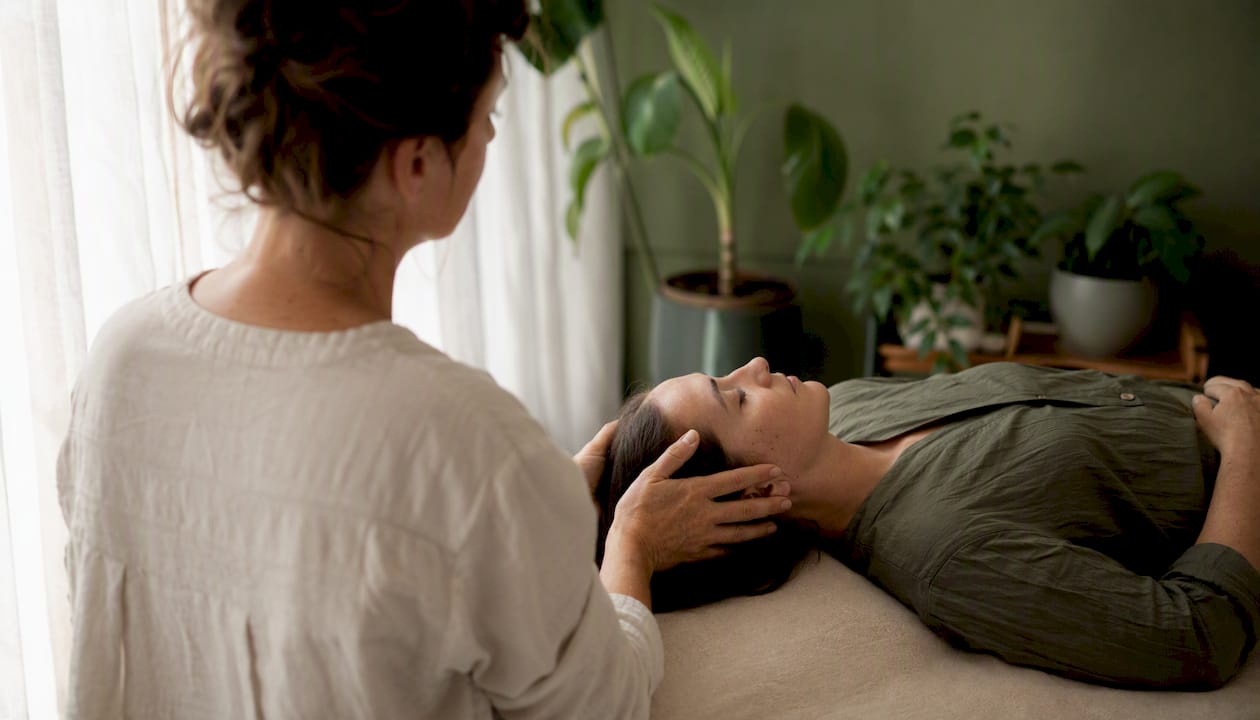
Craniosacral therapy (CST) can help reduce anxiety symptoms for many people, but it is not a proven standalone treatment. Small randomized trials show measurable reductions in anxiety scores and stress hormones after CST, while systematic reviews describe the overall evidence as promising but limited and mixed, calling for larger, better-controlled studies. If you are managing clinical anxiety, panic disorder, or any mental-health condition, please talk with your primary care provider or a licensed mental-health clinician before relying on CST as your main approach. For everyone else curious about whether this gentle, hands-on therapy might fit into their anxiety-management plan, here is what the research actually shows.
Key Takeaways
Craniosacral therapy shows genuine promise for anxiety reduction, supported by measurable hormone changes and randomized trial data, but it works best as part of a broader, clinician-guided care plan.
Point | Details |
Evidence verdict | Small randomized trials show real anxiety reductions; systematic reviews call for larger, standardized studies before CST is considered a proven primary treatment. |
Measurable biological effects | Five weekly CST sessions reduced cortisol (p ≤ 0.0001) and CRH (p = 0.00067) in a randomized trial, providing objective evidence of a physiological stress response. |
Safety profile | CST is low-risk; mild dizziness and tiredness are common. Avoid CST after recent head trauma, with unstable intracranial pressure, or without medical clearance after cranial surgery. |
Realistic timeline | Many practitioners recommend weekly sessions for four weeks before reassessing; track progress with the GAD-7 or a symptom journal. |
Finding a provider | Prefer a licensed health professional (PT, OT, DO) with postgraduate CST training and experience treating anxiety or trauma; ask about insurance coverage before booking. |
Contemporaryrehabservices | Offers CST within a full physical therapy evaluation in Albertson, NY, accepting Medicare, Aetna, Cigna, Emblem, and United Healthcare. |
Table of Contents
How craniosacral therapy is thought to help anxiety
Practitioners and researchers have proposed several pathways to explain why people often feel calmer after a CST session. These are physiologically plausible hypotheses, not proven mechanisms, though some carry objective markers from small studies.
The main proposed pathways include:
Vagal and parasympathetic stimulation. Light touch applied to the skull, sacrum, and connective tissue may activate the vagus nerve, shifting the autonomic nervous system away from the fight-or-flight response. Pilot studies measuring heart-rate variability (HRV) after CST report shifts toward parasympathetic-dominant HRV metrics, a pattern associated with lower anxiety.
Cortisol and stress-hormone reduction. A randomized trial in firefighter cadets found statistically significant reductions in cortisol and corticotropin-releasing hormone (CRH) after five weekly CST sessions (cortisol p ≤ 0.0001; CRH p = 0.00067), providing objective biomarker evidence of a physiological stress response.
Fascial tension release. CST practitioners focus on releasing restrictions in the fascia, the connective tissue that runs throughout the body, rather than manipulating skull bones alone. Reduced fascial tension may send “safety” signals through the nervous system, dampening the threat-detection loop that feeds anxiety.
Relaxation response. The sustained, quiet, light-touch environment of a CST session reliably triggers a generalized relaxation response, lowering sympathetic arousal in ways similar to other relaxation techniques for anxiety such as progressive muscle relaxation.
Tactile safety signaling. Safe, predictable, non-painful touch activates bottom-up nervous-system regulation, meaning the body’s own sensory experience shifts the emotional state before the thinking brain gets involved. This is distinct from top-down approaches like cognitive behavioral therapy (CBT), and it is one reason CST pairs well with talk therapy.
Cortisol and HRV changes are the mechanisms with the clearest objective markers in published trials. The fascial and vagal pathways remain theoretically sound but are harder to isolate in controlled conditions.
Pro Tip: When you read a claim that CST “activates the vagus nerve” or “resets the nervous system,” ask whether the source cites a direct measurement (HRV data, cortisol assay) or is offering a plausible explanatory model. Both can be useful, but they carry very different levels of certainty.
You can read more about these mechanisms behind CST’s effects in a detailed clinical overview from Contemporaryrehabservices.
What the research actually shows about CST and anxiety
The honest summary: some well-designed trials show real anxiety reductions, but the evidence base is still small, and reviewers consistently flag methodological limits. Here is what the best available studies found.
Key trial findings
A 25-week randomized, double-blind trial in 84 fibromyalgia patients assigned participants to two weekly one-hour CST sessions. The trial reported significant improvements in state and trait anxiety, along with pain, sleep quality, and several quality-of-life measures at six months. Some of those gains attenuated by the one-year follow-up, though sleep improvements held longer. Anxiety was a primary outcome here, making this one of the stronger pieces of direct evidence.
A separate eight-week, sham-controlled trial enrolled 54 patients with chronic neck pain. CST produced clinically relevant pain reductions, and at the 20-week follow-up, the between-group reduction in anxiety reached statistical significance (P = 0.020). Anxiety was a secondary outcome in that trial, so the finding is supportive rather than definitive.
The firefighter-cadet trial mentioned above adds a different kind of evidence: objective hormone data rather than self-reported scores. Fifty-seven cadets received one CST session per week for multiple weeks. Cortisol and CRH dropped significantly compared with controls, suggesting a real physiological shift even in a relatively short course.
What systematic reviews say
Review-level commentary characterizes the overall evidence as promising but limited, noting that most trials are small, use heterogeneous protocols, and face blinding challenges inherent to any hands-on therapy. A sham control in manual therapy is difficult to design convincingly, and non-specific effects such as therapist attention, a quiet room, and safe touch can account for part of the measured benefit. The neck-pain trial’s sham-control design illustrates both the strength and the difficulty: even with a light-touch sham, separating specific CST effects from placebo-level relaxation is genuinely hard.
Research on related manual therapies also shows that a single osteopathic manipulative treatment can speed heart-rate recovery and alter sympathovagal balance after stress in healthy participants, lending biological plausibility to the CST anxiety findings without proving them.
Pro Tip: When evaluating a CST study, check four things: Was anxiety a primary or secondary endpoint? Was there an active sham control? Were outcome assessors blinded? And how long was the follow-up? A trial that scores well on all four carries much more weight than one that scores well on only one.
For a deeper look at how clinical evidence and real-world experience compare, Contemporaryrehabservices has compiled case-based context alongside the published research.
What to expect during a CST session for anxiety
A typical session runs about 60 minutes and takes place in a quiet, dimly lit room. You remain fully clothed and lie face-up on a padded treatment table. The environment itself is designed to lower arousal before the therapist’s hands even make contact.
Here is how a session generally unfolds:
Intake and goal-setting. Your therapist reviews your health history, current medications, and anxiety concerns. This is the time to mention any implants, recent surgeries, or psychiatric diagnoses.
Initial assessment. The therapist places their hands lightly on your feet, ankles, or sacrum to feel the rhythm of the craniosacral system, a subtle pulse of cerebrospinal fluid that practitioners are trained to detect and interpret.
Light-touch techniques. Pressure is typically described as the weight of a nickel, roughly five grams. The therapist works along the spine, skull base, and other fascial junctions, pausing and holding rather than pushing or manipulating.
Targeted release work. If the therapist identifies areas of restriction, they hold a gentle sustained contact until they feel a release, often described as a softening or unwinding sensation under their hands.
Closure and aftercare. The session ends with a brief grounding sequence. Your therapist will ask you to sit up slowly and may recommend drinking water and avoiding strenuous activity for a few hours.
Will it hurt? No. CST uses extremely light pressure. If anything feels uncomfortable, tell your therapist immediately.
Can you fall asleep? Yes, and many people do. Falling asleep is considered a sign that your nervous system has shifted into a parasympathetic state, which is exactly what the therapy aims for.
What sensations are normal? Warmth, tingling, a sense of heaviness or floating, and brief emotional releases such as unexpected tears are all commonly reported. The Cleveland Clinic notes that transient lightheadedness and tiredness after a session are typical and usually resolve within a few hours.

Most people notice a shift in their anxiety level within the session itself or in the hours immediately following. Whether that effect accumulates over multiple sessions depends on the individual and the severity of their anxiety.
Safety, risks, and who should avoid CST
CST is generally considered low-risk, but “low-risk” is not the same as “risk-free.” Understanding the limits protects you.
Mild, transient side effects are common. Dizziness, fatigue, and a brief emotional release are the most frequently reported, and they typically resolve within 24 hours. The Cleveland Clinic advises moving slowly when you sit up after a session precisely because lightheadedness is predictable enough to plan for.
Certain conditions require caution or a medical clearance before you try CST:
Recent head or spinal trauma, or any condition involving unstable intracranial pressure
Active infection, open wounds, or inflammation at or near the treatment site
Certain implants (cochlear implants, intracranial shunts) where pressure changes could be problematic
Recent cranial or spinal surgery, until your surgeon clears you for manual therapy
Severe osteoporosis or conditions that make bone fragile
If you experience a sudden severe headache, neurological symptoms such as vision changes or numbness that persist beyond the session, or any worsening of psychiatric symptoms after treatment, seek medical attention promptly.
Pro Tip: Before your first session, tell your therapist about every medication you take (especially blood thinners), any implanted devices, a history of bleeding disorders, pregnancy, and any psychiatric diagnoses including PTSD or dissociative disorders. A trauma-informed therapist will adjust their approach based on this information, and withholding it puts you at unnecessary risk.
How many sessions does it take, and when might you notice a difference?
Response times vary considerably. Some people feel a meaningful shift in their anxiety level after a single session; others notice gradual changes over four to six weeks of weekly treatment.
The trials that produced measurable results used different protocols. The firefighter-cadet study showed significant hormone changes after just five weekly sessions. The fibromyalgia trial required 25 weeks of twice-weekly sessions to show broad anxiety and quality-of-life improvements. That range reflects a real clinical reality: dose matters, and anxiety severity, co-occurring conditions, and whether you are also receiving psychotherapy or medication all influence how quickly you respond.
In common clinical practice, many practitioners recommend starting with weekly sessions for four to six weeks, then reassessing. A straightforward way to track your own response is the GAD-7, a seven-question validated anxiety scale available free online. Complete it before your first session and again after your fourth or fifth. A drop of five or more points is generally considered clinically meaningful. If you prefer something less structured, a brief daily symptom journal noting sleep quality, tension, and mood works well.
Maintenance sessions vary by individual. Some people find monthly sessions sufficient once their anxiety stabilizes; others return only when symptoms flare. There is no universal schedule, and a good practitioner will help you find yours rather than locking you into an indefinite weekly commitment.
How to find a qualified craniosacral therapist in the U.S.
The single most important filter is licensure. Prefer practitioners who hold an active state license in a regulated health profession, such as physical therapy (PT), occupational therapy (OT), osteopathic medicine (DO), or chiropractic (DC), and who have completed postgraduate training specifically in CST. A licensed physical therapist trained in CST brings both the anatomical foundation and the clinical judgment to integrate the therapy safely with your overall care.
When you are evaluating a potential therapist, look for:
A current state license in a regulated health profession, verifiable through your state’s licensing board
Documented postgraduate CST training (many practitioners complete courses through the Upledger Institute or similar continuing-education programs)
Experience working with anxiety, trauma, or nervous-system dysregulation specifically
A trauma-informed approach, particularly if your anxiety is linked to past trauma or PTSD
Willingness to coordinate with your primary care provider or mental-health clinician
Before booking, ask directly: How many CST sessions have you completed as part of your training? Do you have experience treating patients with anxiety or trauma histories? How do you handle emotional releases during a session? What is your cancellation policy and how is my health information protected?
On insurance: coverage for CST varies widely. When billed by a licensed physical therapist as part of a broader PT plan of care, some insurers, including Medicare, Aetna, Cigna, Emblem, and United Healthcare, may cover the visit. Call your insurer before your first appointment and ask specifically whether manual therapy or physical therapy visits are covered under your plan. A clinic that accepts your insurance can also help you understand what documentation is needed for reimbursement.
You can learn more about what craniosacral therapists actually do and what to look for in a qualified provider in this overview from Contemporaryrehabservices.
Evidence-based approaches that pair well with CST
CST tends to work best as part of a broader plan, not as a replacement for treatments with a stronger evidence base. Here is how it fits alongside the options with the most clinical support.
Cognitive behavioral therapy (CBT) remains the most extensively studied psychological treatment for anxiety disorders. It works top-down: you learn to identify and restructure the thought patterns that feed anxiety. CST works bottom-up, through the body’s sensory experience. The two approaches address different entry points into the same nervous-system loop, which is why many clinicians find them genuinely complementary rather than redundant.
SSRIs and SNRIs, when prescribed by a physician or psychiatrist, address anxiety at the neurochemical level. CST does not replace medication for clinical anxiety disorders, and you should never stop a prescribed medication to try CST instead. The two can coexist safely for most people.
Mindfulness and meditation share some of CST’s parasympathetic-activation effects and are easy to practice between sessions. Research consistently links regular meditation to reduced anxiety and improved emotional regulation. Pairing a daily meditation practice for relaxation with weekly CST gives your nervous system repeated opportunities to practice the calmer state.
Breathing techniques such as 4-7-8 breathing or paced breathing at roughly six breaths per minute are among the fastest ways to shift autonomic tone between sessions. They are safe for most people and require no equipment.
Yoga combines movement, breath, and body awareness in ways that reinforce the nervous-system regulation CST initiates. Evidence supports yoga as an anxiety-reduction tool, and yoga-based breathing and movement can extend the calming effects of a CST session into your daily routine.
For home use between sessions, the 3-3-3 grounding exercise (name three things you see, three sounds you hear, move three parts of your body) is a simple, evidence-informed tool for interrupting acute anxiety. If you are experiencing severe panic attacks or any thoughts of self-harm, please contact a mental-health professional or call 988 (the Suicide and Crisis Lifeline) rather than relying on self-help techniques alone.
How we integrate CST for patients with anxiety at our clinic
At Contemporaryrehabservices, CST is not offered in isolation. When a patient comes in describing anxiety alongside physical symptoms such as chronic neck tension, jaw pain, or headaches, the intake process includes a full physical therapy evaluation alongside a conversation about their mental-health history and current care team.
In practice, CST is typically woven into a broader manual therapy plan that may include myofascial release, joint mobilization, and neuromuscular re-education. For patients who are already working with a therapist or psychiatrist, we coordinate care so that the physical and psychological sides of treatment reinforce each other rather than pulling in different directions. Patients frequently report that the deep relaxation from a CST session makes their talk-therapy work feel more accessible, as if the body has already lowered its guard before the cognitive work begins.
Contemporaryrehabservices is a boutique physical therapy clinic in Albertson, NY, serving patients across Nassau County and Queens. We accept Medicare, Aetna, Cigna, Emblem, and United Healthcare, as well as cash-pay patients. If you are curious about whether CST might fit your situation, the first step is a conversation, not a commitment.
Ready to try CST for anxiety? Here is how to get started
If you have read this far and are wondering whether CST is worth trying for your anxiety, Contemporaryrehabservices offers a practical path forward. As a licensed physical therapy clinic in Albertson, NY, we provide craniosacral therapy and a full range of manual therapy services within a clinical framework, meaning your care is grounded in a proper evaluation, not a one-size-fits-all session.
We accept Medicare, Aetna, Cigna, Emblem, and United Healthcare, and we also see cash-pay patients. To prepare for your first visit, bring a list of your current medications, any relevant imaging or prior therapy notes, and a brief description of your anxiety symptoms and how long you have had them. Mention your anxiety concerns when you call or book online so your therapist can plan accordingly.
CST is complementary care. It is not a substitute for urgent mental-health treatment, and we will always tell you honestly if your situation calls for a referral to a psychiatrist or psychologist first. To schedule an evaluation at our Albertson, NY clinic, reach out through our website or call the clinic directly.
Sources
The sources below were selected for peer-reviewed rigor, clinical trustworthiness, or direct relevance to CST and anxiety. Primary trials and systematic reviews are listed first.
This article provides general health information and is not a substitute for professional medical or mental-health advice. Confirm current treatment options and suitability with a licensed clinician.
Recommended
Comments