
Clinic Tested Myofascial Release for Plantar Fasciitis: 5 Home Steps

Myofascial release can reduce plantar heel pain and improve mobility when it’s used inside a progressive program that also includes stretching and strengthening. It is not usually a standalone cure. Self-massage with a ball, roller, or frozen can offer real short-term relief, but if pain worsens, spreads, or comes with numbness, that’s your signal to get a clinical assessment rather than push through it alone.
TL;DR:
Myofascial release should be combined with stretching and strengthening, not used as a standalone treatment for plantar heel pain.
Effectiveness increases when manual therapy is integrated into a broader rehab program that includes progressive load management.
Self-massage tools can reduce symptoms temporarily but should be used carefully to avoid worsening pain or injury.
Persistent or worsening symptoms, numbness, or signs of trauma require assessment by a healthcare professional rather than self-treatment.
Long-term improvement typically occurs over three to six months through a multimodal approach, including manual therapy, exercises, orthotics, and activity modifications.
Table of Contents
What Is Plantar Fasciitis and How Does the Fascial Chain Play a Role?
How Do You Do Myofascial Release for Plantar Fasciitis at Home?
What Happens During an In-Clinic Myofascial Release Session?
What Does the Research Actually Say About MFR for Plantar Fasciitis?
When Should You See a Clinician Instead of Treating It Yourself?
What Is Plantar Fasciitis and How Does the Fascial Chain Play a Role?
The plantar fascia is a thick band of connective tissue running from your heel bone to the base of your toes. It works like a bowstring during the “windlass mechanism”: every time you push off a step, your toes extend, the fascia tightens, and your foot’s arch stiffens to help you walk efficiently. When that tissue is overloaded, repeatedly, it develops small areas of irritation and thickening, and every first step out of bed can feel like stepping on glass.
The reason therapists rarely treat the heel in isolation is that the fascia doesn’t work alone. It connects, functionally and anatomically, to the Achilles tendon and the calf muscles above it. Limited ankle dorsiflexion, the ability to bring your toes up toward your shin, forces the plantar fascia to absorb more strain than it should. A handful of common contributors show up again and again in clinic:
Tight calves or a stiff Achilles that restrict ankle motion
Prolonged standing on hard surfaces, especially in unsupportive shoes
Sudden increases in walking, running, or standing volume
Higher body weight, which raises load on the fascia with every step
Old or worn-out footwear that no longer cushions the heel strike
This is why a therapist assessing plantar heel pain will almost always check your calf and Achilles mobility, not just press on your arch. Treating the fascia without addressing what’s happening one joint up is treating half the problem.
How Does Myofascial Release Work for Foot Pain?
Myofascial release, often shortened to MFR, is manual pressure applied to soft tissue with the goal of reducing tension, improving blood flow, and restoring slide between tissue layers that have become stiff or adhered. For plantar heel pain, therapists typically work three zones: the plantar surface of the foot itself, the triceps surae (the calf muscle group), and the deep posterior compartment of the lower leg.
The dosing pattern that shows up most consistently in clinical trials is low load and long duration rather than short, aggressive pressure. Think sustained, moderate pressure held for a stretch of time, not quick jabbing strokes. A 2023 assessor-blinded trial applied this exact approach, treating the plantar foot, calf, and deep posterior calf together rather than isolating the heel.
It’s worth being honest about the mechanism. There’s no solid evidence that manual pressure “breaks up” scar tissue or physically restructures fascia in a single session.
What MFR most plausibly does:
Modulates pain signaling, temporarily lowering sensitivity in irritated tissue
Improves short-term range of motion, particularly ankle dorsiflexion
Increases tolerance for the exercises that build lasting strength
That third point matters more than it sounds. If your calf is too tight to load safely, MFR can be the thing that makes the actual rehab work, the stretching and strengthening, possible in the first place.
How Do You Do Myofascial Release for Plantar Fasciitis at Home?
Self-treatment can meaningfully reduce pain between clinic visits, but it works best as a short, consistent daily routine rather than a one-time fix. Here’s a sequence you can do safely at home.
Start with the plantar-fascia stretch. Sit down, cross the affected foot over your other knee, and pull your toes back toward your shin until you feel tension along the arch. Hold for 30 seconds and repeat at least three times, ideally before your first steps in the morning, when the fascia is stiffest.
Roll the arch with a lacrosse ball. Stand or sit with the ball under your foot and roll slowly from heel to midfoot for one to two minutes. Use enough pressure to feel firm tension, not sharp pain.
Work the calf with a foam roller. Roll from behind the knee down to the Achilles for one to two minutes per leg. This addresses the kinetic chain issue described above instead of just chasing the sore spot.
Finish with ice massage. Freeze a water bottle or use a frozen can and roll it under your arch for five to ten minutes. This is especially useful after activity, when the fascia is inflamed and reactive.
Repeat once or twice daily, and reassess after a week. If your first-step pain is easing, keep going. If it isn’t budging, that’s useful information for a clinician.
Pro Tip: Grade your pressure the same way a therapist would, work the calf and Achilles first, then move to the sensitive arch. Hitting the tender spot hard right away tends to backfire and can leave you sorer the next day.
Progression matters here. If you notice bruising, tingling, numbness, or a flare that lasts into the next day, stop and scale back the pressure or frequency. Self-release tools are useful for symptom management, but they can’t diagnose what’s actually causing your pain, so repeated flares deserve a second look rather than more pressure.

What Happens During an In-Clinic Myofascial Release Session?
A first visit starts with information gathering, not hands-on treatment. Your therapist will typically walk through:
Your symptom timeline, including when pain started and what makes it better or worse
A gait analysis, watching how you walk and where your foot loads unevenly
Ankle dorsiflexion range of motion, checked directly against the calf tightness discussed earlier
Palpation of the plantar fascia, calf, and Achilles to locate the most reactive tissue
From there, a typical session moves through a warm-up, graded myofascial release starting proximally at the calf before working down to the arch, joint mobilization if the ankle or midfoot is restricted, and guided exercises to reinforce whatever range of motion the manual work just opened up.
The goals are concrete: improved dorsiflexion, less pain on that first step out of bed, and better tolerance for the strengthening work that follows. A therapist measuring progress by anything vaguer than that isn’t tracking outcomes closely enough.

How Does Myofascial Release Fit Into a Full Recovery Plan?
MFR earns its place in a rehab program, but it isn’t the engine that drives recovery. That role belongs to progressive loading, gradually increasing the demand placed on the calf and foot-intrinsic muscles so tissue adapts and gets stronger rather than just less irritated. Passive techniques alone rarely produce durable change; the shift from manual treatment to genuine capacity building is what separates temporary relief from lasting improvement.
A well-built multimodal program usually includes:
Myofascial release and stretching to manage pain and open up range of motion
Calf-raise and towel-scrunch style strengthening for the foot’s intrinsic muscles
Gradual increases in standing, walking, or running volume, tracked week to week
Orthotics or heel cups to redistribute load during the day
Night splints for people with pronounced first-step pain in the morning
Activity modification, temporarily reducing high-impact loading while tissue heals
Timelines vary, but reviews of nonoperative care consistently find that most patients see meaningful improvement within three to six months, not days or weeks. That’s a longer runway than most people expect walking into their first appointment, and it’s worth setting that expectation early so frustration doesn’t derail an otherwise sound plan.
What Does the Research Actually Say About MFR for Plantar Fasciitis?
The American Physical Therapy Association’s 2023 clinical practice guideline frames plantar heel pain as a movement problem, not just a sore spot on the heel, and it supports manual therapy, exercise, and patient education as part of physical therapist care rather than a single fix.
The trial evidence backs a similar, tempered picture. A 2014 randomized controlled trial found MFR improved outcomes when delivered inside a broader rehabilitation program. A 2023 assessor-blinded RCT compared an MFR protocol against a structural-diagnosis-and-management approach; both groups improved after 12 weeks, though the structural approach edged ahead on several measures.
Broader evidence summaries push for caution rather than confidence. A recent systematic review and meta-analysis of physiotherapy interventions found only modest, low-certainty short-term pain reductions, with substantial variation across the trials pooled.
The clearest signal across this research isn’t that myofascial release “works” in some universal sense. It’s that it works best as one piece of individualized, multimodal care, paired with strengthening and judged by measurable functional change rather than momentary comfort.
When Should You See a Clinician Instead of Treating It Yourself?
Most plantar heel pain responds to conservative self-care, but certain signs mean it’s time to get assessed rather than keep rolling a ball under your foot.
You can’t bear weight on the foot, or pain is rapidly worsening with visible swelling or bruising.
You notice numbness, tingling, or progressive weakness, which points toward nerve involvement rather than straightforward fascia irritation.
You have fever or recent trauma, both of which need prompt medical evaluation.
Symptoms don’t shift after several weeks of consistent self-care.
A clinician will also rule out look-alike conditions: calcaneal stress fracture, tarsal tunnel syndrome, an actual plantar fascia rupture, Achilles tendinopathy, or systemic inflammatory disease. Bring your symptom timeline, when it started, what activity or footwear changed, and what eases or worsens it, since that history often shapes the diagnosis as much as the physical exam does.
A Clinician’s View on Using Myofascial Release Responsibly
At CRS Wellness, myofascial release for plantar fasciitis is never the whole plan; it’s the piece that makes the rest of the plan possible. Assessment comes first, then graded manual work through the calf and arch, then immediate movement to lock in that new range, then progressive strengthening tracked against real outcomes like walking tolerance and first-step pain.
The most overlooked mistake we see isn’t neglecting MFR. It’s leaning on it indefinitely as a substitute for the strengthening work that actually builds durable capacity in the foot and calf.
— CRS Wellness
Get Clinician-Guided Myofascial Release at CRS Wellness
Rolling a ball under your foot at home has real limits: you can’t assess your own gait, grade pressure against a proper baseline, or know for certain whether your pain is fascia, nerve, or something else entirely. One-on-one myofascial therapy delivered by a clinical team that pairs hands-on manual work with individualized strengthening plans, not a generic template.
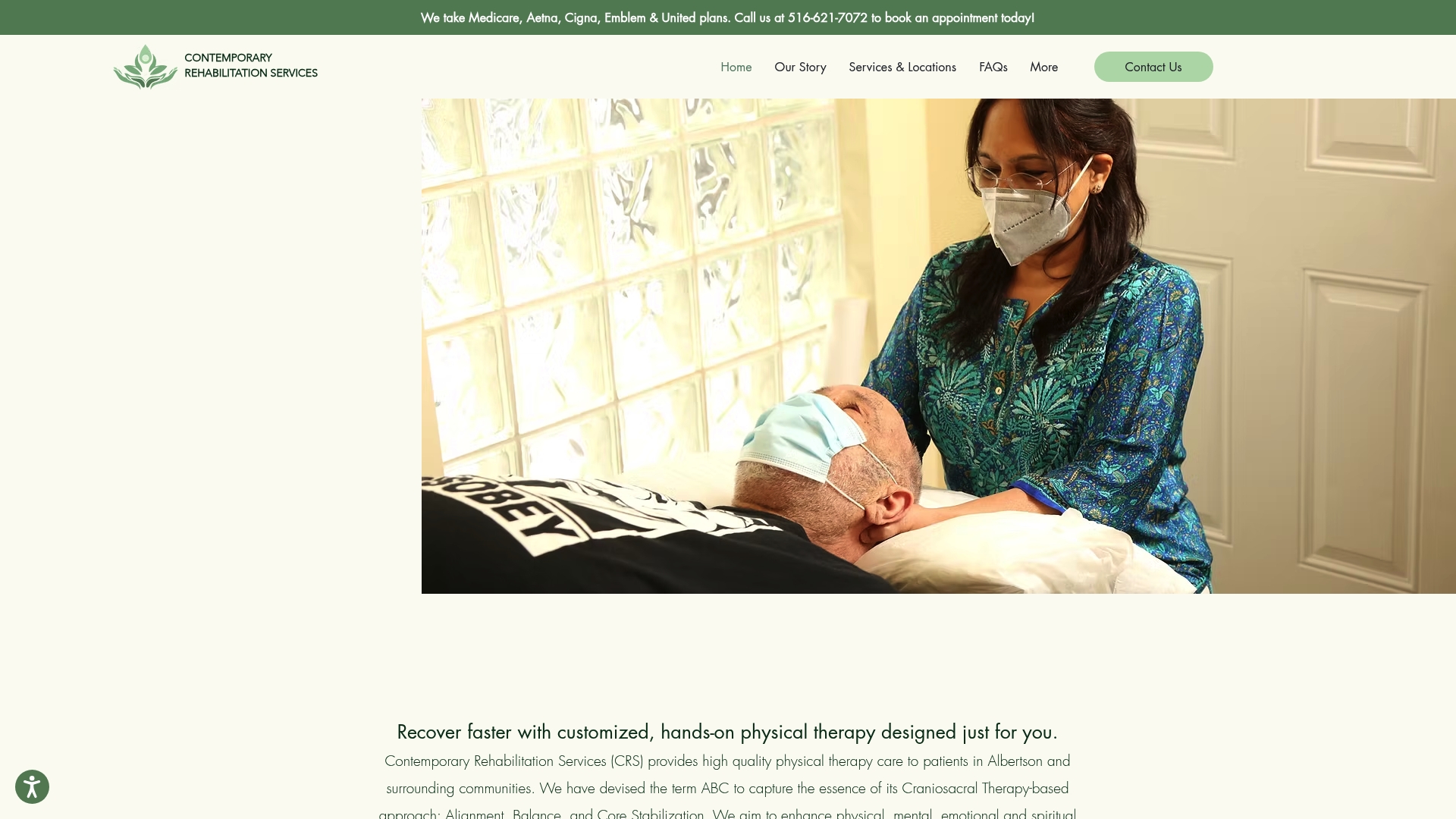
A first visit includes a full gait and range-of-motion assessment, so treatment starts from what your foot is actually doing, not a guess. The clinic accepts various insurance plans plus cash payments, and offers telehealth PT sessions for patients who want guided exercise progression without an in-person visit every week. If you’re nearby, book an evaluation and bring your symptom timeline, footwear history, and any imaging you already have. That’s the fastest way to find out whether your heel pain needs manual therapy, a loading program, or both.
This article is general information, not a substitute for advice from a qualified doctor. Consult a qualified healthcare professional about your own circumstances before acting on anything here.
Sources
FAQ
How Do You Release Fascia for Plantar Fasciitis?
Start with a plantar-fascia-specific stretch, pulling the toes back for 30 seconds, repeated several times daily, then use a ball or roller under the arch and calf with firm, tolerable pressure. Ice massage with a frozen can for five to ten minutes after activity adds short-term relief on top of that routine.
What Finally Resolves Chronic Plantar Fasciitis?
There’s no single fix that works for everyone, but reviews consistently show that most people improve within three to six months of consistent, multimodal care: stretching, myofascial release, progressive calf and foot strengthening, and load management together. Chasing one technique alone tends to stall progress compared to combining them.
What’s the Worst Thing You Can Do for Plantar Fasciitis?
Ignoring pain and continuing high-impact activity on hard surfaces without addressing calf tightness or footwear is the most common way symptoms worsen. Aggressive, painful self-massage directly on the tender heel without grading pressure can also backfire and trigger next-day flares.
Can You Massage Out Plantar Fasciitis?
Massage and myofascial release can meaningfully reduce pain and improve mobility, but they work best paired with stretching and strengthening rather than used alone. Clinical trials on myofascial release show benefit specifically when it’s part of a broader rehabilitation program, not a solo treatment.
Does Insurance Cover Myofascial Release for Plantar Fasciitis?
Coverage depends on your plan and the provider’s billing setup, so check directly with your insurer. CRS Wellness accepts Medicare, Aetna, Cigna, Emblem, and United Healthcare, along with cash pay for physical therapy sessions.
Recommended
Comments