
Myofascial Release for Scar Tissue: What to Expect

Myofascial release is a gentle, hands-on technique that physical therapists use to ease tightness in the connective tissue around a scar. It can help a scar feel less tight, pull less and move more freely. It works best as part of a plan that also includes movement and home care. Below, we explain how it works, what the research shows, when it can begin and what a visit looks like. We are a boutique physical therapy clinic in Albertson, serving Queens and Nassau County.
TL;DR
Myofascial release uses slow, sustained pressure on the skin and the fascia (the connective tissue under it) to ease tension around a scar.
Reviews of scar massage report improvements in pain, itch, thickness and pliability, though study methods vary a lot, so your therapist should tailor the plan to your scar.
Treatment starts only once the healed skin tolerates surface friction. Ask your surgeon or provider before you rub or treat any scar.
Older scars, including surgical scars on the back, ankle or abdomen, can still be assessed and treated by a physical therapist.
We offer in-person and virtual sessions and accept Medicare, Aetna, Cigna, Emblem and United Healthcare.
Table of Contents
What scar tissue is and why it can feel tight
When skin is cut, burned or injured, your body repairs it with new tissue. That repair tissue is what we call a scar. MedlinePlus notes that scars may keep fading for as long as two years, and that deeper wounds are more likely to scar.
Most scars are harmless. But some stay tight, tender or sticky. Fascia is the thin, web-like connective tissue that wraps your muscles, joints and organs. Think of it as a continuous sleeve running under the skin. When a scar forms, the fascia nearby can stiffen and cling to the tissue beneath. One physical therapy resource describes adhesions as small areas of scar tissue that cling to muscle fibers, but we only rely on sources we can verify here, so we will keep to what the research below supports.
People often describe the result in simple terms:
A pulling or tight feeling when they stretch or reach
Numbness or sensitivity around the scar
Pain that shows up with a certain movement, sometimes away from the scar itself
Trouble bending, twisting or walking the way they did before
MedlinePlus explains that thick burn scars can restrict the movement of muscles, joints and tendons, and that long-term joint stiffness may call for physical therapy. A scar does not need to be large to feel limiting. A small abdominal or ankle scar can change how you move if the tissue under it has become stiff.
How myofascial release works on a scar
Myofascial release is gentle, constant massage aimed at releasing tightness and pain in the myofascial tissues. Cleveland Clinic says it may benefit people who have scarring after burns or surgery.
In practice, the therapist works with their hands directly on your skin. According to Cleveland Clinic, the work uses no oils or lotions, so the hands can grip the skin and the tissue below it. The pressure is slow. The therapist may knead and stretch the tissue, then move on once they feel the tension let go.
This is very different from a deep, aggressive massage. You should not be gritting your teeth. The goal is to ask the tissue to soften, not to force it.
Techniques you may hear about
UCSF describes several techniques physical therapists use under the name soft-tissue mobilization:
Parallel planing: strokes that glide along the tissue.
Perpendicular strumming or bending: pressure across the tissue with a sustained hold.
Petrissage: kneading of the soft tissue.
Myofascial release: a sustained hold of about 90 seconds.
The same source explains that therapists commonly combine this hands-on work with therapeutic exercise, education and a home program. That matches how we think about care. The hands-on session opens up the tissue, and the movement work teaches your body to use the new range. If you want a deeper explanation, see our guide to soft tissue mobilization and our overview of what myofascial release is.
What the research shows about massaging scars
Scar massage has been studied for years, and the picture is encouraging, with room for more research. Here is what the main reviews report.
Review | What it looked at | What it reported |
10 scar-massage publications, 144 patients | Treatment began anywhere from suture removal to more than two years later. 27 of 30 surgical scars improved in appearance or on a scar assessment scale. The authors called the overall evidence weak and the regimens highly variable. | |
Physical scar management in adults | Significant improvements in pain, itch, pigmentation, pliability, surface area and thickness. The authors noted a high risk of bias in blinding. | |
7 studies, 420 participants | Reduced pain, thickness, itch and anxiety. No significant effect on depression. Sessions ran 5 to 30 minutes, one to three times a week, for 12 weeks. |
Three things stand out for you as a patient.
Many people see gains. Across these reviews, scars often became less painful, less itchy and more flexible.
Results depend on the scar and the plan. The 2012 review found treatment start times and routines varied widely, and a 2025 review of physical therapy for skin scars says technique choices should vary with scar location, tissue strength and maturation. In other words, the best approach is one that fits your scar, your history and your goals.
Consistency matters. The burn-scar studies used regular sessions over about 12 weeks. A scar rarely changes after one visit, so a steady plan with home work between sessions makes sense.
The researchers behind these papers call for more long-term studies. That is good news for patients, because it means experienced clinicians keep refining how scars are treated. It is also why a one-on-one assessment beats a generic routine.
When can you start, and can an older scar still be treated?
Starting on a new scar
The 2025 review says massage should begin once the healed tissue tolerates surface friction. It does not set one universal start date. Your surgeon or provider knows how your wound is healing, so talk with them first. MedlinePlus advises you not to rub a scar or apply products to it without discussing it with a provider. It also says vitamin E and petroleum jelly have not been proven to prevent or fade scars.
UCSF adds that acute injuries or inflammation should not receive soft-tissue mobilization. If the area is still red, swollen, open or draining, it is not ready.
Working with an older scar
A scar from years ago can still cause trouble. A 2023 case report describes an older adhesive ankle surgical scar treated by a physical therapist with weekly scar-fascial release for one month, plus daily scar movement at home. Pain during walking nearly resolved. Ankle range of motion did not clearly improve. The authors say these techniques are effective anecdotally and that scientific evidence is still limited.
One case does not predict your result. It does show that a long-standing scar can be a real source of pain, and that a therapist may look at it as part of the whole picture.
Scar tissue in the lower back
Lower back scars, from a spinal procedure or another surgery, often come with a question: is the scar the cause of my pain? Sometimes the scar contributes. Sometimes the pain comes from the joints, discs or muscles around it. A physical therapist can tell the difference by testing how the skin glides, how the tissue moves under your hands and how you bend, lift and walk.
If the scar is involved, treatment may combine gentle fascial work around the area with joint mobilization and strengthening. Our guide on fascia release explains how the hands-on side fits in, and our page on post-surgical rehab covers why recovery after surgery often needs more than rest.
Cleveland Clinic says soreness after myofascial release should settle fairly quickly. It also lists rare risks, including internal bleeding, trouble moving muscles, short-term paralysis and nerve damage. That is one more reason to choose a trained provider who screens you first and adjusts pressure as you go.

What a scar session with us can look like
Every plan is individual, but a typical path looks like this:
A conversation. We ask about the surgery or injury, when it happened, what you feel and what you want to do again.
An assessment. We look at the scar, how the skin and fascia move, and how your joints and muscles work around it.
Hands-on care. Depending on what we find, this may include myofascial therapy, joint mobilization, neural mobilization, visceral therapy or neuromuscular re-education.
Movement and home work. You leave knowing what to do between visits, so progress carries over.
Re-checking. We adjust the plan as the tissue changes.
If you cannot come in every week, we also offer virtual sessions. They are a good fit for guided movement, home exercise coaching and follow-up. Our posts on safe home exercises and home PT exercises give you a starting point.
Who can treat scar tissue
Cleveland Clinic says myofascial release is performed by trained providers, including physical, occupational and massage therapists, chiropractors, sports-medicine specialists, athletic trainers and osteopathic physicians. For scar-related pain or restricted movement, a physical therapist is a natural choice. They evaluate how the scar affects your whole body, not only the skin, and they pair hands-on work with exercise.
If you are choosing a provider, look for someone who examines you first, explains what they are doing and checks your comfort throughout. The research on scar massage for surgical scars shows how much protocols differ, which makes a clear explanation from your provider all the more valuable.
Our perspective
We treat scars as part of the whole person. A scar on your abdomen can change how your hips move. A scar on your ankle can change how you walk, and then your knee or back starts to complain. That is why we do not stop at the skin. Our team is a mother-daughter practice, and every session is one-on-one. That means the person who evaluates you is the person who treats you, and the plan is built around your scar, your history and your goals. We blend holistic and integrative manual therapy, including myofascial therapy, craniosacral therapy and visceral therapy, with exercise guidance through our ABC Approach to rehabilitation. We believe gentle, patient hands-on work gives tissue the best chance to loosen, and that movement practice is what helps your body keep the change. If a scar has been holding you back, we would be glad to take a careful look. CRS Wellness
Care for scar tissue in Albertson and across Long Island
If a scar leaves you feeling tight, sore or limited, we can assess it and build a plan with you. Our clinic in Albertson serves patients in Queens and Nassau County, including Mineola, Roslyn, Williston Park, Westbury and nearby towns. We accept Medicare, Aetna, Cigna, Emblem and United Healthcare, as well as cash payment. Please contact us to confirm how your plan applies to your visit.
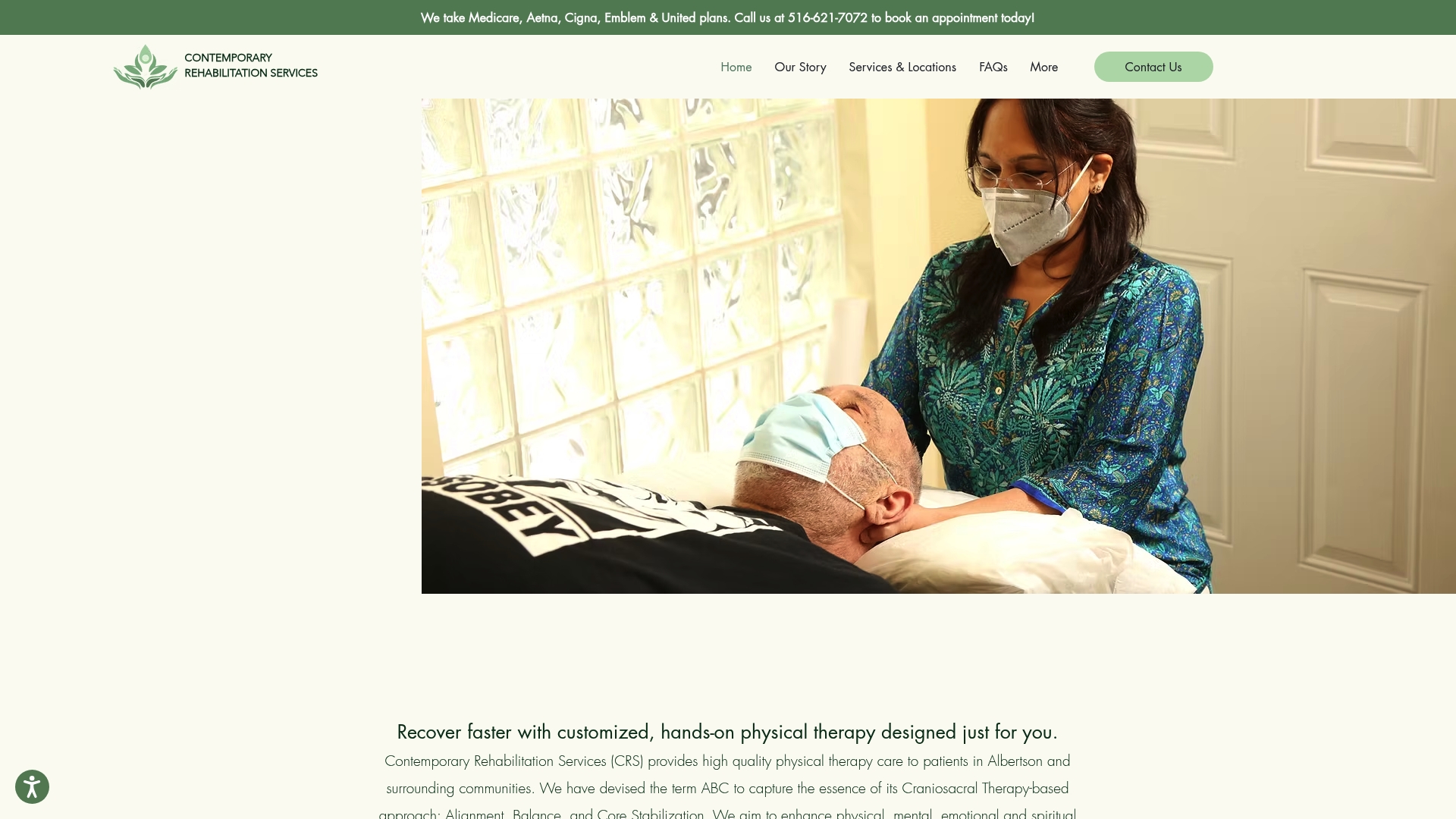
You can read about all of our hands-on services or start from our home page to book in-person or virtual physical therapy.
Signs that need medical attention first
A scar still in the wound-healing stage needs your surgeon or doctor, not hands-on therapy. MedlinePlus advises contacting a provider promptly if you notice:
Redness or increasing pain at the wound
Yellow or green pus, or a lot of clear drainage
Black wound edges
Bleeding that will not stop
A fever of 100°F (37.7°C) or higher for more than four hours
Unrelenting pain, or a wound that reopens
Once your provider confirms the area has healed, we are happy to take it from there. For more on how manual care supports recovery, see our overview of manual therapy benefits and common physical therapy modalities.
FAQ
Does massaging scar tissue help get rid of it?
Massage does not erase a scar, but reviews report that it can improve how a scar feels and looks. The 2020 meta-analysis found improvements in pain, itch, pliability and thickness. Ask your provider before you begin, and let a therapist show you how much pressure is right.
Can scar tissue cause pain?
Yes. A scar can feel tight, tender or numb, and it can limit movement if the tissue under it stiffens. Pain may also show up away from the scar, as in the ankle case report above. A physical therapist can assess whether the scar is a factor.
Can a physical therapist release fascia?
Yes. Physical therapists use myofascial release and soft-tissue mobilization as part of treatment, usually together with exercise and education. Cleveland Clinic lists physical therapists among the providers trained to perform myofascial release.
How long does scar work take?
It depends on the scar’s age, depth and location. The burn-scar studies used sessions one to three times a week for 12 weeks, but your plan should match your own tissue. We reassess as you progress and adjust the schedule.
Is myofascial release painful?
The pressure is slow and sustained, and many people feel a stretching or tender sensation, not sharp pain. Tell your therapist if something hurts so they can ease off. Soreness afterward should settle fairly quickly, according to Cleveland Clinic.
Sources
Recommended
Comments