
Is Pain After Physical Therapy Normal? What to Do Next
Updated: Sep 10
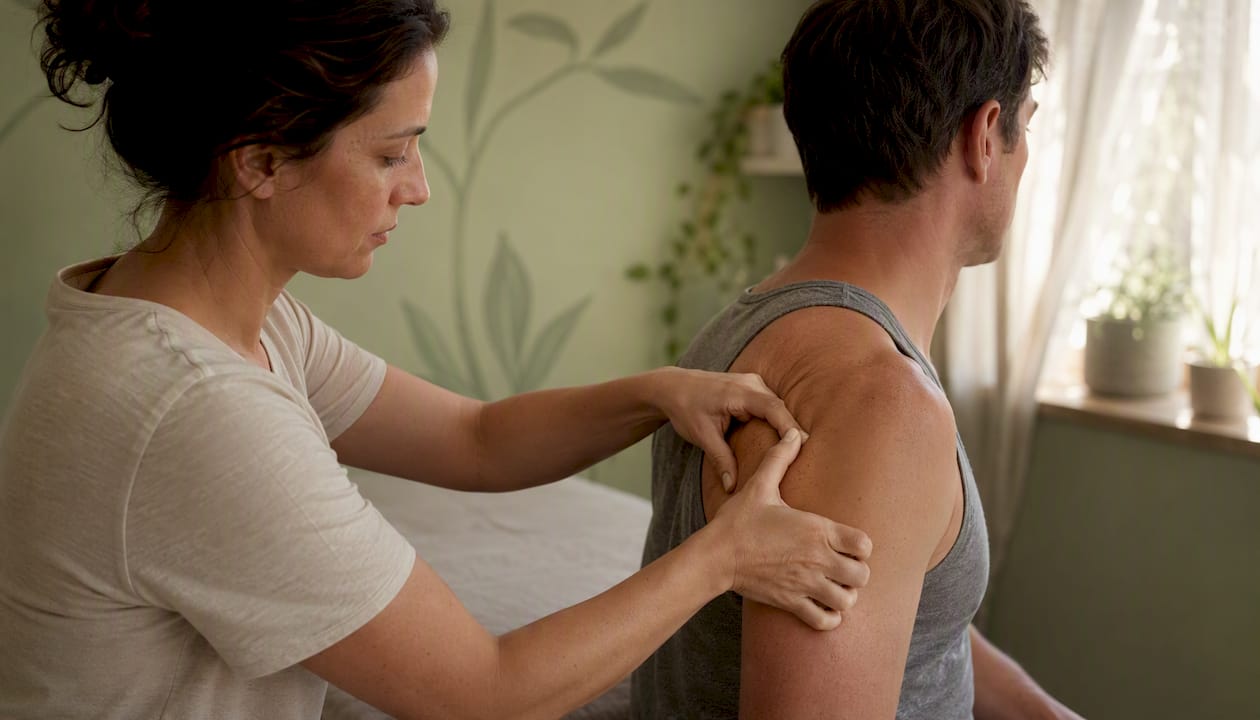
Yes, mild soreness after physical therapy is normal, but sharp or worsening pain is not. Most patients feel a dull, achy sensation that peaks within 24 to 48 hours and fades on its own, a pattern the Mayo Clinic links to delayed onset muscle soreness, or DOMS. Here’s what to do right now:
Try this: gentle movement, ice or heat, and a good night’s sleep.
Avoid this: stopping all activity or skipping your home exercises.
Call your therapist if: pain sharpens, spreads, or hasn’t eased within a few days.
Key Takeaways
Mild soreness after physical therapy typically peaks within 24 to 48 hours and resolves in 1 to 3 days, while sharp or worsening pain signals a need for professional reassessment.
Point | Details |
Soreness follows a pattern | Expect onset within hours, a peak at 24 to 48 hours, and relief within 1 to 3 days. |
Know the difference | Dull, spread-out pain that improves with movement is normal; sharp, localized, worsening pain is not. |
Keep moving | Gentle activity, ice or heat, sleep, and hydration support recovery better than full rest. |
Watch for red flags | Numbness, instability, fever, or pain lasting beyond 72 hours warrants a call to your clinician. |
Communicate early | Contemporary Rehab Services can reassess your plan and adjust load or technique before small issues grow. |
Table of Contents
Why Does Pain After Physical Therapy Happen?
Your body reacts to new physical stress the same way it reacts to a first day back at the gym. When a therapist introduces new loads, stretches tight tissue, or performs hands-on techniques, small-scale muscle microtears and short-term inflammation follow. That’s DOMS, not damage.
Several things happen at once at the tissue level:
Microscopic muscle fiber tears trigger a repair response.
Tendons and joints, unused to new ranges of motion, become temporarily more sensitive.
Blood flow and mild inflammation increase to the treated area.
The nervous system, adjusting to unfamiliar movement patterns, can amplify sensation for a day or two.
Therapists load tissue this way on purpose. Controlled stress is what stimulates the adaptation that builds strength and mobility over time.
What Causes Pain After a Physical Therapy Session?
Most soreness traces back to something predictable. New exercise load, manual therapy or soft tissue mobilization, reactivating muscles that have been weak or guarded, and stretching stiff joints all commonly produce a temporary ache.
Less common causes deserve more attention: a technique error during an exercise, a dose that’s too aggressive for where you are in recovery, an inflammatory flare in an already irritated joint, or nerve irritation from a stretch or mobilization gone slightly too far.
The distinction that matters: normal soreness after physiotherapy is usually a dull ache that spreads across the area and improves once you move. Concerning pain is sharp, stays in one exact spot, and gets worse instead of better.
How Long Does Soreness Last After Physical Therapy?
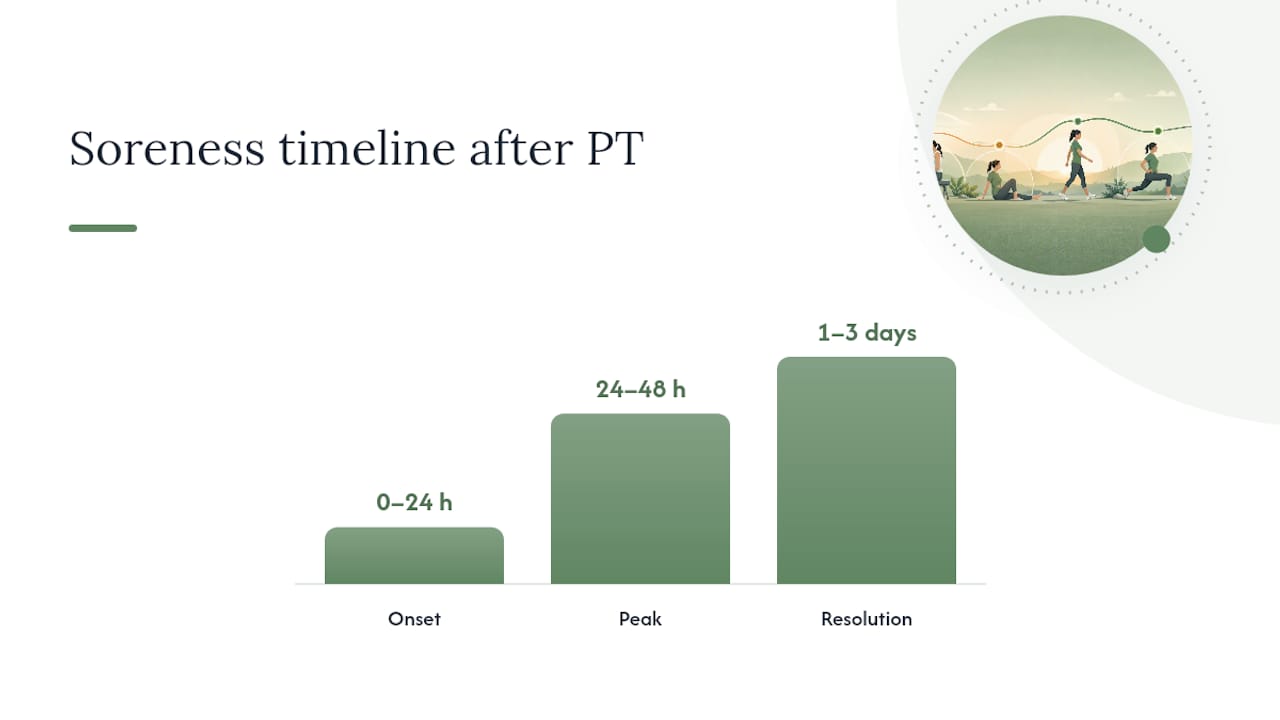
Soreness typically starts within a few hours of your session, though some people feel it immediately. It usually peaks between 24 and 48 hours after treatment and resolves within 1 to 3 days.
A few benchmarks worth keeping in mind:
Onset: same day to next morning.
Peak: 24 to 48 hours post-session.
Resolution: 1 to 3 days for most cases.
If pain keeps building over several days or hasn’t let up within a few days, that’s outside the normal window and worth a call. It also helps to know that full tissue healing takes longer than symptom relief. Muscle adapts over weeks, but connective tissue like tendons and ligaments can take months to remodel, so feeling occasional twinges well after your soreness has faded doesn’t necessarily mean something’s wrong.
How Do You Manage Soreness After Therapy?
Full rest is rarely the answer. Movement encourages blood flow, and blood flow speeds recovery. Here’s what actually helps:
Take a gentle walk or move through easy range-of-motion exercises.
Apply ice for a fresh, inflamed feeling; switch to heat once things have settled into general stiffness.
Prioritize sleep and hydration. Both support tissue repair.
Use nonprescription pain relievers if needed, following the label and your physician’s guidance.
Stretch gently within a pain-free range rather than pushing through tightness.
Stick with your home-exercise plan, but scale back the intensity if soreness is running higher than you can comfortably manage. A simple gauge many clinicians use: mild discomfort during movement is expected, but if it’s consistently interfering with how you function that day, the load needs adjusting.
Pro Tip: Test your recovery the next morning with a light version of yesterday’s movement. If it feels noticeably easier than the day before, you’re on track. If it feels the same or worse, that’s useful information to bring to your next session.

For daily habits that support this process beyond the clinic, simple recovery routines around sleep and nutrition make a real difference, and a partner resource on movement therapies for pain relief covers gentle strategies worth exploring too.
What Are the Red Flags After Physical Therapy?
Certain symptoms move beyond ordinary soreness and need attention. Watch for:
Sharp, stabbing, or burning pain
Pain that keeps worsening instead of easing
New swelling or redness at the treated area
Numbness, tingling, or unexplained weakness
A joint that feels unstable or gives out
Fever accompanied by localized swelling or warmth
Loss of bladder or bowel control
Chest pain or shortness of breath
For nonurgent warning signs, call your physical therapist. For sudden, severe changes, contact urgent care, your surgeon, or your primary care doctor. Chest pain, shortness of breath, or loss of bladder or bowel control warrants a call to 911 without delay. When you do call, jot down when the symptom started and what movement or activity made it worse. That detail speeds up triage considerably.
Should You Stop Physical Therapy If It Hurts?
Pause immediately if pain is sharp, rapidly worsening, or accompanied by numbness, tingling, or weakness. Otherwise, the better move is usually to modify intensity and keep going rather than quit altogether.
When you report a concerning symptom, your therapist typically needs three things:
Timing: When did it start, during the exercise or afterward, and which specific movement triggered it?
Quality: What does it feel like, dull, sharp, burning, or tingling?
Trend: Has it gotten worse, better, or stayed the same since it started?
Early communication matters. A therapist can often adjust load, technique, or exercise selection in a single conversation, no need to halt your whole plan over one uncomfortable exercise.
How Do Clinicians Interpret Soreness and Adjust Your Plan?
Session to session, therapists are tracking more than just “does it hurt.” They’re watching pain quality, whether your function is actually improving, any neurologic changes, and how your body responds to the last dose of exercise.
That ongoing read shapes real adjustments:
Regressing an exercise to an easier variation
Changing repetitions, sets, or tempo
Swapping one movement for a similar one that loads the tissue differently
Adding manual therapy or modalities focused on pain relief
Temporarily pausing heavy loading in favor of mobility work
If you need to reach out between visits, a short, specific message works best:
That kind of detail lets a therapist make a real decision instead of guessing. Clinicians expect a spike in symptoms during the first two to three weeks of active care as your body adapts to new mechanical demands, so don’t read that early bump as a sign your plan has failed.
A Clinician’s Note on Coping With Soreness

Feeling worse before you feel better is unsettling, and that worry is valid. Trust the process, but never sit with concern alone. If something feels off, tell your treating clinician. That conversation is part of the plan, not an interruption to it.
Get a Reassessment With Contemporary Rehab Services
If soreness has you second-guessing your plan, a hands-on evaluation settles the question faster than another week of wondering. Contemporary Rehab Services offers in-person and virtual physical therapy, individualized rehab programs, and manual therapy options including craniosacral therapy and joint mobilization, so a therapist can look directly at what’s driving your discomfort rather than guessing from a symptom list.
Booking a reassessment is straightforward. Call the clinic or request an appointment online, and bring a short note on when your pain started, what movement triggers it, and how it’s changed since your last session, the same details your therapist would ask for over the phone. If you’re near the Albertson headquarters, the Albertson clinic is a direct next step, and patients closer to the North Shore can reach the Flower Hill location or Roslyn Heights office just as easily. Contemporary Rehab Services accepts Medicare, Aetna, Cigna, Emblem, United Healthcare, and cash payment, so cost shouldn’t be the reason a concerning symptom goes unchecked.
Frequently Asked Questions
Is it normal to hurt more after physical therapy? Yes. A short-term increase in soreness, especially in your first few sessions, reflects your body adjusting to new movement demands. It should ease within a few days, not build week over week.
Why does therapy cause pain if it’s supposed to help? Therapy intentionally stresses tissue in controlled amounts to trigger repair and strength gains. That controlled stress produces temporary soreness the same way a new workout does, distinct from the pain of an actual injury.
How long should soreness last after a PT session? Most soreness peaks at 24 to 48 hours and fades within 1 to 3 days. If it’s still building after that window, contact your therapist.
Should I ice or use heat for post-therapy soreness? Ice works well for fresh inflammation right after a session. Heat is better once soreness has settled into general stiffness a day or two later.
When should I stop doing my home exercises? Stop and call your therapist if you notice sharp pain, numbness, tingling, or weakness. For milder soreness, scale back intensity rather than skipping the exercises altogether.
This article is general information, not a substitute for advice from a qualified doctor. Consult a qualified healthcare professional about your own circumstances before acting on anything here.
Sources
Recommended
Comments