
Physical Therapy for Posture Correction: What to Expect
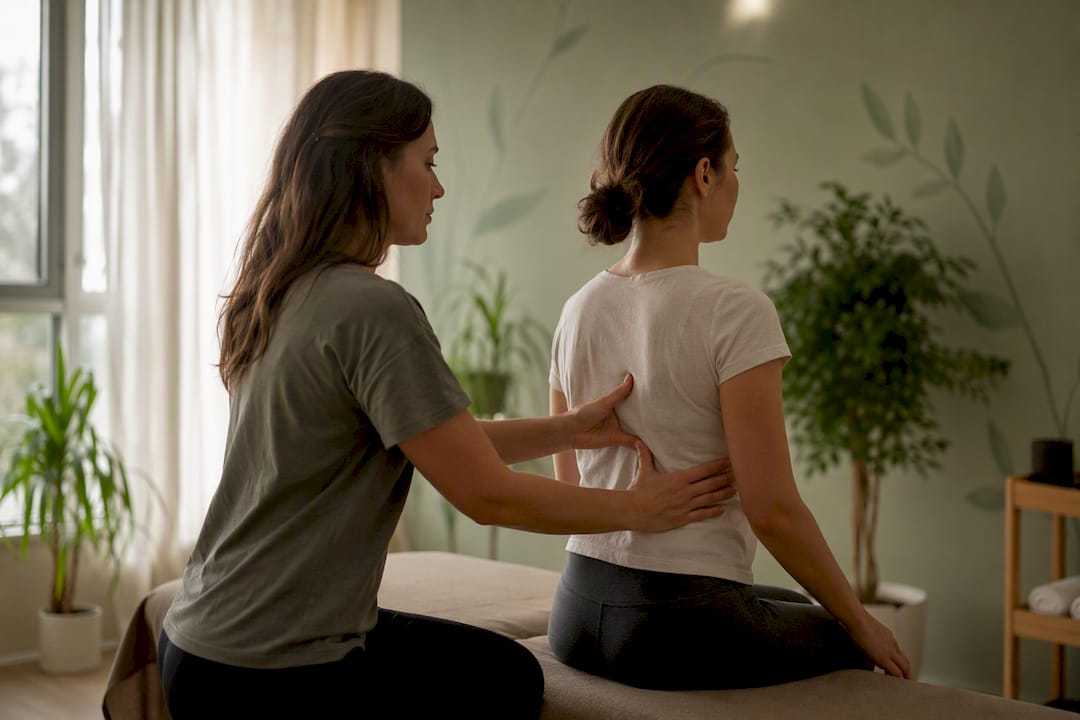
Physical therapy can meaningfully improve posture and reduce the muscle tightness that comes with it. Most patients notice looser, less guarded muscles within 3 to 5 sessions, while measurable changes to spinal alignment typically take a 6 to 8 week program. If pain or stiffness has settled in, the next right step is a postural evaluation, guided by APTA-informed testing, ideally with a practice like Contemporary Rehab Services.
TL;DR:
Muscle tightness typically improves within 3 to 5 sessions of manual therapy, but noticeable structural alignment changes usually require a 6 to 8 week program.
Posture correction involves layered approaches, including manual therapy, neuromuscular re-education, and targeted exercises for mobility, activation, and strengthening.
Home routines of 10 to 15 minutes three times a week, combined with ergonomic adjustments, are key to maintaining progress outside clinic sessions.
Posture improvements may be visible on photos before pain relief, which often lags behind, necessitating ongoing assessment beyond subjective symptoms.
Red flags such as weakness, numbness, or night pain require prompt medical evaluation and are not suited for self-managed therapy.
Table of Contents
What Happens During a Posture Correction Physical Therapy Evaluation
A posture-focused evaluation is not a quick glance at how you’re standing. Your therapist builds a full picture before touching a single muscle.
Expect the visit to move through several layers of assessment, each one narrowing down what’s actually driving your posture problem:
History intake: pain patterns, work setup, past injuries, sleep position, and activity level.
Static postural observation: how you stand and sit, checking for forward head carriage, rounded shoulders, or pelvic tilt.
Functional movement testing: watching you squat, reach overhead, or walk to see how posture holds up under motion.
Range of motion and strength testing: isolating which joints are stiff and which muscles are underperforming.
Muscle length and balance testing: identifying tight hip flexors, weak deep neck flexors, or an unstable core, added when the history points that way.
These findings, part of the standard patient/client management model that guides PT evaluations nationally, determine whether your first sessions lean toward manual therapy, neuromuscular re-education, or exercise. Bring a list of your symptoms, your typical workday, and any imaging reports. Your therapist will likely ask when the stiffness is worst and what makes it better.
Evidence-Informed Techniques Used in Postural Alignment Therapy
Correcting posture rarely comes down to one technique. Therapists layer manual work with active retraining, and the order matters as much as the methods themselves.
Manual therapy comes first when tissue is restricted. Myofascial release loosens tight fascia around the shoulders and upper back, while joint mobilization restores glide to stiff thoracic or cervical segments. Most patients feel looser within one or two sessions of manual work, though the effect fades without follow-up exercise. This is typically applied once or twice weekly early in care, per APTA guidance on interventions.

Neuromuscular re-education comes next. This retrains the nervous system to hold a corrected position automatically, rather than relying on conscious effort. Without it, patients often slip back into old patterns within days.
Therapeutic exercise rounds out the plan:
Stabilization drills that teach deep core and scapular muscles to fire correctly.
Eccentric loading to build control through a muscle’s lengthening phase.
Mobility drills that keep newly gained range of motion from tightening back up.
The clinical sequence generally runs mobility, then activation, then strength, then integration into daily tasks. Progress often stalls when strengthening is attempted before mobility is adequately restored.
Pro Tip: Ask your therapist to explain which phase you’re in. Knowing whether you’re still working on mobility or already building strength helps you understand why your home exercises change week to week.
Correct Posture Exercises Your Therapist Will Likely Prescribe
These are the exercises that show up most often in posture-focused PT plans, backed by trial data on corrective exercise protocols. Form matters more than reps here.
Thoracic extension over a foam roller. Purpose: opens up a stiff upper back. Cues: support your head with your hands, hinge at the roller, exhale as you extend. Dose: 8 to 10 reps, held 2 seconds. Progress by moving the roller lower on the spine.
Scapular retraction with a resistance band. Purpose: strengthens the muscles that pull rounded shoulders back. Cues: pull elbows to your sides, squeeze shoulder blades, avoid shrugging. Dose: 2 sets of 12. Progress with heavier band tension.
Chin tucks for deep neck flexors. Purpose: corrects forward head posture. Cues: glide your chin straight back, no tilting. Dose: 10 reps, 5 second hold. Progress by adding light resistance against your forehead.
Glute bridges. Purpose: activates glutes that compensate for a tucked pelvis. Cues: drive through heels, avoid arching your low back. Dose: 3 sets of 12. Progress to single leg bridges.
Cat cow with thoracic rotation. Purpose: restores mid back mobility. Cues: move slowly, rotate one arm toward the ceiling on the “cow” phase. Dose: 8 reps per side.
Plank variations for anti-extension core control. Purpose: builds the trunk stability that supports upright sitting. Cues: keep hips level, avoid sagging. Dose: start with 20 second holds, build up gradually.
A meta-analysis of 28 randomized trials involving 901 participants found large, consistent improvements in postural alignment from programs of this type. Stop and check in with your therapist if any exercise sharpens pain rather than easing tightness.
Turning Clinic Sessions Into a Home Program That Sticks
Progress made in the clinic can unravel fast without a home routine to reinforce it. Adherence between visits is consistently cited as the deciding factor in whether postural gains last.

A realistic weekly template looks something like two supervised PT sessions paired with three short home practice sessions of 10 to 15 minutes each. That rhythm keeps the neuromuscular retraining fresh without demanding an hour a day you don’t have.
Ergonomics deserves equal attention:
Set your monitor at eye level so you’re not craning forward.
Choose a chair seat depth that supports your thighs without pressing behind your knees.
Add lumbar support if your chair back is flat.
Hold your phone at chest height rather than tilting your neck down.
Take a 30 to 60 minute microbreak to stand, walk, or stretch.
Sitting posture tends to drive daily symptoms more than standing posture does, since most people spend more waking hours seated than upright. A desk-focused ergonomic approach often makes a bigger dent in daily pain than standing posture drills alone. For a structured way to build out your routine, this home exercise guide walks through progression logic step by step.
Pro Tip: Stack your posture resets onto habits you already do, like standing tall every time you refill your water bottle or doing chin tucks at every red light.
How Long Posture Correction Physical Therapy Actually Takes
Expect two different timelines running at once. Muscle tightness tends to ease first, often within 3 to 5 sessions, as manual therapy and early mobility work take effect. Structural change, the kind you’d measure on a postural angle assessment, generally needs the full 6 to 8 week protocol to show up.
Here’s the nuance that matters: alignment and pain don’t always move together. The same meta-analysis that found large improvements in posture angles also found inconsistent effects on pain and function. Your posture can look measurably better on a follow-up photo while your pain lags behind, or improves faster than the alignment changes would predict. Track progress with standing photos taken every two weeks, periodic range of motion checks, and your therapist’s chosen outcome measure rather than pain alone.
When Self-Management Isn’t Enough
Some posture-related discomfort responds well to stretching and awareness on its own. Other cases need a clinician’s hands and judgment.
Certain symptoms are non-negotiable red flags: new numbness or weakness in an arm or leg, progressive loss of strength, unexplained weight loss, or pain that wakes you at night and doesn’t ease with position changes. These warrant prompt medical evaluation, not a home exercise program.
Outside of those red flags, you’re a strong candidate for PT if:
Posture-related pain persists despite weeks of stretching and awareness.
Daily function is limited, like difficulty sitting through a workday or sleeping comfortably.
You need a progression tailored to your specific restrictions rather than generic advice.
Older adults, post-surgical patients, and anyone with a neurologic condition need individualized supervision and closer outcome tracking, since generic protocols carry more risk in these groups. If you’re unsure which category you fall into, these warning signs are worth reviewing before deciding.
Why Posture Breaks Down in the First Place
Poor posture rarely has a single cause. Most referrals to physical therapy trace back to a combination of sustained positions, weakness, and old injuries stacking up over time.
Prolonged sitting, especially during desk work with hips flexed and shoulders rounded for extended periods, is a common driver. Add a phone habit that tilts the neck forward for hours of scrouled screen time, and the upper back and neck take on a load they weren’t built to hold statically.
Muscle imbalance compounds the problem. Weak deep neck flexors, underactive glutes, and a core that doesn’t stabilize well let gravity win, pulling the head forward and the pelvis out of neutral. Old injuries play a role too. A previous shoulder injury, a car accident, or even a poorly healed ankle sprain can shift how weight distributes through the spine, sometimes for years afterward.
Other contributing factors include:
Occupational demands like repetitive lifting or long hours at a computer, pregnancy-related shifts in center of gravity, footwear that alters gait mechanics, and simply aging, since bone density and muscle mass changes affect spinal curvature over decades. Stress also plays an underappreciated role. Chronic tension tends to concentrate in the upper trapezius and neck, reinforcing the rounded, guarded posture that brings many patients into a clinic in the first place.
Challenges That Come Up During Posture Correction Therapy
Posture correction is rarely a straight line from bad alignment to good. Knowing the common friction points ahead of time keeps you from getting discouraged when progress feels slow.
Soreness after early sessions is the most frequent complaint. Muscles that haven’t been asked to activate correctly in years will protest when you first wake them up. This typically settles within 24 to 48 hours and is not a sign that something’s wrong, though sharp or worsening pain is different from normal muscle soreness and should be flagged to your therapist.
Plateaus happen, often around the 3 to 4 week mark, when the easy mobility gains have been made but strength hasn’t caught up yet. This is usually a sequencing issue, not a failure of the plan, and it typically resolves once the program shifts toward loading.
Inconsistent home practice is the most controllable challenge and also the most common one. Life gets busy, and posture exercises are easy to skip because the consequences aren’t immediate. Missing a few sessions here and there compounds over weeks.
Old habits reasserting themselves under stress or fatigue is normal. Neuromuscular retraining takes repetition to become automatic, and a demanding week at work can undo weeks of gains if awareness lapses.
Mismatched expectations cause frustration when patients expect pain relief to track exactly with visible postural improvement. As covered above, these two measures don’t always move in sync, and a therapist who explains that upfront prevents a lot of unnecessary discouragement partway through care.
Beyond Exercises: What Patient Education Actually Changes
Exercises fix the mechanics. Education fixes the behavior that put those mechanics out of alignment in the first place, and one without the other tends to produce short-lived results.
A good therapist teaches you to recognize your own postural triggers, the specific chair, task, or stress pattern that pulls you out of alignment, so you can intervene before pain builds. This includes understanding why your particular posture pattern developed, not just what to do about it. A patient who knows their forward head posture stems from a decade of downward phone use approaches correction differently than one who’s just handed a stretching sheet.
Self-management strategies that extend beyond the clinic include:
Body awareness cues, like noticing when your shoulders creep toward your ears during focused work.
Pain versus soreness discrimination, so you know when to push through and when to back off.
Realistic goal setting tied to function, such as sitting through a meeting comfortably, rather than an abstract idea of “perfect posture.”
Understanding that posture is dynamic. Therapists increasingly frame success as sustainable alignment during your actual daily tasks, not holding a textbook position all day.
Patients who understand the “why” behind their program tend to stick with home exercises longer, which circles back to the adherence factor that determines whether gains hold.
Do You Need a Brace or Support Device During Therapy
Postural supports have a role, but a narrow one. They’re a bridge tool, not a long-term fix, and most therapists use them sparingly and for a specific purpose.
A soft posture brace can provide helpful feedback in the early weeks, giving your body a physical cue when your shoulders round forward. The risk is dependency: muscles that get used to external support instead of building their own strength can end up weaker than before you started. Most therapists recommend limiting brace use to a few hours a day, paired with active exercise, rather than wearing it as an all-day crutch.
Lumbar rolls and seat wedges serve a more sustainable purpose, supporting the low back’s natural curve during long sitting stretches without taking over the job of your core muscles. These are often paired with the ergonomic adjustments covered earlier in a home program.
For patients whose posture issues tie into sleep position, mattress and pillow setup can matter as much as daytime habits. If nighttime spinal alignment is part of your picture, ergonomic sleep considerations are worth a look alongside your daytime routine. Older adults working on balance alongside postural control may also benefit from structured balance training, since posture and stability share overlapping muscle groups; balance-focused exercise programs are a useful adjunct in that population. Any assistive device should be reviewed by your therapist so it supports the plan rather than substituting for it.
What We’ve Learned Treating Posture Cases Every Week
Patients consistently improve faster when they stop chasing a picture-perfect standing position and instead focus on holding good alignment during the tasks that actually hurt them. We offer both in-person and virtual visits and accept Medicare, Aetna, Cigna, Emblem, and United Healthcare. For a deeper look at what realistic outcomes look like, our 2026 guide to posture alignment breaks down expectations further, and our primer on functional alignment covers the broader clinical picture.
— CRS Wellness
Ready to Start Your Postural Alignment Therapy
Reading about thoracic extensions and chin tucks only gets you so far without someone checking your form and adjusting the plan as you progress. Contemporary Rehab Services runs a full evaluation before assigning a single exercise, so your program targets what’s actually driving your posture rather than a generic checklist.
Sessions combine hands-on manual therapy, individualized exercise progressions, and telehealth follow-ups for weeks when getting to Albertson isn’t practical. We accept Medicare, Aetna, Cigna, Emblem, and United Healthcare, along with direct payment options. Visit our therapy services page to see what an initial evaluation includes, then schedule your first appointment to get a plan built around your specific posture pattern rather than a one-size-fits-all sheet of stretches.
Sources
For readers who want to go deeper into the clinical evidence behind this article, these sources cover the evaluation model, exercise protocols, and outcome data referenced throughout:
This article is general information, not a substitute for advice from a qualified doctor. Consult a qualified healthcare professional about your own circumstances before acting on anything here.
Recommended
Comments