
Craniosacral Therapy for Neck Pain: RCT Results and Clinic Steps
Craniosacral therapy can offer real, measurable relief for chronic neck pain when it’s practiced by a properly trained clinician and used alongside active rehabilitation, not instead of it. A randomized sham-controlled trial found meaningful pain reduction that held up at three months, though newer reviews caution the evidence base is thinner outside neck pain specifically. If you’re considering it, confirm your practitioner’s training and licensure, and pair CST with a progressive exercise plan rather than treating it as a standalone fix.
TL;DR:
Craniosacral therapy can reduce neck pain when combined with active rehabilitation, with evidence showing a 21 mm reduction after eight weekly sessions.
The strongest evidence comes from one high-quality randomized trial, with broader reviews indicating only modest benefits outside neck pain specifically.
CST’s proposed mechanism involves calming the nervous system to decrease muscle guarding and improve movement tolerance, not mechanical tissue repair.
A typical treatment includes light-touch techniques like frontal lift and dural traction, generally over 45-minute sessions, with improvement often noticed around four weeks.
CST is safe when properly trained practitioners are used, but should be avoided by those with recent surgeries, unstable spinal conditions, or active infections.
Table of Contents
What Is Craniosacral Therapy for Neck Pain?
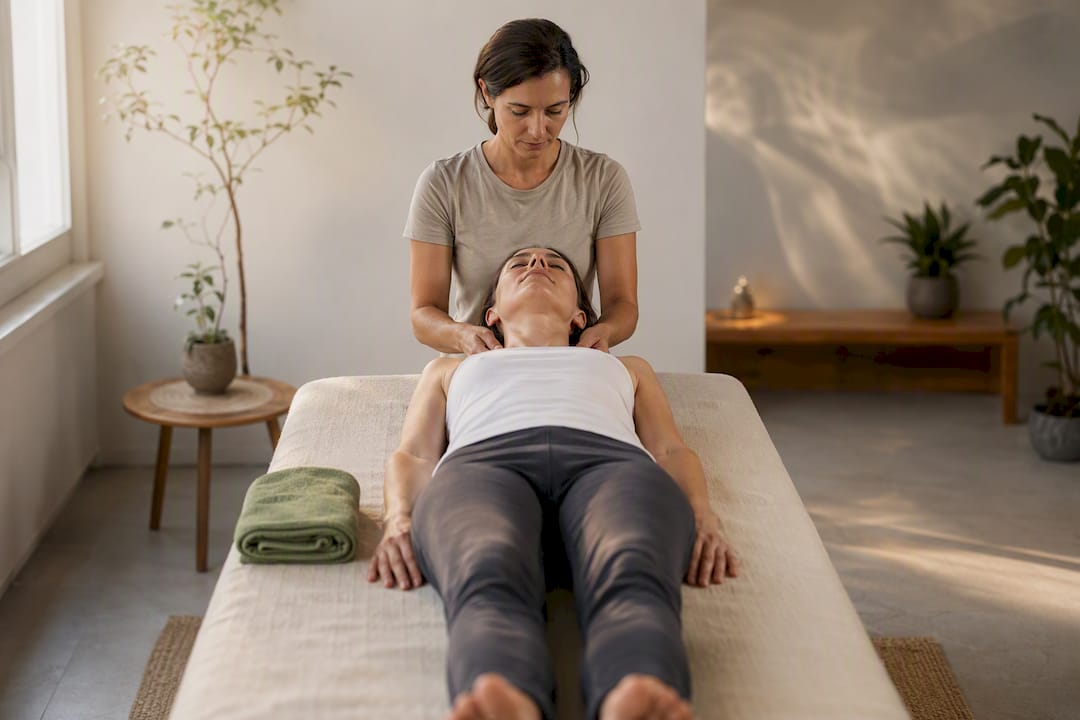
Craniosacral therapy (CST) is a light-touch, hands-on technique built around the idea that a practitioner can detect and gently influence subtle rhythms in the tissues surrounding your skull, spine, and sacrum. It’s nothing like a deep-tissue massage or a chiropractic adjustment. Where massage works muscle tissue with pressure and chiropractic care often involves quick, targeted joint thrusts, CST practitioners describe their approach as “listening” rather than pushing. Cleveland Clinic notes that the technique aims to release fascial tension and encourage relaxation, often using pressure as light as five grams, about the weight of a nickel resting on your skin.
A typical CST session draws on a handful of recognizable techniques:
Frontal lift: gentle traction applied near the forehead to ease tension patterns radiating from the head and upper neck.
Dural traction: subtle stretching along the membrane that surrounds the spinal cord, intended to relieve restriction without force.
Fascial unwinding: slow, following movements that let connective tissue “release” at its own pace rather than being stretched against resistance.
Still point induction: a pause technique where the practitioner holds a position to let the nervous system settle before continuing.
None of this involves cracking, popping, or deep pressure. That gentleness is exactly why people with acute pain, post-surgical sensitivity, or fear of manipulation often gravitate toward it. It’s also why some skeptics question whether such a light touch can do anything measurable, which brings up the actual research.
How Strong Is the Evidence for CST and Chronic Neck Pain?
The best single piece of evidence comes from a randomized, sham-controlled trial by Haller and colleagues, published in the Clinical Journal of Pain. Patients with chronic neck pain received eight weekly CST sessions, with outcomes tracked against a credible sham treatment so participants couldn’t easily tell which group they were in.
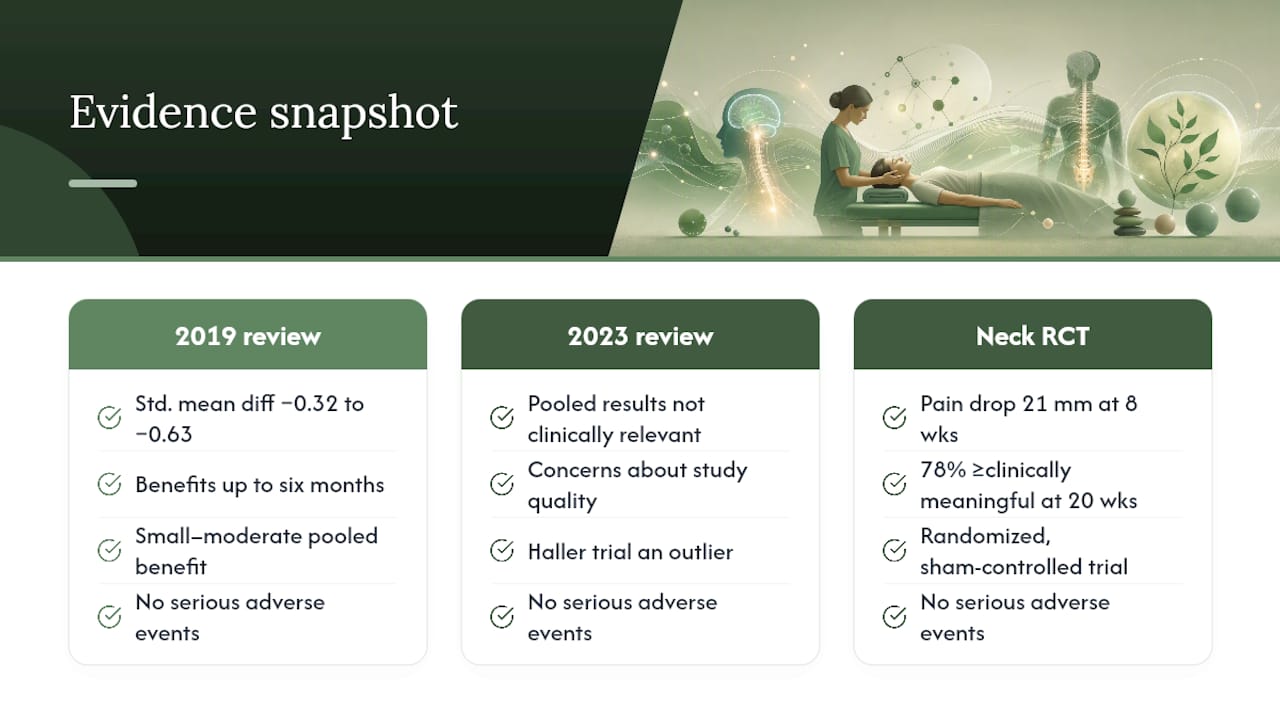
By the Numbers: Patients receiving real CST saw pain intensity drop by 21 mm on a 100 mm scale at eight weeks, a change large enough to count as clinically meaningful, not just statistically detectable. By week 20, 78% of the CST group had reached that clinically meaningful threshold, and the benefit had only faded slightly, down to a 16.8 mm improvement. No serious adverse events occurred in either arm.
That trial’s Clinicaltrials under NCT01526447, confirming the randomized, blinded design that gives its results credibility.
Zoom out to the broader pain literature and the picture gets more nuanced. A 2019 systematic review and meta-analysis pooled CST trials across several chronic pain conditions and found small-to-medium effects on pain intensity and disability, with standardized mean differences ranging from about −0.32 to −0.63 depending on which comparison group was used. Some of those benefits persisted for up to six months. The same review’s sensitivity analysis found something worth noting for anyone with neck-specific pain: CST’s effects tended to be larger in neck pain studies than in trials involving fibromyalgia or migraine.
Then comes the more skeptical read. A 2023 systematic review and meta-analysis examined CST across musculoskeletal conditions broadly and concluded that pooled results did not show clinically relevant benefits for most of them. The authors were candid that Haller’s neck pain trial stood out as the one study in their pool that did report clinically meaningful improvement, while flagging concerns about study quality and biological plausibility across the field.
So where does that leave you? The strongest, most specific evidence for CST helping chronic neck pain is one well-designed RCT with a real effect size and a durable follow-up. Broader reviews are split: one finds moderate pooled benefit across pain conditions, the newer one finds the overall evidence thin outside that neck-pain trial. Both agree on one thing worth remembering: none of these trials reported serious adverse events. That safety profile is consistent even where the pain-relief conclusions diverge.
How Might Craniosacral Therapy Actually Reduce Pain?
Nobody has fully proven the mechanism behind CST, and it’s worth being upfront about that. The most credible working theory involves the nervous system rather than the tissue itself. Researchers behind the 2019 meta-analysis suggest CST’s gentle, sustained touch may downshift sympathetic overactivity, the fight-or-flight branch of your nervous system that tends to stay switched on in chronic pain states.
When that overactivity eases, several things can happen at once. Muscle guarding around the neck, the involuntary tightening that happens when tissue is irritated or when you’re bracing against expected pain, may decrease. Pressure pain thresholds, a measurable marker researchers use to gauge sensitivity, often shift favorably in trial settings. And patients frequently report a subjective sense of calm during and after sessions that seems to track with reduced hypervigilance around movement.
Here’s the practical link: a nervous system that isn’t constantly bracing tends to tolerate movement better. That matters because chronic neck pain often becomes self-reinforcing. Pain triggers guarding, guarding limits range of motion, limited range of motion feeds stiffness, and stiffness feeds more pain. If CST can interrupt that loop even modestly, it opens a window for the kind of active exercise that actually rebuilds strength and mobility.
None of this counts as proven physiology. It’s a coherent, testable hypothesis connected to real outcome measures like pain on movement and pressure pain thresholds, the same metrics used in the trials above. Think of CST’s proposed mechanism less like a fixed mechanical repair and more like calming a car alarm that’s been going off too long, so you can actually hear what’s wrong underneath it.
What Happens During a CST Session and Treatment Course?
A CST session typically runs about 45 minutes, matching the protocol used in the Haller trial. Here’s the general flow:
Initial assessment. Your practitioner reviews your neck pain history, current symptoms, and any red flags before touching you.
Positioning. You lie fully clothed, usually on your back, in a quiet, comfortable setting.
Light-touch palpation. The practitioner rests their hands lightly on your head, neck, or sacrum, feeling for subtle tissue patterns rather than applying pressure.
Technique application. Depending on what they find, they may use frontal lift, dural traction, fascial unwinding, or a still point hold.
Check-ins. Good practitioners ask how you’re feeling throughout, since CST relies on your feedback, not force, to guide the session.
Wind-down. Sessions end gradually, often with a few minutes of quiet before you’re asked to sit up.
The RCT protocol used eight weekly 45-minute sessions, and that’s a reasonable benchmark if you’re wondering how many visits to expect. In practice, some clinics adjust frequency based on how you respond, front-loading sessions early and spacing them out as symptoms ease. Clinicians typically track progress using tools like the Visual Analog Scale (VAS) for pain intensity and the Neck Disability Index (NDI) for functional limitation, the same measures used in published trials, so your progress can be compared against something concrete rather than a vague “feeling better.”
Most patients in the trial data started noticing change by the four-week mark, with the more durable improvement showing up around week eight and holding through the three-month follow-up.
Pro Tip: After a session, sit up slowly rather than jumping off the table. Some patients feel briefly light-headed as their nervous system resets, and a glass of water afterward tends to help more than people expect.
Is Craniosacral Therapy Safe for Neck Pain?
The safety record across the major trials is reassuring: no serious adverse events were reported in the Haller RCT or in the pooled data from the 2019 meta-analysis. Mild, temporary reactions do happen occasionally, things like brief light-headedness, a short-lived increase in emotional sensitivity, or a temporary change in symptoms as tissue responds to touch. These typically resolve within a day.
That said, gentle doesn’t mean appropriate for everyone. You should get medical clearance before trying CST if you have any of the following:
Recent head, neck, or spinal surgery
A diagnosed unstable spinal condition, such as significant instability or an undiagnosed fracture
A known vascular disorder, including aneurysm or clotting concerns
An active infection near the head or spine
Increased intracranial pressure or a recent traumatic brain injury
Before booking, it’s worth confirming a few basics about whoever is treating you: their specific CST training program and hours completed, whether they hold an underlying license (physical therapist, osteopathic physician, massage therapist, or similar), and whether they have direct experience working with spinal conditions rather than general wellness clients. Licensure and training standards vary by state and by practitioner background, so it’s a reasonable question to ask outright before your first visit.
Combining CST With Physical Therapy for Better Results
CST works best as one part of a larger plan, not a replacement for active rehabilitation. Chronic neck pain usually involves some combination of restricted motion, weakened stabilizing muscles, and a nervous system that’s grown overly protective of movement. CST can address that last piece; it doesn’t rebuild strength or restore range of motion on its own.
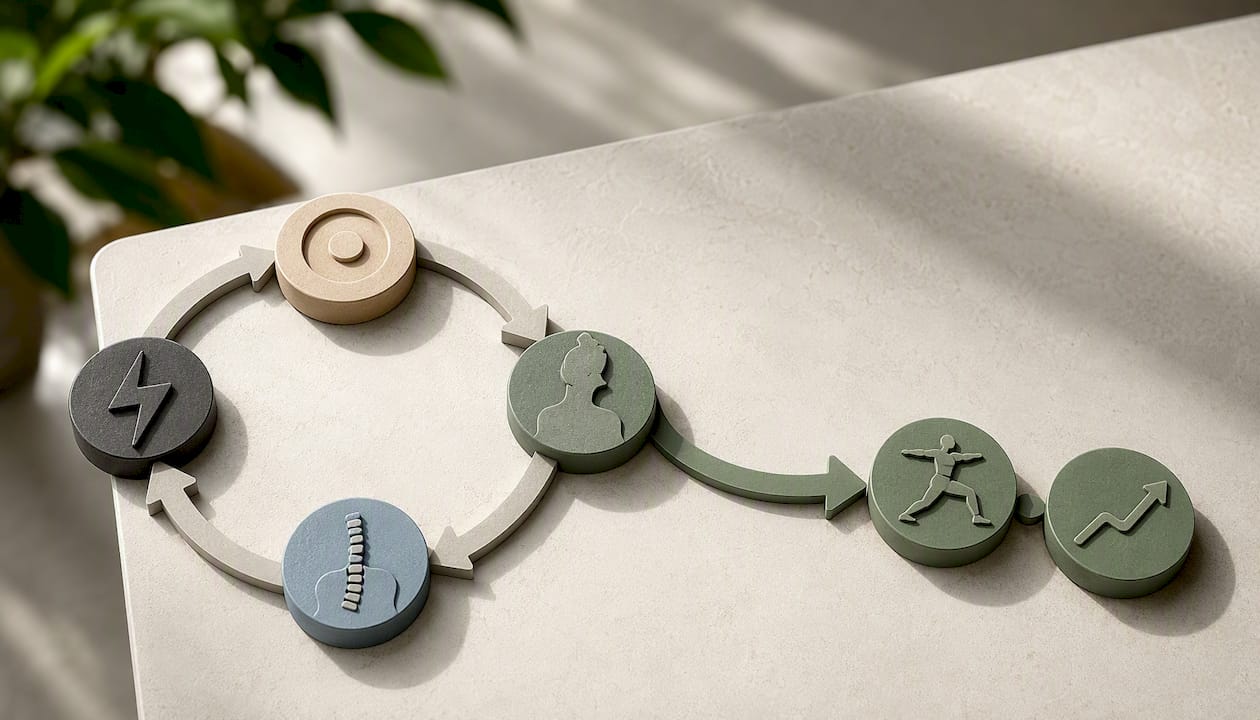
A practical care pathway looks something like this:
Assessment first. A clinician evaluates pain patterns, movement restrictions, and how much guarding or fear-avoidance is limiting your progress.
CST when arousal is high. If your nervous system is too reactive for active exercise to be tolerable, sessions of craniosacral therapy can lower that baseline sensitivity first.
Progressive exercise second. Once tolerance improves, the plan shifts toward graded strengthening and mobility work, the piece that produces lasting functional change.
Reassessment throughout. Progress gets tracked against the same kinds of measures used in research, pain scores and functional indices, so the plan adjusts based on data, not guesswork.
This mirrors how physical and craniosacral therapy are often combined in integrated rehab settings: CST calms the system down enough that active work like neuromuscular re-education becomes tolerable and productive. Approaches like reactive neuromuscular training fit naturally into that second phase, once a patient can move without bracing against every rep.
Pro Tip: If you’re billing through insurance, ask your clinic to document the functional goals CST is supporting, like tolerating a specific exercise progression, since that framing matters for medical necessity documentation.
Getting CST-Informed Physical Therapy at CRS Wellness
Some clinics treat chronic neck pain through an integrated model that combines manual therapy, including craniosacral technique, with the active rehabilitation research consistently points to for lasting change. Sessions may cover myofascial therapy, joint mobilization, neuromuscular re-education, and individualized exercise progression, delivered in person or virtually, and billed through various insurance plans or direct payment.
Your first visit typically involves a review of your pain history, any prior imaging or diagnoses, and a conversation about your functional goals, whether that’s sitting through a full workday without stiffness or getting back to a specific sport. Bringing a list of what’s already been tried, medications, past PT, or other manual therapies, helps your clinician build a plan that doesn’t repeat what hasn’t worked.
An Editorial Take: When CST Actually Makes Sense
CST earns its place as an adjunct, not a first-line cure: reach for it when conservative care has plateaued, or when pain sensitivity is too high for active rehab to feel tolerable. If you’re not seeing movement toward that goal by then, it’s time to lean harder into active exercise or reassess the plan with your clinician.
— CRS Wellness
Book a Craniosacral-Informed PT Visit at CRS Wellness
Most people trying to sort out chronic neck pain end up choosing between a hands-off approach (waiting it out, over-the-counter medication) or committing to hands-on care that actually addresses the guarding and restriction driving the pain. Some providers offer craniosacral therapy alongside active rehab, so the two approaches build on each other instead of happening in separate, disconnected appointments.
Booking starts with a call or online request through your nearest location. The clinic accepts Medicare, Aetna, Cigna, Emblem, and United Healthcare, plus direct payment, and both in-person and virtual visits are available depending on your needs. Your first session covers a full history, a functional assessment, and a discussion of realistic goals before any hands-on work begins. If you’re near Nassau County or Queens, you can check appointment availability at the Albertson or Great Neck Plaza locations, or review the full range of manual and rehabilitative therapies on the services overview page before you book.
This article is general information, not a substitute for advice from a qualified doctor. Consult a qualified healthcare professional about your own circumstances before acting on anything here.
Sources
FAQ
What Is the Most Effective Treatment for Chronic Neck Pain?
There isn’t one single most effective treatment; the strongest outcomes generally come from combining active exercise and manual therapy, with craniosacral therapy showing clinically meaningful results as an adjunct in at least one well-designed randomized trial.
Who Should Not Do Craniosacral Therapy?
People with recent head or spinal surgery, unstable spinal pathology, vascular disorders like aneurysm, active infection, or recent traumatic brain injury should get medical clearance before trying CST, and Cleveland Clinic recommends confirming practitioner training regardless.
What Type of Massage Is Most Effective for Neck Pain?
CST isn’t technically massage, since it uses extremely light touch rather than muscle-working pressure, but for readers comparing manual therapies, myofascial-focused techniques that target connective tissue tend to pair well with the kind of neuromuscular re-education used at clinics like Contemporaryrehabservices.
Is Craniosacral Therapy the Same as Chiropractic Care?
No. Chiropractic care generally uses targeted force and joint manipulation, while CST relies on sustained, extremely light contact, often compared to the weight of a nickel, aimed at fascial release rather than joint adjustment.
How Many CST Sessions Does It Take to Notice Improvement for Neck Pain?
Trial data suggests noticeable change by around four weeks, with clinically meaningful improvement typically building through eight weekly sessions and holding at a three-month follow-up in the Haller RCT.
Recommended
Comments