
Physical Therapy Sessions: 30–60 Minutes, and Why Visits Vary

Most physical therapy sessions typically last between half an hour to an hour, with many clinics booking follow-up appointments in that time range according to common clinic practice. Your first visit will likely take longer, usually about one hour or more, since it includes a full history and physical examination. From there, your actual time in the clinic depends on your condition, the treatment you need, and how your therapist structures your plan of care.
TL;DR:
Initial evaluations commonly take 60 to 90 minutes, telehealth appointments often last 20 to 30 minutes, and complex manual therapy can reach 90 minutes.
Visit frequency often starts at two to three times weekly, then declines as patients improve and manage more exercises independently at home.
Insurers bill from documented skilled treatment time, not scheduled length; Medicare uses timed units, and 8 minutes can qualify for one unit.
Track home exercises and report missed sessions honestly, since your therapist can adjust the plan and space visits according to your actual progress.
Table of Contents
What Happens During a PT Session
Every minute of a physical therapy appointment serves a purpose, even when it does not feel that way. On your first visit, your therapist gathers your medical history, tests your strength, range of motion, and movement patterns, and builds a plan of care around what you need. That groundwork takes time, which is why initial evaluations tend to run longer than any visit after it.
Follow-up sessions move faster but still pack in several steps:
Hands-on treatment such as manual therapy, joint mobilization, or soft tissue work
Supervised therapeutic exercise with your therapist watching your form
A quick reassessment to see how you responded to the last session
Updates to your home exercise program based on your progress
Your therapist also spends part of each visit on documentation, charting your progress and tracking your response to treatment. That paperwork is not wasted time. It protects the continuity of your care and supports the billing that keeps your sessions covered.
Typical Session Length Ranges, Including First Visits and Telehealth
Session length varies by setting and purpose, but a few patterns hold across most outpatient clinics.
Standard outpatient visits: typically 30 to 60 minutes, with many practices booking 45 to 60 minute slots as their default
Initial evaluations: commonly 60 to 90 minutes to cover history, testing, and goal setting according to APTA guidance
Telehealth check-ins: often shorter, around 20 to 30 minutes, since they usually focus on exercise review and progress checks rather than hands-on work
Complex manual therapy sessions: can stretch to 90 minutes when conditions like craniosacral work, visceral therapy, or multi-region treatment require extra time
A systematic review of PT trial dosing found session durations in research studies ranged from 15 to 105 minutes, which reflects how much clinical goals drive timing rather than a single fixed standard. That range is a useful reminder that your own sessions might not match a friend’s, even if you have a similar diagnosis. A sprained ankle recheck looks nothing like a post-surgical knee session, and your schedule should reflect that difference.
Factors That Change Your Session Length
A few variables consistently push sessions longer or shorter, and knowing them helps you predict what your own appointments will look like.
Clinical complexity: post-surgical recovery, neurological conditions, or injuries affecting multiple body regions usually need more time per visit
Treatment type: manual therapy, modalities like heat or electrical stimulation, and aquatic therapy all add setup and hands-on time that exercise alone does not
Patient factors: age, mobility limitations, and whether a caregiver needs instruction can extend a visit
Clinic workflow: some practices block extra minutes for documentation or equipment setup, which shapes how appointments are scheduled even before you walk in
Pro Tip: If your visits feel rushed, ask your therapist how much of your scheduled time is spent on hands-on treatment versus exercise supervision. A clear answer tells you whether the length fits your actual needs.
How Often You’ll Go and How Long Treatment Usually Lasts
Most patients attend physical therapy one to three times per week, with two to three visits common during active rehabilitation phases. Your frequency should drop as you improve and take on more of your program independently.
Early phase: often two to three visits weekly while your therapist monitors your response closely
Improvement phase: frequency typically tapers as you build independence with home exercises
Episode length: many chronic spinal pain programs show measurable improvement within about 8 to 12 weeks of active therapy, though your therapist should extend or shorten that window based on your actual progress rather than a fixed calendar
Your home exercise consistency matters here too. A therapist who sees steady progress between visits may space out your sessions, while slower progress might mean closer monitoring for a stretch. Evidence summaries on chronic pain treatment emphasize active, tailored programs over passive treatments, which is part of why your home program carries real weight between appointments. For more on how a plan of care is structured, our treatment planning guide walks through what to expect.
Insurance and Billing Rules That Shape Your Schedule

Part of why clinics schedule the appointment lengths they do comes down to how insurance pays for therapy. Medicare and many private insurers use 15-minute timed units for certain treatment codes, and CMS billing guidance sets 8 minutes as the minimum time needed to bill a single unit.
A visit’s billed units come from your total skilled treatment minutes, not a flat per-session fee, according to CMS billing scenarios. That means a 45-minute visit with 40 minutes of documented skilled time bills differently than one with only 25 minutes of direct treatment, even if both appointments were scheduled for the same slot.
Therapists document total treatment minutes to support each billed unit
Clinics build scheduling around both skilled treatment time and necessary paperwork
Patients can ask their clinic how scheduled appointment time maps to billed skilled minutes
Asking that question upfront helps you understand what your insurance is actually paying for and why your appointment length looks the way it does.
How to Prepare for and Maximize Your PT Session
A little preparation turns a scheduled appointment into real progress, especially when your supervised time is limited.
Bring your records and medication list so your therapist has the full picture from the start.
Wear clothing you can move in since testing and exercise both require a real range of motion.
List your top questions before you arrive so you do not lose track of them once treatment starts.
Report your home exercise adherence honestly, even when it was inconsistent, so your plan reflects reality.
Ask for a session agenda at the start so you know what the visit will cover.
Pro Tip: Logging your home exercises, even briefly, gives your therapist real data to adjust your plan and often means fewer supervised visits are needed over time.
Our guide to maximizing PT sessions and our recovery checklists both offer practical ways to get more out of fewer minutes with your therapist.
CRS Wellness: How We Structure and Schedule Sessions
We offer in-person and telehealth physical therapy alongside craniosacral therapy, myofascial therapy, joint mobilization, neural mobilization, visceral therapy, and neuromuscular re-education. We accept Medicare, Aetna, Cigna, Emblem, and United Healthcare, along with direct cash payment.
Our initial evaluations run long enough to cover a complete history, hands-on testing, and a personalized plan of care, because we believe that groundwork shapes everything that follows. We work one-on-one with each patient rather than rotating between multiple people in an hour. That boutique structure lets us set session length around your actual needs instead of a generic clinic template.

Clinician Perspective: Why Session Length Should Fit the Patient, Not the Clock
Session length should follow clinical judgment, not a fixed template. What a patient needs, documented goals, and safety come first, and a good therapist adjusts time accordingly. If your appointment feels rushed or oddly long, asking your therapist how that time serves your recovery is a fair and useful question.
— CRS Wellness
Book With CRS Wellness: What to Expect at Your First Visit
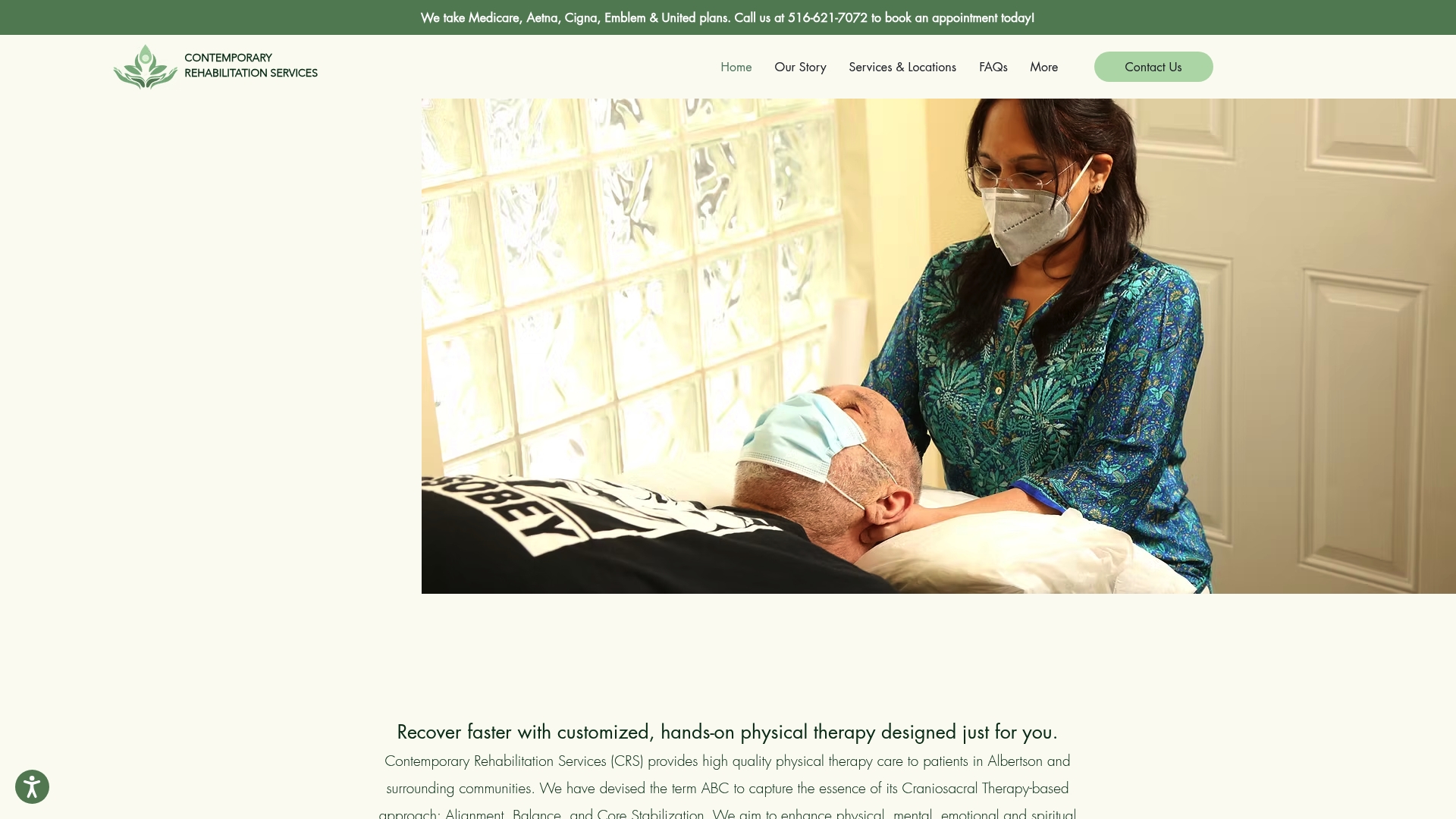
Clear session lengths matter less than whether that time actually moves your recovery forward, and that is where personalized, one-on-one care makes a real difference. When you book an initial evaluation with CRS Wellness, you get a full history review, hands-on testing, and a plan of care built around your goals rather than a generic protocol.
Before your first visit, it helps to come prepared:
Bring your medical records and a current medication list
Wear clothing that allows a full range of movement
Have your insurance information ready, including Medicare, Aetna, Cigna, Emblem, or United Healthcare
Ask about telehealth scheduling if an in-person visit is not convenient
You can also browse our full list of manual therapy services or check in-person scheduling at our Searingtown location to find a time that works for you. For patients managing chronic pain alongside other conditions, complementary approaches like TMS therapy are worth discussing with your broader care team as part of a fuller recovery picture.
FAQ
How long does physical therapy take for lower back pain?
Many chronic spinal pain programs show measurable improvement within 8 to 12 weeks of active therapy, though your therapist may extend or shorten that window based on your progress. Individual sessions for back pain typically run 30 to 60 minutes, with the first visit often longer for a full evaluation.
Is PT harder than nursing?
Physical therapy and nursing both demand distinct physical, academic, and emotional skills, and neither is universally harder than the other. The better comparison is fit: PT emphasizes movement science and hands-on rehabilitation, while nursing covers broader acute medical care.
What not to say to a physical therapist?
Avoid downplaying your pain or skipping details about missed home exercises, since inaccurate information can shape a plan that does not match your real progress. Honest, specific feedback about what helps and what does not gives your therapist the information needed to adjust your sessions effectively.
Can you finish PT school in 2 years?
Doctor of Physical Therapy programs in the United States typically require three years of full-time study after a bachelor’s degree, so a two-year timeline is not standard. Program length can vary by school, so checking directly with an accredited program is the most reliable way to confirm.
Sources
Recommended
Comments