
Tennis Elbow Physical Therapy: Why Exercise Beats Passive Care

Yes, physical therapy centered on progressive exercise is a first-line, evidence-based approach for tennis elbow, and it’s the right next step if gripping, lifting, or typing has become painful. Most people improve within a few months of consistent, guided loading. A physical therapist can assess your whole arm, not just the sore spot, and build a plan that matches your pain and your goals.
TL;DR:
A review of 30 trials involving 2,123 participants found exercise based care modestly outperforms passive treatment, while injections and braces may ease symptoms briefly.
Mild cases often improve within 6 to 12 weeks, but persistent symptoms can last 3 to 18 months; supervised programs support better adherence than home exercise alone.
Begin with mobility and wrist extension holds lasting 45 seconds, repeated three times; then progress to three sets of 10 to 15 slow eccentric repetitions.
Mild exercise discomfort is acceptable if it settles within 24 hours; sharp pain, swelling, or pain that persists the next day means reducing the load.
For Medicare patients, combined physical therapy and speech therapy services reach a $2,480 threshold in 2026; care beyond it requires a KX modifier documenting medical necessity.
Table of Contents
What tennis elbow is and why physical therapy helps
Tennis elbow, known clinically as lateral elbow tendinopathy, is irritation and breakdown of the tendon fibers where your wrist extensor muscles attach near the outside of your elbow. You’ll typically notice pain when gripping objects, shaking hands, or extending your wrist against resistance, sometimes radiating down the forearm.

It’s common: annual incidence runs around 1% to 3% of the population, and most cases resolve without surgery. Physical therapy works because tendons respond to load. Controlled, progressive stress encourages the tissue to remodel and strengthen rather than stay inflamed and fragile. Many therapists also assess the shoulder, scapula, and neural mobility, since weakness or stiffness upstream can force the elbow tendon to absorb more strain than it should.
Recovery timelines vary:
Mild cases often improve within 6 to 12 weeks of consistent exercise.
More stubborn cases can take 3 to 18 months, with adherence to the exercise plan being the biggest factor in outcome.
What research and guidelines say about PT and exercise for tennis elbow
Clinical guidance consistently points toward exercise and away from passive treatment alone. A guideline summary for managing lateral elbow tendinopathy recommends offering physiotherapy as a strong recommendation, with exercise and individualized care at the center of treatment.
One of the most comprehensive looks at the evidence, a review of 30 randomized trials covering 2,123 participants, found that exercise-based interventions outperform passive treatments, though the effect sizes are modest rather than dramatic.
Eccentric loading, where the muscle lengthens under tension, shows measurable benefit for pain and strength in meta-analyses of eccentric-exercise trials, though exact dosing still varies across studies.
Supervised programs tend to show better adherence than home programs done entirely alone.
Short-term relief from injections or bracing can be real, but long-term outcomes tend to favor exercise-based rehabilitation.
What physical therapists do for tennis elbow
A thorough assessment shapes everything that follows. Your physical therapist will typically look well beyond the sore spot on your elbow.
Grip and forearm strength testing to measure how much load your tendon currently tolerates.
Shoulder and scapular mobility checks, since poor control higher up the chain often shifts stress onto the elbow.
Neural mobility screening, because nerve tension in the neck or arm can mimic or worsen tendon pain.
Functional movement review, watching how you grip, lift, or type to spot the habits aggravating your tendon.
From there, treatment usually blends several approaches: manual therapy and targeted joint mobilizations to improve movement quality, a supervised loading program that progresses week by week, and adjuncts like a counterforce strap or brief use of icing methods for tennis elbow or NSAIDs for symptom control. Evidence for these adjuncts is modest at best, so they tend to support the loading program rather than replace it. Many clinics now also offer telehealth check-ins between in-person visits, which keeps your program on track without requiring a trip to the office every week. Most insurance plans, including Medicare, cover physical therapy for tennis elbow when medical necessity is documented.
Practical exercise program: mobility, isometrics, and eccentric loading
A well-built home program follows a sequence: calm the tendon down, then build it back up.
Start with gentle mobility. Wrist flexion and extension stretches, held for 20 to 30 seconds, loosen the forearm before loading work.
Add isometric holds for pain control. Press your wrist into extension against a table or your other hand and hold for 45 seconds, repeated three times, several times a day. Isometrics are especially useful in the first one to two weeks when the tendon is most irritable.
Progress to eccentric wrist extensor work. Begin assisted (using your opposite hand to help lift, then lowering slowly against resistance), then move to a light resistance band, and eventually a light dumbbell. Three sets of 10 to 15 slow, controlled lowering reps, a few times a week, is a reasonable starting point.
Round out the program. Pronation and supination exercises, grip strengthening with a soft ball or hand gripper, and shoulder or scapular strengthening (rows, external rotation) address the rest of the kinetic chain.
Progress load gradually, increasing resistance or reps only once the current level feels manageable, not painful, for several consecutive sessions.
Pro Tip: Keep a simple log of your reps, resistance, and next-day soreness. It makes it easy to see when you’re ready to progress and when you need to hold steady.
Progression rules and when to get help
Pain during exercise isn’t automatically a problem. A general rule many therapists use: mild discomfort during exercise that settles within 24 hours is acceptable, but sharp pain, swelling, or pain that lingers into the next day means you should back off the load.
A typical progression might look like this over 4 to 8 weeks: isometrics and mobility in weeks 1 to 2, light eccentric loading in weeks 2 to 4, and heavier band or dumbbell work from week 4 onward, provided symptoms stay controlled. Supervised programs tend to show better adherence and outcomes than unsupervised ones, which is one reason check-ins with a therapist matter even when you’re doing most of the work at home.
Watch for red flags that warrant a prompt evaluation:
Increasing weakness or numbness in the hand or forearm
Severe pain at night that disrupts sleep
Rapidly worsening function despite rest
Returning to sport or heavy work too soon is one of the most common reasons tennis elbow recurs, so a staged return plan matters as much as the exercises themselves.
What a PT course looks like and Medicare coverage practicals
A typical course of care runs 6 to 12 weeks, often starting with one to two visits a week and tapering as you gain strength and confidence. Your first session usually includes the assessment described earlier, a review of your daily activities, and your first set of exercises to start immediately.
In-person visits are valuable early on for hands-on manual therapy and precise exercise coaching.
Telehealth sessions work well for progress checks, form review, and adjusting your home program once you’re past the initial phase.
For Medicare patients, the CY 2026 threshold for combined PT and speech-language services is $2,480; care above that amount requires a KX modifier documenting medical necessity, which your therapist handles as part of your plan of care.
Bring a list of your symptoms, aggravating activities, and any prior imaging or injections to your first visit to help your therapist build an accurate plan.
A clinic-informed 6 to 12 week plan
A well-structured plan typically unfolds in three phases, and we’ve outlined a full exercise-first tennis elbow program for readers who want the complete week-by-week detail.
Weeks 0 to 2: Pain control and mobility work, including isometric holds and gentle wrist mobilizations.
Weeks 3 to 6: Progressive loading begins, introducing eccentric wrist extensor exercises and light resistance.
Weeks 6 to 12: Capacity building and return-to-activity planning, with heavier loads and task-specific practice for work or sport.
Clinicians commonly combine this exercise progression with manual therapy, neuromuscular re-education to restore proper movement patterns, and telehealth check-ins between visits to keep the program on track without requiring every session in person.
A clinician’s perspective on realistic recovery
Tennis elbow rarely responds to a quick fix, and we think that’s the hardest part for most patients to accept. The tendon needs time and consistent load to rebuild capacity, not a single treatment that makes the pain disappear overnight. Patience and adherence to a graded exercise plan matter more than any individual technique. The goal isn’t just less pain today. It’s an arm that can handle your daily demands without flaring up again next month.
— CRS Wellness
How we can help you recover from tennis elbow
If you’re ready to move from home exercises to a guided plan, we offer in-person and telehealth physical therapy sessions built around your specific tendon irritability, strength deficits, and goals. Our sessions often combine supervised loading progressions with manual approaches like myofascial therapy, joint mobilization, and neuromuscular re-education, drawing on our full range of manual therapy services when your assessment calls for them.
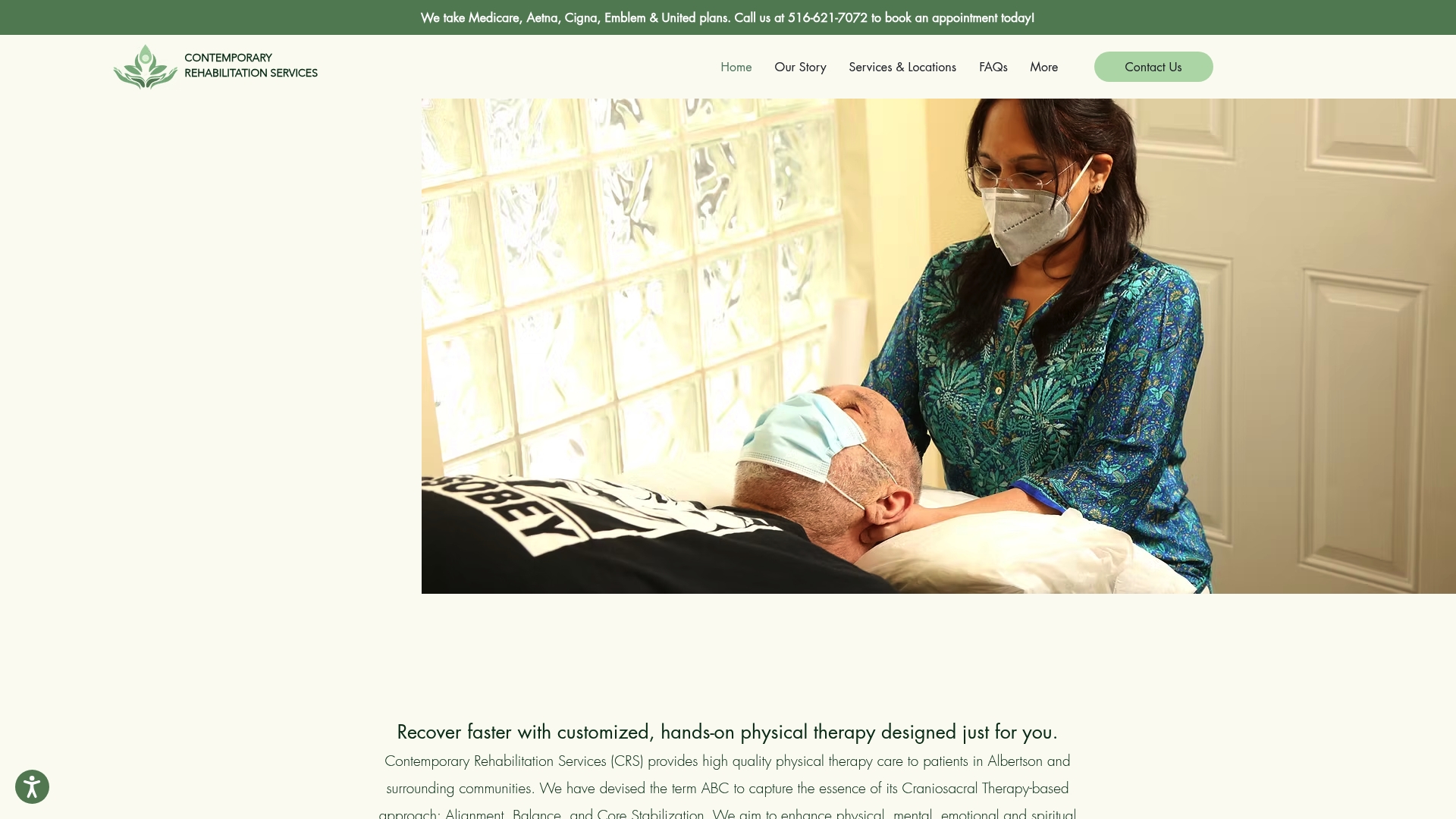
We accept various insurance plans and cash payment, so coverage questions shouldn’t stand between you and starting care.
One-on-one physical therapy sessions, in-person or via telehealth
Manual therapy options including craniosacral therapy and myofascial work
Individualized rehab programs that progress with your tendon’s tolerance
Bring your symptom history and any prior treatment details to your first visit, and reach out through our website to find a time that works for you.
This article is general information, not a substitute for advice from a qualified doctor. Consult a qualified healthcare professional about your own circumstances before acting on anything here.
FAQ
What is tennis elbow physiotherapy?
Tennis elbow physiotherapy is a structured program of progressive exercises, manual therapy, and activity guidance aimed at helping the wrist extensor tendon tolerate load again. It typically includes an assessment of your grip strength, shoulder mobility, and movement habits, followed by a phased plan that moves from pain control to strengthening.
Can you get tennis and golfer’s elbow at the same time?
Yes, it’s possible to have both lateral elbow tendinopathy (tennis elbow) and medial elbow tendinopathy (golfer’s elbow) at the same time, since they affect opposite sides of the same joint. A physical therapist can assess both tendons and build a single program that addresses each without overloading the elbow overall.
Can I do gym with a tennis elbow?
You can often continue gym training with tennis elbow if you modify grip-heavy or wrist-loading exercises that reproduce your pain. Working with a physical therapist helps you identify which movements to scale back and which ones support your recovery instead of aggravating it.
Does squeezing a ball help tennis elbow?
Gentle grip strengthening, including ball squeezes, can be part of a broader tennis elbow program, but it works best alongside wrist extensor loading rather than as a standalone fix. A physical therapist can help you dose grip work appropriately based on your current pain and strength levels.
Sources
Recommended
Comments