
Tension Headache Physical Therapy: What Helps and What to Expect

If your headaches feel like a tight band around your head and come with a stiff neck and sore shoulders, physical therapy is a reasonable next step. A physical therapist looks at the muscles and joints of your neck, jaw and upper back, treats the tight spots with hands-on techniques, and gives you exercises that keep the headaches from coming back. At Contemporary Rehab Services in Albertson, we see patients from Nassau County and Queens for exactly this kind of neck-driven headache, in person or by telehealth.
TL;DR
The 2023 VA/DoD headache guideline suggests physical therapy for managing tension-type headache, along with aerobic exercise or strength training for prevention.
Hands-on work on trigger points (tender knots in a muscle) and the muscles at the base of the skull has been studied for tension headaches and linked to fewer, shorter and less intense attacks.
A gentle suboccipital release at home can ease a tight neck, but severe, sudden or unusual headaches need a doctor first.
A first visit sorts out whether your headache really is tension-type and which neck, jaw or posture factors feed it.
We accept Medicare, Aetna, Cigna, Emblem and United Healthcare, and we also take cash payments.
Table of Contents
What a tension headache is, and why the neck matters
A tension-type headache is the most common kind of headache. It usually feels like steady, dull pressure on both sides of the head, not a pulsing or throbbing pain. Many people also feel it in the forehead, temples, or the back of the head where the skull meets the neck.
The VA/DoD guideline gives a precise definition for a “definite” tension-type headache. It requires at least 10 headaches lasting from 30 minutes to 7 days. It also requires at least two of these features: pain on both sides, a pressing rather than pulsing quality, mild to moderate intensity, and no worsening with routine activity like climbing stairs. There should be no nausea or vomiting, and no more than one of light sensitivity or sound sensitivity.
You do not need to count your headaches to benefit from a visit. The point is that these headaches often travel with muscle tightness in the neck, jaw and shoulders, and those are the tissues a physical therapist can assess and treat. A headache that pulses, comes with vomiting, or follows a different pattern may be something else, and your therapist will tell you so and point you to your doctor.
What the evidence says about physical therapy for tension headaches
The VA/DoD guideline, revised in 2023, suggests physical therapy for the management of tension-type, migraine or cervicogenic headache. The same guideline defines physical therapy broadly: manual therapy, therapeutic exercise, strength and endurance training, self-management training and supporting modalities, delivered by a licensed physical therapist. That is a good picture of what a visit looks like: hands-on care and a plan you carry out yourself.
The guideline’s review of the research found that thermal methods, trigger point massage, and mobilization or manipulation delivered by a physical therapist reduced headache frequency and intensity compared with sham treatment or medication. It also notes that supervised physical therapy is generally considered safe, with benefits outweighing the likelihood of side effects.
A 2023 systematic review of 15 randomized trials found that no single physical therapy protocol has been standardized for tension headache. Still, every technique studied focused on the cranio-cervical-mandibular region: the skull, upper neck and jaw. The techniques that worked in the short term included direct trigger point treatment, suboccipital inhibition and upper cervical manipulation, and pain intensity and headache frequency fell in both the short and medium term.
What this tells you in practical terms: the treatment is not one magic technique. It is a careful assessment of your neck, jaw and upper back, followed by the combination of hands-on work and exercise that fits what the assessment finds.
Trigger point headaches: what the treatment involves
A trigger point is a tender, tight spot in a muscle that can refer pain elsewhere. Trigger points in the upper trapezius (the muscle running from your neck to your shoulder), the muscles at the base of the skull and the jaw muscles are common sources of pain felt in the head.
A 2024 systematic review of nine studies with 370 participants concluded that trigger point therapy reduced the duration, intensity and frequency of tension-type headaches. The methods that worked included ischemic compression (steady pressure held on the knot until it softens), positional relaxation techniques and trigger-point-focused massage. The review also noted that treatment raised the local pressure pain threshold, meaning the treated area became less sensitive to pressure.
A 2018 meta-analysis of seven randomized trials put numbers on it. Manual trigger point treatment of head and neck muscles lowered attack frequency by an average of 3.5 attacks per month, pain intensity by about 13 points on a 100-point scale, and attack duration by about half an hour. Individual results vary, but those averages show the direction of the benefit.
In our clinic, myofascial therapy, joint mobilization and neural mobilization are part of the hands-on work we offer, and your therapist chooses among them based on what your exam shows. You can read more about how these approaches work in our guide to the benefits of manual therapy for pain relief and mobility.

What happens at a tension headache physical therapy visit
Every clinic runs its visits a little differently. Here is the general path a patient with headaches can expect, and where the details matter.
A history of your headaches. How often they come, how long they last, where you feel them, what sets them off, and what you have already tried. Bring a short diary if you have one. Note when they start in the day, since a headache that builds through a desk workday points in a different direction than one that wakes you up.
A movement and tissue exam. Your therapist checks how far your neck turns and bends, how the upper neck joints glide, how your shoulders and upper back sit, whether your jaw clicks or tightens, and which muscles are tender. Pressing on a trigger point may reproduce your familiar headache pain, which is useful information.
Hands-on treatment. This can include soft tissue work, trigger point release, joint mobilization and gentle suboccipital release. It should feel like firm, working pressure, never sharp pain.
Exercise and posture work. You leave with a short list of movements for your neck, shoulders and upper back, matched to what the exam found.
A plan over several visits. Headache patterns usually change over weeks, not in one session, so a plan with a start, a check-in and a way to taper visits makes sense.
We are a boutique clinic, and our sessions are one-on-one with our mother-daughter team of experienced therapists. Our treatment plans are individualized, and we offer both in-person and telehealth sessions, which helps if getting to Albertson from Queens or Suffolk is hard in a given week.
Suboccipital release: what it is and how to try it at home
The suboccipitals are four small muscles at the base of your skull, just above the top of your neck. They help you nod and tilt your head, and they work hard when you look at a screen for hours with your head pushed forward. When they tighten, pain can settle at the back of the head and creep toward the forehead. That is why suboccipital inhibition, a sustained gentle pressure to let these muscles relax, appears among the techniques that reduced tension headache symptoms in the short term.
If your doctor has already confirmed your headaches are the tension kind, here is a gentle version you can do at home.
Lie on your back on a firm surface, such as a carpeted floor or a bed, with your knees bent. A thin pillow or folded towel under your head is fine.
Place your fingertips, palms up, at the base of your skull, where the thick neck muscles end and the skull begins. Let the weight of your head rest on your fingers.
Keep your shoulders loose and your jaw unclenched. Let the pressure build slowly, the way you would settle into a chair, instead of pressing in.
Hold for one to two minutes while breathing slowly. You may feel a dull, easing ache or a slow release. Gradually lower your hands and let your head settle.
Repeat once or twice a day if it feels good.
Stop and talk to a clinician if you feel sharp pain, tingling or numbness in your arms or hands, dizziness, or lightheadedness, or if the headache gets worse. Do not press hard, twist your neck, or crank your head into position. The neck contains delicate structures, and gentle is the rule.
See a doctor promptly, or call 911, for a sudden, severe headache that feels like the worst of your life, a headache with fever and a stiff neck, or one with weakness, confusion, trouble speaking, vision changes, or that follows a blow to the head. These are not tension headaches to be treated at home.
Home release is a useful tool between visits. What it cannot do is work out why your suboccipitals keep tightening. That is the job of the exam: checking your neck joints, your shoulder and upper back posture, and your jaw, then treating the cause as well as the sore spot.
Exercise: the part you do between visits
Hands-on work calms the muscles down, and exercise helps keep them calm. The VA/DoD guideline suggests aerobic exercise and progressive strength training for headache prevention. In the studies it reviewed, aerobic exercise was generally done two to three times per week for 30 to 60 minutes, and supervised upper-body strength training about three times per week for 30 minutes.
For most people, that translates into:
Aerobic activity. Brisk walking, cycling or swimming, built up gradually. A walk along the Long Island paths near you counts.
Upper-body and neck strengthening. Rows, shoulder blade squeezes and gentle chin tucks, taught and progressed by your therapist so the load fits your neck.
Posture breaks. A short reset every 30 to 45 minutes if you work at a desk: shoulders back and down, screen at eye level, and a few slow neck turns.
The guideline words these as suggestions, not guarantees, and your therapist will adjust the amount to your health and fitness. A visit is a good time to get the program set up correctly, especially if you have not exercised in a while.
Is it tension-type, cervicogenic, or something else?
Headaches overlap, and the label affects the plan. A cervicogenic headache starts in the neck and is often triggered by neck movement or sustained positions, usually on one side. A tension-type headache is typically on both sides and pressing in quality. Migraine tends to pulse and may bring nausea and sensitivity to light. Many people have a mix.

The good news is that the physical therapy exam works for all of them: it looks at neck mobility, muscle tension and posture, which matter in each of these patterns. If you think your headache starts in the neck, our guide to cervicogenic headache physical therapy walks through the approach in detail. If neck and back stiffness is a wider problem, see our guide to physical therapy for chronic neck and back pain.
Craniosacral therapy as part of a gentle approach
Craniosacral therapy is a very light-touch hands-on technique applied to the head, neck and spine. Many patients with tension and stress-related headaches prefer it because it is calm and non-forceful. We offer it alongside myofascial therapy, joint mobilization, visceral therapy and neuromuscular re-education, so your plan can combine gentle techniques with the stronger soft tissue work described above. If you want to learn more, read our pages on craniosacral therapy safety and craniosacral therapy for neck pain.
How to prepare for your first visit
A little preparation makes the first session more useful:
Write down when your headaches began, how often they come, and how long they last.
Note your triggers: long screen time, poor sleep, stress, clenching your teeth, a particular chair or car seat.
List your medications and any previous scans or diagnoses. If you have taken over-the-counter pain relievers often, mention how often. The VA/DoD guideline suggests ibuprofen 400 mg or acetaminophen 1000 mg for acute tension headache treatment, and your doctor can tell you what is right for you.
Wear comfortable clothes that let your therapist see and reach your neck and shoulders.
Bring your insurance card. We accept Medicare, Aetna, Cigna, Emblem and United Healthcare, and cash payments are welcome too.
Book physical therapy for headaches in Albertson, Queens and Nassau County
If your tension headaches keep returning, a one-on-one evaluation is the fastest way to find out which muscles, joints and habits are driving them. Our boutique clinic in Albertson serves patients across Nassau County and Queens, and we offer both in-person and telehealth physical therapy. Our team blends manual therapy with individualized exercise programs, and our own ABC Approach to rehabilitation guides how we build each plan.
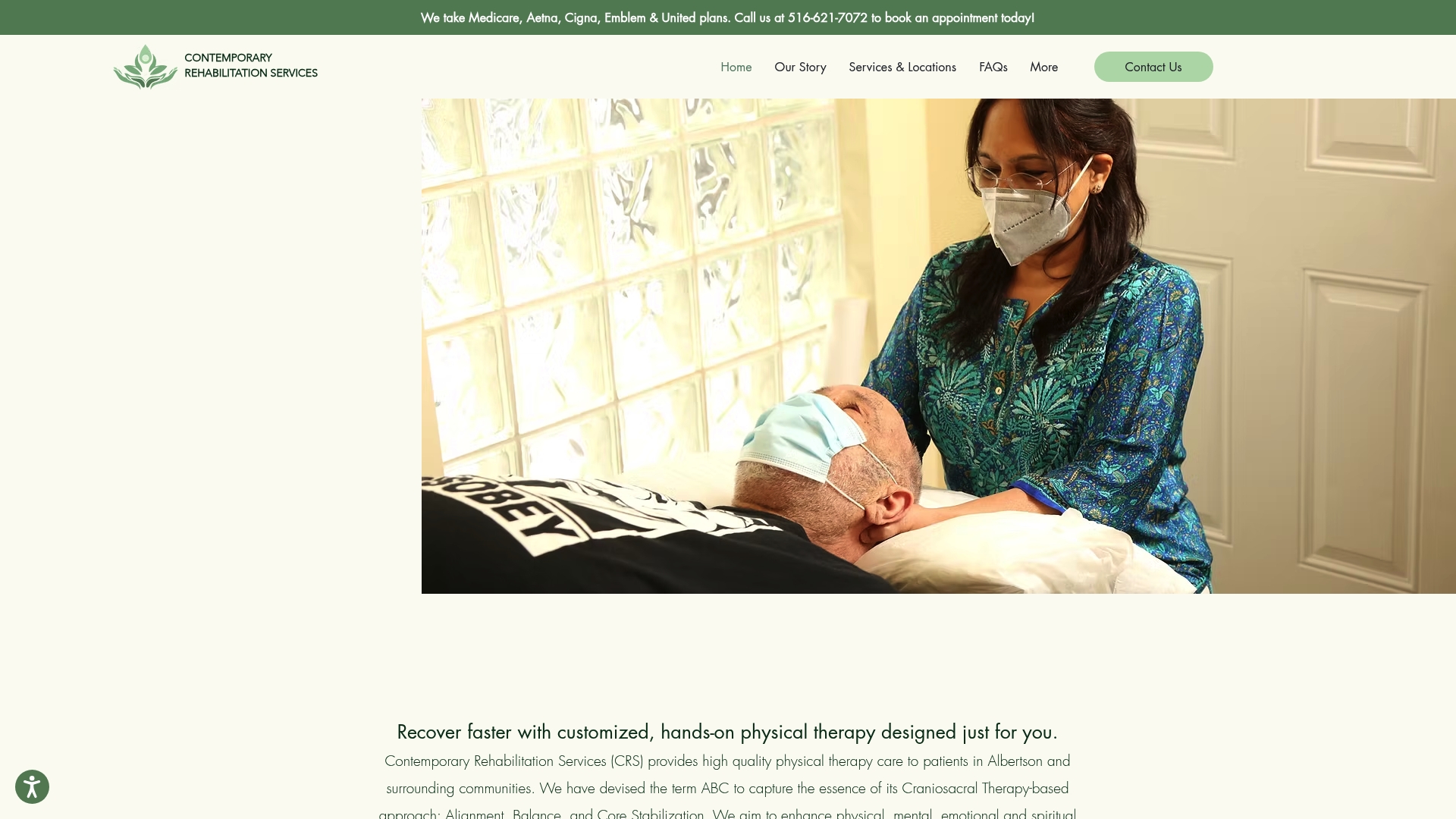
See our full list of services, or start with physical therapy and telehealth sessions to book. If you live closer to Queens, our Herricks location page has the details.
Our perspective
Headaches that live in the neck deserve more than a pill and a pep talk. When someone walks in with a band of pressure around the head, we look at the whole chain: the upper neck, the jaw, the shoulders, the way they sit at work and the way they breathe when they are stressed. We believe in hands-on care because muscles and joints respond to skilled touch. Myofascial work, joint mobilization and gentle suboccipital release let us feel what is tight and change it in the room, and craniosacral therapy gives patients who are sensitive or worn out a calm way to start. Then we hand the patient the tools to stay well: exercises, posture changes and a plan they understand. As a mother-daughter team, we give every patient our full attention in every session, and we build each plan around the person, not a template. If your headaches keep returning, you do not have to guess what is behind them. Come in, let us examine your neck and jaw, and we will map out a plan together. CRS Wellness
FAQ
Can physical therapy really help tension headaches?
The 2023 VA/DoD guideline suggests physical therapy for managing tension-type headache, and trials of trigger point treatment and manual therapy have found fewer, shorter and less intense headaches. Physical therapy works best when the neck, jaw or upper back muscles are part of the problem. Your therapist will tell you at the first visit whether that fits your pattern.
How many sessions will I need?
It depends on how long you have had the headaches, how tight your neck and shoulders are, and how consistently you do your exercises. Research has not settled on one standard protocol, so your therapist sets the plan from your exam and adjusts it as you respond. Most plans are reviewed after the first few visits.
Is suboccipital release safe to do at home?
A gentle, supported version, lying on your back with your fingertips resting under the base of your skull, is a common self-care method. Keep the pressure light, never twist or force your neck, and stop if you feel sharp pain, tingling, numbness or dizziness. If your headache is sudden and severe, or comes with fever, a stiff neck, weakness or vision changes, seek medical care instead.
Do I need a doctor’s referral to see a physical therapist?
Requirements can depend on your insurance plan and on your situation, so it is worth confirming before your visit. We accept Medicare, Aetna, Cigna, Emblem and United Healthcare, and we also take cash payments. Call the clinic with your plan details and we can point you in the right direction.
Can I do tension headache physical therapy by telehealth?
Yes, we offer telehealth physical therapy sessions as well as in-person care. Virtual sessions work well for posture review, exercise coaching and progressing your home program. Hands-on techniques are done in person at our Albertson clinic.
Sources
2023 VA/DoD headache guideline, primary care review in Annals of Internal Medicine
VA/DoD headache guideline, full text (definition of physical therapy)
VA/DoD headache guideline, full text (tension-type headache diagnosis)
Physical Therapy in Tension-Type Headache: A Systematic Review (2023)
Trigger Point Therapy Techniques as an Effective Treatment for Tension-Type Headache (2024)
Effectiveness of Trigger Point Manual Treatment on Tension-Type Headache (2018)
Recommended
Comments