
Why PT for Pre-Surgery: Benefits and What to Expect

Pre-surgery physical therapy, known clinically as prehabilitation, is the process of conditioning your body before an operation to improve healing, reduce complications, and speed up recovery. If you are scheduled for joint replacement, major abdominal surgery, or another significant procedure, understanding why PT for pre-surgery matters could be the single most important step you take before your operation date. Research confirms that patients who complete a structured prehabilitation program experience less pain at discharge and better early mobility than those who skip it. The benefits go well beyond the physical. Prehabilitation also prepares you mentally, sets realistic expectations, and gives you practical tools to manage the first days after surgery.
Why does PT before surgery improve recovery outcomes?
Prehabilitation works by building a stronger functional baseline before surgery cuts into that baseline. Every major operation causes temporary muscle loss, reduced joint mobility, and disrupted movement patterns. The stronger and more mobile you are going in, the less ground you lose during the recovery window.
Strengthening the muscles around a surgical site is the most direct benefit. When the quadriceps, hip abductors, or core muscles are strong before a knee or hip replacement, they support the joint more effectively from day one after surgery. Progressive resistance training combined with balance work produces clinically meaningful improvements in both pain and function up to six months post-op.

Prehabilitation also addresses what clinicians call maladaptive movement patterns. Chronic pain before surgery often causes patients to favor one side, shorten their stride, or avoid certain positions. Undoing these patterns before the operation gives the body a more stable and symmetrical starting point for healing. That matters because post-op rehab builds on whatever foundation exists at the time of surgery.
Better cardiovascular fitness reduces surgical stress directly. High-intensity interval training (HIIT) is especially effective for improving cardiopulmonary fitness before surgery, and HIIT-based prehab programs show the strongest results in reducing complications for major abdominal procedures. A fitter heart and lungs handle anesthesia better and recover from the physiological demands of surgery more quickly.
Key recovery outcomes supported by pre-surgical PT include:
Reduced subjective pain scores at discharge
Improved range of motion in the first weeks after surgery
Lower risk of postoperative complications
Shorter hospital stays, particularly after major abdominal surgery
Stronger engagement in post-op rehab from day one
Pro Tip: Ask your surgeon for a prehabilitation referral at least six weeks before your scheduled operation date. Starting earlier gives your body more time to build strength and adapt.
What does a typical pre-surgery PT program include?
A standard prehabilitation program runs 4–6 weeks and is built around your specific surgery type, current fitness level, and any existing conditions. No two programs are identical, but most share a core set of components.
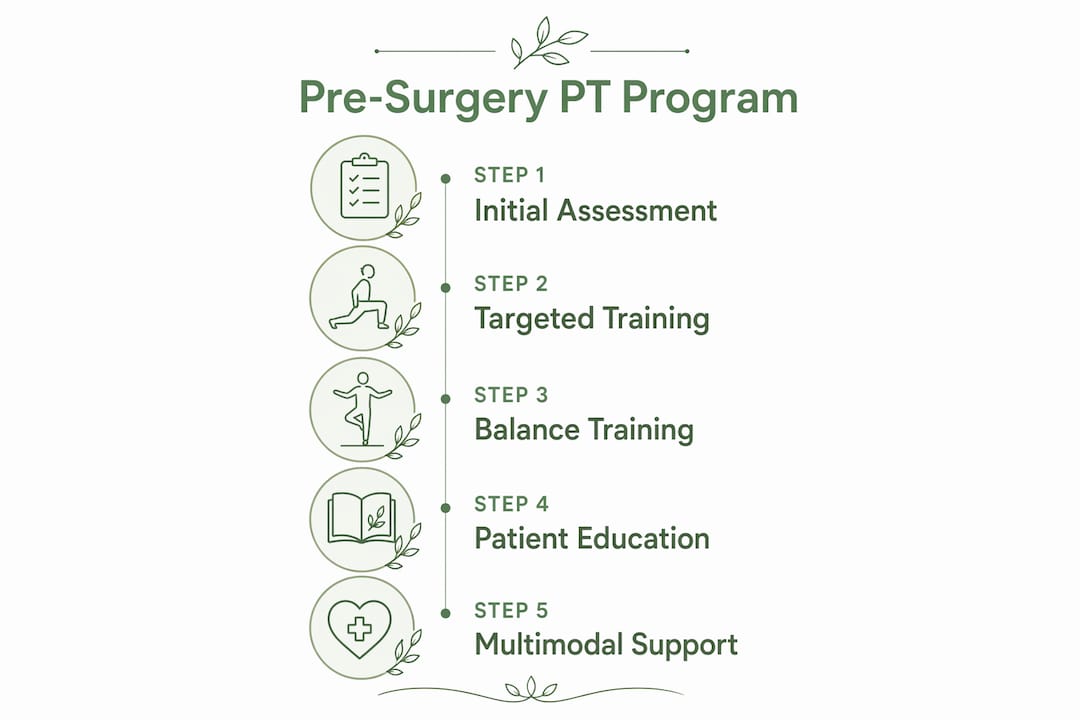
Progressive resistance training targets the muscle groups most affected by your surgery. For a total knee replacement, that means quadriceps sets, straight-leg raises, and hip strengthening. For abdominal surgery, it includes core stability work and breathing exercises that protect the surgical site.
Balance and proprioception training reduces fall risk before and after surgery. Proprioception is your body’s ability to sense its own position in space. Surgery temporarily disrupts this sense, so training it beforehand helps you recover it faster. Contemporaryrehabservices incorporates balance-focused exercises that directly support this goal.
Patient education covers post-op precautions, safe movement techniques, and how to use assistive devices like walkers or crutches. Patients trained in assistive devices and home safety before surgery have smoother post-op transitions and a lower risk of falls. This is one of the most underrated parts of any prehab program.
Multimodal support extends beyond exercise. Multimodal prehabilitation that combines exercise with nutrition guidance and psychological support reduces postoperative complications and shortens hospital stays in major abdominal surgery patients. That combination effect is stronger than exercise alone.
Program component | Primary benefit |
Progressive resistance training | Builds muscle strength around the surgical site |
Balance and proprioception work | Reduces fall risk and speeds sensory recovery |
Assistive device training | Improves safety and confidence post-op |
Nutrition guidance | Supports tissue healing and reduces inflammation |
Psychological preparation | Lowers anxiety and sets realistic recovery expectations |
Self-mobilization techniques and isometric exercises round out most programs. Isometric exercises contract muscles without moving the joint, making them safe even when a joint is painful or unstable before surgery.
Who benefits most from pre-surgical PT, and when should it start?
The strongest evidence for prehabilitation comes from patients scheduled for total joint replacement and major abdominal surgery. These procedures involve significant tissue disruption and a demanding recovery period, which means the functional gains from prehab translate directly into measurable outcomes.
Patients who benefit most include:
Those with low baseline function or chronic pain before surgery
Older adults with reduced muscle mass or balance deficits
Active adults who want to return to sport or physical work quickly
Patients with anxiety or fear about surgery and recovery
Anyone facing major abdominal, cardiac, or orthopedic procedures
Timing matters. Starting prehabilitation 4–6 weeks before surgery gives enough time to build meaningful strength and mobility gains. Starting earlier is better when your baseline fitness is low. Starting even two weeks out still provides benefit, particularly for education and assistive device training.
Prehab differs from rehab in a fundamental way. Rehab restores function that surgery temporarily takes away. Prehab reduces how much function you lose in the first place. That distinction means prehab and post-op rehab are not interchangeable. They work together. Completing a prehab program does not replace the post-op work. It makes that work more effective because you start from a higher baseline.
Pro Tip: If your surgery is scheduled more than eight weeks out, use the extra time to address cardiovascular fitness alongside strength. Even moderate aerobic activity three times per week improves surgical tolerance.
Patients with chronic pain often see an additional benefit. Prehabilitation addresses modifiable predictors like poor preoperative conditioning and psychological distress, both of which are linked to worse postoperative pain and prolonged recovery. Treating these factors before surgery, rather than after, changes the entire recovery trajectory.
How does pre-surgery PT support mental readiness and pain control?
Mental preparation is one of the least discussed but most impactful benefits of prehabilitation. Many patients do not realize that prehab sets realistic expectations about pain and recovery, which directly reduces post-surgical anxiety. Knowing what to expect removes the fear of the unknown, and that fear is a genuine barrier to recovery.
Learning pain-relieving movements during prehab gives you tools to use from the moment you wake up after surgery. Techniques like controlled breathing, gentle isometric contractions, and supported positioning reduce pain without relying solely on medication. Pre-surgery education in pain management techniques reduces opioid requirements and improves patient engagement after total joint arthroplasty. That is a meaningful outcome for anyone concerned about medication dependence.
“Prehabilitation prepares patients not just physically but mentally, giving them the confidence and skills to participate actively in their own recovery from day one after surgery. Patients who arrive at surgery informed and conditioned recover faster and with less distress.”
Setting up your home environment before surgery is part of this mental preparation. Knowing where your walker is, how to get in and out of bed safely, and which movements to avoid removes decision fatigue during the most vulnerable days of recovery. This practical knowledge, combined with physical therapy in rehabilitation, builds the confidence that drives better outcomes.
Patient engagement and adherence to the therapy plan are the strongest predictors of prehab success. Patients who attend sessions consistently and practice at home between visits see the greatest gains. The program works in proportion to the effort you put in.
Key Takeaways
Pre-surgery physical therapy builds the strength, mobility, and mental readiness that directly reduce pain, complications, and recovery time after surgery.
Point | Details |
Start prehab 4–6 weeks out | Earlier starts produce greater strength and mobility gains before surgery. |
Resistance and balance training | These two components deliver the most clinically meaningful improvements in pain and function. |
Multimodal programs work best | Adding nutrition and psychological support to exercise reduces complications and hospital stay length. |
Mental prep reduces opioid use | Education in pain management techniques lowers post-op medication requirements. |
Prehab complements post-op rehab | Completing prehab raises your functional baseline, making post-op recovery faster and more effective. |
What I’ve learned from watching patients prepare for surgery
Working with patients at Contemporaryrehabservices in Albertson, NY, I have seen one pattern repeat itself more than any other. The patients who arrive at surgery the most prepared are not always the ones in the best shape. They are the ones who showed up consistently, asked questions, and took the education seriously.
The biggest misconception I encounter is that prehab is only for athletes or highly fit patients. That is exactly backward. The patients with the lowest baseline function gain the most from a structured program because they have the most room to improve before surgery. A patient who can barely walk a block has far more to gain from six weeks of targeted work than someone who runs three miles a day.
I also see patients underestimate the value of the education component. Learning to use a walker correctly, knowing how to get off a toilet safely, or understanding which movements to avoid after a hip replacement sounds basic. In practice, that knowledge prevents falls, reduces pain, and builds the confidence that keeps patients moving forward in recovery.
My honest advice: do not wait for your surgeon to bring it up. Ask directly about a prehabilitation referral at your next appointment. The recovery tips that matter most are the ones you learn before you need them.
— Tj
Preparing for surgery with Contemporaryrehabservices
Contemporaryrehabservices offers personalized prehabilitation programs for patients in Albertson, NY, and throughout Queens and Nassau County. Each program starts with a one-on-one assessment to identify your specific needs based on your surgery type, current fitness level, and recovery goals.
The clinic accepts Medicare, Aetna, Cigna, Emblem, and United Healthcare plans, making pre-surgical PT accessible without financial stress. Therapists build programs that combine progressive strengthening, balance training, assistive device education, and pain management techniques. You can review the full range of pre-surgical therapy services and schedule a consultation directly through the website. Starting early gives your body the best possible foundation for a smooth, confident recovery.
FAQ
What is prehabilitation in physical therapy?
Prehabilitation is a structured physical therapy program completed before surgery to build strength, improve mobility, and prepare patients mentally for recovery. It differs from post-op rehab by reducing functional decline during surgery rather than restoring it afterward.
How long before surgery should I start PT?
Most prehabilitation programs run 4–6 weeks before the scheduled surgery date. Starting earlier is better when baseline fitness is low, but even two weeks of focused preparation provides meaningful benefit.
Does pre-surgery PT reduce pain after the operation?
Research on total joint arthroplasty patients shows that prehabilitation reduces subjective pain scores at discharge and lowers opioid requirements when education in pain management techniques is included.
Who should do physical therapy before surgery?
Patients scheduled for joint replacement, major abdominal surgery, or any procedure with a demanding recovery period benefit most. Those with chronic pain, low baseline function, or surgical anxiety see especially strong results.
Does prehab replace post-op physical therapy?
Prehab does not replace post-op rehab. The two work together. Completing a prehabilitation program raises your functional baseline, which makes post-surgical rehabilitation faster and more effective from the first session.
Recommended
Comments