
10 Signs You Need Physical Therapy Right Now

Physical therapy, the clinical practice of restoring movement and function through targeted exercise and manual techniques, is the most effective first-line treatment for musculoskeletal pain and mobility loss. The signs you need physical therapy are often clearer than people realize. Pain that lingers beyond two weeks, stiffness that limits daily tasks, or a recent injury that hasn’t fully healed are all signals your body sends before a problem becomes chronic. Recognizing these indicators early gives you the best chance at a full recovery. Contemporaryrehabservices, a boutique physical therapy clinic serving Nassau County and Queens, NY, sees patients every day who waited too long and made their recovery harder than it needed to be.
1. Signs you need physical therapy: Persistent pain that won’t go away
Pain lasting more than one to two weeks despite rest, ice, or over-the-counter medication is a clear signal that something deeper is wrong. Persistent pain beyond two weeks indicates the need for professional evaluation to prevent a short-term problem from becoming a chronic condition. Waiting it out rarely works once that window has passed.
Common types of persistent pain that warrant evaluation include:
Low back pain that returns every few weeks or never fully resolves
Neck and shoulder pain that worsens after sitting at a desk
Knee or hip pain that limits walking, climbing stairs, or standing up
Foot or heel pain that is worst in the morning and eases through the day
Pain that disrupts sleep, work, or daily activities signals that structured support is needed, not more rest. Rest handles initial inflammation well. Physical therapy rebuilds the strength and corrects the mechanical problems that caused the pain in the first place.
Pro Tip: Track your pain on a simple 1–10 scale each morning for one week. If the number stays above 4 or keeps returning after brief improvement, book a physical therapy evaluation.

2. Limited range of motion and stiffness
Stiffness that stops you from reaching overhead, bending forward, or turning your head fully is a direct indicator of physical therapy need. Avoiding specific movements or changing your gait to protect a painful area is one of the most reliable early warning signs therapists look for. The body compensates quickly, and those compensations create new problems in other joints and muscles.
Watch for these movement restrictions in your daily life:
Difficulty putting on shoes or socks due to hip or low back stiffness
Trouble turning your head to check blind spots while driving
Inability to raise your arm above shoulder height without pain
A noticeable limp or altered walking pattern after an ankle or knee injury
Movement avoidance is not a solution. It accelerates muscle weakness and joint stiffness, making the original problem harder to treat. A physical therapist uses movement retraining techniques to restore normal patterns before compensation becomes permanent.
3. Recent injury that hasn’t fully healed
An injury that still limits you after two to three weeks needs professional attention, not more waiting. Starting therapy within two weeks of persistent pain reduces total care duration and lowers the risk of re-injury. Sprains, strains, and muscle tears all require active rehabilitation to rebuild tissue strength and restore joint stability.
Key indicators that your injury needs therapy include:
Swelling or bruising that has not fully resolved after two weeks
Weakness in the injured area compared to the opposite side
Pain that returns immediately when you try to return to normal activity
A feeling of instability or “giving way” in the joint
Pro Tip: You do not need a formal medical diagnosis before booking a physical therapy appointment. Therapists diagnose through movement evaluation and can identify musculoskeletal problems even when the exact cause is unclear.
Even if your X-ray or MRI came back negative, that does not mean nothing is wrong. Negative imaging results do not rule out mechanical or soft tissue problems. A physical therapist’s movement assessment detects issues that imaging simply cannot show.
4. Post-surgery symptoms and recovery plateaus
Surgery repairs a structural problem, but it cannot rebuild the strength and movement patterns your body needs to function normally. Prehabilitation before surgery improves outcomes, and rehabilitation after surgery is measured in functional gains, not just pain reduction. Sitting comfortably, walking longer distances, and returning to work are the real benchmarks of recovery.
Signs that you need therapy after surgery include persistent swelling beyond four weeks, difficulty bearing full weight, and a range of motion that has plateaued. A recovery plateau is one of the clearest red flags for physical therapy. If your progress stalls for two or more consecutive weeks, a therapist can identify what is blocking improvement and adjust your program. For a detailed look at what post-surgical recovery involves, the post-surgical rehab guide from Contemporaryrehabservices explains the process clearly.
5. Balance problems and a fear of falling
Balance problems are an underrecognized indicator of physical therapy need, especially in adults over 50. Early therapy reduces fall risk and corrects faulty movement patterns before a fall causes a serious injury. The consequences of a fall, including fractures and loss of independence, are far more disruptive than a few weeks of therapy.
Watch for these balance-related warning signs:
Feeling unsteady when standing on one leg, even briefly
Grabbing walls, furniture, or other people for support during normal walking
Dizziness or lightheadedness when changing positions
A history of two or more falls in the past year
Difficulty walking on uneven surfaces like grass or gravel
Balance training in physical therapy targets the specific muscles and neurological pathways responsible for stability. Therapists use progressive exercises that challenge your balance in controlled ways, building confidence alongside physical strength.
6. Pain that “warms up” during activity but returns after
This pattern is a classic physical therapy warning sign for tendon problems. Pain that improves during activity but returns afterward signals early tendon or soft tissue damage that worsens without treatment. Many people mistake this for normal soreness and ignore it for months.
The warming-up pattern appears most often in the Achilles tendon, patellar tendon (below the kneecap), and rotator cuff. Left untreated, early tendon irritation progresses to tendinopathy, a degenerative condition that takes significantly longer to resolve. A physical therapist uses loading programs, specifically graded exercises that stress the tendon just enough to stimulate healing, to reverse this process before it becomes chronic.
7. Chronic conditions causing daily limitations
Chronic conditions like osteoarthritis, rheumatoid arthritis, and repetitive strain injuries produce signs that call for physical therapy even when there is no acute injury. Persistent stiffness after waking, swelling that fluctuates with activity, and gradual avoidance of tasks you once did easily are all indicators that therapy can help. For patients managing chronic neck and back pain, physical therapy offers evidence-based strategies that medication alone cannot provide.
The goal with chronic conditions is not to eliminate all pain. The goal is to improve function, reduce flare-up frequency, and maintain the ability to do the things that matter. Therapy builds the strength and movement habits that protect joints and tissues from further damage. Proactive therapy, started before a condition becomes severely limiting, consistently produces better outcomes than waiting for a crisis.
8. Poor posture causing recurring pain
Posture-related pain is one of the most common yet most overlooked reasons to seek physical therapy. Rounded shoulders, a forward head position, and an exaggerated lower back curve all place abnormal stress on muscles, discs, and joints. That stress accumulates over months and years, eventually producing pain that feels sudden but has been building for a long time.
Physical therapists assess posture as part of a full movement evaluation and identify which muscle imbalances are driving the problem. Tight hip flexors, weak glutes, and overactive upper trapezius muscles are frequent culprits. Correcting these imbalances through targeted exercise and manual therapy produces lasting relief in a way that ergonomic chairs and posture reminders alone cannot.
9. Pain or weakness after returning to activity
Returning to exercise, sport, or physical work after a period of rest is a high-risk moment for injury. Pain or weakness that appears when you try to resume normal activity is a direct signal that your body has not fully recovered. Therapy complements rest; rest reduces inflammation, but therapy rebuilds the strength and movement quality needed to return safely.
This sign is especially relevant for athletes and physically active people. A return-to-sport physical therapy program tests your readiness through objective strength and movement benchmarks before clearing you for full activity. Skipping this step is the primary reason athletes re-injure themselves within weeks of returning. For a structured approach to getting back to full strength, the step-by-step injury recovery guide from Contemporaryrehabservices is a practical starting point.
10. Functional decline in everyday tasks
When everyday tasks become harder without a clear reason, that gradual decline is a red flag for physical therapy. Difficulty rising from a chair, carrying groceries, or climbing stairs without holding the railing all point to underlying strength or mobility deficits. Physical therapy progress is measured by mobility, strength, and function, not pain levels alone. This means therapy addresses the full picture of how your body performs, not just where it hurts.
Functional decline often goes unnoticed because it happens slowly. People adjust their habits, avoid certain activities, and assume the changes are just part of aging. Physical therapy challenges that assumption directly. Therapists set objective functional goals and track progress with measurable benchmarks, giving you a clear picture of improvement over time.
Key Takeaways
Recognizing the signs you need physical therapy early is the single most effective step you can take to prevent short-term pain from becoming a long-term limitation.
Point | Details |
Act within two weeks | Pain lasting beyond two weeks despite rest needs a professional evaluation to prevent chronic damage. |
Movement changes are warning signs | Altered gait, avoided movements, and stiffness signal underlying problems a therapist can correct. |
No diagnosis required | You can book a physical therapy evaluation without a referral; therapists diagnose through movement assessment. |
Imaging can miss the problem | Negative X-rays and MRIs do not rule out soft tissue or mechanical issues that therapy addresses. |
Function is the real measure | Recovery success is defined by strength, mobility, and daily function, not by pain levels alone. |
Why I tell every patient not to wait
People come to me after months of managing pain on their own. They tried rest, they tried stretching videos, they tried ignoring it. By the time they walk through the door, what started as a simple tendon irritation or a minor movement restriction has become a pattern their whole body has adapted around. That adaptation is the hardest part to undo.
The conventional wisdom is to wait and see. My clinical experience says the opposite. The patients who come in early, before the pain becomes constant, before the compensations become habits, recover faster and more completely. They also spend less time in therapy overall. Early intervention is not about being overly cautious. It is about being efficient with your recovery.
What I find most meaningful is watching patients rediscover what their bodies can do. Physical therapy progress is not just about pain going away. It is about walking further, sleeping through the night, picking up your grandchildren, or getting back on the field. Those are the milestones that matter. Pain reduction is a byproduct of restoring function, not the goal itself.
If you are reading this and recognizing yourself in more than one of these signs, that recognition is enough reason to book an evaluation. You do not need to be in severe pain to deserve professional support.
— Tj
Physical therapy at Contemporaryrehabservices in Albertson, NY
Contemporaryrehabservices is a boutique physical therapy clinic in Albertson, NY, serving patients across Nassau County and Queens. The clinic accepts Medicare, Aetna, Cigna, Emblem, and United Healthcare plans, making expert care accessible without financial stress.
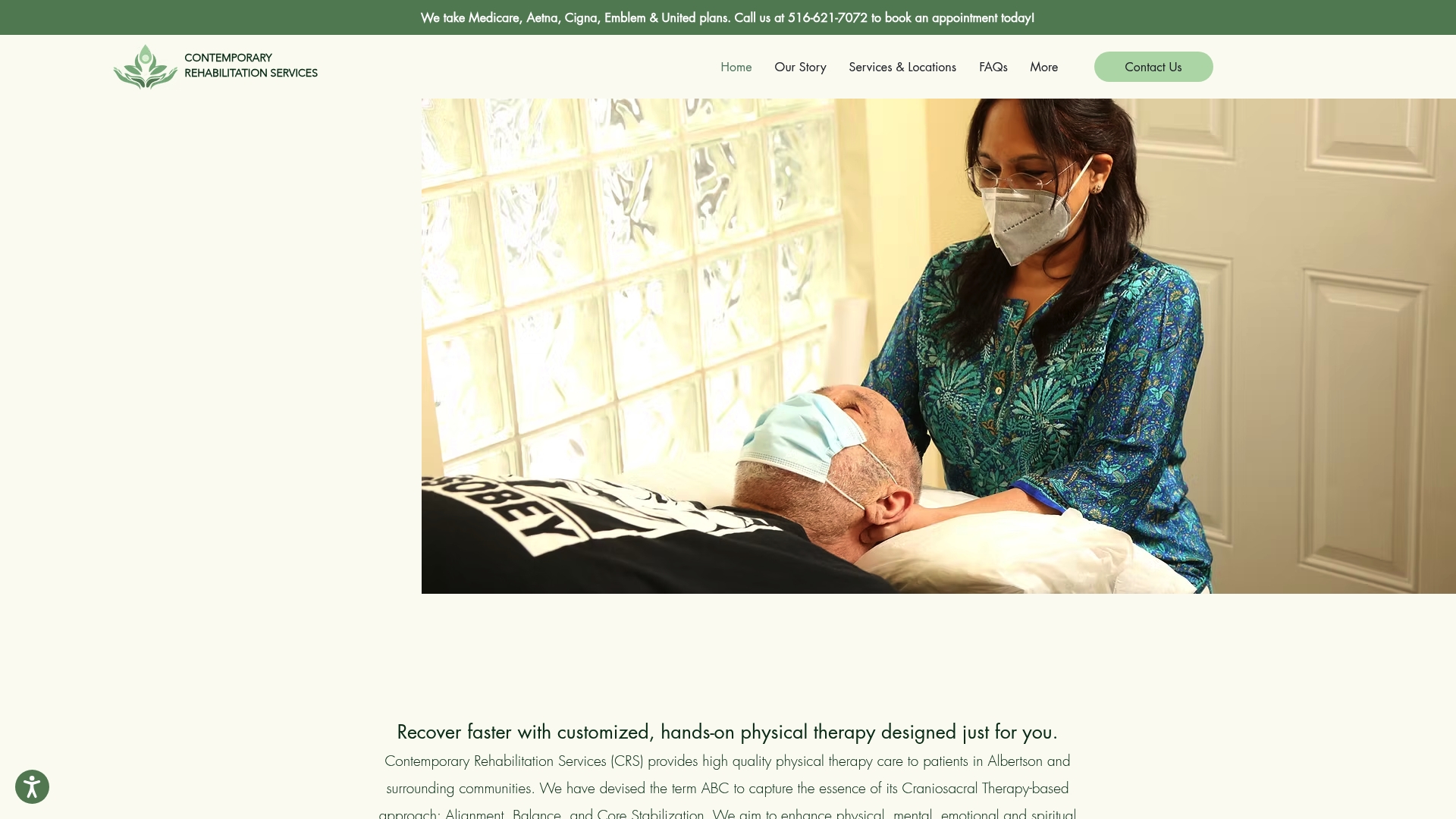
Every patient at Contemporaryrehabservices receives a personalized treatment plan built around their specific symptoms, goals, and lifestyle. The clinic specializes in both physical therapy and craniosacral therapy, offering an integrated approach to pain relief and functional recovery. Whether you are managing a recent injury, recovering from surgery, or dealing with a chronic condition, the team at the Albertson, NY therapy clinic is ready to help you move and feel better. You can also explore the full range of therapy services offered to find the right fit for your needs.
FAQ
How long should I wait before seeing a physical therapist?
Starting therapy within two weeks of persistent pain reduces total care duration. Do not wait longer than two weeks if rest and over-the-counter medication have not resolved your symptoms.
Do I need a doctor’s referral to start physical therapy?
No referral is required in most cases. Physical therapists diagnose through movement evaluation and can identify musculoskeletal problems without a prior medical diagnosis.
Can physical therapy help if my MRI or X-ray was normal?
Yes. Negative imaging results do not rule out soft tissue or mechanical problems. A movement-based assessment detects issues that imaging cannot show.
What are the most common signs that someone needs physical therapy?
The most common indicators include pain lasting more than two weeks, limited range of motion, balance problems, post-injury weakness, and functional decline in daily tasks. Any one of these warrants an evaluation.
How is progress measured in physical therapy?
Therapy progress is measured by objective gains in mobility, strength, and daily function, not by pain reduction alone. Benchmarks like walking distance, stair climbing, and return to work are standard measures.
Recommended
Comments