
What Is Myofascial Release? Your 2026 Pain Guide

Myofascial release is defined as a slow, sustained manual therapy that applies gentle pressure to the body’s connective tissue, called fascia, to relieve pain and restore movement. Unlike a standard massage, this technique targets the fascial system directly, which wraps around every muscle, bone, and organ in your body. When fascia tightens due to injury, stress, or poor posture, it can restrict movement and create pain far from the original problem site. Understanding what myofascial release is, and how it works, gives you a real foundation for making informed decisions about your pain management.
What is myofascial release and how does it work?
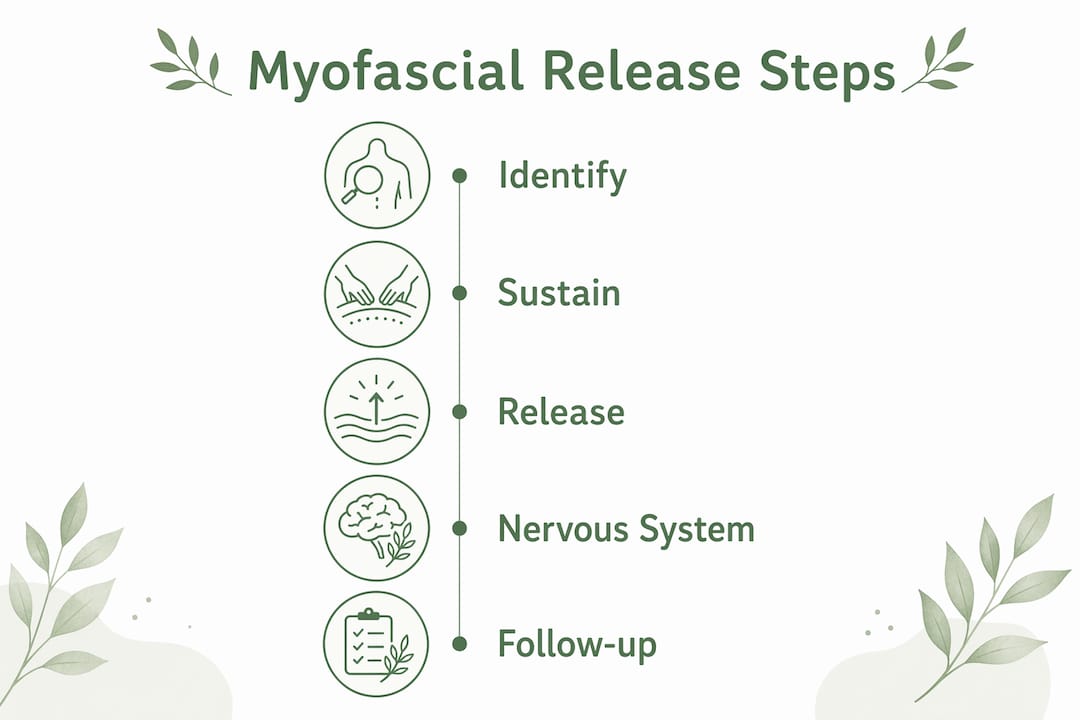
Myofascial release therapy works by applying low-load, long-duration pressure to restricted areas of fascia until the tissue softens and releases. Fascia is a three-dimensional web of connective tissue that supports and connects every structure in your body. When it becomes tight or scarred, it pulls on muscles and joints, creating pain, stiffness, and reduced range of motion.
The key to this therapy is time. Therapists hold pressure for 60–120 seconds or longer, waiting for the fascia to respond. That duration matters because fascia is a viscoelastic tissue. It does not respond to quick, forceful pressure the way a muscle does. It needs sustained, gentle load to reorganize and release.

The therapy also works through your nervous system. MFR elicits neurophysiological effects including gate control pain modulation and calming of the autonomic nervous system. Gate control theory explains that non-painful pressure signals can “close the gate” on pain signals traveling to the brain. That is why patients often feel immediate relief during a session, even before the fascia fully releases.
Myofascial release also differs from traditional massage in one practical way. MFR uses minimal lubricant and requires direct skin contact to feel and engage fascial restrictions accurately. Oil or lotion causes the therapist’s hands to slide over the surface, which prevents them from detecting the subtle resistance patterns in the tissue beneath.
Here is what patients commonly experience during a session:
A slow, building sensation of warmth or pressure at the treatment site
A feeling of the tissue “softening” or “melting” under the therapist’s hands
Referred sensations in areas away from where the therapist is working
Gradual release of tension followed by a sense of lightness or ease
Mild soreness for 24–48 hours after the first few sessions
Pro Tip: If you feel nothing during the first few minutes of sustained pressure, that is normal. Fascia releases slowly. Communicate any sharp or burning pain to your therapist immediately, as that signals a need to adjust technique.
What are the different myofascial release techniques?
Myofascial release techniques fall into three main categories: primary manual therapy, instrument-assisted soft tissue mobilization (IASTM), and self-myofascial release. Each serves a different purpose and context.
Technique | Method | Best for | Limitation |
Manual MFR | Therapist’s hands, sustained pressure | Treating complex restrictions, referred pain | Requires trained therapist |
IASTM | Specialized tools on skin | Breaking down scar tissue, dense adhesions | Less precise for deep fascial chains |
Self-MFR (foam rolling) | Foam rollers, massage balls | Maintaining gains between sessions | Cannot replicate clinical depth or specificity |
Primary manual therapy is the gold standard. A trained physical therapist uses their hands to locate and hold restrictions, following the tissue’s response in real time. Clinicians distinguish primary manual techniques from device-based self-care because the depth, sensitivity, and adaptability of hands-on work cannot be replicated by a tool.
IASTM uses rigid instruments, often made of stainless steel or hard plastic, to apply targeted pressure along fascial lines. This method works well for dense scar tissue or post-surgical adhesions where a therapist needs more mechanical force than hands alone can provide. It is also useful for treating smaller areas like the plantar fascia or forearm tendons.
Self-myofascial release with foam rollers or massage balls is a practical supplement to clinical care. Self-MFR tools help maintain gains from professional sessions but are not replacements for therapist-led treatment. Think of them as maintenance between appointments, not a substitute for clinical work. If you are managing chronic pain or recovering from an injury, home PT exercises combined with self-MFR tools can extend the benefits of each clinical session significantly.
One important distinction: myofascial pain is often referred pain. Fascia connects body-wide, so a restriction in your hip can cause pain in your knee or lower back. A skilled therapist treats not just the painful site but also the connected fascial chains that feed into it. This is why self-care tools, which target only the area you can reach, often miss the root cause.
What benefits does myofascial release offer?
The benefits of myofascial release extend well beyond simple pain relief. Recent clinical research confirms its effects on inflammation, flexibility, tissue health, and quality of life.
A 2025 RCT showed MFR significantly improved pain scores and flexibility in patients with chronic low back pain. That finding matters because chronic low back pain is one of the most treatment-resistant conditions in physical therapy. Achieving statistically significant improvement in a controlled trial places MFR in a different category from many manual therapies that lack this level of evidence.
The anti-inflammatory findings are even more striking. The same 2025 study found that 3D-MFR significantly reduced TNF-α, a key inflammatory biomarker, in both blood and urine compared to sham treatment. TNF-α is a cytokine directly linked to chronic pain and tissue inflammation. Reducing it through manual therapy suggests MFR works at a biological level, not just a mechanical one.
“Myofascial release therapy does more than relieve surface tension. By reducing inflammatory markers like TNF-α and modulating the autonomic nervous system, it addresses the biological roots of chronic pain in ways that stretching and standard massage do not.”
Beyond pain, patients report improved range of motion, better sleep, reduced stress, and greater ease with daily activities. These outcomes align with the manual therapy benefits documented across multiple physical therapy disciplines.
That said, outcomes vary. MFR is not a cure, and results depend on the severity of restrictions, the patient’s overall health, and how consistently they follow through with treatment. Best results arise when MFR is combined with exercise, pain education, and progressive loading. Patients who treat MFR as one part of a broader rehab program consistently outperform those who rely on it alone.
Integrating mind-body connection practices alongside MFR can also amplify outcomes. Breathing exercises, body awareness training, and relaxation techniques support the autonomic calming effects that MFR initiates during a session.
What should you consider when choosing myofascial release therapy?
Choosing the right therapist is the single most important decision you will make about this therapy. Standardized MFR protocols are lacking, which means the quality of treatment varies widely depending on the therapist’s training and experience. Not every physical therapist or massage therapist has specific MFR training. Ask directly about their credentials and how many patients they have treated with this approach.
Here is what to expect during a well-run session:
An initial assessment of your posture, movement patterns, and pain history
Hands-on evaluation to locate fascial restrictions, which may not be at the pain site
Sustained pressure holds lasting 60 seconds to several minutes per area
Minimal or no massage oil used during treatment
A gradual, unhurried pace with time for your tissue to respond between holds
Safety is generally high for MFR, but contraindications exist. Avoid MFR over open wounds, active infections, fractures, blood clots, or areas of acute inflammation. Patients on blood thinners or with fragile skin conditions should consult their physician before starting treatment.
A common misconception is that MFR should feel intense to be effective. The opposite is true. Aggressive pressure causes the nervous system to guard, which prevents fascial release. The therapy works precisely because it is gentle and sustained. If a session feels painful rather than deeply pressured, the technique needs adjustment.
Pro Tip: Keep a simple symptom journal after each session. Note your pain levels, sleep quality, and range of motion. This gives your therapist concrete feedback and helps both of you track progress over time.
Combining MFR with soft tissue mobilization and targeted exercise produces the most durable results. MFR releases the restriction; exercise teaches your body to move well within that new range. Without movement training, restrictions tend to return.
Key Takeaways
Myofascial release is a clinically validated manual therapy that reduces pain, lowers inflammation, and improves mobility by applying sustained pressure to restricted fascia across the body.
Point | Details |
Definition of MFR | Slow, sustained manual pressure on fascia to release restrictions and reduce pain. |
How it works | Sustained pressure of 60–120+ seconds triggers fascial release and nervous system calming. |
Anti-inflammatory evidence | A 2025 RCT confirmed MFR significantly reduced TNF-α, a key inflammatory biomarker. |
Best results require integration | Combine MFR with exercise and pain education for durable, lasting outcomes. |
Therapist selection matters | Seek therapists with specific MFR training, as protocols and quality vary widely. |
Why MFR deserves more credit than it gets
Patients often arrive at Contemporaryrehabservices having tried everything: cortisone shots, standard massage, stretching programs, and pain medication. Many of them have never heard of myofascial release, or they have dismissed it as “just another soft tissue technique.” That assumption costs them months of unnecessary pain.
What I have observed clinically is that MFR works best when the therapist is genuinely patient. The temptation in any manual therapy is to do more, press harder, and move faster. MFR demands the opposite. The therapist who can hold a position for two full minutes and wait for the tissue to respond is the one who gets results. That kind of patience is a skill, and it is not universal.
The lack of standardized protocols is a real problem in this field. Two therapists can both call what they do “myofascial release” and deliver completely different treatments. This is why research findings, while promising, are hard to replicate consistently across clinical settings. Patients deserve to know this going in.
My honest advice: treat MFR as a powerful tool within a broader rehab program, not a standalone solution. The patients I see make the most progress are those who combine their sessions with physical therapy modalities and commit to home exercise between appointments. The therapy opens a window. What you do with that window determines how long the results last.
— Tj
Myofascial release therapy at Contemporaryrehabservices
Contemporaryrehabservices is a boutique physical therapy clinic in Albertson, NY, serving patients across Nassau County and Queens. The clinic’s therapists are trained in hands-on MFR techniques and integrate them with targeted exercise, manual therapy, and patient education for lasting pain relief.
If you are dealing with chronic pain, stiffness, or limited mobility, myofascial release may be a missing piece in your recovery. Contemporaryrehabservices accepts Medicare, Aetna, Cigna, Emblem, and United Healthcare plans. Explore the full range of rehabilitation therapies available and find out which approach fits your needs. Patients in the Albertson area can also visit the Albertson physical therapy location to schedule an assessment with a specialist.
FAQ
What is myofascial release in simple terms?
Myofascial release is a hands-on therapy where a trained therapist applies slow, sustained pressure to tight areas of connective tissue, called fascia, to reduce pain and improve movement. It differs from massage because it uses minimal oil and holds pressure for 60–120 seconds or more.
Is myofascial release effective for chronic pain?
A 2025 randomized controlled trial found MFR significantly improved pain scores and flexibility in chronic low back pain patients. The same study showed it reduced TNF-α, an inflammatory biomarker, confirming biological as well as mechanical effects.
How does myofascial release differ from massage?
Myofascial release uses no or minimal lubricant, requires direct skin contact, and holds pressure for extended periods to engage fascial restrictions. Traditional massage uses oil, applies rhythmic strokes, and primarily targets muscle tension rather than the fascial layer.
Can I do myofascial release at home?
Foam rollers and massage balls allow self-myofascial release at home, which helps maintain gains from clinical sessions. These tools are supplementary and cannot replicate the depth, sensitivity, or specificity of therapist-led treatment for complex restrictions.
Who should avoid myofascial release?
MFR is contraindicated over open wounds, active infections, fractures, blood clots, and areas of acute inflammation. Patients on blood thinners or with fragile skin conditions should consult their physician before starting treatment.
Recommended
Comments