
Ankle Sprain Rehab: Your Phase-by-Phase Recovery Plan
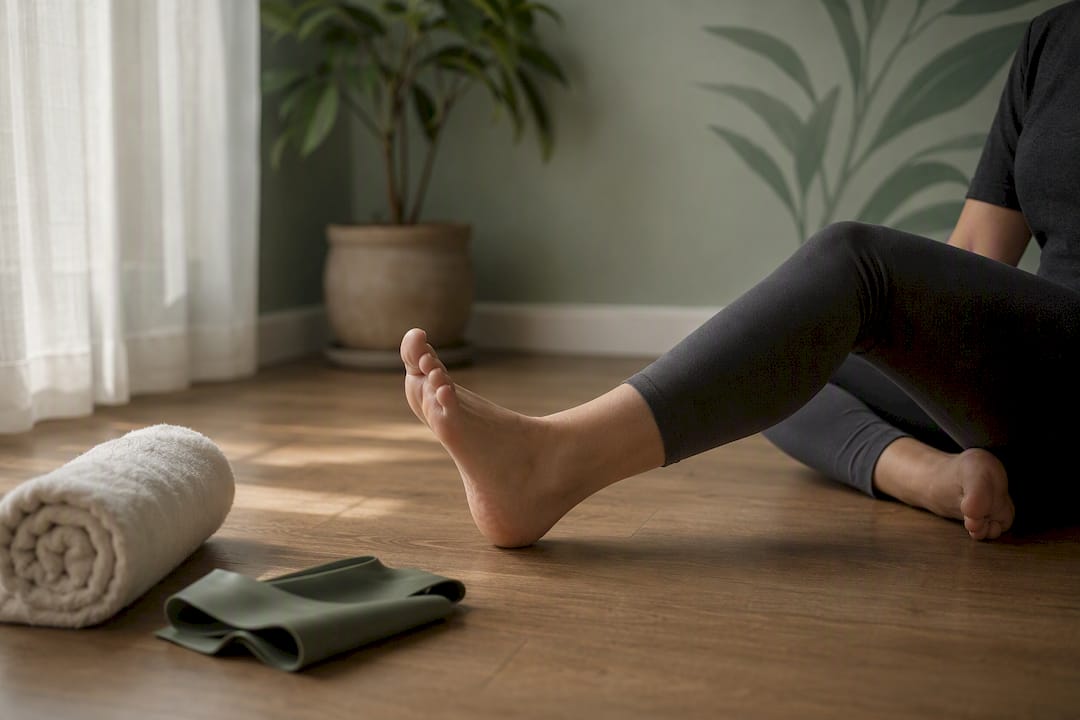
If you’ve just rolled your ankle, here’s the bottom line: protect it, control the swelling, and start gentle movement as soon as pain allows, then follow a three-phase rehab progression toward strength, balance, and full return to activity. Waiting too long to move usually slows you down more than moving too soon.
First 48-72 hours: protect the joint, ice it, compress it, elevate it, and bear weight only as pain allows.
See a clinician if you can’t take four steps unaided, or swelling and pain worsen after two days.
Recovery windows: Grade I heals in about 1-3 weeks, Grade II in 3-6 weeks, and Grade III can take several months.
Key Takeaways
Ankle sprain rehab works best when pain-guided movement starts early and every phase change is confirmed by an objective test, not a calendar date.
Point | Details |
Move early, within reason | Begin gentle weight-bearing and ROM work within the first three to seven days as pain allows. |
Match rehab to grade | Expect 1-3 weeks for Grade I, 3-6 weeks for Grade II, and months for Grade III sprains. |
Progress by criteria, not dates | Advance phases only when you hit specific benchmarks like pain-free balance or symmetric heel raises. |
Don’t skip balance training | Proprioception drills prevent the chronic instability that causes repeat sprains. |
Get supervised care when needed | Contemporaryrehabservices offers individualized, criteria-based rehab programs in Albertson, NY, with in-person and virtual options. |
Table of Contents
How Do You Start Ankle Sprain Rehab in the First 72 Hours?
The acute window is about damage control, not aggressive exercise. Your ligament needs time to start healing, but total rest actually works against you. Research on early functional rehabilitation shows that protected weight-bearing and gentle movement, started within the first three to seven days, speeds return to work and sport compared with keeping the joint immobilized.
Here’s the practical version of that advice:
Protect the joint with a brace, ankle wrap, or crutches if walking is painful.
Ice for 15 to 20 minutes every two to three hours during the first two days, never directly on bare skin for long stretches.
Compress with an elastic wrap snug enough to control swelling, loose enough that your toes don’t tingle or discolor.
Elevate the foot above heart level whenever you’re sitting or lying down.
Begin gentle weight-bearing as soon as pain allows, rather than staying completely off it.
Watch for red flags: inability to bear any weight after 48 to 72 hours, a visibly deformed joint, numbness, or pain that keeps climbing instead of easing. Any of those means it’s time to get evaluated rather than push through at home.
Pro Tip: Ice works best in short, repeated doses. A single 45-minute session does less for swelling than three separate 15-minute sessions spread through the day.

What Are the Grades of Ankle Sprains and How Long Do They Take to Heal?
Clinicians classify ankle sprains by how much ligament tissue tears and how much function you lose. A Grade I sprain involves mild stretching or microscopic tearing, with minimal instability. A Grade II sprain is a partial tear, with noticeable swelling, bruising, and some joint looseness. A Grade III sprain is a complete ligament rupture, often with significant instability and difficulty bearing weight at all.
The timelines track that severity closely:
Grade I: typically 1-3 weeks before returning to normal activity.
Grade II: generally 3-6 weeks of structured rehab.
Grade III: often many weeks to months, sometimes with a period of bracing or, rarely, surgical consultation.
Age, prior ankle injuries, and involvement of multiple ligaments can all stretch these windows longer, so treat them as a range, not a guarantee.
What Are the Three Phases of Ankle Sprain Recovery?
Rehabilitation is generally organized into three functional phases, each with its own goals and its own test for moving forward. Skipping ahead before you meet a phase’s criteria is the most common reason sprains become chronic.
Acute/early phase (roughly days 0-3): goals are pain control, swelling reduction, and protected weight-bearing. Safe exercises here include ankle pumps and gentle range-of-motion work, nothing that reproduces sharp pain.
Subacute phase (roughly weeks 1-6): goals shift to restoring full range of motion, rebuilding foundational strength, and normalizing your walking pattern. You’re ready to progress when you can walk without a limp and perform resisted ankle movements without pain.
Advanced/return-to-sport phase (roughly week 6 onward): goals are proprioception, agility, and sport-specific loading. Progression criteria include single-leg balance approaching parity with your uninjured side and pain-free hopping.
Moving through these phases by feel alone is risky. Moving through them by criteria, what you can actually do without pain, is what keeps a sprain from becoming a recurring problem.
What Exercises Help Rehab a Sprained Ankle?
This is where the real work happens, and it follows a logical order: restore motion first, then strength, then balance, then function.
Range of motion. Start with ankle pumps, pointing your toes up and down, 10 to 15 reps, several times a day. Add ankle alphabet drills, tracing letters in the air with your big toe, once pumps feel easy. Gentle dorsiflexion and plantarflexion stretches round this out. Progress when you can move through a full pain-free arc.
Stretching. Once swelling has calmed, add a towel calf stretch: loop a towel around your forefoot, knee straight, and gently pull toward you for 20 to 30 seconds, three reps. Move to a standing gastrocnemius and soleus wall stretch once you can bear full weight comfortably.
Strengthening. Resisted inversion and eversion with a resistance band, along with dorsiflexion and plantarflexion pulls, build the muscles that stabilize the joint. Start with two to three sets of 10 to 15 reps daily. Add single-leg heel raises once you can do 10 double-leg raises without pain, working toward 15 to 20 single-leg reps as a strength benchmark.
Balance and proprioception. Begin with double-leg standing balance, progress to single-leg stance, then add unstable surfaces like a pillow or wobble board. Holding tandem or single-leg balance for two to three sets of 20 seconds is a reasonable daily target, and closing your eyes or adding a dual task, like catching a ball, makes it harder once the basic version feels easy. This retraining matters more than most people assume; without it, the ankle stays prone to giving way again.
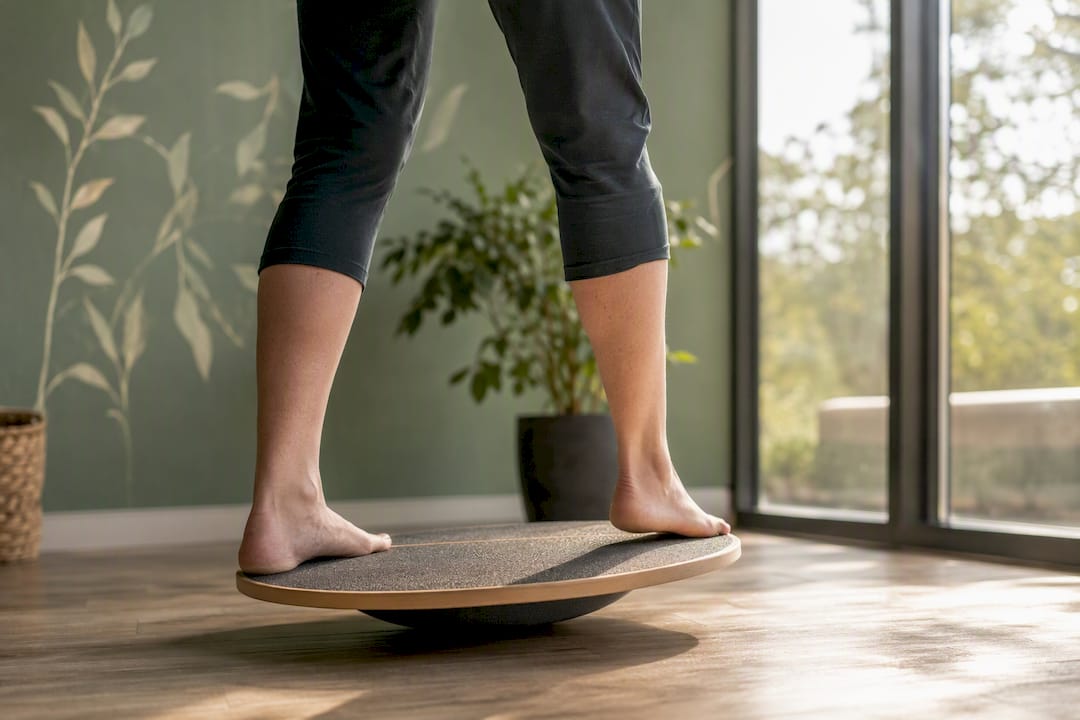
Gait and functional drills. Practice deliberate heel-toe walking to rebuild a normal pattern, then add step-ups and, later, a staged hopping progression, forward hops, then lateral hops, then single-leg hops, before returning to running or cutting sports.
Pro Tip: A little muscle soreness the next day is normal. Sharp pain during the exercise, or pain that lingers well past 24 hours, means you’re progressing too fast and should scale back.
When Should You See a Doctor for an Ankle Sprain?
Most sprains respond well to home care and structured rehab, but a subset need clinical eyes on them right away. See a clinician if you notice any of the following:
Complete inability to bear weight or take four unassisted steps.
Visible deformity or a joint that feels unstable at rest.
Numbness, tingling, or cold, pale skin below the injury.
Swelling or bruising that keeps worsening past 72 hours.
Fever, redness, or warmth suggesting infection.
A clinical evaluation may include imaging to rule out a fracture, brief immobilization, and a referral to physical therapy once acute inflammation settles. If instability or pain persists past the expected window for your grade, ask about an orthopedic consult rather than continuing to self-treat.
How Do You Know You’re Ready to Return to Activity?
Returning too early is the single biggest driver of repeat sprains, so lean on objective checkpoints rather than a calendar date.
Pain-free single-leg balance for 30 seconds, roughly matching your uninjured side.
Single-leg heel raises with strength and endurance close to parity between both ankles.
Pain-free walking, then jogging, in a straight line before adding direction changes.
A staged return: walk, then jog, then sport-specific drills like cutting and pivoting, then full return to play, with at least a few sessions at each stage before advancing.
If pain or swelling returns at any stage, drop back to the prior stage rather than pushing forward. A brace or athletic tape during those early return-to-play sessions adds mechanical support and proprioceptive feedback while your ankle finishes rebuilding trust in itself.
How Can You Prevent Another Ankle Sprain?
Rehab doesn’t really end when symptoms go away. Keep balance and strength work in rotation once or twice a week indefinitely, even after you feel fully recovered, since proprioceptive pathways fade faster than strength does if you stop training them.
Continue single-leg balance drills as ongoing maintenance, not just rehab.
Use functional bracing or taping for high-risk sports, commonly for four to six weeks after injury, longer for sports with frequent cutting or jumping.
Replace worn-out athletic shoes and choose footwear appropriate to your sport’s surface and movement demands.
Warm up with dynamic ankle mobility work before activity rather than skipping straight into play.
What Does a Physical Therapist Do for an Ankle Sprain?
A first visit typically includes a history review, hands-on ligament stability testing, a gait assessment, and baseline strength and balance measurements to set a starting point. From there, treatment often blends manual therapy techniques with neuromuscular re-education and a progressive loading plan tracked against measurable milestones.
Manual therapy and joint mobilization to restore motion and reduce stiffness.
Individualized strengthening and balance programs adjusted week to week.
Objective retesting to confirm you’re ready for the next phase, not just guessing.
If you’d rather have someone else make those progression calls, in-person and virtual sessions both work, depending on how hands-on your case needs to be.
What actually determines a good ankle sprain outcome?
Most people treat ankle sprain recovery like a waiting game, ice it, rest it, hope it feels better in a few weeks. The research doesn’t support that model. Early, pain-guided movement outperforms prolonged rest, and the ankles that end up chronically unstable are usually the ones that skipped balance retraining, not the ones that strengthened too aggressively.
The overrated piece of conventional wisdom is total immobilization. Boots and crutches have a place in the first few days for a severe sprain, but they’re a bridge to movement, not a substitute for it. The underrated piece is proprioception work. People will diligently do their resistance band exercises and skip the wobble board drills, then wonder why the ankle gives out on uneven ground eight months later.
If you take one thing from this, prioritize objective testing over how you feel. Soreness lies. A single-leg balance test or a heel-raise count doesn’t. Match your rehab pace to what your ankle can actually demonstrate, not to how many days have passed on the calendar.
Get Supervised Ankle Sprain Rehab in Albertson, NY
Following a home program gets you far, but knowing exactly when to progress from ROM work to loaded strengthening, and when a balance drill needs to get harder, is where a trained eye changes outcomes. Contemporaryrehabservices builds individualized rehab programs around your specific grade of sprain, your baseline testing, and objective criteria rather than a generic timeline off the internet.
As a boutique clinic in Albertson, NY serving Queens and Nassau County, Contemporaryrehabservices accepts Medicare, Aetna, Cigna, Emblem, and United Healthcare, along with direct cash payment, so supervised recovery is accessible whether you’re insured or paying out of pocket. Sessions combine manual therapy, neuromuscular re-education, and progressive loading plans with the kind of measurable retesting this article recommends, plus virtual options if in-person visits aren’t practical every week. If your ankle sprain isn’t progressing the way you’d expect, book an evaluation through our services page and get a plan built around your actual test results.
Where Can You Learn More About Ankle Sprain Recovery?
Frequently Asked Questions About Ankle Sprain Rehab
How long does ankle sprain rehab usually take? It depends on grade: Grade I sprains often resolve in 1-3 weeks, Grade II in 3-6 weeks, and Grade III can take several months of structured rehab.
Can you walk on a sprained ankle right away? Gentle, pain-guided weight-bearing within the first few days is generally encouraged over strict immobilization, but stop and seek care if you can’t bear any weight after 48 to 72 hours.
What are the best exercises for a sprained ankle? Start with ankle pumps and alphabet drills for motion, add resisted inversion and eversion bands and heel raises for strength, then progress to single-leg balance and hopping drills for function.
Do you need physical therapy for a mild ankle sprain? Not always for a straightforward Grade I sprain, but physical therapy helps significantly for Grade II and III sprains, or for anyone with a history of repeat sprains or lingering instability.
Should you wear a brace during ankle sprain recovery? Functional bracing or taping for four to six weeks is common practice, especially for return to sport, since it adds mechanical support and proprioceptive feedback while the ankle rebuilds strength.
Sources
Recommended
Comments