
Anterior Pelvic Tilt Physical Therapy: What to Expect

Physical therapy for anterior pelvic tilt starts with an assessment of how your pelvis, low back, hips and trunk move together. Treatment then combines hands-on work, targeted strengthening and mobility exercises, and movement retraining built around your symptoms and goals. If you live in Queens or Nassau County and wonder whether your pelvic position is part of your back or hip pain, this guide explains what a therapist looks at, what a plan can include and how long it usually takes.
TL;DR
Anterior pelvic tilt means the front of the pelvis rotates downward and forward, which often goes along with a deeper curve in the low back. Many people have some degree of it.
A therapist looks at how you move and what your symptoms are, not just how your posture looks in a mirror.
Plans usually combine manual therapy, hip and trunk strengthening, mobility work and practice with everyday movements.
Research on timelines is limited. Many rehab programs run about six to eight weeks and are adjusted as you progress.
Pain with numbness, bladder or bowel changes, or after a fall needs a medical evaluation first.
Table of Contents
What anterior pelvic tilt is
Your pelvis can rock forward and back like a bowl being tipped. In anterior pelvic tilt, the bowl tips forward. The front of the pelvis drops, the tailbone lifts and the low back curve (lumbar lordosis) usually increases. Researchers describe it as a postural deviation with excessive forward rotation of the pelvis, often seen alongside increased lumbar lordosis and studied in people with non-specific low back pain.
Clinically, pelvic tilt is defined by the relationship between two bony landmarks, the front and back of the pelvic rim, in the side-view plane, as laid out in a 2021 peer-reviewed commentary on clinical measures of pelvic tilt.
Does it always cause pain?
No. Pelvic position varies from person to person, and a tilted pelvis does not automatically mean something is wrong. What matters is whether your tilt goes along with symptoms such as low back tightness, hip pinching, front-of-thigh tightness or trouble with certain activities. If it does, we treat the symptoms and the movement patterns behind them, not a number or a photo.
Common situations where people ask about it:
Long hours of sitting, followed by stiff hips when standing up
Low back ache after standing, running or lifting
Hip flexor tightness or a pinching feeling at the front of the hip
A noticeable arch in the low back, sometimes with a belly that seems to “stick out”
Recovery after pregnancy, an injury or surgery, when core and hip strength have changed
How a physical therapist assesses it
A good evaluation is more than looking at you from the side. The 2021 commentary mentioned above explains that pelvic tilt can be assessed standing still, through active pelvic motion, or during a functional task. It also cautions that visual assessment alone is not helpful for guiding clinical decisions and describes inclinometer options for more precise measurement.
In practice, a first visit with us typically covers:
Your story. Where it hurts, when it started, what makes it better or worse, past injuries, and what you want to get back to doing.
Posture and movement. How you stand, walk, squat, bend and get up from a chair.
Joint and muscle testing. Hip, low back and pelvic motion, along with muscle length and strength around the hips, trunk and glutes.
Hands-on assessment. Tissue tension, joint movement and how the nervous system responds to movement.
A plan. Goals, visit frequency and a first set of exercises you can do at home.
The point of the evaluation is to decide whether pelvic position is contributing to your symptoms or is simply how your body is built. That answer shapes everything that follows. For a broader look at how we use posture findings, see our guide to physical therapy for posture correction.
What physical therapy for anterior pelvic tilt typically includes
There is no single exercise that “fixes” pelvic tilt. A 2020 systematic review of non-surgical interventions for excessive anterior pelvic tilt found only four studies with 95 participants in total, and judged the evidence to be very low quality and varied. That tells us the research is still catching up, and it is one reason we build each plan around the individual rather than a standard routine.
A 2025 review of trunk and hip exercise prescription points the same way. It recommends choosing exercises for the person’s goals and loading needs, and moving beyond isolated exercises to include progressive multi-joint movements. That matches how we work: a mix of targeted and whole-body movements, chosen for you.
Hands-on manual therapy
Manual therapy is a core part of our practice. Depending on what the evaluation shows, we may use:
Myofascial therapy to address tight, restricted soft tissue around the hips, low back and trunk
Joint mobilization for stiff hip, pelvic or spinal joints
Neural mobilization when nerve sensitivity limits movement
Visceral therapy and craniosacral therapy, gentle techniques that we offer as part of an individualized, whole-person approach
These are offered as part of a plan, and we pair them with active work so that the changes in comfort and motion carry over into daily life.
Strength and control work
The exercise side usually targets the areas that share the load with the pelvis:
Glutes and hamstrings, with bridges, hip hinges and step-ups
Deep core and trunk, with controlled movements such as dead bugs, bird dogs and carries
Hip flexors and front-of-thigh tissue, with mobility work that is comfortable and gradually progressed
Mid-back mobility, so the low back is not doing all the work when you reach, lift or stand tall
We teach the movement first, then add load. Squats, lunges, hip hinges and carries are the kinds of multi-joint patterns that bring the work back to real life.
Neuromuscular re-education
Sometimes muscles are strong enough, but the brain is not recruiting them well. Neuromuscular re-education is retraining that timing and coordination, so your core and glutes switch on during walking, climbing stairs or lifting a grocery bag, not just during an exercise on a mat. It is often the piece that makes a home program stick.
A simple starter routine
Your therapist will tailor this, but a beginner-level session might look like this:
Exercise | What it works | Typical starting point |
Supine pelvic tilts | Gentle awareness of pelvic motion | 2 sets of 8 to 10 slow reps |
Glute bridge | Glutes, hamstrings | 2 sets of 8 to 12 reps |
Dead bug | Deep core control | 2 sets of 6 to 8 per side |
Half-kneeling hip flexor stretch | Front of hip mobility | 2 holds of 20 to 30 seconds per side |
Hip hinge to a counter or wall | Hip-driven bending | 2 sets of 8 reps |
These numbers are starting examples to show the shape of a program, not a prescription. If any movement increases pain, stop and check in with your therapist.
If you want help choosing and pacing exercises safely, particularly with bone health concerns, this daily posture plan for osteoporosis shows how exercise selection changes when safety comes first.

How long it can take
Honest answer: it depends on you. The 2020 review notes one uncontrolled study that used eight weeks of treatment and reported reductions in both pain and measured pelvic tilt. Because it had no control group, we can’t say for certain what caused the change.
For general guidance on program length, a 2024 scoping review of Pilates in rehabilitation found durations of six to 16 weeks, most commonly eight weeks, with two to three sessions a week of 50 to 60 minutes. That is general musculoskeletal evidence, not a specific dose for pelvic tilt, but it gives a realistic frame for planning.
Factors that shape your timeline:
How long you have had symptoms
Your daily activity, including hours sitting or standing
Past injuries, surgeries or pregnancies
How consistently you do your home program
Your goals, whether that is walking comfortably, running or lifting
To get more from each visit, read our tips on how to maximize PT sessions, and see how long physical therapy sessions run and why visits vary.
Related areas we look at
Pelvic position rarely stands alone. Depending on your symptoms, we may also look at:
Hip pain. See our hip pain physical therapy plan, as well as guides on hip bursitis and hip osteoarthritis.
Pelvic floor and pelvic pain. Our overview of what pelvic therapy is and what to expect explains how that care differs.
Whole-body alignment. Our guide to why PT helps with posture covers the bigger picture.
When to get evaluated
Book an evaluation if low back, hip or pelvic discomfort lasts more than a couple of weeks, keeps returning, or limits sitting, walking, sleeping or exercise. The American Physical Therapy Association’s ChoosePT pelvic pain guide lists difficulty sitting, reduced hip or low-back movement, trouble walking or sleeping, pelvic numbness, urinary or bowel symptoms and pain during sexual activity among the signs. It notes that an evaluation may look at joint problems, muscle tightness or weakness and nerve involvement, and that a physical therapist may refer you to a physician when appropriate.
See a physician promptly, before starting exercises, if you have numbness around the groin or inner thighs, new bladder or bowel changes, severe pain after a fall or accident, or pain with fever or unexplained weight loss.

If you are on Medicare, it helps to understand how coverage works before you start. This overview of Medicare coverage for physical therapy is a good place to begin. We accept Medicare, Aetna, Cigna, Emblem and United Healthcare, and we also see patients on a cash basis.
Our perspective
At Contemporary Rehab Services, we don’t treat a pelvic tilt as a number to correct. We treat a person who has a particular pattern of pain, stiffness or weakness, and who wants to get back to something specific. That is why every visit is one-on-one with our mother-daughter team. We start by listening, then we combine hands-on techniques such as myofascial therapy and joint mobilization with strengthening and neuromuscular re-education. Our ABC Approach to rehabilitation and our exercise guides are designed to help you keep progress going between visits. We also bring a holistic, integrative view. Craniosacral and visceral therapy are part of our toolbox because we look at how the whole body shares load and tension. Your plan changes as you do, and we explain every step in plain language. CRS Wellness
Physical therapy in Albertson, Queens and Nassau County
Our boutique clinic in Albertson, NY serves patients from Queens and across Nassau County, including Mineola, Roslyn, Williston Park, Westbury and Carle Place. We offer in-person visits and telehealth PT sessions, so you can start with a video visit if getting to the office is hard. Our services include physical therapy, myofascial therapy, joint mobilization, neural mobilization, visceral therapy, craniosacral therapy and neuromuscular re-education.
If your low back, hips or pelvis have been bothering you, we’d like to look at how you move and build a plan around you. See the full list on our services page, or book physical therapy with us in person or by telehealth.
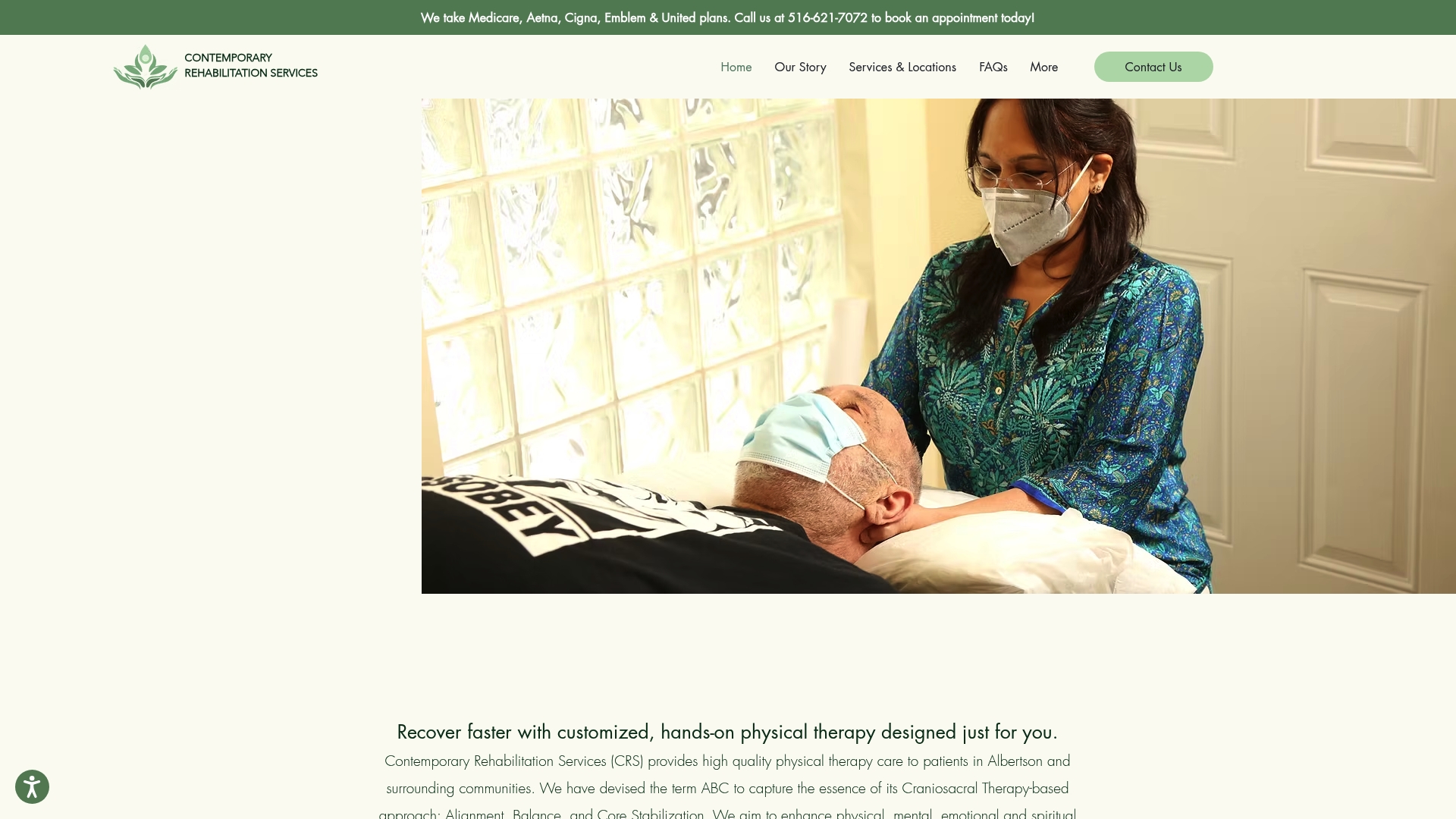
Bring a list of your symptoms, the activities you want to return to and your insurance card. We’ll handle the rest.
FAQ
Can physical therapy fix anterior pelvic tilt?
Physical therapy can help you improve strength, mobility and movement control around the pelvis, and those changes often ease symptoms. The research on changing the tilt itself is still limited, so we focus on how you feel and function. Your therapist will track measurable progress, such as motion, strength and comfort with daily tasks.
How do I know if my anterior pelvic tilt is causing my pain?
A physical therapist looks at how your pain responds to movement, how your hips and low back move and how your muscles share the load. A photo or a mirror check alone is not enough to guide care. An in-person evaluation sorts out whether pelvic position is part of the picture.
How long will I need physical therapy?
Many rehab programs run about six to eight weeks, with two to three visits a week at the start, then fewer as you progress. Your timeline depends on your symptoms, history and how consistently you do your home program. We will review your plan with you as you improve.
Do I need a referral to start?
New York allows patients to be evaluated by a physical therapist without a physician referral, but your insurance plan may have its own rules. Call us with your plan details and we’ll explain what to expect before your first visit.
Sources
Recommended
Comments