
Craniosacral Therapy for Sinusitis and Sinus Headaches

If your face feels full, your forehead aches and your head feels heavy, it is natural to look for a gentle, hands-on option. Craniosacral therapy (CST) is a light-touch form of manual therapy applied to the head, neck and spine, and many people try it for the tension and pressure that come with sinus symptoms. The most useful first step, though, is to find out what is actually causing the pressure. Many “sinus headaches” turn out to be something else, and a true sinus infection needs medical care. Once you know what you are dealing with, one-on-one manual therapy can be a calm, supportive part of your plan. At our Albertson clinic we offer craniosacral therapy to patients across Nassau County and Queens.
TL;DR
Craniosacral therapy is a gentle, hands-on method that uses very light touch on the skull, spine and sacrum, in sessions of about 45 to 60 minutes.
Sinus pressure and headache overlap with migraine and tension-type headache, so a proper assessment comes before any hands-on plan.
A suspected sinus infection should be checked by a provider if it lasts more than 10 days, gets worse after improving, or comes with a strong headache or a fever lasting more than 3 to 4 days.
We combine craniosacral therapy with myofascial work, joint mobilization and individualized rehabilitation programs, in person or by telehealth.
We accept Medicare, Aetna, Cigna, Emblem and United Healthcare, as well as cash payments.
Table of Contents
What craniosacral therapy is, in plain words
Craniosacral therapy is a hands-on method that works with the craniosacral system. That is the membranes and the fluid (cerebrospinal fluid) that surround the brain and spinal cord. According to the Upledger Institute, which teaches the method, the touch used is no heavier than about 5 grams, roughly the weight of a nickel. Dr. John Upledger developed the approach after research done between 1975 and 1983 at Michigan State University.
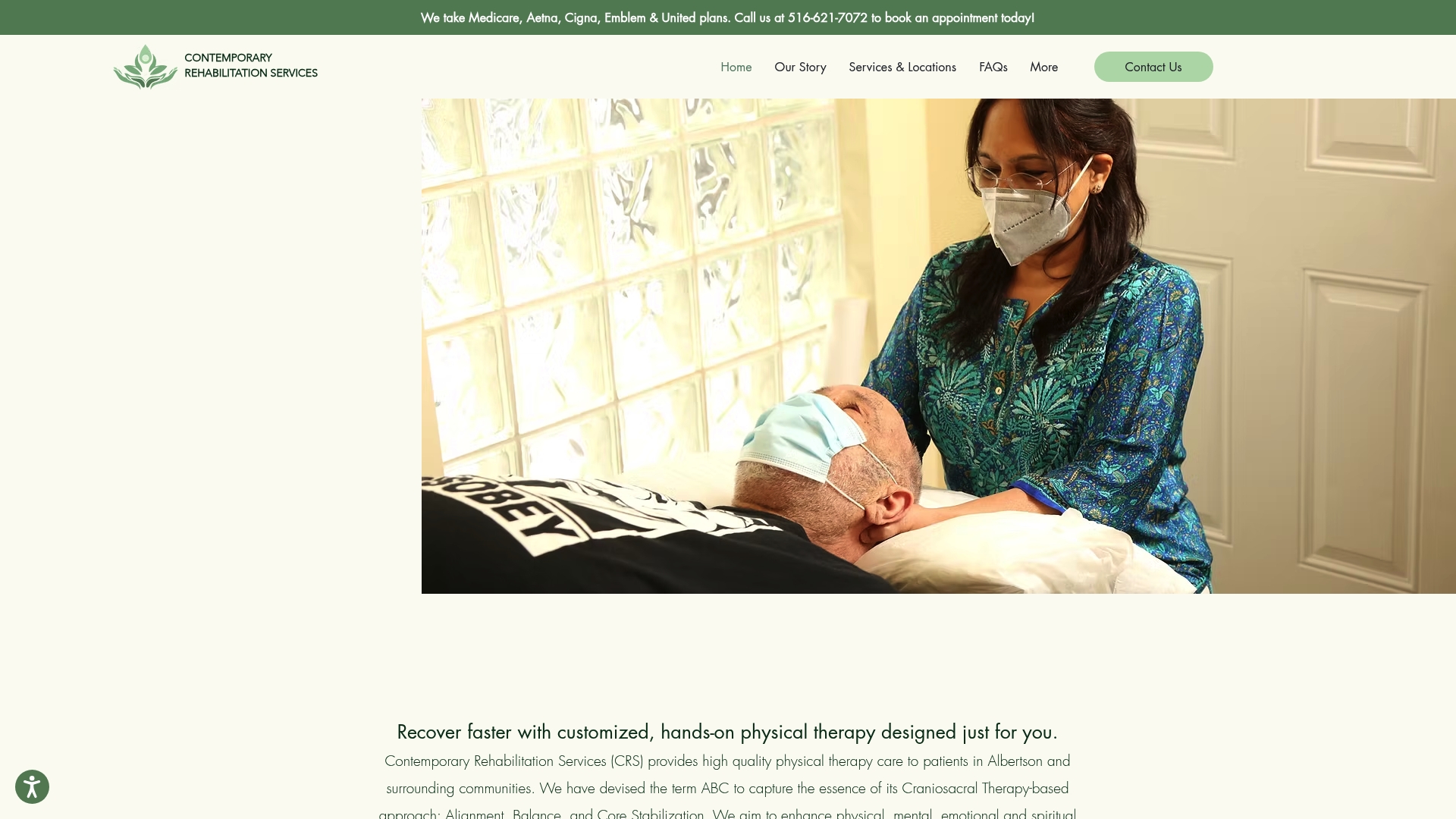
A typical session is calm and quiet. You stay fully clothed on a treatment table while the therapist places their hands lightly on the skull, spine or sacrum, the flat bone at the base of the spine. The therapist feels for a subtle rhythm and for areas that seem restricted. The Upledger Institute describes sessions of 45 to 60 minutes, and patients often report warmth, a gentle pulsing feeling or deep relaxation.
There is no cracking, no deep pressure and no need to undress. That makes it a comfortable option if your face and head are already tender and sensitive to pressure.
If you want the longer background, our article on what craniosacral therapy is and why more people are turning to it walks through it in detail.
Why sinus symptoms are so easy to misread
Before choosing any therapy, it helps to know what the pressure behind your eyes and cheeks really is. A 2024 review in Neurologic Clinics by neurologist Dr. Michael Marmura looked at a prospective study of 2,991 adults who believed their headaches came from their sinuses. Most reported sinus pressure (84%), sinus pain (82%) or nasal congestion (63%). Yet the majority were diagnosed with migraine.

The same review notes that among people referred for a sinus evaluation who showed no sign of rhinosinusitis on a CT scan or endoscopy, migraine was the most common diagnosis, at 58%. Migraine and tension-type headaches sit in the same places as sinus pain, and migraine can cause congestion and a runny nose through the body’s autonomic nervous system, the part that runs automatic functions.
American Family Physician makes a similar point for clinicians: frequent or increasing headaches deserve a complete assessment, because migraine and sinus headache are often misdiagnosed. It recommends using International Headache Society criteria to identify each headache type.
What this means for you:
If your “sinus headaches” come back again and again, with no fever or colored discharge, ask your doctor whether migraine or tension-type headache could be involved.
If you do have an infection, you want it treated appropriately.
Either way, tight muscles and fascia (the connective tissue wrapped around muscle) in the neck, jaw, face and upper back can add to how heavy your head feels. That is where hands-on therapy comes in.
When to see a provider first
The CDC explains that most sinus infections are viral and often improve without antibiotics. For comfort, it suggests a warm compress over the nose and forehead, a saline nasal spray or decongestant, and steam from hot water or a shower. A provider may also use “watchful waiting”, which means waiting two to three days to see whether antibiotics are needed, or give a deferred prescription.
The same CDC page says to see a provider if you have:
A strong headache or severe facial pain.
Symptoms that get worse after they started to improve.
Symptoms lasting more than 10 days without improvement.
A fever lasting more than 3 to 4 days.
Several sinus infections in the past year.
If any of these fit you, please see your doctor or an ear, nose and throat specialist first. Manual therapy works best when you already know what is behind your symptoms. Treatment for an infection and hands-on therapy for tension can run side by side once your provider has weighed in.
What researchers are looking at
Sinus problems are common. A 2022 pilot study in Osteopathic Family Physician notes that sinusitis affects more than 30 million Americans a year. In that small study, 22 people received a 14-minute hands-on osteopathic protocol, and they reported relief of congestion, postnasal drip, sinus pain, headache and fatigue, with no adverse events. It was an early, small study without a control group, and the authors call for larger ones. It is osteopathic manual treatment rather than craniosacral therapy, but it shows why clinicians are interested in gentle hands-on care for sinus symptoms.
Research continues. A randomized trial in Turkey, registered on ClinicalTrials.gov, tested an eight-session, four-week craniosacral osteopathic protocol alongside standard medical therapy for chronic rhinosinusitis. Sessions lasted 45 minutes, twice a week, and focused on vagal stimulation, lymphatic drainage and craniosacral regulation. Outcomes included the SNOT-22 symptom questionnaire and endoscopic findings. The trial involved 50 participants and was completed in early 2026.
Notice how that trial was designed: the hands-on work was an adjunct, added to standard medical care and not used in place of it. That is how we think about it too.
If you like to see how different therapies are studied and summarized, this overview of clinical research on vibroacoustic therapy shows how research on non-drug approaches is usually presented.
Our own articles on craniosacral therapy for migraines and on what evidence and experience reveal go deeper if you want to read the studies yourself.

Why the face, head and neck feel so tight with sinus trouble
When you are congested for days, you tend to hold your face, jaw and shoulders tensely. You breathe through your mouth, tilt your head forward, clench your teeth at night and sleep poorly. Over time the muscles around the jaw, the base of the skull and the neck stay contracted, and that tension can feel a lot like sinus pressure.
Hands-on therapists look at this whole chain. The areas we pay attention to include:
The base of the skull and upper neck, where tight muscles can refer pain up into the forehead and behind the eyes.
The jaw (temporomandibular joint, or TMJ), the sliding hinge in front of each ear. Jaw tension is often mistaken for sinus pain in the cheeks.
The thoracic spine and ribs, which affect how freely you breathe and how your head sits over your shoulders.
Fascia, the thin connective tissue that links these regions together.
Our pages on craniosacral therapy and TMJ and on neck pain cover those areas more closely.
What a session with us looks like
We are a boutique physical therapy clinic in Albertson, serving Queens and Nassau County. Every visit is one-on-one with an experienced mother-daughter team, and your plan is built around you. A first visit usually follows this path:
Your story. We ask where the pressure sits, when it started, what makes it better or worse, and what your doctor has already told you. If a headache pattern sounds more like migraine, or an infection sounds likely, we will say so and encourage you to follow up with your physician.
A hands-on assessment. We look at how your neck, jaw, upper back and posture move and where tissue feels restricted.
Gentle treatment. Depending on what we find, this may include craniosacral therapy, myofascial therapy (work on the fascia), joint mobilization, neural mobilization, visceral therapy or neuromuscular re-education. These are all listed on our services page.
A plan for home. Our individualized rehabilitation programs include exercises, and we publish our own exercise guides. Our “ABC Approach” to rehabilitation shapes how we organize that plan.
If you want to see what to expect in more detail, our step-by-step craniosacral therapy guide takes you through a session.
Safe use: who should wait or ask their doctor first
Craniosacral therapy is gentle, but a few situations call for medical clearance first. Published lists of contraindications include intracranial aneurysm, cerebral hemorrhage, subdural or subarachnoid bleeding and increased intracranial pressure. Another professional guide adds recent brain injury, stroke, concussion or trauma, recent spinal taps, and recent skull, vertebral or rib fractures until fully healed.
Tell us about any of these before your first visit, along with any head injury, surgery or new neurological symptoms. Sudden, severe “worst-ever” headache, vision changes, confusion, a stiff neck with fever, or swelling around the eye need urgent medical attention, not an appointment with us: call 911 or go to the nearest emergency room. Our article on craniosacral therapy safety covers this in more depth.
Getting the most from your care
A few habits make your visits count:
Keep a short headache log. Note the time of day, any fever or colored discharge, your sleep, and how your jaw and neck feel. It helps us and your doctor sort out the pattern.
Keep up the basics your provider recommends. The CDC’s comfort measures, such as warm compresses, saline spray and steam, fit alongside hands-on therapy.
Wear comfortable clothes. You stay clothed throughout craniosacral sessions.
Plan for rest afterward. Patients often describe feeling relaxed after a session, so a light schedule afterward is wise.
Our perspective
We see people who arrive saying they have sinus problems and who are really carrying tension through the jaw, neck and base of the skull. Others have migraine that behaves like sinus pain. Our approach starts with listening and a careful hands-on assessment, because the right plan depends on what is truly driving your symptoms. Craniosacral therapy suits this kind of work because it is gentle. The touch is light, you stay clothed, and nothing about it asks your tender face and head to tolerate more than they can. We pair it with myofascial therapy, joint mobilization and neuromuscular re-education when your body calls for it, so you are not limited to one technique. We believe in personal care. You work directly with an experienced mother-daughter team, with an individualized plan and exercises you can practice at home. And we want you to be seen by the right physician whenever your symptoms point to an infection or something that needs medical attention. Our care is meant to work alongside that. CRS Wellness
Ready to book a visit in Albertson
If head and face tension has been wearing you down, we can help you work through it. We offer in-person physical therapy and telehealth sessions, and our craniosacral, myofascial and joint mobilization work is described on our services page. We accept Medicare, Aetna, Cigna, Emblem and United Healthcare, as well as cash payments. We welcome patients from Albertson, Mineola, Roslyn, Williston Park, Westbury, Carle Place and the rest of Nassau County and Queens. You can start on our home page.
FAQ
Can craniosacral therapy cure a sinus infection?
No. A sinus infection is a medical condition, and your provider decides how to treat it. The CDC notes that most are viral and often improve without antibiotics. Craniosacral therapy is a gentle hands-on option for tension in the head, neck and jaw, and it can be used alongside the care your provider recommends.
Is craniosacral therapy safe if I have a stuffy nose or head pressure?
For most people the light touch is comfortable, and you stay clothed. Tell us first if you have had a head injury, stroke, aneurysm, brain bleed or recent skull, spine or rib fracture, because those call for medical clearance. Any sudden, severe headache or fever with a stiff neck needs emergency care.
How do I know if my sinus headache is really migraine?
Only a clinician can diagnose it. A large study of adults who thought they had sinus headaches found that most were diagnosed with migraine, so recurring episodes without fever or colored discharge are worth discussing with your doctor. Mention any sensitivity to light or sound, nausea, or a family history of migraine.
How long is a craniosacral session, and does insurance cover it?
Sessions in this method typically run 45 to 60 minutes, according to the Upledger Institute. We accept Medicare, Aetna, Cigna, Emblem and United Healthcare, plus cash payments. Call us to check how your own plan applies to your visit.
Sources
What Is CranioSacral Therapy? A Complete Guide, Upledger Institute
Headaches due to Nasal and Paranasal Sinus Disease, Neurologic Clinics review (Marmura, 2024)
Frequent Headaches: Evaluation and Management, American Family Physician (2020)
Osteopathic Manipulative Treatment for Sinusitis Relief: A Pilot Study (2022)
Craniosacral Osteopathic Treatment for Chronic Sinusitis, ClinicalTrials.gov NCT07542444
Craniosacral therapy: gentle manipulation, South African Pharmaceutical Journal (2006)
What Exactly Is Cranial Sacral Therapy? Massage Professionals Update (2016)
Recommended
Comments