
8–12 Week Balance Training for Seniors: Clinic Backed Home Program
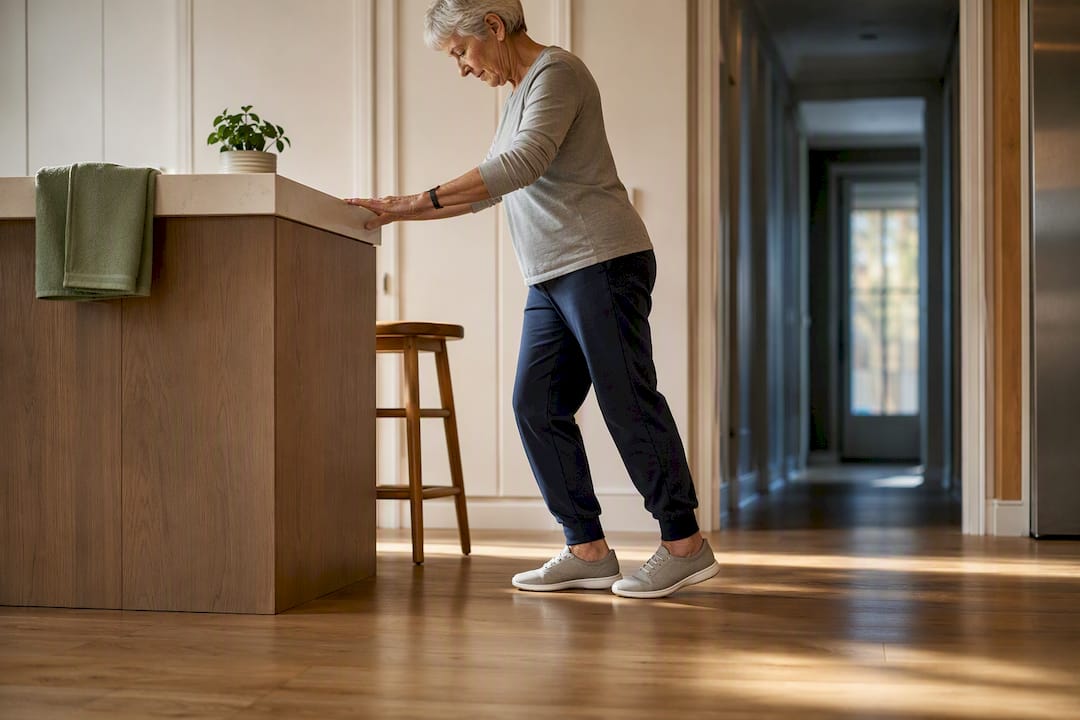
Start a progressive balance-training routine two to three times a week, mixing static holds like single-leg stance with dynamic moves like tandem walking and sit-to-stand drills. Task-specific, progressively challenging exercise is what the evidence backs, not generic activity. If you’ve had a recent unexplained fall, new dizziness, or take multiple medications, get screened by a clinician before you push the intensity.
TL;DR:
Reactive balance training, which involves perturbation exercises, yields the largest improvements in reactive balance compared to general strength or standard routines.
Incorporating functional tasks like sit-to-stand, reaching, and stepping mimics real-life movements and enhances overall fall prevention.
Balance exercises should progress gradually, focusing on task-specific challenges such as reducing support or adding dual tasks over several weeks.
A safety screening is essential before starting; individuals with recent unexplained falls, dizziness, or cardiovascular issues should consult a healthcare professional first.
Professional physical therapy may be necessary if recurrent falls occur or specific deficits persist despite home exercises.
Table of Contents
What Is the Best Balance Training for Seniors?
Balance training works when it’s specific to the skill you’re trying to protect. Walking on a treadmill helps your heart, but it does very little for the reflexes that catch you when you trip on a curb. A network meta-analysis of older adults found that reactive, or perturbation-based, balance training produced the largest improvements in reactive balance of any exercise type studied, outperforming general strength work and standard balance routines alone.
That doesn’t mean strength training is optional. It means the most effective senior balance exercises combine static holds, dynamic movement, and functional tasks that mimic real life: reaching for a cabinet, stepping off a curb, catching yourself when a rug slips underfoot.
Static balance exercises
Feet-together stance: Stand with feet touching, hands near a counter, for 10 to 30 seconds. Progress by closing your eyes once you’re steady.
Tandem stance: Place one foot directly in front of the other, heel to toe, and hold for 10 to 20 seconds each side.
Single-leg stance: Lift one foot slightly off the floor near a wall or chair, aiming for 10 seconds, building toward 30.
Dynamic balance exercises
Heel-to-toe walk: Walk a straight line placing the heel of one foot directly in front of the toes of the other for 10 to 15 steps.
Sideways walking: Step sideways for 10 to 12 steps in each direction, keeping knees soft.
Step-ups: Use a stair or low step, pressing up through the whole foot, 8 to 10 reps per leg.
Weight shifts: Standing with feet shoulder width apart, shift weight slowly from one foot to the other without lifting your feet.
Functional and dual-task exercises
Sit-to-stand from a firm chair, done 8 to 12 times in a row, builds the leg strength that most directly predicts fall risk. Transfer drills, moving from a chair to standing to a different surface, rehearse the exact movement that causes trouble in real bathrooms and kitchens. Once these feel manageable, add a dual task: counting backward by threes while walking heel to toe, or naming animals while shifting weight. Splitting attention is exactly what happens on a sidewalk when a phone rings, and dual-task practice trains your brain to handle both at once.
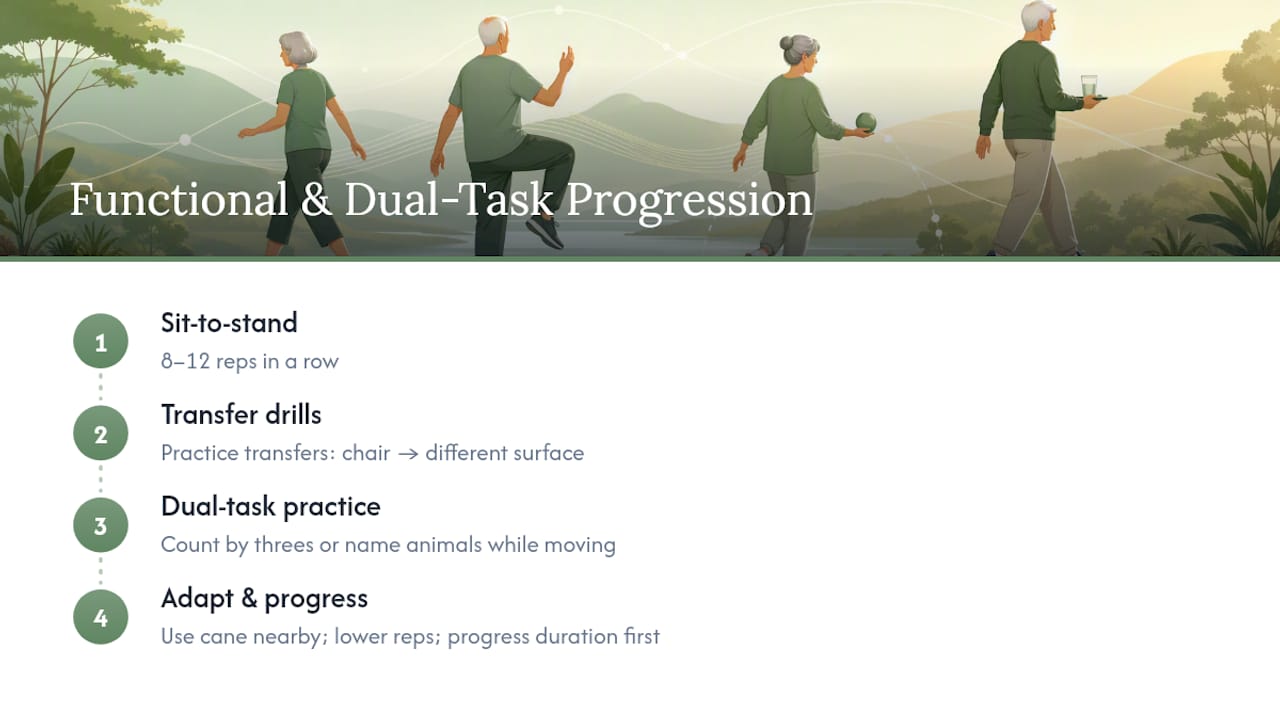
If you use a cane or walker, keep it nearby but practice single-leg stance and weight shifts holding a stable counter instead. Lower reps and shorter hold times are fine starting points if strength is limited. Progress the duration before you progress the difficulty.
Are You Safe to Start? Screening and Modifications
Before starting any balance improvement exercises, a short safety check matters more than the workout itself.
Stop and see a clinician first if you’ve had:
An unexplained fall in the past 12 months
New or worsening dizziness, especially when standing up
Chest pain, fainting, or a racing heartbeat during activity
A recent diagnosis affecting vision, inner ear, or nerve sensation
Set up your space before you begin:
A stable chair or countertop within arm’s reach
A clear floor, free of rugs, cords, or pets underfoot
Supportive shoes with a flat, non-slip sole
A family member or caregiver nearby for the first few sessions
If vision is limited, keep your eyes open during every exercise and rely more on wall support. If grip or hand strength is weak, practice near a countertop rather than a single chair back, which can tip. Anyone using a cane or walker should master seated and supported standing balance before attempting any single-leg work.
Pro Tip: Stop immediately if you feel lightheaded, your vision blurs, or your heart rate spikes uncomfortably. A brief rest and a glass of water solve most of these episodes, but repeated dizziness needs a same-week appointment, not a shrug.
For more on setting up a safe home space, see this guide to exercising safely at home.
How Often Should Seniors Do Balance Exercises?
Aim for two to three dedicated balance sessions weekly, 15 to 20 minutes each, plus short daily practice like standing on one leg while brushing your teeth. Pooled evidence reviewed for the US Preventive Services Task Force found that exercise programs combining gait, balance, and functional training meaningfully cut the rate of falls and the odds of having at least one fall.
Progress in this order, not all at once:
Weeks 1 to 2: Master the base versions with full hand support. Focus on form.
Weeks 3 to 4: Reduce hand support to fingertip touch. Increase hold times.
Weeks 5 to 8: Remove hand support where safe. Narrow your stance. Add head turns or eye closure.
Weeks 9 to 12: Add dual tasks and, if cleared by a clinician, unstable surfaces like a folded towel underfoot.
Track two simple checkpoints: how long you hold single-leg stance, and how quickly you complete the Timed Up and Go test (standing from a chair, walking 10 feet, turning, and sitting back down). World falls-prevention guidelines point to these exact measures for tracking progress over a 12-week program.
Consistency beats intensity. Three steady weeks of 15-minute sessions build more stability than one exhausting hour followed by two weeks off. If a session leaves you sore or shaky the next day, hold at that level one extra week before progressing.
When Clinical Balance Training or Physical Therapy Is Needed
Home exercises cover a lot of ground, but some situations call for a professional set of eyes. Recurrent falls, trouble transferring out of a chair or bathtub, new dizziness, or a walking pace slower than about 0.8 meters per second are all signals worth a physical therapy evaluation. So is taking several medications known to affect balance, since combined side effects are easy to miss at home.
A physical therapy visit for balance typically includes standardized testing like the Timed Up and Go or Berg Balance Scale, an individualized plan built around your specific deficits, and supervised progression that can include perturbation or reactive training, the kind that showed the strongest gains in reactive balance in clinical research. This kind of guided “near-fall” practice is hard to replicate safely alone, since a therapist paces the exposure to avoid excessive dizziness while your nervous system relearns how to catch itself.
Medicare and major private insurers, including Aetna, Cigna, Emblem, and United Healthcare, commonly cover physical therapy for balance and fall risk when it’s documented as medically necessary. Exact costs still depend on your specific plan and setting, so it’s worth confirming your benefits before your first visit.
Before your visit, bring or note:
A current medication list
A brief history of any recent falls or near-falls, including where and when
Your insurance card and referral information, if required
Questions about your specific goals, whether that’s gardening, grandkid duty, or simply getting up from the floor unassisted
For more on what this process looks like, see this guide to the role of PT for older adults.
Why Most Home Balance Programs Fail Before They Work
The biggest barrier to better balance isn’t motivation. It’s boredom paired with invisible progress. Static holds and slow walks don’t produce the same feedback as lifting a heavier weight or running a faster mile, so people quit around week three, right before real gains typically show up.
The fix isn’t more willpower. It’s building balance work into tasks you already do every day: single-leg stance while waiting for coffee to brew, heel-to-toe steps down a hallway you walk anyway, sit-to-stand reps every time you get up from the couch during commercials. Guidelines converge on one principle worth repeating: balance training has to be progressive and task-specific to actually change fall risk. Simply staying active isn’t the same thing, and that distinction is where most well-meaning routines quietly stall out.
The other overlooked barrier is fear itself. Some seniors avoid the exact movements that would help them most, like standing without hand support, because a wobble feels like a warning sign rather than a training stimulus. That’s a reasonable instinct without guidance, and it’s exactly why supervised progression matters for anyone who feels unsteady rather than just out of practice.
— CRS Wellness
How CRS Wellness Supports Seniors With Balance and Fall Risk
CRS Wellness works with older adults across Queens and Nassau County on exactly this kind of progressive, task-specific balance training, delivered in person or through virtual sessions when travel is difficult. The clinic accepts Medicare, Aetna, Cigna, Emblem, and United Healthcare, along with direct cash payment, so coverage rarely stands between you and an evaluation.
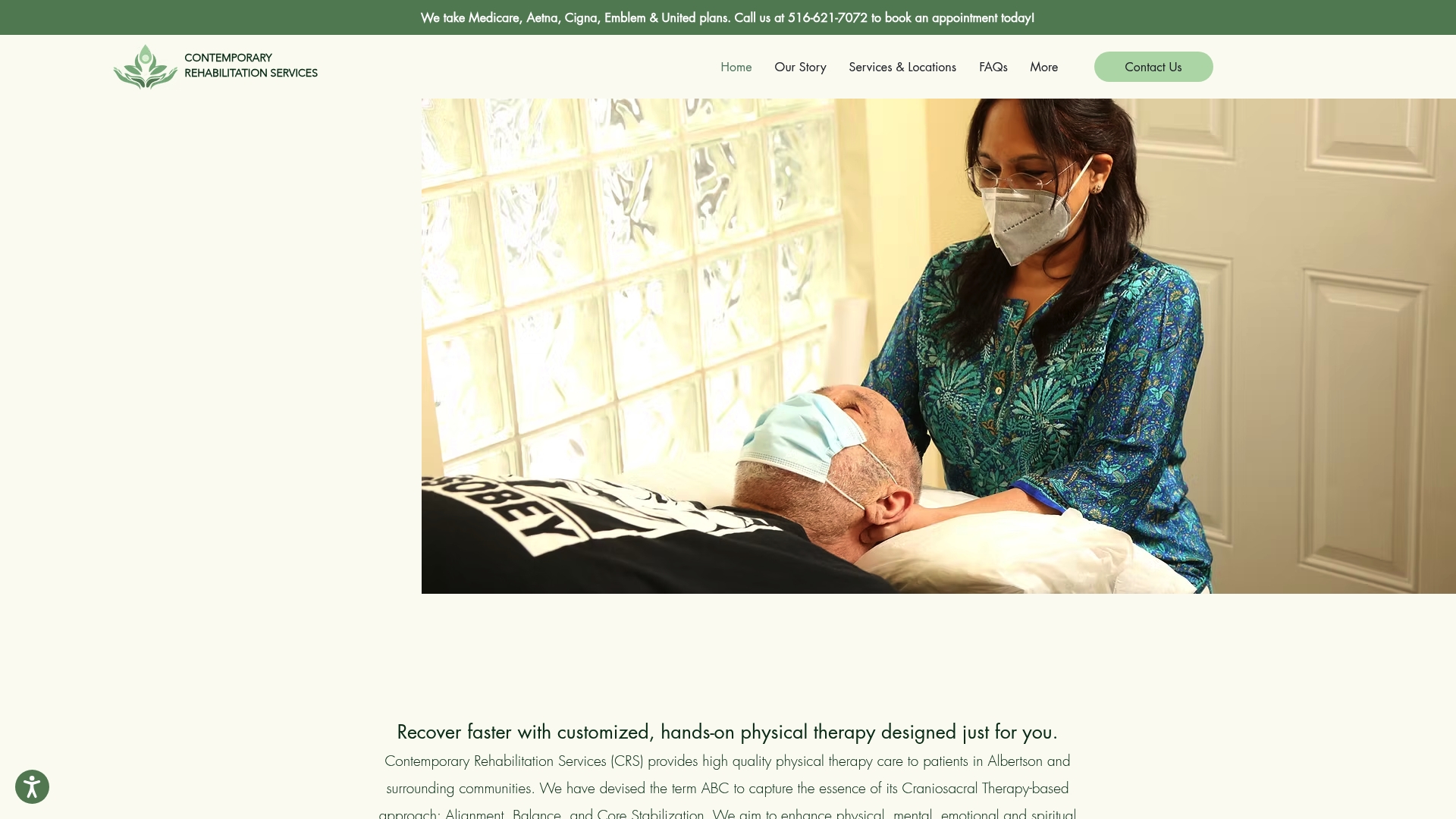
A first visit typically starts with a gait and balance assessment, similar to the Timed Up and Go and single-leg stance checks described above, followed by a plan built around your specific risk factors rather than a generic exercise sheet. If you’ve hit a screening red flag, or your home program has plateaued despite consistent effort, that’s the point where supervised, hands-on care outperforms anything you can safely do alone. You can check availability and book a visit at the Albertson clinic location to get a personalized assessment started this week.
This article is general information, not a substitute for advice from a qualified doctor. Consult a qualified healthcare professional about your own circumstances before acting on anything here.
Sources
Recommended
Comments