
Common Physical Therapy Modalities: Your 2026 Guide
- tjdontplay
- Jun 22
- 7 min read

Common physical therapy modalities are the treatment tools and techniques physical therapists use to reduce pain, restore movement, and support recovery from injury or chronic conditions. These modalities fall into three broad categories: exercise-based therapies, manual therapy techniques, and adjunctive treatments such as electrical stimulation, thermal applications, and mechanical traction. Combination multidisciplinary rehab programs are more effective than single modality treatments alone for chronic pain. That finding shapes how every well-designed PT plan is built. Understanding what each modality does, and why your therapist may combine several, helps you get more from every session.
1. What are the most common physical therapy modalities?
Physical therapy modalities in clinical practice include exercise-based therapies, manual therapy, TENS, therapeutic ultrasound, laser therapy, dry needling, heat, cold, and traction. Each serves a distinct role. Some address pain directly. Others rebuild strength and movement. Most are used together rather than alone. Knowing the full list helps you ask better questions at your next appointment.

2. Exercise-based therapy: the foundation of rehabilitation treatment
Exercise-based therapies are the most evidence-supported physical modality for chronic musculoskeletal pain. Moderate-certainty evidence backs their use for conditions including low back pain and osteoarthritis. No other single modality matches that level of research support.
Therapeutic exercise works by rebuilding the neuromuscular connection between your brain and your muscles. After an injury, that connection weakens. Targeted exercise restores it. The main types your therapist may prescribe include:
Range of motion exercises: Restore joint flexibility after surgery or immobilization
Strengthening exercises: Rebuild muscle around an injured joint to reduce load on damaged tissue
Neuromuscular training: Retrain balance and coordination, especially after ACL tears or stroke
Aerobic conditioning: Improve cardiovascular endurance and reduce systemic inflammation in chronic pain patients
In orthopedic rehab, a patient recovering from rotator cuff surgery will progress from passive range of motion to active strengthening over weeks. In neurological rehab, a stroke patient may work on gait retraining and balance boards. The exercises differ, but the principle is the same: progressive loading drives recovery.
Pro Tip: Adherence matters more than any single exercise choice. A therapist-guided home program you actually follow beats a perfect clinic program you skip.
3. Manual therapy techniques used in physical therapy
Manual therapy is a broad category that includes spinal manipulation, chiropractic care, osteopathic manipulative treatment, and soft tissue mobilization. Different clinicians apply these techniques differently, and evidence quality varies across subtypes. Patients should expect short-term symptom relief rather than a permanent cure from manual therapy alone.
Massage therapy is one of the most recognized manual approaches. It shows favorable short-term effects for pain relief and mobility, though systematic reviews rate the evidence quality as low to very low. That does not mean massage is ineffective. It means the benefit is real but modest, and it works best as part of a broader active rehab plan.
Common manual therapy techniques include:
Spinal manipulation: High-velocity, low-amplitude thrust to restore joint mobility in the spine
Joint mobilization: Slower, graded movements to reduce stiffness and pain in peripheral joints
Soft tissue mobilization: Hands-on pressure to release muscle tension and improve circulation
Myofascial release: Sustained pressure on connective tissue to reduce restrictions
Pro Tip: Manual therapy works best when it is paired with exercise. Use it to reduce pain and improve mobility first, then build strength through active rehab.
4. Adjunctive modalities: electrical stimulation, ultrasound, and laser therapy
TENS, therapeutic ultrasound, laser therapy, dry needling, and shockwave therapy are adjunct therapies for musculoskeletal pain. They support recovery but are not designed to replace exercise or manual therapy. Think of them as tools that reduce the barriers to active rehabilitation.
TENS (transcutaneous electrical nerve stimulation) delivers low-voltage electrical current through skin electrodes. It interrupts pain signals traveling to the brain and reduces muscle spasm. Patients with chronic low back pain or knee osteoarthritis often receive TENS before or after exercise sessions.
Therapeutic ultrasound and laser therapy use sound waves and light energy, respectively, to stimulate tissue healing and improve blood flow. Both are applied directly to the skin over the injured area. They are particularly useful in the early stages of soft tissue injury when inflammation limits movement.
Other adjunctive options include:
Dry needling: Thin needles inserted into trigger points to release muscle tension and reduce referred pain
Shockwave therapy: High-energy acoustic waves directed at chronic tendon injuries like plantar fasciitis or calcific tendinitis
Iontophoresis: Electrical current used to drive anti-inflammatory medication through the skin
Dose and standardization vary widely among modalities like TENS and ultrasound, affecting patient outcomes. Progress should be measured by patient results, not by the device used.
5. Thermal and mechanical modalities: heat, cold therapy, and traction
Thermal and mechanical modalities manage symptoms and prepare the body for active rehabilitation. Clinicians commonly use heat and cold application alongside electrical stimulation, manual therapy, and exercise to manage symptoms and restore movement. Sequencing matters: thermal prep before exercise produces better functional gains than exercise alone.
Modality | Primary use | Key consideration |
Heat therapy | Relax tight muscles, improve tissue extensibility | Apply before stretching or exercise for best results |
Cold therapy (cryotherapy) | Reduce post-exercise soreness, control acute inflammation | Limit sessions to under 15 minutes at temperatures below 59°F |
Traction | Relieve nerve root compression in spine conditions | Best combined with other therapies, not used in isolation |
Cold water immersion under 15 minutes at temperatures below 59°F reduces post-exercise muscle soreness within 24 hours. That makes cryotherapy a practical recovery tool after intense PT sessions, not just a post-game treatment for athletes.
Traction is a mechanical modality that uses controlled force to separate vertebrae and relieve nerve root compression in conditions like cervical radiculopathy or lumbar disc herniation. It is rarely used alone. Most therapists combine it with manual therapy and exercise for lasting results.
Pro Tip: For faster recovery from a tough PT session, try cold therapy techniques within two hours of exercise. Keep sessions short and water temperature cold but safe.
6. Emerging and alternative physical therapy modalities
Several newer or less-established modalities appear in PT clinics today. Kinesio taping, Hivamat therapy, hydromassage, and hands-free ultrasound all fall into this category. According to 2026 BCBSM medical policy, many alternative modalities including Kinesio taping and hydromassage are considered experimental or investigational. That means they lack sufficient evidence to be considered standard care.
That does not mean you should refuse them outright. It means you should ask specific questions before committing to a course of treatment:
What outcome measure will we use to track progress?
How many sessions before we reassess?
Is this modality replacing or supplementing active exercise?
Is this covered by my insurance plan?
Alternative modalities labeled investigational require documented progress to justify continued use. Objective check-ins using pain scales and functional tests prevent indefinite passive treatment without clear results. If a modality is not moving the needle after a reasonable trial, a good therapist will say so and adjust the plan.
Key takeaways
Exercise-based therapy is the most evidence-supported physical therapy modality, and it works best when combined with manual therapy and adjunctive treatments in a structured, outcome-tracked plan.
Point | Details |
Exercise is the core modality | Moderate-certainty evidence supports exercise for chronic musculoskeletal conditions above all other single modalities. |
Manual therapy offers short-term relief | Spinal manipulation, joint mobilization, and massage reduce pain and improve mobility but work best alongside active rehab. |
Adjunctive modalities support, not replace | TENS, ultrasound, and laser therapy reduce barriers to exercise but should not be the primary treatment. |
Thermal prep improves outcomes | Applying heat or cold before exercise sessions improves tissue readiness and functional gains. |
Alternative modalities need tracking | Investigational options like Kinesio taping require measurable progress checks to avoid prolonged passive care. |
What I’ve learned about combining modalities for real results
Working with patients recovering from everything from rotator cuff repairs to chronic low back pain, one pattern stands out clearly. The patients who recover fastest are not the ones who receive the most modalities. They are the ones whose therapist sequences those modalities with a clear purpose.
Heat before exercise, TENS for acute flare-ups, manual therapy to unlock a stiff joint before loading it, and then progressive exercise to rebuild strength. That order is not arbitrary. It reflects how tissue responds to treatment. Skipping the prep phase and jumping straight to exercise often leads to guarded movement and slower progress.
The other thing I see regularly is patients who arrive expecting a single modality to fix everything. They want the ultrasound to heal the tendon or the massage to cure the back pain. Those tools help. But evidence on manual therapy and adjunctive modalities consistently shows short-term symptom relief, not long-term cure. The cure comes from rebuilding capacity through exercise.
Set measurable goals with your therapist from day one. Track them every two to three weeks. If a modality is not contributing to progress on those goals, ask why it is still in the plan. That conversation is not confrontational. It is exactly what good clinical care looks like.
— Tj
Physical therapy modalities at Contemporaryrehabservices
Contemporaryrehabservices is a boutique physical therapy clinic in Albertson, NY, serving patients across Queens and Nassau County. The clinic accepts Medicare, Aetna, Cigna, Emblem, and United Healthcare plans.
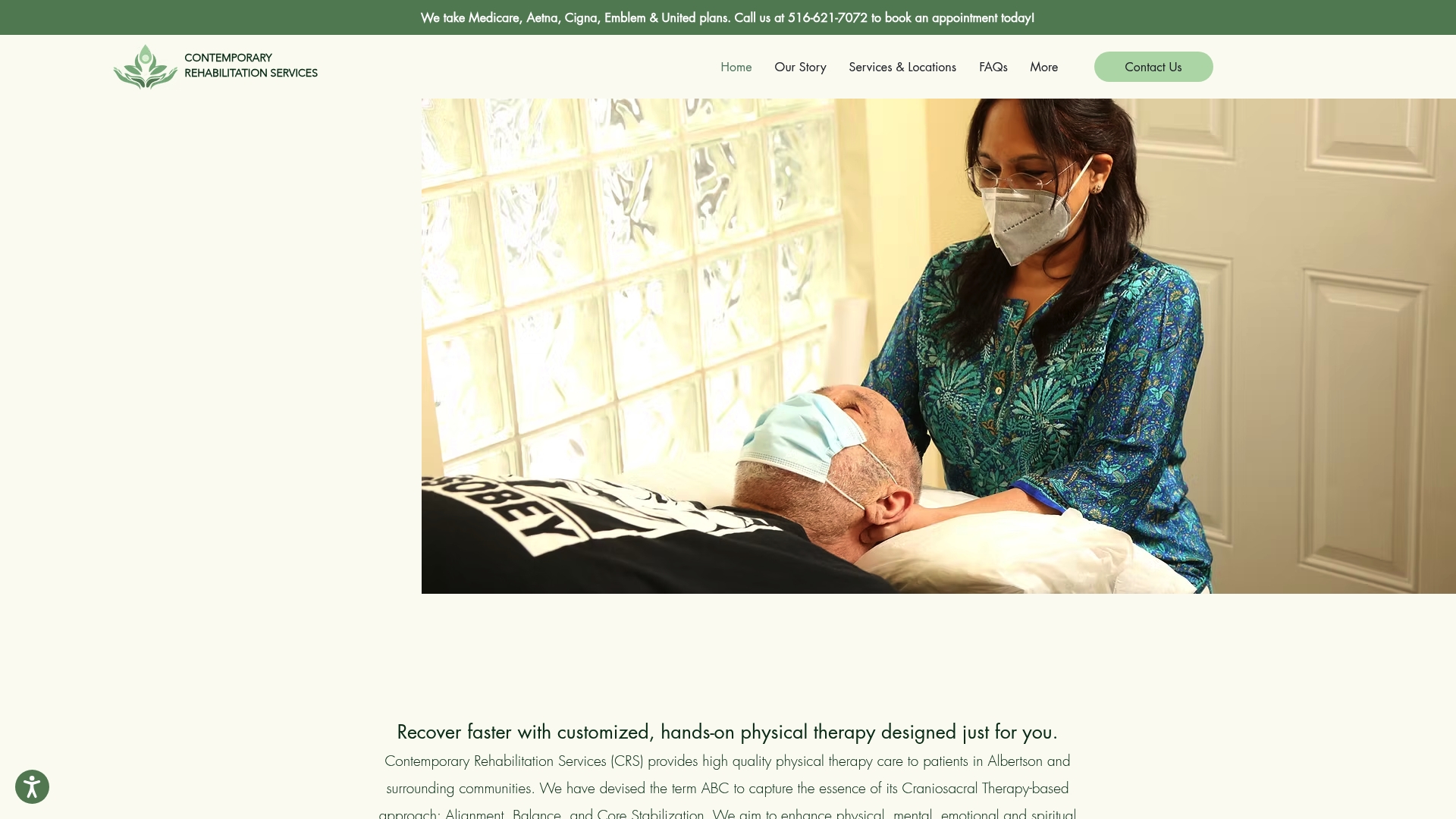
Every treatment plan at Contemporaryrehabservices is built around the modalities that match your specific condition and goals. Whether you need exercise-based rehabilitation, manual therapy, or adjunctive treatments like TENS and therapeutic ultrasound, the team designs a structured, outcome-tracked program. You can review the full range of therapy services offered or book a consultation at the Albertson clinic to get started on a plan built for your recovery.
FAQ
What are the most common PT treatment options?
The most common physical therapy treatment options include therapeutic exercise, manual therapy, TENS, therapeutic ultrasound, heat and cold therapy, and traction. Most treatment plans combine several of these modalities rather than relying on one alone.
Is manual therapy the same as chiropractic care?
Manual therapy is a broad category that includes chiropractic manipulation, osteopathic treatment, and physical therapist-delivered joint mobilization. The techniques overlap, but the clinician’s training and scope of practice differ.
How long does cold therapy need to be effective?
Cold water immersion under 15 minutes at temperatures below 59°F reduces post-exercise muscle soreness within 24 hours. Longer or colder sessions do not produce proportionally better results and carry increased risk.
Are alternative modalities like Kinesio taping worth trying?
Kinesio taping and similar modalities are classified as experimental or investigational by major insurers in 2026. They may provide symptom relief for some patients, but you should track measurable outcomes and set a clear reassessment timeline with your therapist.
How do I know which modality is right for my condition?
Your physical therapist will assess your condition, pain level, and functional goals to select the right combination of modalities. Exercise-based therapy is the evidence-supported foundation for most musculoskeletal conditions, with other modalities added based on your specific needs.
Recommended
Comments