
PT Treatment Planning: What Patients Need to Know

PT treatment planning is the process of building a personalized roadmap that outlines your diagnosis, therapy goals, specific interventions, and a schedule for tracking your progress toward functional recovery. In physical therapy, this structured approach is formally called a Plan of Care. It is not just a clinical formality. The Plan of Care is a legal and billing document that guides every session, satisfies Medicare and private insurance requirements, and gives both you and your therapist a clear picture of where you are headed. Understanding what goes into this plan helps you participate more actively in your own recovery.
What is PT treatment planning and why does it matter?
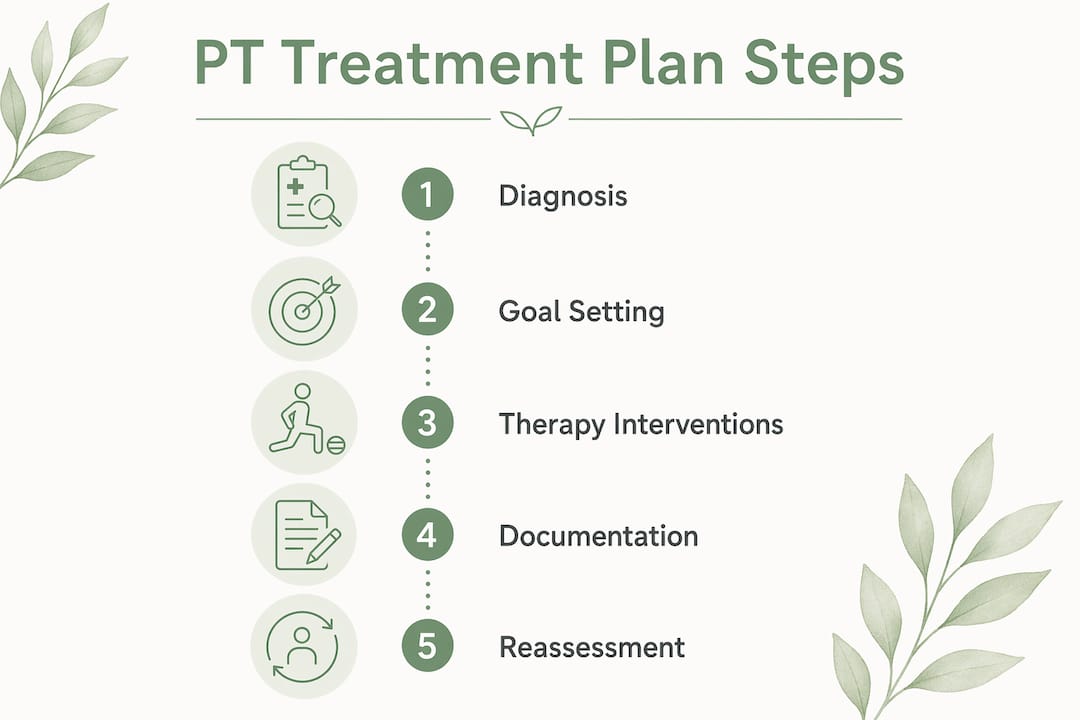
PT treatment planning is defined as the structured clinical process of identifying a patient’s condition, setting measurable recovery goals, selecting appropriate interventions, and scheduling reassessments to track progress. The formal industry term is the Plan of Care, and it covers everything from your initial diagnosis to the number of sessions per week. Physical therapy planning is not a one-size-fits-all document. Every plan reflects your specific condition, lifestyle, and recovery timeline.
The Plan of Care serves two equally important purposes. First, it guides your therapist’s clinical decisions at every session. Second, it satisfies the documentation requirements of payers like Medicare, Aetna, Cigna, Emblem, and United Healthcare. Without a properly structured plan, your insurance coverage can be denied, even if the therapy itself is medically necessary. That is why understanding the plan’s structure matters as much to you as it does to your therapist.

What are the essential components of a physical therapy treatment plan?
A complete rehabilitation treatment plan must include at least six critical components. According to plan of care standards, these are: medical diagnosis, therapeutic interventions, functional outcomes, session count per day, sessions per week, and total plan length. Missing any one of these elements can trigger insurance claim denials or gaps in your care.
Here is what each component means in practice:
Medical diagnosis: This identifies your condition precisely, such as lumbar disc herniation, rotator cuff tear, or post-surgical knee rehabilitation. A clear diagnosis anchors every other decision in the plan.
SMART goals: These are Specific, Measurable, Achievable, Relevant, and Time-bound targets. An example is: “Patient will increase shoulder range of motion to 150 degrees of flexion within six weeks.” SMART goals shift the focus from managing pain to restoring function in daily life.
Therapeutic interventions: These include targeted exercises, manual therapy techniques, and modalities like ultrasound or electrical stimulation. Personalized treatment strategies combine clinical expertise with your individual needs to support recovery.
Session frequency and duration: Your plan will specify how many times per week you attend therapy and for how many total weeks. This sets realistic expectations for both you and your insurance provider.
Documentation format: Therapists record every session using SOAP notes, which stands for Subjective, Objective, Assessment, and Plan. This format keeps your care team aligned and your records legally sound.
Pro Tip: Ask your therapist to walk you through your Plan of Care at your first session. Knowing your goals and timeline from day one keeps you motivated and helps you spot when progress is on track.
How do Medicare certification and recertification influence physical therapy plans?
Medicare has specific legal requirements that directly affect your Plan of Care. Medicare certification by a physician or non-physician practitioner must occur within 30 calendar days of your initial evaluation. If that deadline is missed, Medicare can deny the entire claim, regardless of how much therapy you have already received.
Recertification follows a predictable cycle:
Every 90 days: Your physician or non-physician practitioner must review and re-sign the Plan of Care to confirm that continued therapy is medically necessary.
Upon major clinical change: If your condition significantly improves or worsens before the 90-day mark, a new certification is required to reflect the updated plan.
At each recertification: Your therapist updates goals, adjusts interventions, and documents measurable progress to justify ongoing coverage.
Non-compliance consequences: Failure to meet certification deadlines makes it nearly impossible to demonstrate skilled necessity to payers, which puts your Medicare PT benefits at risk.
The Plan of Care is not just a clinical tool. It is a legal document with real financial consequences. Clinics like Contemporaryrehabservices manage the entire certification and recertification process on your behalf, so you never have to track these deadlines yourself. Understanding this process helps you appreciate why your therapist asks you to sign forms and why timely physician sign-off matters so much to your coverage.
How are treatment goals and progress documented and reassessed?
SOAP notes are the standard documentation format in physical therapy, and the Plan section is where your goals live. SOAP documentation serves two key functions: it creates a legal clinical record and it communicates your care plan consistently across your entire treatment team. Every session note builds a picture of your progress over time.
The table below shows how short-term and long-term goals differ in a typical rehabilitation treatment plan:
Goal type | Time frame | Example |
Short-term goal | 2–4 weeks | Reduce pain from 7/10 to 4/10 at rest |
Long-term goal | 6–12 weeks | Return to full stair climbing without assistance |
Reassessments typically occur every 30 days. At each reassessment, your therapist compares your current function to your baseline and adjusts the plan accordingly. Treatment plans act as living documents, with initial milestones averaging 4–12 weeks. That means your plan at week eight may look very different from your plan at week one, and that is a sign the process is working correctly.
Pro Tip: Keep a simple journal of how you feel after each session. When your therapist conducts a reassessment, your notes give them concrete data that makes goal adjustments faster and more accurate.
The clinical reasoning behind every treatment decision shows up in the Plan section of your SOAP notes. This transparency is what separates skilled physical therapy from generic exercise instruction. You have the right to ask your therapist to explain the reasoning behind any change to your plan.
What role does patient adherence play in PT treatment planning success?
Your therapist builds the plan, but you execute a significant portion of it at home. Adherence to your home exercise program, often called an HEP, is one of the strongest predictors of recovery speed. Non-compliance with the treatment plan can compromise insurance reimbursement and slow your recovery, because missed appointments and skipped exercises make it difficult to demonstrate that skilled therapy is still necessary.
Here is what strong adherence looks like in practice:
Completing your HEP daily: Your therapist prescribes exercises matched to your ability level and daily schedule. Skipping them even two or three times per week can delay your progress by weeks.
Attending scheduled sessions: Consistent attendance gives your therapist the data they need to reassess and adjust your plan on time. Learn more about safe home exercise habits to stay on track between visits.
Communicating changes: If pain increases or a new symptom appears, telling your therapist immediately allows the plan to be updated before a small setback becomes a larger one.
Engaging with patient education: Therapists who explain the “why” behind each exercise produce better outcomes. Patient education builds your confidence and helps you make smarter decisions about activity outside the clinic.
Caregivers play a meaningful role here too. If you are helping a family member through rehabilitation, understanding their HEP and appointment schedule gives you the tools to provide real support. Recovery is rarely a solo effort.
Key takeaways
A well-structured Plan of Care is the single most important factor in both clinical outcomes and insurance coverage for physical therapy patients.
Point | Details |
Plan of Care is a legal document | It must be physician-certified within 30 days and recertified every 90 days for Medicare coverage. |
Six components are required | Diagnosis, interventions, functional outcomes, session count, weekly frequency, and total plan length must all be present. |
SOAP notes track every change | Reassessments every 30 days keep goals current and document measurable progress for payers. |
SMART goals drive recovery | Goals tied to functional outcomes, not just pain reduction, produce faster and more durable results. |
Adherence determines success | Completing your home exercise program and attending sessions consistently protects both your recovery and your coverage. |
Why I think patients underestimate their Plan of Care
Most patients I have worked with treat the Plan of Care as paperwork. They sign it, file it, and forget it. That is a mistake with real consequences.
The plan is the single document that justifies every session to your insurance company. If your therapist cannot show measurable progress tied to documented goals, your coverage can be cut, even mid-treatment. I have seen patients lose weeks of approved therapy simply because a reassessment was delayed or a goal was written too vaguely to demonstrate improvement.
The other thing patients consistently underestimate is the timeline. Functional progress in physical therapy is incremental. Plans incorporate measurable milestones over weeks, not days. Expecting to feel dramatically better after two sessions sets you up for frustration and early dropout. The patients who do best are the ones who read their goals, ask questions at every reassessment, and treat their HEP like a non-negotiable part of their day.
My honest advice: treat your Plan of Care the way you would treat a contract. Read it. Understand it. Hold your care team accountable to it, and hold yourself accountable to it in return. That mindset shift alone can meaningfully change your outcome.
— Tj
Get a personalized PT plan at Contemporaryrehabservices
If you are ready to start physical therapy with a team that takes your Plan of Care seriously, Contemporaryrehabservices is here to help. The licensed therapists at Contemporaryrehabservices build individualized plans that meet Medicare certification standards and reflect your specific recovery goals.

Contemporaryrehabservices serves patients across Nassau County and Queens from convenient locations in Searingtown, East Williston, and Roslyn. The clinic accepts Medicare, Aetna, Cigna, Emblem, and United Healthcare plans. From your first evaluation through every reassessment, the team handles certification paperwork and keeps your plan updated so you can focus entirely on getting better. Schedule your evaluation today.
FAQ
What is a PT treatment plan in simple terms?
A PT treatment plan, formally called a Plan of Care, is a written document that outlines your diagnosis, therapy goals, specific treatments, and session schedule. It guides every decision your physical therapist makes throughout your recovery.
How long does a physical therapy treatment plan last?
Most plans run 4–12 weeks for initial milestones, with reassessments every 30 days to adjust goals and interventions based on your progress.
Does Medicare require a signed Plan of Care?
Yes. Medicare requires certification by a physician or non-physician practitioner within 30 days of your initial evaluation, with recertification every 90 days to maintain coverage.
What happens if I skip my home exercise program?
Skipping your home exercise program slows recovery and can make it harder for your therapist to document the skilled necessity of continued treatment, which puts your insurance reimbursement at risk.
Can a PT treatment plan be changed after it starts?
Yes. Treatment plans are living documents. Your therapist updates goals and interventions at each reassessment, typically every 30 days, to reflect your current condition and progress.
Recommended
Comments