
Craniosacral Therapy for Insomnia: What the Evidence Says
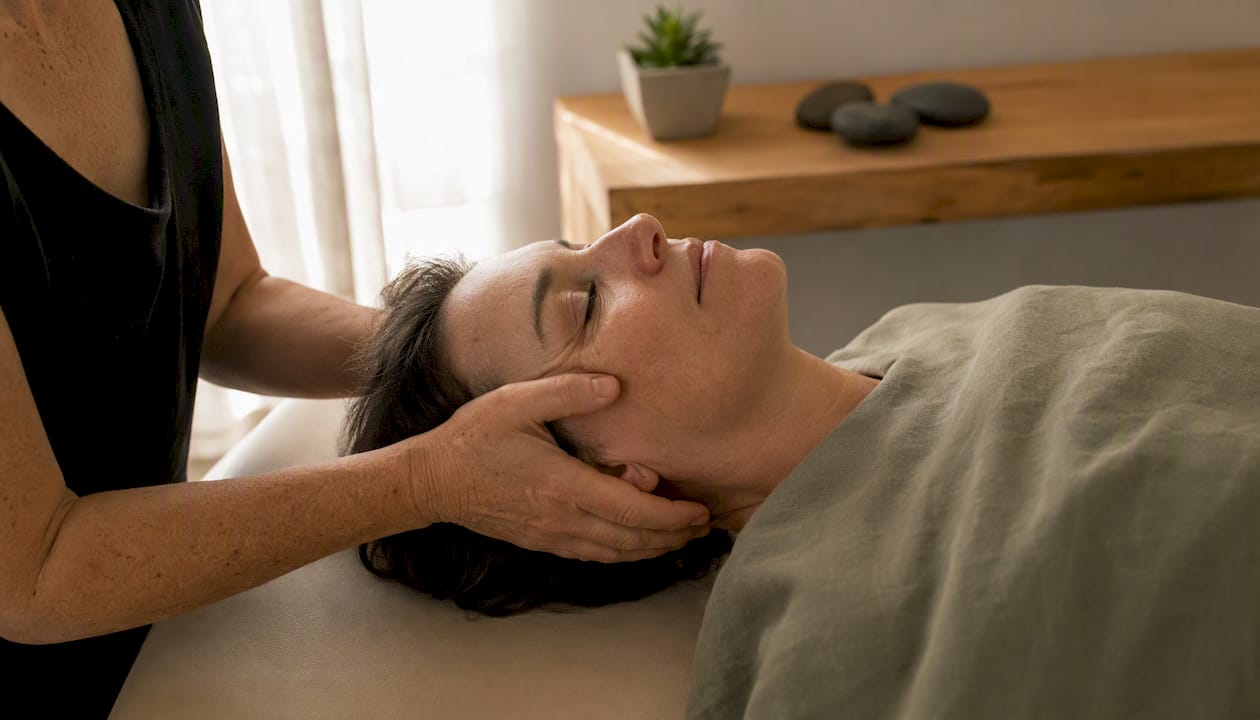
Craniosacral therapy (CST) can help some people with insomnia by promoting deep parasympathetic relaxation and improving measurable sleep metrics, though the overall evidence remains limited. A 2023 pilot trial with fibromyalgia participants reported significant improvement on the Pittsburgh Sleep Quality Index (PSQI) after 12 weekly sessions. That is a meaningful signal, but it comes from a small, single-location study. Three things to know before you read further:
Who showed benefit: Adults with fibromyalgia who were already identified as poor sleepers, not the general insomnia population.
Strength of evidence: Preliminary and limited. A 2024 systematic review rated the overall RCT evidence for CST as very low quality.
Safety headline: CST is not a nationally licensed or uniformly regulated therapy in the United States, so who performs it matters as much as the therapy itself.
If your insomnia is tied to chronic pain, high tension, or stress-related hyperarousal, a short, measurable trial of craniosacral therapy sleep support is a reasonable next step alongside standard care.
Key Takeaways
Craniosacral therapy can produce meaningful sleep improvements in some patients, but the evidence is preliminary and works best when CST is paired with sleep-hygiene practices and standard medical care.
Point | Details |
Pilot evidence is promising but limited | A 2023 RCT showed significant PSQI improvement after 12 weekly sessions in fibromyalgia patients. |
Systematic reviews urge caution | A 2024 meta-analysis rated overall CST evidence as very low quality with no confirmed clinical benefits across conditions. |
Best candidates for CST sleep trials | Adults with fibromyalgia, chronic pain, or stress-driven hyperarousal show the strongest clinical rationale for a trial. |
Credential-checking is non-negotiable | CST is not nationally licensed in the U.S.; verify your provider’s underlying state license and formal CST training before booking. |
Contemporaryrehabservices offers local CST | Credentialed clinicians in Albertson, Great Neck Plaza, and Russell Gardens provide CST with measurable goals and insurance billing support. |
Table of Contents
What does the clinical evidence say about craniosacral therapy and insomnia?
The most directly relevant study is the 2023 pilot RCT mentioned above. Participants with fibromyalgia received weekly CST sessions lasting around 45 minutes each. The PSQI global score improved significantly, mean sleep duration increased by a notable amount, and sleep latency dropped by a notable amount. Most participants completed the full protocol, suggesting the approach is well-tolerated. The authors were careful to call it a feasibility study and urged larger randomized trials before drawing firm conclusions.
The broader picture is more cautious. A 2024 systematic review and meta-analysis that included 15 RCTs qualitatively and seven in a pooled analysis found no convincing evidence that CST produces clinical benefits across musculoskeletal or non-musculoskeletal conditions. Evidence certainty was rated very low, and the authors recommended against routine clinical use until better-quality studies are available. WebMD similarly notes that good scientific evidence is lacking for most of CST’s claimed uses, including sleep complaints.
Key limitations across the research base:
Small samples: Most trials enroll fewer than 30 participants, limiting statistical power.
Single-location recruitment: Findings may not generalize to broader populations.
Protocol heterogeneity: Session lengths, technique sequences, and therapist training vary widely between studies.
Risk of bias: Blinding participants and therapists in hands-on therapy trials is inherently difficult.
Lack of objective sleep measures: Most trials rely on self-reported questionnaires like the PSQI rather than polysomnography.
The practical implication: the pilot data offers a modest, preliminary signal worth exploring if you fit the studied population. The systematic review data is a reminder to keep expectations realistic and to combine CST with evidence-based sleep strategies rather than treating it as a standalone solution.
How might CST actually improve your sleep?
CST is proposed to work through several overlapping pathways, none of which are yet definitively proven but each of which has a plausible biological basis.
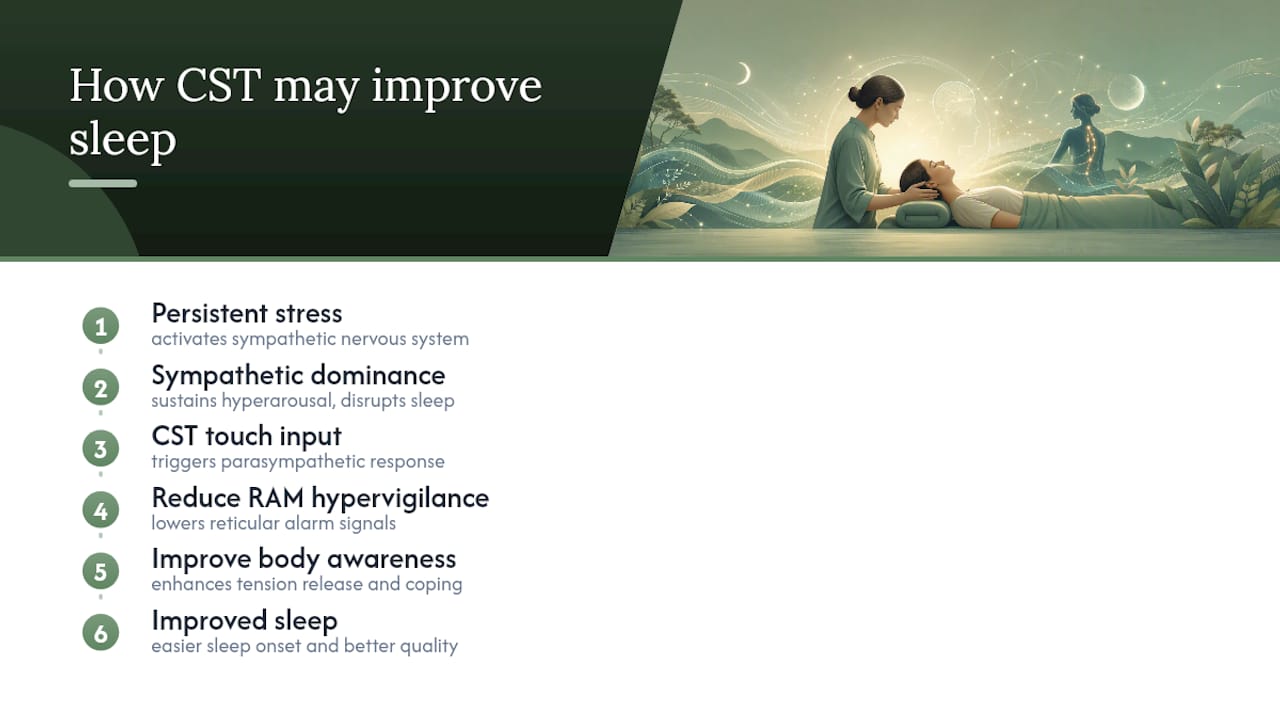
The most commonly cited mechanism involves the autonomic nervous system (ANS). Chronic insomnia is frequently linked to sympathetic dominance, the “fight-or-flight” state that keeps your brain alert when it should be winding down. CST’s gentle, sustained touch is thought to shift the ANS toward parasympathetic activity, the “rest-and-digest” state that lowers heart rate, reduces cortisol, and creates the physiological conditions for sleep onset. You can think of it as a slow, manual reset of an overactive alarm system.

A related concept used by many practitioners is the Reticular Alarm System (RAM). The reticular formation in the brainstem regulates arousal and vigilance. Practitioners propose that light-touch CST techniques, particularly the “still point” induction, reduce hypervigilance signals traveling through this system, allowing the brain to downshift into a more receptive state. This is background clinical rationale rather than established neuroscience, but it aligns with what patients commonly report: a sense of heaviness, warmth, and involuntary relaxation during sessions.
Beyond direct neurological effects, a peer-reviewed study published in a primary care cohort found that CST may improve personal resources like body awareness and coping strategies. For people whose insomnia is driven by tension they cannot consciously release, that shift in body awareness can be genuinely useful. Research on CST’s effects on stress and ANS regulation supports this pathway further.
A simplified picture of the proposed chain: persistent stress activates the sympathetic nervous system, which sustains arousal and disrupts sleep onset. CST touch input may interrupt that cycle by triggering a parasympathetic response, reducing RAM-driven hypervigilance, and improving the patient’s awareness of tension patterns that perpetuate the cycle.
Pro Tip: If you fall asleep on the table during a CST session, that is not an accident. It is one of the most commonly reported responses and a useful early indicator that your nervous system is responding.
What does a CST session for sleep actually look like?
You remain fully clothed and lie face-up on a padded treatment table for the entire session. The therapist uses very light touch, typically described as the weight of a nickel, applied at specific points along the skull, spine, sacrum, and diaphragms. Sessions used in sleep-related trials run approximately 45 minutes.
Common techniques drawn from Upledger Institute protocols and the pilot RCT include:
Still point induction: Gentle compression at the base of the skull to temporarily pause the craniosacral rhythm and encourage a deep relaxation response.
Diaphragm release: Light holds at the respiratory, thoracic inlet, and pelvic diaphragms to reduce fascial restriction and support ANS regulation.
Sacral techniques: Cradling and gentle traction at the sacrum to address tension in the dural tube.
CV-4 (compression of the fourth ventricle): A specific hold at the occiput used to deepen the still point and promote systemic relaxation.
Temporal techniques: Gentle work around the temporal bones, which practitioners associate with stress-related tension patterns.
Studies on craniosacral therapy sleep outcomes typically recommend once-weekly sessions for 8–12 weeks. A single session rarely produces lasting change; the cumulative effect of repeated parasympathetic activation appears to be where the benefit builds. Most patients report feeling deeply relaxed or mildly drowsy immediately after a session, and therapists commonly advise resting quietly for a few minutes before driving. A small number of patients experience transient mild symptoms, such as brief headache or emotional release, in the hours following a session.
Who is most likely to benefit from CST for sleep?
The evidence points most clearly to one group: adults with fibromyalgia who are also poor sleepers. That is the population studied in the 2023 pilot RCT, and the results there were the most encouraging in the CST-sleep literature. If you have fibromyalgia and rate your sleep as poor, the case for a short trial is stronger than for most other insomnia presentations.
Beyond that specific group, clinical rationale supports trying CST when insomnia is linked to:
Chronic pain: Pain-related arousal disrupts sleep architecture, and CST’s role in chronic pain relief may reduce that arousal indirectly.
High baseline tension or hyperarousal: People who describe lying awake with a racing mind and a tense body are describing sympathetic dominance, the exact state CST is proposed to address.
Stress-related insomnia: When poor sleep is clearly tied to anxiety, life stress, or an inability to “switch off,” the parasympathetic activation pathway is clinically plausible.
CST is less likely to be the right first step for primary organic sleep disorders. If you have untreated sleep apnea, restless leg syndrome, or a suspected circadian rhythm disorder, those need medical evaluation before adding any manual therapy. CST is an adjunctive option, as Cleveland Clinic describes it, not a replacement for medical diagnosis.
When insomnia is chronic or severe, pairing CST with cognitive behavioral therapy for insomnia (CBT-I) and standard sleep-hygiene practices gives you a much stronger foundation than CST alone.
Is CST safe, and what are the regulatory rules in the United States?
For most adults, CST carries a low risk of serious adverse events. The touch involved is extremely gentle, and the 2023 pilot trial reported no significant adverse events across its 12-session protocol. That said, certain situations call for caution or medical clearance first.
Contraindications and precautions to discuss with your doctor:
Recent head injury or skull fracture
Unstable intracranial pathology (e.g., aneurysm, active hydrocephalus)
Acute neurological symptoms of unknown cause
Recent spinal surgery or unstable spinal conditions
Severe bleeding disorders or anticoagulant therapy
On the regulatory side, the picture is less reassuring. The American Massage Therapy Association (AMTA) states that CST is not a licensed or nationally regulated practice in the United States. Training requirements and scope-of-practice rules vary by state and by the practitioner’s underlying license. A physical therapist, osteopathic physician, and a massage therapist may all offer CST with very different levels of foundational training.
Insurance coverage is variable. When a licensed physical therapist or osteopath performs CST as part of a broader manual therapy plan, some insurers, including Medicare, Aetna, Cigna, and United Healthcare, may cover the session under manual therapy codes. Confirm your specific coverage before booking.
How do you choose a qualified CST practitioner?
Because CST is not uniformly regulated, vetting your provider is one of the most important steps you can take. Here is a practical checklist:
Verify the underlying license. Your provider should hold an active state license as a physical therapist, occupational therapist, osteopathic physician, or licensed massage therapist. CST training alone is not a license.
Ask about CST-specific training. Look for formal coursework through the Upledger Institute or an equivalent accredited program, with documented hours of supervised practice.
Confirm experience with sleep or pain patients. A therapist who has worked with fibromyalgia or chronic pain populations is more likely to recognize the presentations that respond to CST.
Check liability insurance. Any practicing clinician should carry professional liability coverage.
Questions to ask before booking:
How many CST sessions do you typically recommend for sleep-related concerns?
Which specific techniques do you use, and can you describe them?
Do you accept my insurance, and how do you bill CST sessions?
What side effects should I expect, and when should I contact you?
What results would you expect to see, and by when?
Red flags to watch for:
Claims that CST can cure insomnia, diagnose disease, or replace medical treatment.
Pressure to purchase large session packages upfront before any evaluation.
Reluctance to communicate with your primary care provider or specialist.
No clear explanation of scope of practice or technique rationale.
Pro Tip: Ask for a single evaluation session before committing to a full course. Use that session to assess how your body responds and whether the therapist communicates clearly about goals and timelines.
A practical plan for trying CST for insomnia
If you decide to try CST, a structured, time-limited approach protects both your time and your money. Here is a plan aligned with the protocols used in sleep-related research:
Establish a baseline. Before your first session, complete the Pittsburgh Sleep Quality Index (PSQI), a validated 19-item questionnaire that scores sleep quality across seven components. Record your sleep latency, total sleep time, and how rested you feel each morning in a simple sleep diary.
Book a single evaluation session. Use this to confirm the therapist’s credentials, discuss your sleep history, and experience the approach before committing to a course.
Run a 6-session trial. Schedule once-weekly, 45-minute sessions. This is the minimum meaningful exposure based on the pilot trial protocol. Ask your therapist to document a brief pre- and post-session comfort rating at each visit.
Reassess at session 6. Retake the PSQI and compare it to your baseline. If your global score has not improved meaningfully, or if your sleep diary shows no change in latency or total sleep time, pause and discuss with your clinician before continuing.
Extend to 12 sessions if you see early improvement. The pilot RCT used 12 sessions as its full protocol. If sessions 1–6 show a positive trend, completing the full course gives the therapy its best opportunity to consolidate gains.
Combine with sleep-hygiene and CBT-I. CST works best as one component of a broader plan. Consistent sleep and wake times, limiting screen exposure before bed, and CBT-I techniques address the cognitive and behavioral drivers of insomnia that CST cannot reach on its own.
A step-by-step guide to what happens in a CST session can help you prepare for each visit and know what to track.
A clinician’s perspective on CST and sleep
CST is one of the more nuanced tools in a physical therapist’s manual therapy toolkit, and that nuance matters when someone comes in describing years of poor sleep. The patients who respond most noticeably tend to share a common profile: their bodies carry a level of background tension that no amount of willpower or sleep-hygiene advice has been able to release. For those patients, the still-point induction and diaphragm work often produce a quality of relaxation they describe as unfamiliar, a genuine downshift rather than just lying still.
That said, CST is not a sleep cure, and setting that expectation clearly from the first session is part of good clinical practice. The evidence supports a cautious, measurable trial, not an open-ended commitment. When we use CST at Contemporaryrehabservices, it sits within a broader plan that includes manual therapy, movement work, and coordination with the patient’s medical team when sleep disruption is severe. The goal is always a measurable outcome, tracked with tools like the PSQI, so both the patient and the clinician can make an informed decision about continuing.
If you are in Nassau County or Queens and want to explore whether CST fits your situation, a short evaluation session is the right starting point.
Contemporaryrehabservices offers CST for sleep in Nassau County and Queens
Patients dealing with insomnia tied to chronic pain, fibromyalgia, or persistent tension have a concrete option close to home. Contemporaryrehabservices provides in-person craniosacral therapy and manual therapy delivered by credentialed clinicians at locations in Albertson, Great Neck Plaza, and Russell Gardens. Every treatment plan includes measurable goals and progress tracking, so you know whether the therapy is working before you commit to a full course.
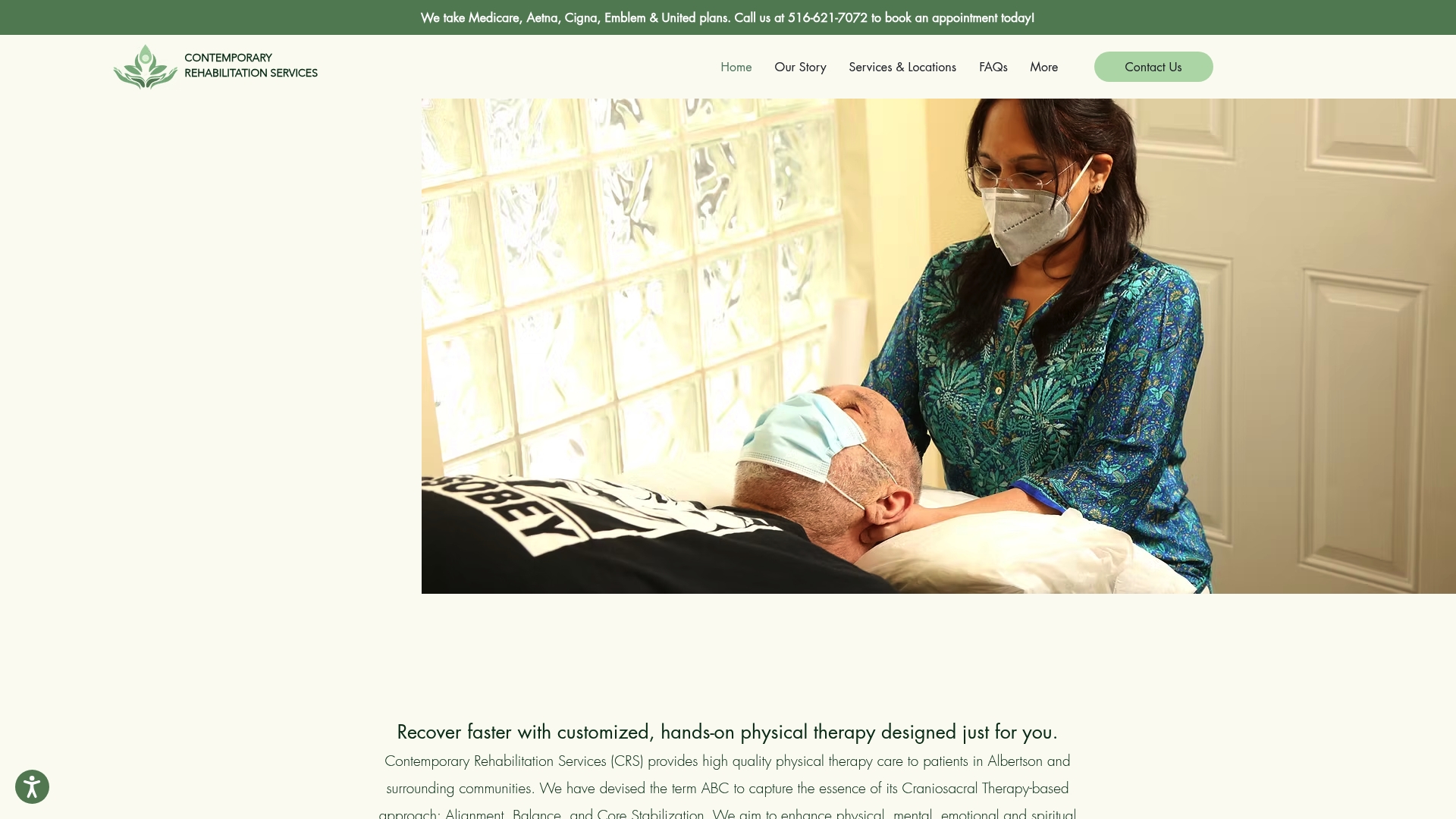
Contemporaryrehabservices accepts Medicare, Aetna, Cigna, Emblem, and United Healthcare, which means CST delivered as part of a manual therapy plan may be covered under your existing benefits. Call or book online to schedule a short evaluation session. You will leave with a baseline PSQI score, a clear treatment proposal, and a realistic picture of what CST can and cannot do for your sleep.
Sources
The studies and resources below are the primary references for this article. Each is worth reading directly if you want to evaluate the evidence yourself.
This article is general information, not a substitute for advice from a qualified doctor. Consult a qualified healthcare professional about your own circumstances before acting on anything here.
Recommended
Comments