
Jaw Pain Physical Therapy: What to Expect and How It Helps

Physical therapy can help many people with jaw pain, especially when the cause is the jaw joint or the chewing muscles around it. A physical therapist examines how your jaw, neck and posture work together, then treats the source with hands-on techniques, targeted exercises and habit changes. If you live in Queens or Nassau County, this guide explains what the process looks like, how long to give it, and when you should see a dentist or doctor first.
TL;DR
Jaw pain is often linked to a temporomandibular disorder (TMD), which affects the jaw joint and chewing muscles. The National Institute of Dental and Craniofacial Research says it affects about 5% of U.S. adults.
Physical therapy combines manual therapy and exercise. A systematic review of physiotherapy studies found that exercise plus manual therapy was commonly used and gave the best results.
Do jaw exercises only within a pain-free range, and stop if pain gets worse.
Jaw pain that spreads from the chest or shoulders, or a suspected broken or dislocated jaw, is an emergency. Call 911.
At our Albertson clinic, we offer one-on-one sessions in person or by telehealth, and we accept Medicare, Aetna, Cigna, Emblem and United Healthcare.
Table of Contents
What is behind jaw pain?
Your temporomandibular joint (TMJ) works like a sliding hinge. It sits just in front of each ear and lets you open, close and move your jaw side to side. When the joint or the muscles that move it become irritated, you feel pain, stiffness or clicking. Doctors group these problems under the name temporomandibular disorders, or TMD.
The NIDCR notes that TMD may follow an injury to the jaw joint, but the exact cause is often unclear. Genes, psychological and life stressors, and the way your body perceives pain may all contribute. That is why two people with the same symptoms can need different treatment.
Common symptoms include:
Pain in the chewing muscles or the jaw joint
Stiffness, limited movement or locking of the jaw
Painful clicking, grating or popping
Ringing in the ears, hearing loss or dizziness
A change in how your upper and lower teeth fit together
If you want a plain-language walk-through of the condition itself, our page on understanding TMJ disorder covers it in more depth.
How physical therapy helps jaw pain
The jaw does not work alone. It is connected to your neck, your upper back and the way you hold your head. A physical therapist looks at all of these, because tension or poor mechanics in one area can keep pain going in another. Researchers writing about evaluation and management of TMD describe the TMJ as similar to other regions of the body, where regional interdependence and pain science principles apply.
In practice, physical therapy aims to:
Calm irritated muscles and joint tissues
Restore smooth, comfortable jaw movement
Teach you to rest and use your jaw in ways that stop the pain from returning
Address the neck and posture contributors that feed the problem
Our overview of TMJ physical therapy explains how these goals fit together in a care plan.
What happens at an evaluation
A good first visit is mostly listening and careful examination. According to a published review on evaluating TMD, physical therapists may use a detailed intake and interview, a questionnaire such as the JFLS-8 that measures jaw function, red-flag screening, assessment of jaw movement, palpation of the chewing muscles and a screen of the neck. The same review points out that no single clinical finding is enough to classify TMD, so the picture comes from putting several findings together.
Physical therapists also use a systems screen to decide whether you need to be referred to another professional before or alongside treatment. That is part of safe care, not a sign that therapy will not work.
Expect questions like these:
When did the pain start, and did anything trigger it, such as a fall, dental work or a stressful period?
Does chewing, yawning or talking make it worse?
Do you clench or grind your teeth, or hold tension in your face and neck?
Do you have headaches, ear symptoms or neck pain?
Then your therapist measures how far your jaw opens, watches whether it travels straight or deviates, feels the muscles for tender spots, and checks your neck. You leave with a clear explanation of what is likely going on and a plan.
Treatments a physical therapist can use
The research on physiotherapy for jaw problems points to a few main tools. A 2023 systematic review lists manual therapy, exercise-based programs, electrotherapy and mobilizations, and found that exercise combined with manual therapy gave the best results among the studies it reviewed.
Manual therapy and joint mobilization
Manual therapy means skilled hands-on work. For the jaw, that can include gentle mobilization of the joint, soft tissue work on the chewing muscles and release of tight areas in the neck. A BMJ analysis of treatments for chronic TMD pain found that therapist-assisted jaw mobilization and manual trigger point therapy were among the approaches probably most effective for pain relief, alongside cognitive behavioral therapy with biofeedback or relaxation.
In our clinic, manual therapy is a core part of care. Joint mobilization, myofascial therapy and neural mobilization are all on our service list.

Exercise and movement retraining
Exercises for the jaw are usually small, slow and precise. They may involve controlled opening and closing, resisted movements, and learning to keep the tongue resting on the roof of the mouth with the teeth slightly apart. Neuromuscular re-education, which retrains how muscles fire and coordinate, is one of the services we offer for this purpose. Your therapist chooses movements for your specific pattern, because the wrong exercise can irritate an already sore joint.
Craniosacral therapy
Craniosacral therapy is a very light touch approach. One 2021 review of temporomandibular myofascial pain describes it as proposed for myofascial pain syndrome, using gentle palpation of fascia, the connective tissue around muscles, to decrease sympathetic arousal. In plain terms, the aim is to help your body settle out of a guarded, tense state.

Craniosacral therapy is a specialty of our team. Many patients with jaw tension who find firm pressure uncomfortable appreciate a gentle option, and we use it alongside other techniques, not as a stand-in for them. Our posts on physical and craniosacral therapy for chronic pain and craniosacral therapy for TMJ go into how we use it.
Visceral and other approaches
Some patients have jaw pain along with neck, digestive or whole-body tension. We also offer visceral therapy, myofascial therapy and individualized rehabilitation programs, and we shape the plan around what your evaluation shows.
People sometimes also look at other pain-relief options outside physical therapy, such as red light therapy for tendonitis, when they are comparing ways to ease sore tissue. If you are weighing different approaches, bring the question to your evaluation so your therapist can help you fit it into one plan.
What a typical course of care looks like
No two jaws are alike, so we do not promise a fixed number of visits. What we can describe is the usual shape of care:
Stage | Focus | What you do |
Evaluation | Find the likely sources of pain | Describe symptoms, complete movement and muscle testing |
Early treatment | Reduce pain and muscle guarding | Manual therapy in session, gentle home habits |
Middle phase | Restore smooth movement | Targeted exercises, posture and neck work |
Maintenance | Keep gains and prevent flare-ups | Short home routine, habit changes |
Progress is rarely a straight line. Most people notice that pain becomes less frequent or less intense before it disappears. Exercises need time to work, so we ask patients to give a program a fair trial, then review the results together. If you have not seen steady improvement within four to six weeks, dental practices advise getting a dental or medical opinion, and we agree that a re-check is wise at that point.
Safe self-care between visits
Simple habits support what happens in the clinic. These are common suggestions, and they should never cause pain:
Choose softer foods during a flare-up.
Use gentle heat to relax tight muscles, or cold briefly if the area is swollen.
Rest your jaw with lips together, teeth slightly apart and tongue resting on the roof of your mouth.
Avoid clenching, nail biting and gum chewing.
These steps are drawn from guidance on home TMJ care, which also advises doing exercises within a pain-free range and stopping to get professional guidance if pain persists or worsens. If an exercise causes sharp pain, clicking that is new, or your jaw catches, stop and tell your therapist. Do not push through it.
When to see a dentist or doctor
Physical therapy is one part of care. Some situations call for a different professional first.
Call 911 if jaw pain spreads from the chest or shoulders to the jaw, since it may be a heart attack symptom. Also call 911 for a suspected broken or dislocated jaw.
Talk to a healthcare provider if jaw pain lasts more than a week, according to the Cleveland Clinic.
See a dentist or physician if your jaw locks and you cannot open or close it, if pain becomes severe, or if it keeps getting worse.
Dentists and physical therapists often work together. A review of TMD management notes that dentists may refer patients to physical therapists for neck or chewing-muscle management, and physical therapists may refer patients to dentists for oral appliances or dental evaluation. A comprehensive assessment may involve a multidisciplinary team that can include dentistry, physiotherapy, psychology and, when needed, surgery. We are glad to coordinate with your dentist or doctor.
Our perspective on jaw pain
Jaw pain rarely has one tidy cause. We see people whose pain began after a dental procedure, a car accident, a long stretch of clenching or a stressful season, and in almost every case the neck, the jaw and the nervous system are all involved. That is why we work one-on-one, as a mother-daughter team, with sessions that are not rushed. We blend hands-on techniques such as joint mobilization, myofascial therapy and craniosacral therapy with movement retraining, and we guide care with our own ABC Approach to rehabilitation. We believe gentle, well-targeted treatment and clear education help most people feel more in control of their jaw. Our goal is for you to understand what is happening and leave each visit knowing what to do next. CRS Wellness
Get care in Albertson, Queens and Nassau County
Our boutique clinic in Albertson, NY serves patients across Queens and Nassau County, including nearby communities such as Mineola, Roslyn, Williston Park, Westbury and Carle Place. You can book in-person sessions or telehealth physical therapy, and we accept Medicare, Aetna, Cigna, Emblem and United Healthcare, as well as cash payments. Check your own plan’s benefits and any referral requirements before your first visit.
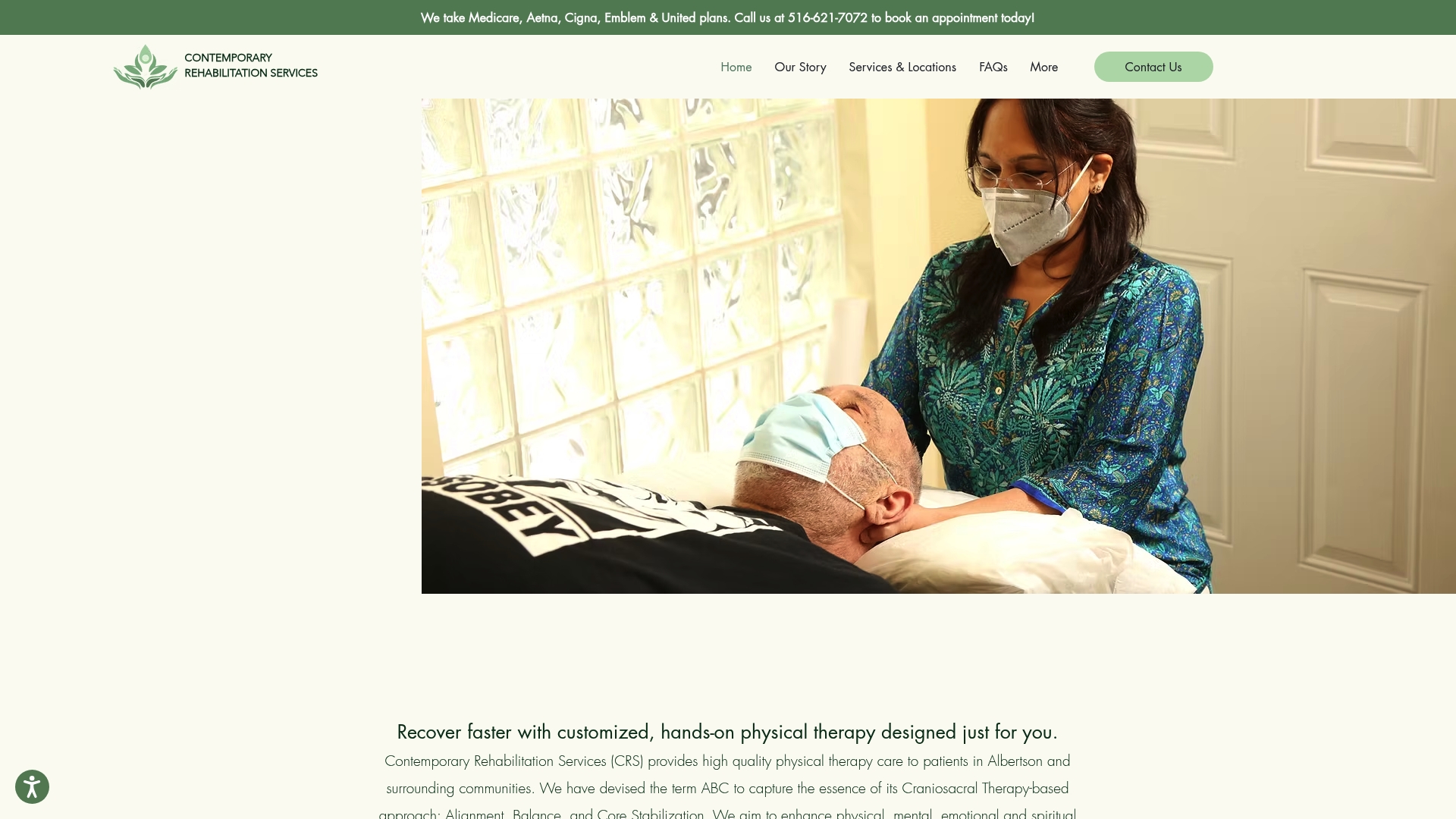
To start, contact our clinic about physical therapy or see everything we offer on our services page. If you are not sure whether your jaw pain fits physical therapy, tell us what you are feeling and we will help you work out the next step.
FAQ
Can physical therapy really help jaw pain?
For many people it can. Reviews of physiotherapy for jaw disorders report that manual therapy and exercise are the most commonly used tools, and the combination gave the best results in the studies reviewed. How much you improve depends on the cause, so an evaluation is the best way to know.
How is TMD diagnosed?
No single test settles it. Clinicians combine your history, jaw movement, muscle palpation and a neck screen, as described in published evaluation guidance. Your dentist or physician may add imaging or a dental exam when needed.
Is craniosacral therapy used for jaw pain?
Yes, it is used as a gentle hands-on option. It is proposed for myofascial pain and uses light fascia palpation to lower the body’s stress response. We use it as part of a broader plan that can include joint mobilization and exercise.
Do I need a dentist before physical therapy?
Not always, but the two often work together. If you have tooth pain, a bite change, or need an oral appliance, a dentist should be involved. We can coordinate with your dentist so your care stays consistent.
When should I go to the emergency room?
Call 911 if jaw pain spreads from your chest or shoulders, or if you think your jaw is broken or dislocated, as the Cleveland Clinic advises. Do not wait for a therapy appointment in these cases.
Sources
Evaluation and management of temporomandibular disorders (PMC10288910)
Evaluation and management of temporomandibular disorders (PMC10288906)
A Proposed Diagnostic Classification of Patients With Temporomandibular Disorders, JOSPT
Temporomandibular Myofascial Pain Syndrome: Aetiology and Treatment
Jaw Pain: Common Causes and How To Treat It, Cleveland Clinic
Recommended
Comments