
Physical Therapy for Patellofemoral Pain: What to Expect

If stairs, squats or your usual run have started to hurt around or behind the kneecap, physical therapy is the first-line treatment, and it centers on exercise. The strongest guidance points to a combination of hip-targeted and knee-targeted strengthening, supported by education about how much load your knee can handle. Manual therapy can be added, but only alongside exercise. Below, we explain what patellofemoral pain is, what a course of therapy involves, how long it usually takes, and when it makes sense to have your knee looked at again.
TL;DR
Patellofemoral pain is pain at the front of the knee, around or behind the kneecap, that shows up with loaded, bent-knee activities like stairs, squatting and running.
The primary evidence-based treatment is exercise that targets both the hip and the knee, which is preferred over knee-only exercises.
Manual therapy is recommended as an add-on to exercise, not as a stand-alone treatment.
Plan on a structured program of roughly 6 to 12 weeks, with progress checks along the way. If you are not improving by about 12 weeks, the diagnosis should be reconsidered.
We see patients in person in Albertson and by telehealth across Queens and Nassau County.
Table of Contents
What patellofemoral pain actually is
Your kneecap (the patella) sits in a groove at the end of your thigh bone and glides up and down as you bend and straighten your knee. Think of it as a small piece riding on a track. When that track is irritated, or the forces going through it are more than it is ready for, you feel pain at the front of the knee.
Clinically, the Academy of Orthopaedic Physical Therapy defines patellofemoral pain as pain behind or around the kneecap that is reproduced by activities loading the joint in a bent position, such as squatting or climbing stairs, once other conditions have been ruled out. You may also hear it called patellofemoral pain syndrome or runner’s knee.
That definition explains why the stairs are such a common complaint. The Mayo Clinic notes that pain often increases when walking up or down stairs, and that running or jumping sports put repeated stress on the knee joint, which can irritate the area under the kneecap. Sitting for a long time with bent knees is another familiar trigger for many people.
Common signs to look for
A dull, aching pain around or behind the kneecap rather than a sharp, locked or giving-way feeling
Pain with stairs, squats, lunges, hills, running or jumping
Discomfort after sitting with your knees bent for a long stretch
Pain that builds with activity and eases with rest, then returns when you load the knee again
Swelling after an injury, a knee that gives way, or a knee that locks are different stories and deserve a prompt medical evaluation rather than a wait-and-see approach.
How a physical therapist assesses your knee
Because patellofemoral pain is defined partly by what it is not, the first visit is about ruling things out and finding what loads your knee too much. A thorough evaluation usually covers:
Your history. When the pain started, which activities provoke it, what you do for work and exercise, and whether anything changed recently, such as a new training plan, more stairs or a different surface.
Reproducing the pain. Squatting, stepping down from a small box or climbing stairs in the clinic shows us which movements bring it on.
Strength and control. Hip, thigh and calf strength, plus how your hip and knee line up when you squat, step or land.
Mobility. Flexibility of the quadriceps, hamstrings and calves, and how freely the kneecap and surrounding tissues move.
Ruling out other sources. Pain at the front of the knee can also come from the hip, the back or other knee structures, so these get checked too.
The goal is a plan built around your findings, not a generic handout. If you want a broader look at how we approach the whole joint, our guide to knee pain physical therapy covers what to expect, and our article on patellofemoral pain therapy goes deeper into what works.
What physical therapy for patellofemoral pain involves
The main treatment is exercise, and the guidance is specific. The 2019 clinical practice guideline from the Academy of Orthopaedic Physical Therapy and APTA identifies combined hip- and knee-targeted exercise as the primary evidence-based treatment, preferred over knee-only exercises. Education is part of it too: understanding load management and sticking with active treatments such as exercise.
In practice, a program usually has three layers.
1. Hip strengthening
The muscles at the side and back of your hip, including the gluteals, help control how your thigh moves when you squat, step or run. Strengthening them gives the kneecap a steadier path. The National Athletic Trainers’ Association position statement reports that an 8-week gluteal-strengthening program may produce greater long-term improvements in pain and health status than an 8-week quadriceps-only program.
Typical exercises include side-lying hip abduction, clamshells, bridges, side planks, band walks and single-leg work as you progress.

2. Knee and thigh strengthening
Your quadriceps still matter. The trick is choosing the right range of motion so the kneecap is not overloaded. The same NATA statement recommends non-weight-bearing quadriceps exercises between 45° and 90° of knee flexion and weight-bearing exercises between 0° and 45°, which minimizes joint stress.

That means a seated or machine-based knee extension and a squat or step-up are not interchangeable. Each is done in the range that suits it, and the range can be widened as your knee tolerates more.
3. Flexibility and movement retraining
Tightness in the thigh, hamstrings or calves can add to the load on the front of the knee, so stretching often has a supporting role. Movement retraining then takes the strength you have built and applies it to the things that hurt: stairs, getting out of a chair, landing from a jump or running form.
A simple way to think about progression
Stage | Focus | Example activities |
Calm it down | Reduce irritation, learn which loads you tolerate | Short-range strengthening, modified activity, education |
Build capacity | Hip and thigh strength, higher volume | Bridges, side-lying work, partial squats, step-ups |
Return to life | Control during real tasks | Stair training, single-leg tasks, return to running or sport |
This is a general framework. Your own timing depends on how irritable your knee is and what you need it to do.
How much exercise is enough?
Volume matters. An American Academy of Family Physicians summary of the APTA guideline cites high-volume exercise, such as three sets of 30 or more repetitions three times per week as tolerated, as effective. Tolerance is the key phrase. We set the starting point to your knee, not to a number on a page, and build from there.
Where manual therapy fits
Hands-on work can feel good and help you move, but it is a supporting player. The 2019 guideline says manual therapy, including knee or patellofemoral mobilization, should not be used on its own and is recommended only as an add-on to exercise therapy.
That fits how we work. Our manual techniques, such as joint mobilization, myofascial therapy and neuromuscular re-education, are used to ease stiffness, reduce tension and help you move well enough to do the exercises that drive recovery. You can see the full list on our services page.
Perspective
Our perspective: why one-on-one care matters for knee pain
Patellofemoral pain is rarely a knee problem alone. In our experience, the knee is where you feel it, but the answer often involves the hip, the foot, the way you move and how much you ask of your body in a week. That is why we spend our time one-on-one with each patient instead of handing out a standard routine. As a mother-daughter team, we bring years of hands-on experience to every session. We pair the exercise-first approach that guidelines support with manual and integrative techniques, including myofascial therapy, joint mobilization and neuromuscular re-education, so that your body is ready to do the work. Our individualized treatment plans follow our ABC Approach to rehabilitation. We want you to leave each visit understanding what is happening in your knee and what to do next. Questions are welcome at any point, and we adjust the plan as you respond. CRS Wellness
How long recovery takes
Most people want a number, and the honest answer is a range. The Dutch multidisciplinary guideline recommends a structured exercise program for 6 to 12 weeks, with progress evaluations at 6 and 12 weeks. That gives you two clear checkpoints: at 6 weeks, are things moving in the right direction, and at 12 weeks, is the plan working well enough to continue?
Over the longer term, a 2026 systematic review found that pain and function generally improve within 12 months, but recovery is highly variable and a meaningful share of people still report symptoms. That is not a reason for alarm. It is a reason to be consistent, to keep your program going after the pain eases, and to speak up early if progress stalls.
What can help you recover steadily
Do the exercises on schedule. Consistency beats occasional big efforts.
Adjust load, do not stop moving. If a movement flares your knee, we change the depth, weight or number of repetitions rather than abandoning it.
Keep going after you feel better. Strength you have built protects the knee when you return to full activity.
Track your own pattern. Note which stairs, distances or positions bother you and share that at each visit.
Some readers also ask about add-on options for pain, such as pulsed electromagnetic field devices. If that interests you, this overview of PEMF for pain research explains what is known. Talk with your physical therapist about how any extra approach fits alongside your exercise program.
If exercise makes the pain worse
Some soreness as muscles adapt is common. A sharp increase in knee pain, or pain that lingers well into the next day, is a signal to change the plan, not to push through. Our article on pain after physical therapy explains how to tell normal soreness from something to report, and how we adjust. For the bigger picture of how therapy fits into pain care, see our piece on the role of PT in pain management.
When to have your knee re-evaluated
Patellofemoral pain should respond to a well-run exercise program. If it does not, the diagnosis deserves a second look. The Dutch expert panel emphasizes that if there is no progress after 12 weeks of structured exercise, the initial diagnosis of patellofemoral pain should be reconsidered.
National Health Service guidance in England, written for primary care clinicians, suggests considering referral when a patient has not responded to 3 to 6 months of comprehensive conservative management, has recurrent instability, has significant pain or stiffness, or when the diagnosis is uncertain. That is guidance from the UK, but the logic carries over: persistent, severe or unexplained symptoms call for a physician’s evaluation.
See a physician promptly if your knee is swollen after a fall or twist, locks, gives way, or you cannot bear weight. Those signs point away from simple patellofemoral pain.
Care for patellofemoral pain in Queens and Nassau County
We are a boutique physical therapy clinic in Albertson, New York, serving Queens and Nassau County. Our sessions are one-on-one, available in person or by telehealth, and built around a plan made for your knee and your goals. We accept Medicare, Aetna, Cigna, Emblem and United Healthcare, and we also take cash payments. Call or visit our site to confirm that your specific plan is accepted.
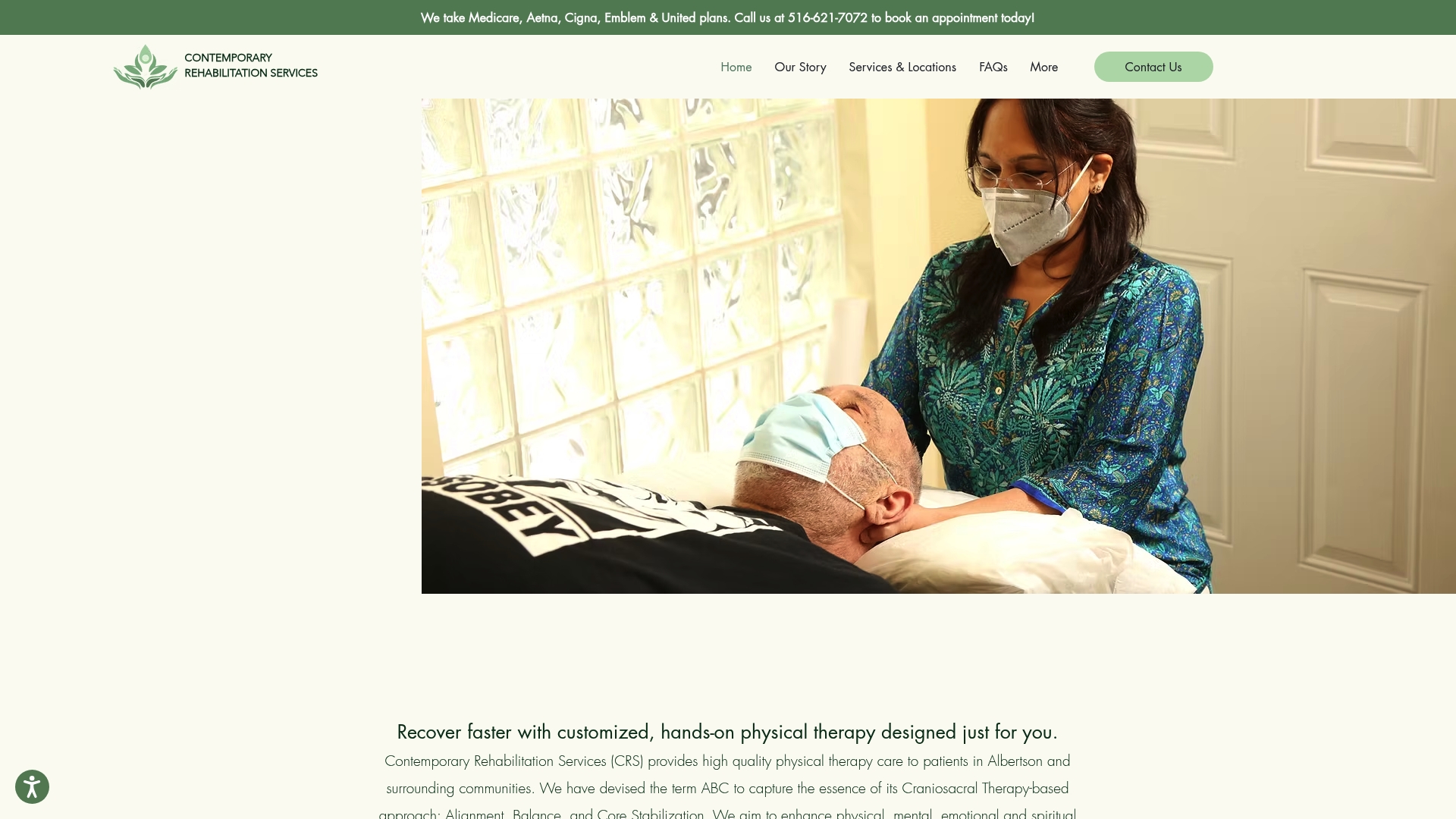
If you are ready to find out why your knee hurts and what to do about it, start with our physical therapy and telehealth sessions or browse the hands-on options on our services page. If you are comparing different joints or stages of care, our guides to hip pain physical therapy and knee replacement physical therapy may help too.
FAQ
Is walking good for patellofemoral pain?
For many people, walking on level ground is well tolerated and helps keep you active. Hills and stairs often provoke symptoms, since the Mayo Clinic notes that pain often increases on stairs. Your therapist can help you set a walking amount that your knee tolerates and build it up gradually.
Do I need to stop running?
Not necessarily. The aim is to manage load rather than stop everything. We often reduce distance, hills or frequency while strength improves, then build back up. Your pain pattern and goals decide the plan, so it helps to bring your training log to your first visit.
Will I need surgery or injections?
Patellofemoral pain is treated first with exercise-based physical therapy. The 2019 guideline names hip and knee exercise as the primary treatment. If you are not improving after a structured program, a physician can reassess your diagnosis and discuss next steps.
Can telehealth physical therapy work for knee pain?
Because the core of treatment is a progressive exercise program plus education, much of it can be taught and monitored remotely. We offer telehealth sessions for patients who cannot easily come in, and in-person visits when hands-on work or closer observation will help.
How many visits will I need?
That varies by person. The Dutch guideline’s 6 to 12 week framework with checkpoints at 6 and 12 weeks is a helpful reference. At your evaluation, we will outline a schedule based on your findings.
Sources
Patellofemoral Pain: Clinical Practice Guidelines (JOSPT, 2019)
Patellofemoral pain syndrome: Symptoms and causes (Mayo Clinic)
National Athletic Trainers’ Association Position Statement on patellofemoral pain
Patellofemoral Pain: Guidelines from the American Physical Therapy Association (AAFP, 2020)
Long-term prognosis of patellofemoral pain in adolescents (2026 systematic review)
Recommended
Comments