
Shoulder Impingement Physical Therapy: What Works and What to Expect

Physical therapy is the first-line treatment for shoulder impingement, and for most people it is the right place to start. A therapist finds why the space around your rotator cuff is getting crowded, calms the painful tissue, and then rebuilds strength and movement so you can lift your arm without that pinch. Published reviews describe exercise-based rehabilitation as central to care, with outcomes comparable to surgery in many settings. Below, we explain how the process works, what to avoid, and when to get checked.
TL;DR
Shoulder impingement happens when the rotator cuff tendons and bursa get pinched under the bony roof of the shoulder as you lift your arm. Physical therapy is the main treatment.
A good program is tailored to you: pain calming first, then range of motion, then progressive strengthening and movement retraining.
Avoid overhead reaching and painful activities, but do not stop using the shoulder completely, because it can stiffen.
See a clinician if pain is steady, your arm feels weak, or motion is limited. Do not return to full activity until you are cleared.
We treat shoulder patients in Albertson, serving Nassau County and Queens, and accept Medicare, Aetna, Cigna, Emblem and United Healthcare.
Table of Contents
What shoulder impingement actually is
Your shoulder is a ball-and-socket joint with a lot of freedom and not much built-in stability. The rotator cuff, a group of four small muscles and their tendons, keeps the ball centered as you move. Above it sits the acromion, the bony tip at the top of your shoulder blade, and a small cushion called the bursa.
When you raise your arm, there is a narrow gap between the cuff and the acromion. Impingement occurs when the acromion rubs or presses on the rotator cuff tendons and bursa as the arm lifts away from the body. The result can be pain and limited movement.
Think of the space as a doorway. If the doorway narrows, or if the tissue going through it swells or moves poorly, everything rubs. That is why the fix is rarely just “rest it.” The therapist’s job is to work out why the doorway is crowded.
Common signs
People with impingement often describe:
A pinching or catching pain when reaching overhead, behind the back, or out to the side.
Pain when sleeping on the affected shoulder. The U.S. Department of Veterans Affairs lists reaching overhead and lying on the shoulder among the likely painful activities.
A dull ache after activity such as painting, swimming, tennis, or lifting a bag into an overhead bin.
Weakness or a feeling that the arm will not lift as smoothly as the other one.
These signs overlap with other problems, including bursitis, rotator cuff tears and neck-related pain, so a hands-on exam matters. If your pain sits more in the bursa, our guide to shoulder bursitis physical therapy explains how that differs.
Can physical therapy fix shoulder impingement?
For most people, yes, it can resolve symptoms, and it is usually tried before anything invasive. A recent review of non-operative care notes that exercise-based rehabilitation is central, and that results for rotator cuff-related shoulder pain are comparable to acromioplasty in many settings. Acromioplasty is the surgery that shaves the underside of the acromion.
Two honest points keep expectations realistic. First, recovery takes weeks, not days, because tendons adapt slowly to load. Second, the result depends on how well the program fits your shoulder, your job and your goals. The American Physical Therapy Association’s patient guide says treatment is tailored to your condition and goals and may include progressive strengthening, range-of-motion exercise, movement retraining and activity modification.
What a physical therapy program looks like
Exact timing varies by person, but a typical course moves through three overlapping stages. A published review of non-operative management describes acute, intermediate and advanced strengthening phases for impingement rehab. Here is how we think about each stage in the clinic.

Stage 1: calm the shoulder and restore comfortable motion
The first goal is to reduce irritation without letting the joint stiffen. That usually means:
Identifying the specific movements and positions that provoke pain.
Adjusting daily and work activities so the tendons are not being pinched hundreds of times a day.
Gentle, pain-free range-of-motion work.
Hands-on techniques to ease tight tissue and improve joint glide.
The APTA guide says a therapist should identify painful activities and may change the type and amount of exercise, sports, and home or work activity to support a pain-free return.
Stage 2: restore the mechanics
Once pain settles, we look at how the shoulder blade, upper back and rotator cuff work together. Many people with impingement have a shoulder blade that does not rotate and tilt well as the arm goes up, or a stiff upper back and tight chest that pull the shoulder forward. Improving those patterns often opens the space more than any single stretch.
This is also where hands-on work earns its place. A systematic review of conservative treatments found that manual therapy combined with exercise may provide short-term benefits over exercise alone for pain and function. Our manual approaches include joint mobilization, myofascial therapy and neural mobilization, used to make exercise more comfortable and more effective. You can read more in our overview of the benefits of manual therapy.
Stage 3: strengthen and return to your life
The final stage builds the rotator cuff and shoulder blade muscles with progressive resistance, then moves into the specific tasks you need: lifting groceries, swimming, golf, hair washing, putting dishes on a high shelf, or overhead work on the job. The AAOS advises that strengthening loads should be light enough to complete the prescribed repetitions without pain, and that you should not ignore pain during an exercise.
If your shoulder pain is broader, or you suspect a cuff tear, the phased plans in our guides to rotator cuff physical therapy and shoulder pain physical therapy show how progression changes.
Exercises you will likely see, and why
The top search results are full of exercise lists, and the moves themselves are fairly standard. What changes from person to person is which ones, how many, and how hard. Typical examples include:
Exercise | What it targets | Common mistake |
Pendulum swings | Gentle motion and relaxation early on | Using the neck and upper trap to swing the arm |
Shoulder blade squeezes | Muscles that control the shoulder blade | Shrugging instead of pulling back and down |
Doorway chest stretch | Tight chest muscles that pull the shoulder forward | Pushing into a pinching pain |
External rotation with a band | Rotator cuff strength | Letting the elbow drift away from the side |
Wall slides or wall angels | Controlled overhead motion | Forcing the arm higher than it moves comfortably |
The AAOS says its conditioning exercises should be done under a doctor’s supervision, and that you should contact your doctor or physical therapist if an exercise causes pain. That is the practical reason to have someone watch your form at least in the first sessions. A band exercise done slightly wrong can feed the same pinch you are trying to remove.
Notice there is no single “number one exercise.” Clinical guidance leans toward care tailored to individual circumstances rather than rigid protocols. The best exercise is the one that matches your findings and that you can do without sharp pain.
What not to do with an impinged shoulder
The rule of thumb is: avoid what pinches, keep moving what does not.
Limit overhead reaching and painful activities. Northwestern Medicine describes “active rest” as avoiding overhead movements and any activity that causes pain while continuing comfortable shoulder use.
Do not immobilize the arm for long. The VA warns that complete disuse can lead to frozen shoulder. The UK’s NHS gives similar advice: do not repeatedly lift the arm overhead, including swimming or tennis, but do not stop moving the shoulder completely.
Be careful with the upright row. An article in a National Strength and Conditioning Association journal explains that the traditional upright row raises the arm while it is internally rotated, a combination associated with subacromial impingement. If you have pain, lower the height below shoulder level or skip it.
Do not rush back. Cleveland Clinic cautions against resuming activity before a provider says it is safe, because using the shoulder too soon can cause reinjury and raise the risk of a rotator cuff tear.
Do not push through sharp pain in the gym or at home. Mild muscle effort is one thing. A pinch at the top of the lift is a signal to stop and adjust.
Sleep is a common trouble spot. Try lying on your other side with a pillow hugging the sore arm, or on your back with a small pillow under the elbow. If you are using a sling after an injury or procedure, tips on dressing safely with a shoulder immobilizer can make mornings easier.
Medication and injections: where they fit
Some people take over-the-counter anti-inflammatories or get a corticosteroid injection while they wait for rehab to take hold. The research on non-operative care says NSAIDs may offer modest short-term pain relief, and corticosteroid injections may give short-term relief that makes rehabilitation easier, while repeated injections may impair tendon health. Ask your physician which option is right for you, especially if you take blood thinners or have stomach, kidney or heart conditions. Medication can make exercise more tolerable, but the lasting change comes from fixing how the shoulder moves and what it can handle.
When to get a medical assessment
Impingement is common, but not every sore shoulder is impingement. The AAOS suggests seeing a shoulder specialist if discomfort does not improve with rest, icing and anti-inflammatory medication, or if you have steady pain, arm weakness or limited joint motion.
Get seen promptly if you had a fall or sudden injury, cannot lift your arm, have night pain that keeps waking you, or have numbness or tingling down the arm. Chest pain, shortness of breath or arm pain with sweating needs emergency care, not a PT visit. Pain that spreads into the arm and hand can come from the neck or the thoracic outlet, which is why a full exam matters. If imaging is being considered, our guide to MRI versus ultrasound for shoulders explains typical scenarios. Not sure whether it is time to book? Our list of signs you need physical therapy can help.
What craniosacral and hands-on therapy add
Some shoulder pain comes with neck tension, jaw clenching, headaches or a stiff upper back. In those cases we may add gentle hands-on work, including craniosacral therapy, a light-touch technique, alongside shoulder-specific exercise. A systematic review of craniosacral therapy found significant pooled effects on pain and disability in patients with chronic pain. That review looked at chronic pain broadly, not shoulder impingement specifically, so we use it as a supportive part of a plan and never as a replacement for strengthening and movement retraining.
Perspective
In our clinic, we see shoulder impingement as a symptom with a reason behind it. A tight upper back, a shoulder blade that is not doing its job, or a cuff that has been overloaded can each crowd the space, and a cookie-cutter handout cannot tell them apart. That is why we work one-on-one. As a mother-daughter team, we spend each session on your shoulder: examining how you move, using hands-on techniques such as joint mobilization, myofascial therapy and neural mobilization to make motion easier, and then building an individualized exercise plan around our ABC Approach to rehabilitation. We believe the best results come when manual therapy and exercise work together, and when you understand why you are doing each movement. Our goal is for you to leave knowing what to avoid, what to keep doing, and when to call us. CRS Wellness
Physical therapy for shoulder impingement in Albertson, Nassau County and Queens
We are a boutique physical therapy clinic in Albertson, NY, serving patients across Nassau County and Queens, including nearby communities such as Mineola, Roslyn, Williston Park, Westbury and Carle Place. You get personal, one-on-one sessions, in person or by telehealth, with a plan built around your shoulder and your daily demands. We accept Medicare, Aetna, Cigna, Emblem and United Healthcare, as well as cash payments.
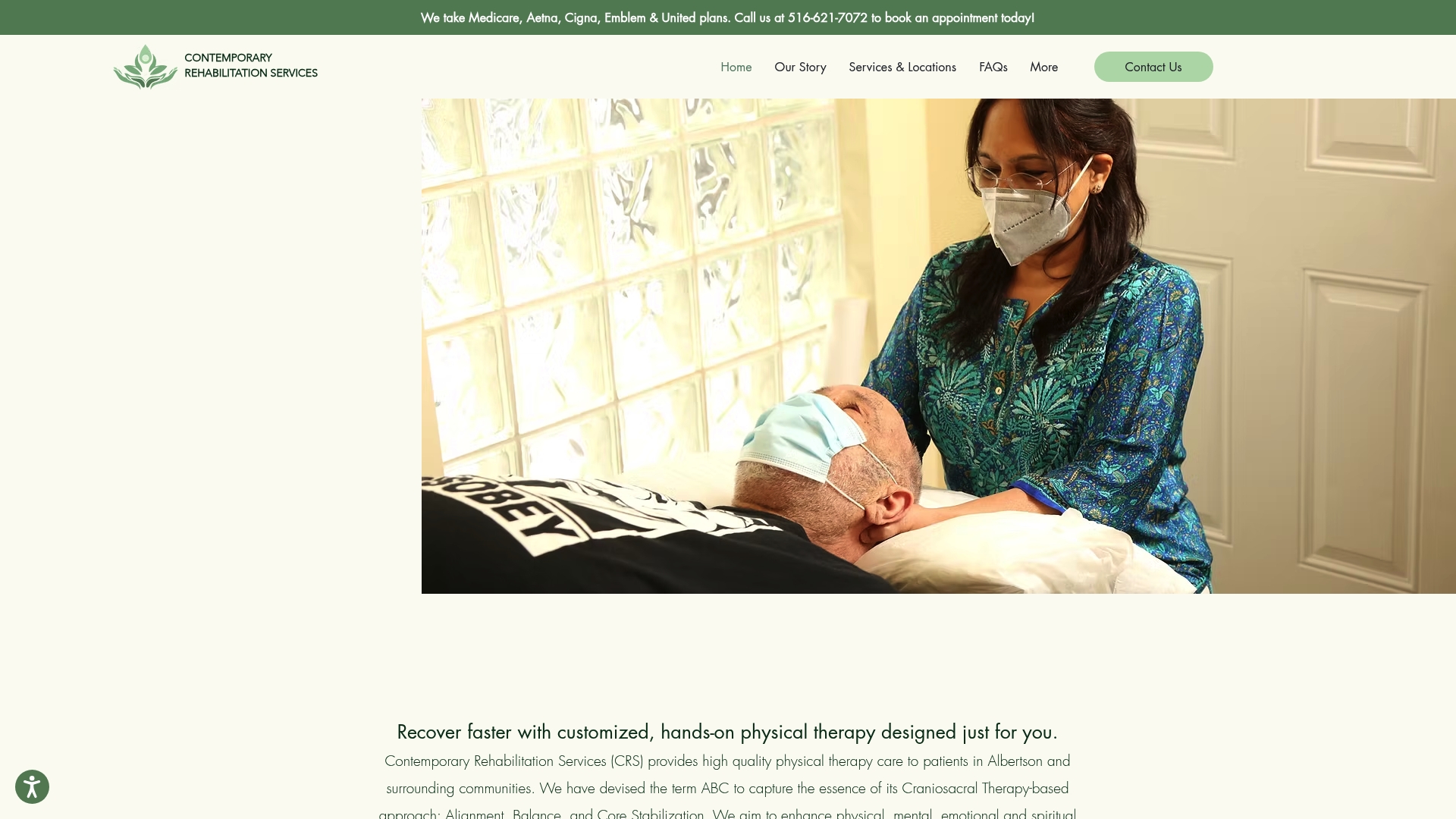
If shoulder pain is limiting your reach, your sleep or your work, book a physical therapy visit and we will start with a thorough assessment. You can also see the full range of hands-on and rehabilitation services we offer, including craniosacral therapy, myofascial therapy and joint mobilization.
How to get the most from your rehab
Go early. Seeing a therapist at the first sign of a pinch gives you more options than waiting until the arm is stiff and weak.
Track your triggers. Note which movements hurt and at what height. This helps your therapist modify your day, not only your exercises.
Do your home program consistently. Short, frequent sessions usually beat one long, painful one.
Progress by symptoms, not the calendar. Increase load only when the last level is comfortable.
Fix the setup. Adjust your desk, car seat and sleeping position so the shoulder is not held forward or lifted for hours.
Keep gentle motion going. Rest the painful movements, not the whole arm.
Ask before returning to sport or heavy lifting. Get clearance first, then build back up gradually.
If your problem started with a hip or other joint issue that changed how you move, or you have a combination of problems, tell your therapist. Compensation elsewhere in the body can show up in the shoulder.
FAQ
Can physical therapy fix a shoulder impingement?
For many people, yes. Reviews of non-operative care describe exercise-based rehabilitation as central to treatment, with outcomes comparable to surgery in many settings. Results depend on a plan matched to your shoulder, so a hands-on evaluation is the best first step.
What is the number one exercise for shoulder impingement?
There is no single best exercise. Therapists choose moves based on what your exam shows, such as shoulder blade control, rotator cuff strength or tight chest muscles. Guidance stresses individualized care rather than rigid protocols, and pain during an exercise is a reason to stop and ask your therapist.
What are the worst exercises for shoulder impingement?
Exercises that lift the arm above shoulder height while it is rotated inward, like the traditional upright row, are the usual concern. If you have pain, lower the height or skip the exercise. Overhead presses and heavy lateral raises can also irritate a sore shoulder, so have them reviewed by your therapist.
How long does shoulder impingement take to heal?
It varies with how long you have had symptoms, your activity level and how consistent you are with rehab. Many people notice changes over several weeks, with fuller strengthening taking longer. Your therapist can give you a realistic timeline after your first evaluation.
Do I need a referral to start physical therapy in New York?
Policies differ by insurance plan, so check with your plan before booking. Call our clinic and we can help you sort out what your coverage requires.
Sources
Current Non-operative Management of Shoulder Pathologies (PMC)
Effectiveness of conservative interventions for shoulder pain (PMC)
Craniosacral therapy for chronic pain: a systematic review (PMC)
Physical Therapy Guide to Shoulder Impingement (APTA ChoosePT)
AAOS Updates Clinical Practice Guideline for Rotator Cuff Injuries
Understanding Shoulder Impingement Syndrome (Veterans Health Library)
Nonsurgical Treatment Choices for Shoulder Impingement (Northwestern Medicine)
The Upright Row: Implications for Preventing Subacromial Impingement
Recommended
Comments