
Medicare-Covered Therapy Types: Your 2026 Guide

Medicare covers four primary therapy types under Part B: physical therapy (PT), occupational therapy (OT), speech-language pathology (SLP), and outpatient mental health therapy. Each of these medicare-covered therapy types carries its own billing rules, cost-sharing requirements, and documentation standards. Knowing the differences before you start treatment helps you avoid unexpected bills and get the most from your benefits. This guide breaks down each therapy type clearly, including the 2026 updates that affect how much you can receive before additional paperwork kicks in.
1. Physical therapy coverage under Medicare Part B
Physical therapy is one of the most frequently used Medicare therapy benefits, covering treatment for conditions like stroke recovery, back pain, joint replacement rehabilitation, and balance disorders. Medicare Part B pays for PT in outpatient clinics, hospital outpatient departments, and via telehealth. You do not need a referral to see a physical therapist, but the therapy must be deemed medically necessary and supervised by a licensed therapist enrolled in Medicare.
For 2026, the KX modifier threshold for PT and SLP combined is $2,480. The KX modifier is a billing code your therapist adds to claims once your charges cross that dollar amount. It signals to Medicare that continued treatment is medically necessary and that proper documentation supports the ongoing care. Denials above this threshold almost always result from missing modifiers or incomplete documentation, not from a clinical judgment that you no longer need therapy.

Cost-sharing under Part B applies a $283 deductible and 20% coinsurance for each session. Telehealth PT visits are covered through December 31, 2027, using two-way audio-video technology. That extension gives patients in Nassau County and Queens real flexibility, especially those with limited mobility.
Common conditions treated through Medicare-covered PT include:
Post-surgical rehabilitation after hip or knee replacement
Neurological recovery following stroke or traumatic brain injury
Chronic pain management for arthritis or spinal conditions
Fall prevention programs for older adults
Sports or overuse injury recovery
Pro Tip: Ask your physical therapist to document your functional progress at every visit. Clear, measurable notes are what keep your claims approved once you cross the $2,480 threshold.
2. Occupational therapy: what Medicare covers in 2026
Occupational therapy helps you regain the ability to perform daily tasks. That includes dressing, cooking, bathing, and returning to work after an injury or illness. Medicare Part B covers OT in outpatient settings under the same cost-sharing structure as PT: the $283 deductible and 20% coinsurance apply. The key difference is that OT has its own $2,480 threshold, separate from the combined PT and SLP limit. This means you can receive more total therapy across disciplines without hitting a single combined cap.
Occupational therapy assistants (OTAs) can provide covered services, but Medicare requires specific billing modifiers to reflect when an OTA delivers care versus a licensed occupational therapist. Your provider handles this billing detail, but it is worth knowing because it affects how claims are processed and paid.
Telehealth OT visits are also covered through 2027, giving you the option to work with a therapist from home when in-person visits are difficult. Medicare Advantage plans must cover OT just as Original Medicare does, though some plans offer additional benefits. Always confirm the specifics with your plan before starting treatment.
Conditions commonly addressed through Medicare-covered occupational therapy include:
Fine motor skill recovery after stroke or hand surgery
Cognitive rehabilitation for dementia or brain injury
Adaptive equipment training for arthritis or Parkinson’s disease
Home safety assessments and modifications
Sensory processing challenges following neurological events
3. Speech-language pathology services covered by Medicare
Speech-language pathology (SLP) addresses communication disorders, swallowing difficulties, and cognitive communication challenges. Medicare Part B covers SLP in outpatient settings with the same 20% coinsurance after the $283 deductible. SLP charges count toward the combined PT and SLP threshold of $2,480, not a separate limit. This is a detail many patients miss: if you receive both PT and SLP, your combined charges reach the documentation threshold faster than if you were receiving only one service.
Medical necessity documentation is especially critical for SLP claims. Swallowing disorders (dysphagia), aphasia following stroke, and voice disorders after surgery are among the most common reasons Medicare beneficiaries seek speech therapy. Each of these conditions requires clear clinical notes linking the therapy to a specific diagnosis and measurable treatment goal.
Telehealth SLP services are covered through December 31, 2027. That coverage is particularly meaningful for patients recovering from stroke or those with conditions that make traveling to a clinic difficult. You can check your PT eligibility and SLP eligibility using the same verification process, since both fall under Part B outpatient therapy rules.
Common SLP services covered by Medicare include:
Swallowing evaluation and dysphagia treatment
Aphasia therapy following stroke or brain injury
Voice therapy after laryngeal surgery or vocal cord damage
Cognitive communication therapy for memory and attention deficits
Augmentative and alternative communication (AAC) training
4. Outpatient mental health therapy under Medicare Part B
Outpatient mental health therapy is covered under Medicare Part B and includes individual psychotherapy, group psychotherapy, family psychotherapy, crisis intervention, and psychological testing. The covered provider list includes psychiatrists, psychologists, licensed clinical social workers (LCSWs), licensed professional counselors (LPCs), and marriage and family therapists. The inclusion of LPCs and marriage and family therapists is a 2024 expansion that significantly broadened access to covered mental health services for Medicare beneficiaries.
Unlike PT, OT, and SLP, mental health therapy under Part B does not have a KX modifier threshold or a dollar cap requiring additional documentation. The same $283 deductible and 20% coinsurance apply, but there is no spending ceiling that triggers extra paperwork. That makes mental health therapy one of the more straightforward Medicare benefits to use once you understand the provider and setting requirements.
Telehealth mental health therapy is covered through at least December 31, 2027, and audio-only sessions are permitted for mental health specifically. This audio-only option is a meaningful accommodation for patients who lack reliable video technology or who find video sessions uncomfortable. Medicare also covers an annual depression screening at no cost when performed in a qualifying primary care setting.
Mental health services covered under Part B include:
Individual and group psychotherapy
Cognitive behavioral therapy (CBT) and other evidence-based modalities
Crisis psychotherapy and emergency mental health intervention
Behavioral health integration (BHI) services in primary care settings
Psychological and neuropsychological testing
Pro Tip: Ask your mental health provider which Medicare benefit category your sessions are billed under, such as HBAI, BHI, or CoCM. Knowing the category helps you anticipate billing rules and avoid surprises when your explanation of benefits arrives.
5. How inpatient and outpatient therapy coverage differ
The setting where you receive therapy determines which part of Medicare pays and what you owe. Outpatient therapy, including PT, OT, SLP, and mental health, falls under Part B with the deductible and coinsurance structure described above. Inpatient rehabilitation therapy in skilled nursing facilities (SNFs) or inpatient rehab hospitals is covered under Part A, with different eligibility rules and cost-sharing.
Part A inpatient rehab requires a qualifying hospital stay of at least three days before Medicare covers SNF care. Once that requirement is met, days 1 through 20 in a skilled nursing facility carry no daily cost. Days 21 through 100 require a daily coinsurance payment. After day 100, Medicare pays nothing, and you are responsible for the full cost. Inpatient psychiatric hospital stays are also covered under Part A, while outpatient mental health visits fall under Part B.
Setting | Medicare Part | Cost-sharing |
Outpatient clinic (PT, OT, SLP, mental health) | Part B | $283 deductible + 20% coinsurance |
Skilled nursing facility (days 1-20) | Part A | No cost after qualifying hospital stay |
Skilled nursing facility (days 21-100) | Part A | Daily coinsurance applies |
Inpatient psychiatric hospital | Part A | Subject to hospital benefit period rules |
Telehealth therapy (all types) | Part B | Same as outpatient Part B |
Medicare Advantage plans must cover all therapy types that Original Medicare covers. Some plans add benefits like reduced coinsurance or additional therapy sessions. Verifying your plan’s specifics before starting treatment prevents billing confusion later.
Key takeaways
Medicare Part B covers four distinct therapy types, each with its own billing rules, and understanding those differences is the most effective way to protect your benefits and avoid claim denials.
Point | Details |
Four therapy types under Part B | PT, OT, SLP, and outpatient mental health therapy each have separate coverage rules. |
2026 KX modifier thresholds | PT and SLP share a $2,480 threshold; OT has its own separate $2,480 limit. |
Standard cost-sharing applies | The $283 deductible and 20% coinsurance apply to all four outpatient therapy types. |
Telehealth extended through 2027 | All four therapy types are available via telehealth, with audio-only permitted for mental health. |
Mental health providers expanded | LPCs and marriage and family therapists became covered providers starting in 2024. |
What I’ve learned about navigating Medicare therapy coverage
Working with Medicare patients at Contemporaryrehabservices, the most common problem I see is not a coverage issue. It is a documentation issue. Patients are clinically eligible for continued therapy, but their claims get denied because the KX modifier was missing or the medical necessity notes were too vague. The shift from session caps to dollar thresholds was actually a patient-friendly change. It means therapy continues as long as the need is documented. The burden shifted to paperwork quality, not clinical eligibility.
The other thing I tell every patient: know which Medicare part covers your setting before you start. Outpatient and inpatient therapy look similar from the patient’s perspective, but the billing rules are completely different. A patient who assumes their SNF stay works like an outpatient visit will be caught off guard by the cost-sharing structure.
Telehealth has been a genuine improvement for access. Audio-only mental health sessions in particular have brought in patients who would not have sought care otherwise. If you have limited mobility or live far from a clinic, that option is worth asking about. The physical therapy rehabilitation path and mental health therapy path are both more accessible in 2026 than they were five years ago, and most patients do not realize how much flexibility they actually have.
— Tj
Start your Medicare therapy plan with Contemporaryrehabservices
If you are ready to use your Medicare benefits for physical, occupational, speech-language, or mental health therapy, Contemporaryrehabservices is here to help. Our experienced therapists across Nassau County accept Medicare along with Aetna, Cigna, Emblem, and United Healthcare plans. We handle the documentation and billing details so you can focus on your recovery.
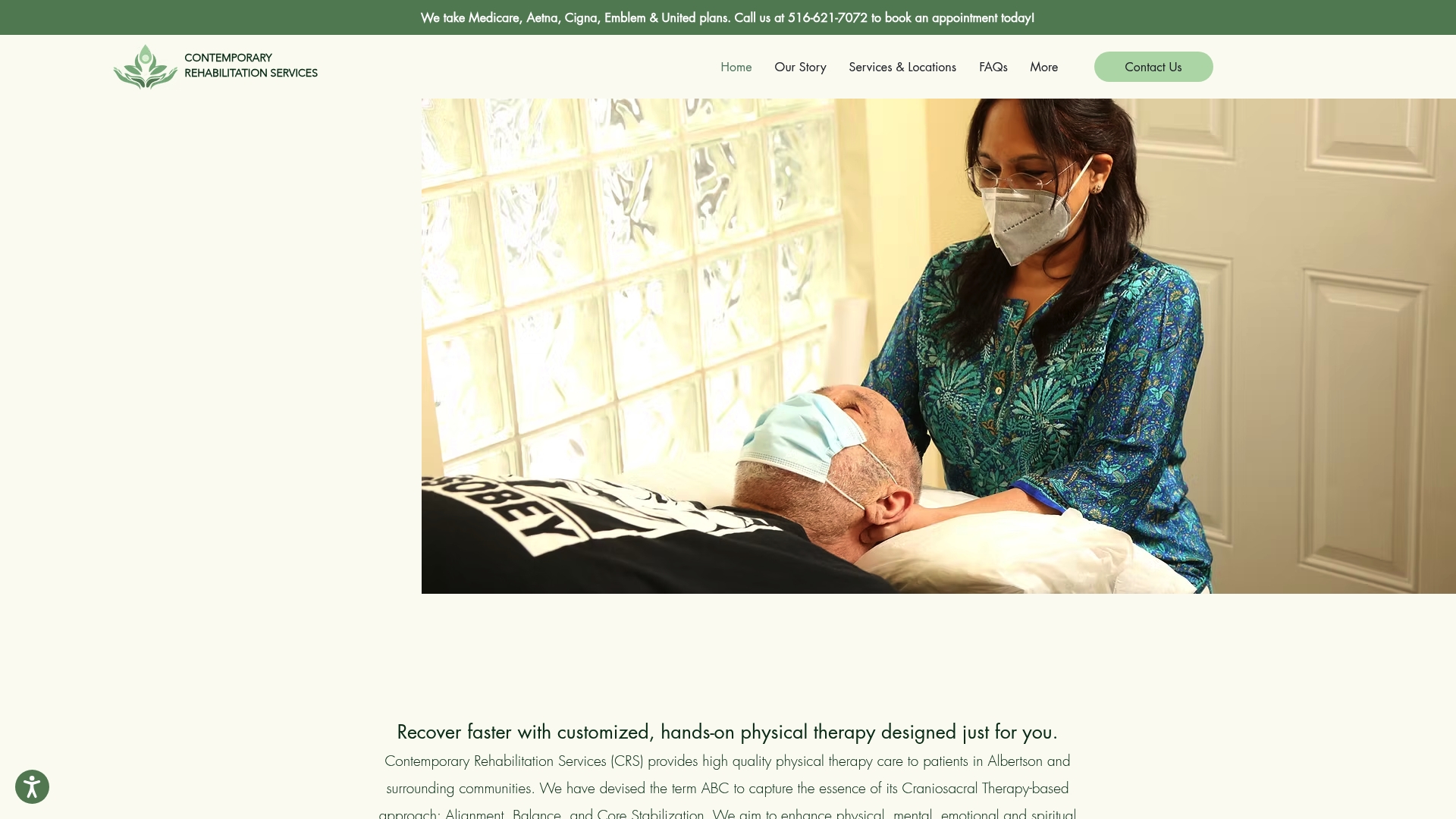
Visit us at our Searingtown clinic, Albertson location, Herricks office, or Williston Park clinic to schedule a personalized evaluation. Our team will confirm your coverage, explain your cost-sharing, and build a therapy plan that fits your health goals. Explore our full range of therapy treatments to see how we can support your wellbeing under your Medicare plan.
FAQ
What therapy types does Medicare Part B cover?
Medicare Part B covers physical therapy, occupational therapy, speech-language pathology, and outpatient mental health therapy. Each type has its own coverage rules, but all require medical necessity and are subject to the $283 deductible and 20% coinsurance.
What is the KX modifier threshold for 2026?
The 2026 KX modifier threshold is $2,480 for PT and SLP combined, and a separate $2,480 for OT. Once your charges exceed these amounts, your therapist must add the KX modifier and document continued medical necessity.
Does Medicare cover telehealth therapy sessions?
Yes. Telehealth coverage for PT, OT, SLP, and mental health therapy is extended through December 31, 2027. Mental health therapy also permits audio-only sessions for patients without reliable video access.
Who qualifies for Medicare-covered mental health therapy?
Any Medicare Part B beneficiary with a qualifying mental health diagnosis can access covered outpatient therapy. Covered providers include psychiatrists, psychologists, LCSWs, licensed professional counselors, and marriage and family therapists.
Does Medicare Advantage cover the same therapy types as Original Medicare?
Medicare Advantage plans must cover all therapy types that Original Medicare covers. Some plans offer additional therapy benefits, so checking your specific plan details before starting treatment is always recommended.
Recommended
Comments