
Neuromuscular Re-Education: Medicare's 20% Isn't the Whole U.S. Bill

Out-of-pocket prices for neuromuscular re-education vary by clinic and location. With insurance, your share depends on whether your plan uses a flat copay or applies visits to your deductible and 20% coinsurance, as Medicare Part B does. Before your first visit, ask your insurer whether CPT 97112 is covered and how it is billed to you.
TL;DR:
Clinics bill CPT 97112 in timed 15 minute units, so ask for both the unit rate and typical session length before comparing quotes.
Original Medicare charges 20% coinsurance after its $283 Part B deductible in 2026; clinics add KX at $2,480 in combined physical and speech therapy.
Ask your insurer whether CPT 97112 is covered, whether therapy requires authorization or has visit limits, and how much of your deductible remains.
For care beyond 12 to 18 visits, your therapist must document medical necessity, including functional loss, progress, and effects on daily activities.
Estimate the episode by multiplying your per visit share by expected visits, then add any deductible amount you still owe.
Table of Contents
What does a neuromuscular re-education visit cost across the U.S.?
How is neuromuscular re-education billed, and why does that matter?
What should you ask your insurer and clinic before your first visit?
What does neuromuscular re-education cost in Queens and Nassau County?
How is telehealth neuromuscular re-education priced compared with in-clinic visits?
What might you pay with Medicare, Aetna, Cigna, Emblem or United Healthcare?
What does a neuromuscular re-education visit cost across the U.S.?
Private-pay prices for a physical therapy visit that includes neuromuscular re-education vary by clinic and location. Where you land depends on your city, the clinic’s overhead and how long your therapist works with you one-on-one. Prices in New York City vary by clinic and location, as we explain in our NYC physical therapy cost breakdown.
Several factors move the price:
Region: Rents and wages differ widely between metro areas and small towns.
Session length: Neuromuscular re-education is billed in timed 15-minute units, so a longer hands-on session means more billed units.
Visit content: A visit may combine neuromuscular re-education with other services, such as manual therapy or an evaluation, each billed separately.
Payer: Contracted insurance rates are usually lower than a clinic’s self-pay rate.
Physical therapy costs vary widely across the United States, according to HealthDay’s coverage of a national study. That spread is why a quote from a friend in another state rarely predicts your own bill. Ask your clinic for its actual rate before you book.
How does your insurance design change what you pay?
A copay is a flat fee you pay at each visit, such as a set dollar amount for every therapy session. A deductible is the amount you pay in full before your plan starts sharing costs. Coinsurance is the percentage you pay after the deductible is met.
Some plans set a standard physical therapy copay, so every visit costs the same no matter what the clinic bills. Others apply therapy visits to the deductible, which means you may pay the full contracted rate until the deductible is met. Healthcare, and notes that copay and deductible rules are plan-specific.
If you have a high-deductible plan tied to a Health Savings Account, expect to cover most nonpreventive services yourself until the deductible is met. HSA-eligible plans typically carry higher deductibles, and you can use HSA funds for qualifying expenses such as therapy. Our guide to physical therapy copays walks through these mechanics in more detail.
Here is how to find your own number:
Get a written breakdown of your therapy benefits before the first visit.
Find out whether therapy is a copay or subject to the deductible.
Check how much of your deductible you have already met this year.
Pro Tip: Ask for the benefits breakdown in writing or through your insurer’s portal, so you have a record if a bill differs from the estimate.
What do Medicare beneficiaries pay in 2026?
If you have Original Medicare, outpatient physical therapy falls under Part B. For 2026, the Part B annual deductible is $283, and you pay 20% coinsurance on covered therapy after that. The same figures appear in CMS’s 2026 deductible and coinsurance update.
Therapy also has review thresholds you should know about:
KX modifier threshold: CMS lists $2,480 for physical therapy and speech-language pathology services combined for calendar year 2026. Once your therapy reaches that point, the clinic must add the KX modifier and document that the care is medically necessary.
Targeted medical review: CMS guidance also describes a higher threshold at which claims can be selected for review, which is why documentation matters in longer episodes.
What it means for you: The 20% coinsurance applies to every covered visit, so a longer episode adds up even when the per-visit share looks small. A supplemental plan may cover some or all of it.
Our Medicare PT benefits guide covers these rules in more depth.
How is neuromuscular re-education billed, and why does that matter?
Clinics bill neuromuscular re-education under CPT code 97112. CMS billing guidance describes it as re-education of movement, balance, coordination, kinesthetic sense, posture and proprioception. The AMA’s code set confirms the timed 15-minute unit.
Three things follow from that:
Units drive the charge. A session with one 15-minute unit of 97112 costs less than one with two or three units.
Documentation must justify the care. Your therapist records your functional loss, your progress and how the problem affects daily activities.
Coverage can depend on the record. The same CMS guidance says documentation must support medical necessity, especially for care beyond 12 to 18 visits.
You can see what a 97112-coded session looks like in practice in our post on neuromuscular re-education exercises therapists prescribe.
How do you estimate the total cost of an episode of care?
CMS billing guidance says documentation must support the need for continued neuromuscular re-education beyond 12 to 18 visits. Your plan and care needs may vary.
To turn a per-visit share into an episode estimate:
To estimate the total cost, confirm your per-visit share, then multiply it by the number of visits your therapist expects. Account for any deductible amount you still owe, and check with your insurer or clinic if you need help estimating the total.

A joint study by ATI Physical Therapy and the Duke Clinical Research Institute found that programs reducing or eliminating therapy copayments can increase early access to care and are associated with lower rates of downstream services such as imaging and surgery. Paying a little for therapy early may help you avoid bigger costs later.
How can you lower what you pay out of pocket?
A few moves can shrink your bill, whether you use insurance or not:
Ask about self-pay or bundled pricing. Compare it with your expected insurance share, since a cash rate is sometimes lower than your deductible-phase cost.
Use HSA or FSA funds. Confirm whether your plan requires you to meet the deductible first.
Request a superbill. It lists the codes and charges you need for out-of-network reimbursement.
Confirm in-network status. Out-of-network visits can cost much more.
Ask about payment plans or sliding scale options. Many clinics will work with you.
If you have no coverage at all, Prism Counseling’s guide to getting therapy without insurance offers general payment strategies that apply to many kinds of care, though it focuses on counseling rather than physical therapy.
Pro Tip: Ask for the price of one 15-minute unit and of a typical full session, so you can compare clinics on the same terms.
What should you ask your insurer and clinic before your first visit?
A short call to each side gives you a reliable estimate. Ask your insurer:
Is CPT 97112 covered, and is physical therapy a copay or subject to the deductible?
What is my copay or coinsurance percentage for therapy visits?
How much of my deductible and out-of-pocket maximum have I already met?
Is there a visit limit or an authorization requirement?
Then ask your clinic:
How many minutes is a typical session, and how many units of 97112 do you usually bill?
Which other CPT codes might appear on my bill?
Are you in network with my plan, and can you provide a superbill?
Multiply your share per visit by the expected number of visits to get your estimate.
What does neuromuscular re-education cost in Queens and Nassau County?
Prices in Queens and Nassau County vary by clinic and location. The exact amount depends on the clinic’s rates, the length of your session and whether you pay cash or use insurance. Our NYC cost post gives a regional example of how those rates play out.
Contemporary Rehab Services, our clinic in Albertson, does not publish a fixed price for neuromuscular re-education. The final amount depends on your plan, the number of units billed and your visit count, so we recommend asking us for a personalized estimate.
Local pricing also differs by setting. A boutique practice with one-on-one sessions, like ours, can look different from a large multi-site chain on both price and the time you spend with your therapist. When you compare local clinics, ask each one the same questions: session length, units billed, in-network status and self-pay rate. That puts every quote on an equal footing.
Because many Long Island residents carry employer plans with copays or high deductibles, your plan design usually matters more than the neighborhood. Check your benefits first, then compare clinics.
How is telehealth neuromuscular re-education priced compared with in-clinic visits?
Telehealth physical therapy sessions use the same therapist time and often the same CPT codes, so the pricing logic is similar to in-person care. Neuromuscular re-education is a hands-on and cueing-based service, and some of it translates well to video, such as guided balance, posture and movement practice. Other parts depend on the therapist’s touch and are better done in the clinic.

What you pay for a telehealth session depends mostly on your plan. Some insurers reimburse telehealth at the same rate as in-person visits, while others apply different rules or limits. Coverage can differ by payer and change over time, so confirm yours before you book. Our post on telehealth physical therapy coverage explains what to check.
We offer both in-person and telehealth physical therapy sessions, and we do not publish a price for either one. Ask us what your plan covers for each format.
Three questions help you compare the two options:
Does my plan cover telehealth physical therapy, and at what copay or coinsurance?
Will my therapist bill the same codes for a video visit?
Is my goal better served by hands-on care, or can it be done well on video?
What might you pay with Medicare, Aetna, Cigna, Emblem or United Healthcare?
We accept Medicare, Aetna, Cigna, Emblem and United Healthcare, so your out-of-pocket cost mainly depends on your specific plan rather than the insurer’s name. Each carrier sells many plan designs, and two people with the same insurer can pay very different amounts.
Medicare: After the $283 Part B deductible for 2026, you pay 20% of the Medicare-approved amount, unless a supplemental plan picks up some or all of it.
Aetna, Cigna, Emblem and United Healthcare: Your share could be a flat copay, or it could be the contracted rate until your deductible is met, followed by coinsurance. Your plan documents or insurer portal show which applies.
We cannot give you a dollar figure for a carrier without your plan details, and we do not publish carrier-specific amounts. The reliable route is simple: call the number on your insurance card, use the checklist above and share the answers with us. We can then help you work out a per-visit estimate before you commit to treatment.
A clinic perspective on insurance and pricing
We know that cost questions can stop people from getting care they need. We accept Medicare, Aetna, Cigna, Emblem and United Healthcare, and we offer both in-person and telehealth sessions. Bring the checklist above to your first call, and we will help you check your benefits so the number on your bill is not a surprise.
— CRS Wellness
How we can help you get started
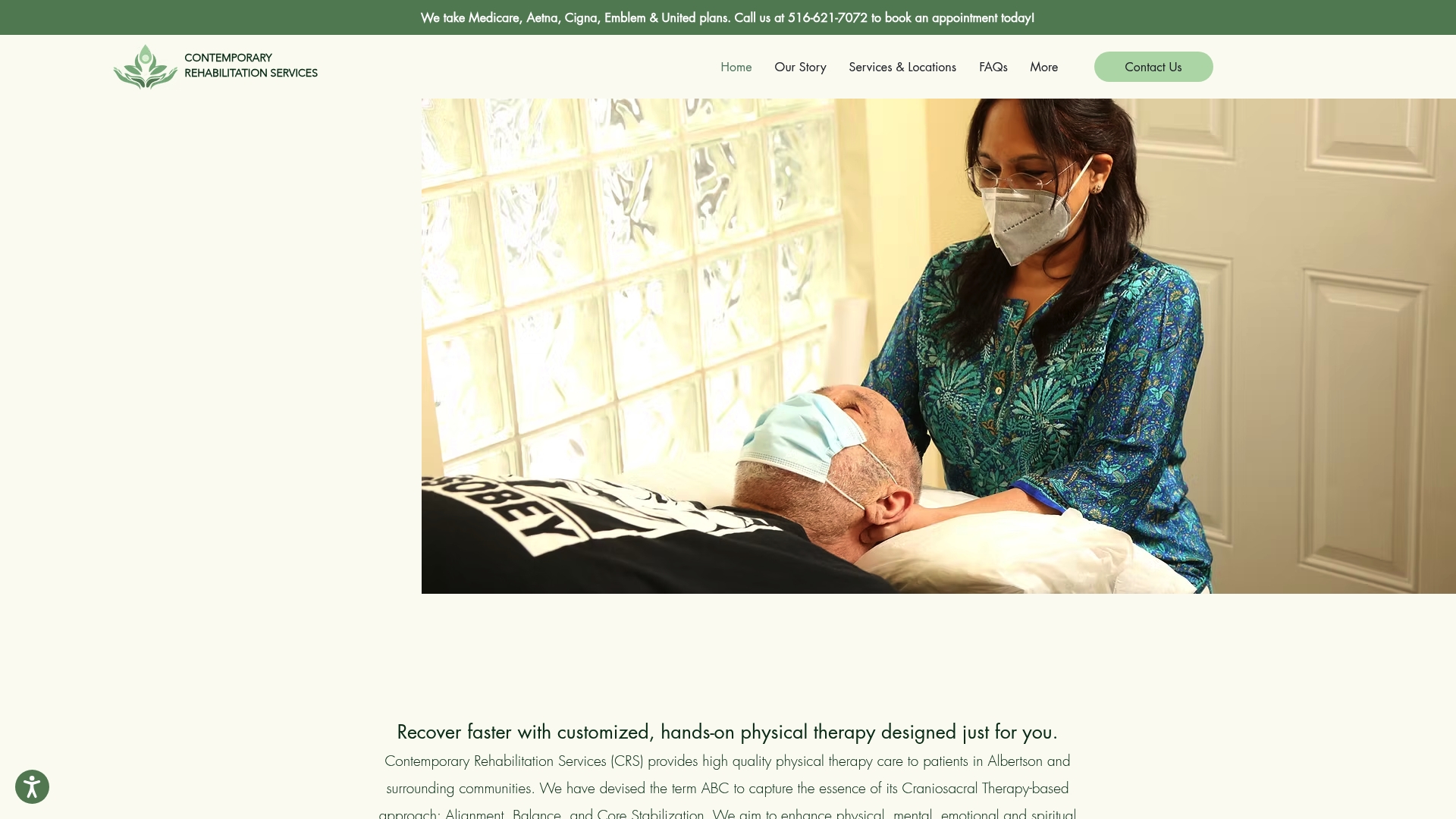
We offer neuromuscular re-education, in-person and by telehealth, and we accept Medicare, Aetna, Cigna, Emblem and United Healthcare. A clear cost estimate should come before treatment, not after it.
Contact us for an insurance benefits check or an initial assessment.
Learn more about our physical therapy and telehealth sessions.
Browse all of our services.
This article is general information, not a substitute for advice from a qualified doctor. Consult a qualified healthcare professional about your own circumstances before acting on anything here.
FAQ
How long does physical therapy usually last?
It depends on your condition and goals. CMS billing guidance says documentation must support the need for continued neuromuscular re-education beyond 12 to 18 visits. The length of an episode varies with your condition and goals.
How is neuromuscular re-education billed?
Clinics bill it under CPT code 97112 in timed 15-minute units, and the therapist’s notes must support the need for skilled care. CMS billing guidance describes the code and its documentation expectations.
What is the average cost of a therapy session in the United States?
Private-pay physical therapy prices vary widely by region and clinic. With insurance, you pay your copay or coinsurance instead, and HealthDay’s reporting shows how much costs differ across the country.
Will my insurance cover neuromuscular re-education?
Many plans cover it as part of physical therapy, but coverage depends on your plan, medical necessity and sometimes authorization. Ask your insurer whether CPT 97112 is covered and whether therapy is a copay or applies to your deductible.
Sources
Recommended
Comments