
6 Neuromuscular Reeducation Exercises Therapists Prescribe for Home
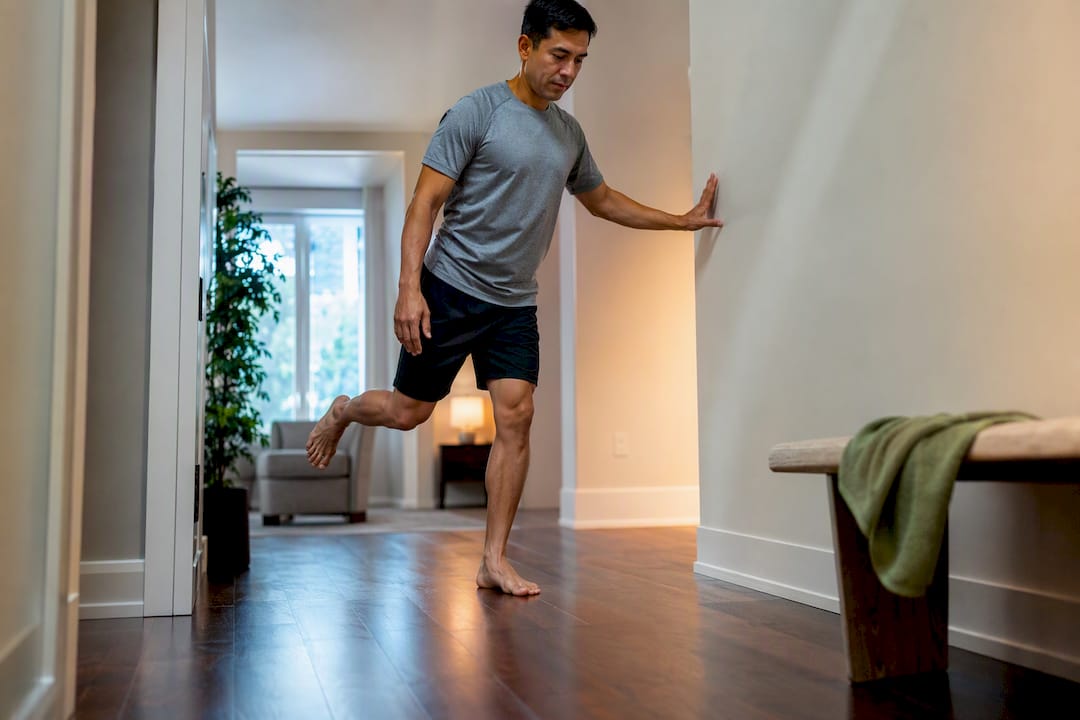
Neuromuscular re-education exercises retrain the nervous system to fire muscles in the right order, at the right time, so movement becomes coordinated instead of compensated. They improve balance, gait, and joint control, and they matter most for post-op patients, people recovering from stroke or other neurological conditions, older adults working on fall prevention, and anyone stuck with a chronic movement fault that strength training alone hasn’t fixed.
TL;DR:
Proper progression involves starting with activation exercises and gradually increasing complexity to avoid reinforcing compensations.
Feedback tools like mirrors or EMG sensors enhance muscle awareness during at-home neuromuscular work, especially when electronic equipment is unavailable.
Controlled, deliberate practice over weeks is essential, with progress measured by holding positions and confidence, not just repetitions or speed.
Supervision is critical if sharp pain, increasing weakness, sensation loss, or dizziness occur, or if recovering from recent surgery or neurological events.
A typical clinic program includes tailored exercises like glute sets, balance drills, gait re-education, and core control, adjusted to individual needs.
Table of Contents
Why Neuromuscular Re-Education Comes Before Heavy Strengthening
Your muscles aren’t the problem most of the time. Your nervous system’s ability to sequence them is. After an injury, surgery, or a neurological event like a stroke, the brain often loses its clean map of how a joint or limb should move. It starts recruiting the wrong muscles, at the wrong time, to get the job done anyway. That’s a compensation pattern, and it feels like progress until it becomes the reason your knee still buckles on stairs six months later.
This is why a peer-reviewed review on sensorimotor training found measurable movement control gains across a range of musculoskeletal and neurologic conditions, not just strength gains. Neural adaptation typically shows up before measurable strength does, according to clinical guidance from outpatient orthopaedic practice, which is exactly why therapists sequence rehab the way they do:
Activation phase: waking up dormant or “neglected” muscles and rebuilding basic sensory awareness.
Controlled movement phase: practicing correct patterns slowly, without speed or load masking errors.
Functional integration phase: applying those patterns to real tasks like walking, climbing stairs, or reaching overhead.
Skip straight to loading a joint before that sequence is in place, and you’re just strengthening the compensation.
Neuromuscular Re-Education Examples You’ll Actually See in the Clinic
Neuromuscular reeducation examples break into a handful of categories, and knowing them helps you understand what your therapist is actually asking for when they say “just feel the muscle working.”
Activation exercises. Glute sets, scapular retraction holds, and quad isometric holds teach a muscle to switch on independently before it’s asked to do real work. The cue matters more than the rep count here. Squeeze, hold five seconds, release, and feel for the muscle rather than the movement.
Balance and stability drills. Weight shifts, single-leg stance, and progressions onto a foam pad or wobble board challenge the proprioceptive system, the sensory network that tells your brain where your joints are in space without you looking.
Postural and core control work. Seated stability drills, dead-bug progressions, and plank variations retrain the deep stabilizers that hold your spine and pelvis steady during everyday movement.
Gait drills. Heel-toe walks, controlled step-downs, and marching in place, all done with deliberate muscle activation rather than speed, retrain the walking pattern itself.
PNF, or proprioceptive neuromuscular facilitation. A hands-on technique where a therapist applies resistance through specific movement patterns to improve strength and range at the same time. It’s a manual technique, which is why it’s usually reserved for in-clinic sessions rather than home programs.
Biofeedback. EMG sensors, mirrors, and simple tactile cues (a light tap on the muscle you’re supposed to feel firing) help your brain locate a muscle it’s currently ignoring. Structured models like NEMEX build this kind of sensorimotor control work into a formal program rather than leaving it to guesswork.
Pro Tip: If you don’t have EMG access at home, stand in front of a mirror during activation exercises. Watching the muscle move gives your brain a visual anchor that works almost as well as electronic feedback.
How to Progress Without Undoing Your Own Work
Progress in neuromuscular training moves in small, deliberate steps, not big jumps. Add complexity too fast and you’ll just relearn the compensation you started with.
Start every new exercise slow, with full attention on form rather than rep count. Once a movement feels controlled and repeatable, add one variable at a time:
Swap a stable surface for foam or a wobble board.
Add a second task, like counting backward while balancing (dual-tasking mimics real life better than silence ever does).
Increase speed only after control is solid, not before.
Add light load last, once the pattern holds under distraction.
Track three simple things: how long you can hold a position under control, how confident the movement feels compared to last week, and whether symptoms spike afterward. Fluctuating progress in the early weeks is normal and expected during neural mapping; consistent, slow, correct repetition is what locks in durable change. The most common mistake is rushing past that phase, or pushing through a compensation because it “still gets the job done.”
When to Stop and Call a Physical Therapist
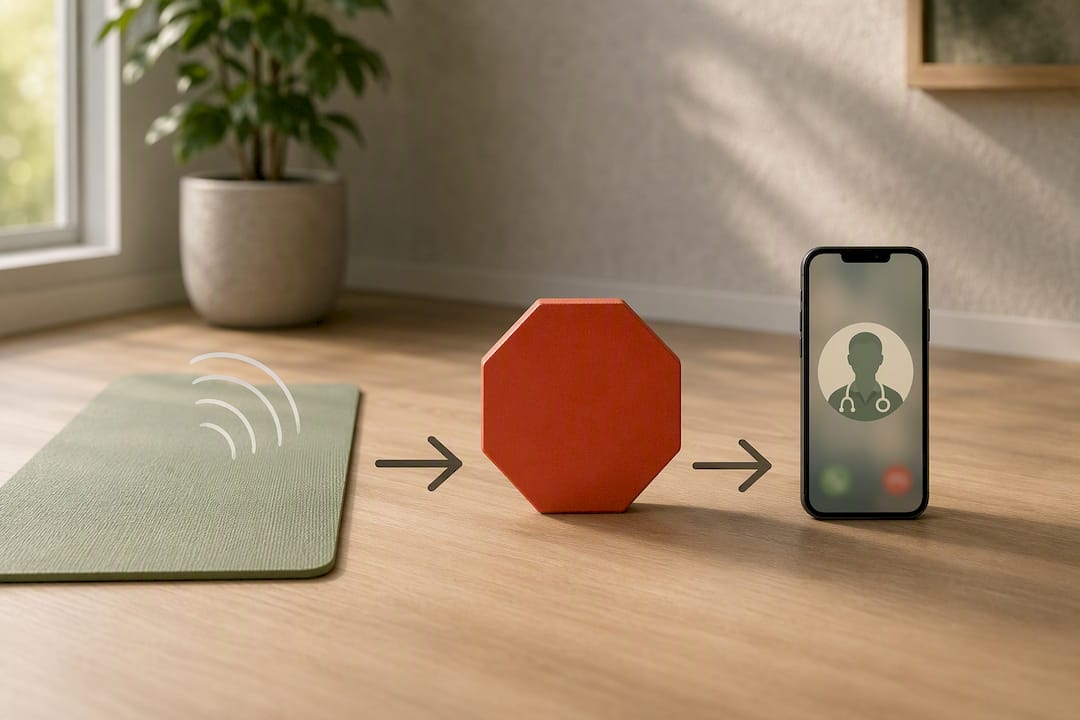
Most neuromuscular re-education exercises are safe to try in a controlled setting, but certain signals mean you need supervised care, not another home rep.
Stop and seek evaluation if you notice:
New, sharp pain that wasn’t there before the exercise.
Progressive weakness that gets worse session to session rather than better.
Loss of sensation or numbness in the limb you’re training.
Dizziness or a fall risk during balance tasks.
Supervised therapy is essential, not optional, if you’re recovering from recent surgery, recovering from a recent stroke, managing an unstable joint, or dealing with an uncontrolled medical condition like uncontrolled blood pressure or seizures. A therapist assesses readiness through observation, gait analysis, and specific balance and range-of-motion tests, then adjusts your program based on what your body actually shows them, not what a generic plan assumes. For a broader safety checklist before trying exercises solo, see this guide on doing physical therapy exercises safely at home.
A Six-Exercise Sample Program to Try at Home
This routine covers activation, balance, gait, and functional integration, the same phase structure a clinic uses, scaled for home practice two to three times a week.
Glute sets (activation): squeeze and hold 5 seconds, 10 reps. Progress to bridges once activation is consistent.
Seated marching (activation to gait): lift knees alternately with control, 10 per side. Progress to standing marching holding a counter.
Single-leg stance (balance): hold near a wall for support, 20 to 30 seconds per side. Progress to eyes-closed or foam-pad variations.
Weight shifts (balance): side to side and front to back, slow and controlled. Progress to shifting on a foam pad.
Controlled step-downs (gait): step down from a low curb slowly, focusing on knee alignment. Progress to a slightly higher step.
Dead-bug progressions (core and integration): opposite arm and leg extension, controlled tempo. Progress to adding a light resistance band.
Log sets, reps, and a one-word control note (steady, wobbly, painful) after each session so you can spot trends. Pause and check with a clinician if any exercise triggers sharp pain, dizziness, or a fall.
Pro Tip: Do the hardest exercise in your routine first, while your focus and muscle activation are freshest. Neuromuscular work depends on quality attention, and that fades fast.
Who Actually Benefits From This Kind of Training
Neuromuscular re-education shows up across a wide range of clinical situations, and knowing where it fits helps set realistic expectations.
Post-surgical recovery. Knee, hip, and shoulder surgeries often leave surrounding muscles inhibited even after the structural repair is solid, making activation work a prerequisite for real strength gains.
Neurological rehab. Stroke recovery and Parkinson’s management rely heavily on this approach, though it needs specialist oversight given the complexity of motor pathway involvement. See more on physical therapy for neurological conditions.
Older-adult fall prevention. Proprioceptive training is especially valuable for seniors working on balance, since falls are often a coordination failure rather than a strength failure.
Chronic pain and recurring movement faults. Persistent compensations, like a hip that never quite fires right after an old ankle sprain, respond well to targeted re-education.
What Clinic-Led Neuromuscular Re-Education Looks Like
A supervised program starts with an assessment, not a generic exercise sheet. At Contemporaryrehabservices, that first visit typically includes:
A posture and movement screen to identify compensation patterns.
Balance and gait observation under controlled conditions.
Range-of-motion testing at the affected joint or limb.
A discussion of your goals, whether that’s climbing stairs pain-free or returning to sport.
Physical therapy sessions built around this kind of individualized assessment can be offered in-person and virtually, with acceptance of various insurance plans to facilitate starting supervised care early.
How Long Before You See Real Change?
Early neural adaptation often produces noticeable improvements in control within a few weeks. Functional change, the kind that shows up climbing stairs or walking on uneven ground, usually takes months, not weeks. Track movement quality and daily task tolerance rather than just strength numbers, and keep follow-up appointments even when progress feels slow. Adherence, more than intensity, determines whether gains hold.
— CRS Wellness
Get a Supervised Neuromuscular Assessment at Contemporaryrehabservices
Home exercises get you started, but a compensation pattern that’s been building for months usually needs a trained eye to spot and correct, and that’s the gap Contemporaryrehabservices closes. In-person and virtual physical therapy, manual therapy, and individualized neuromuscular re-education programs, including gait training and balance work, may be available, with sessions billed through common insurance providers or paid directly.
Your first visit includes a full movement assessment covering posture, balance, range of motion, and gait, so your program targets your actual compensation pattern instead of a generic checklist. Contemporaryrehabservices serves patients from locations including Albertson, Russell Gardens, Plandome Heights, and Great Neck Plaza. Book an initial assessment at the location nearest you to find out what’s actually driving your movement limitations.
Sources
For readers who want to go deeper, the NCBI review on sensorimotor training covers outcomes across musculoskeletal and neurologic populations, and the NEMEX program page lays out a structured model for sensorimotor control and joint stabilization used in both research and clinical settings. Both are worth a read before starting a serious home program.
This article is general information, not a substitute for advice from a qualified doctor. Consult a qualified healthcare professional about your own circumstances before acting on anything here.
FAQ
What Are Examples of Neuromuscular Exercises?
Common examples include glute and scapular activation holds, single-leg balance work, wobble board or foam pad drills, controlled step-downs, PNF patterns performed with a therapist, and biofeedback tools like EMG or mirror cueing.
What Activities Fall Under Neuromuscular Re-Education?
Activities generally fall into activation drills, balance and stability training, postural and core control work, gait retraining, PNF, and biofeedback-assisted movement, all aimed at restoring correct muscle firing patterns.
What Are the Seven Essential Exercises?
There’s no single universal list of seven exercises; programs are individualized based on assessment findings. A typical clinic program covers glute sets, scapular holds, single-leg stance, weight shifts, controlled step-downs, dead-bug progressions, and gait drills, adjusted to the patient’s specific compensation pattern.
What Are Some Neuromuscular Retraining Techniques?
PNF, balance training on unstable surfaces, gait drills like heel-toe walks, postural control exercises, and biofeedback methods such as EMG or mirror therapy are the core techniques therapists use.
Can I Do Neuromuscular Re-Education Exercises at Home?
Many activation, balance, and postural exercises are safe to try at home once you understand proper form, but techniques like PNF require hands-on guidance, and anyone with recent surgery, a neurological event, or new symptoms should start under supervision from a clinic like Contemporaryrehabservices.
Recommended
Comments