
Visceral Manipulation for Pelvic Pain: What to Know

Visceral manipulation is a gentle, hands-on technique in which a trained therapist works on the soft tissue around your organs, and the connective tissue that holds them in place, to ease tension and restore movement. People with pelvic pain look into it when muscle and joint treatment has not fully helped. The research is still early and of modest quality, so it is best seen as one option within a broader plan, after a medical evaluation has ruled out other causes. This guide explains what the technique is, what a session looks like, what the evidence supports, and who should be cautious.
TL;DR
Visceral manipulation is a soft-tissue technique that mobilizes the fascia (connective tissue) around organs. Therapists use it on the idea that restricted tissue can add to pelvic pain.
Evidence is limited. Reviews of myofascial manual therapies for chronic pelvic pain describe low-quality evidence with positive trends, not proof of superiority over standard care.
Get a medical evaluation first. Pelvic pain has many treatable causes that need to be excluded before any manual therapy plan.
Sessions are gentle and slow. Pressure should never be forceful, and some situations, such as implanted devices in the treated area, are reasons to avoid the work.
We offer visceral therapy in Albertson, NY, serving Queens and Nassau County, and we accept Medicare, Aetna, Cigna, Emblem and United Healthcare.
Table of Contents
What visceral manipulation actually is
The word “visceral” refers to your internal organs: the bladder, bowel, uterus and ovaries, and so on. Each organ sits in a wrapping of connective tissue, and the organs glide slightly against one another and against the body wall as you breathe, walk and change position.
A professional review describes visceral manipulation as a soft-tissue technique that mobilizes the fascial layer of the visceral system in relation to the somatic frame, in other words, the organs’ connective tissue relative to your muscles and bones. The idea is that when those sliding surfaces become restricted, for example after surgery, infection, injury or long-standing guarding, they may contribute to pain through referred visceral pain, central sensitization (a nervous system that becomes more reactive to signals) and changes in how local tissue behaves.
Think of it as checking whether the structures around the pelvis can move freely. The therapist uses light, sustained pressure and listens with their hands for areas that feel tight, tender or less mobile. Then they apply gentle techniques to encourage movement.
This is a proposed mechanism, and it is worth saying plainly: the same review notes that clinical evidence for visceral mobilization is limited and relies largely on observational studies and case reports rather than enough controlled trials. We would rather you know that before you book than discover it afterward.
How pelvic pain and the viscera can be connected
Pelvic pain is a broad label. It can involve the pelvic floor muscles, hip joints, lower spine, bladder, bowel, reproductive organs, nerves or several of these at once. Pain from one organ can also be felt in another region, which is what “referred” pain means. That overlap is one reason pelvic pain can be hard to pin down.
Therapists who use visceral work usually consider it when:
Pain persists after muscles and joints have been treated.
There is a history of abdominal or pelvic surgery, such as a cesarean section, hysterectomy or hernia repair, where scar tissue may limit tissue glide.
Pain changes with digestion, bladder filling or the menstrual cycle.
Breathing feels shallow and the diaphragm and pelvic floor seem to work against each other.
These are reasons a therapist may look at the area. They are not diagnoses, and none of them proves that visceral restriction is the cause of your pain.
What happens in a session
It helps to know what the hands-on work looks like. In a 2025 non-controlled study of women with endometriosis and pelvic organ prolapse, participants received a protocol of 20-minute visceral manipulation sessions once a week for five weeks. The techniques included diaphragm relaxation, pelvic and urogenital diaphragm relaxation, ligament stretching, and general relaxation techniques for the uterus, ovaries and fallopian tubes.
That protocol is one study’s design, not a prescription. A real visit with us is individualized. In general you can expect:
A conversation first. We ask about where the pain is, when it started, what makes it better or worse, your surgical and medical history, and what your doctor has already found.
Movement and posture screening. We look at how your hips, spine, ribs and breathing work together.
Gentle hands-on assessment. You stay clothed, usually lying on a treatment table. The pressure is light and slow.
Treatment matched to what we find. This may include visceral work, myofascial release, joint mobilization or neuromuscular re-education, depending on your needs.
A plan you can follow at home. Breathing, positioning or movement strategies between visits.
You should feel in control throughout. If something is uncomfortable, say so and we change the approach. Our visceral manipulation safety guide goes deeper on screening and risks.
What the research shows, and what it does not
This is the part most pages skip, so here it is directly.
Myofascial manual therapies for chronic pelvic pain. A 2022 systematic review found the evidence for these therapies remains low quality. The reviewers found them not superior to other standard care interventions, though positive trends justify more randomized controlled trials. So the honest reading is “promising enough to study further,” not “proven better.”
Small studies in specific groups. The 2025 endometriosis and prolapse study above looked at quality of life after a five-week course. Because it was non-controlled, there was no comparison group, so it cannot show that the technique caused any improvement. Natural fluctuation in symptoms, attention from a caring therapist and other changes can all play a part.
Heat and other self-care. Many people with menstrual or endometriosis-related pain use heat alongside professional care. An article on heat therapy for endometriosis pain explains how gentle heat is used for cramp relief, which can be a useful companion to manual therapy while you work out what helps you.
A related caution on craniosacral therapy. Because we also provide craniosacral therapy, we want to be consistent. A 2024 systematic review concluded that craniosacral therapy produced no significant or clinically relevant benefits for musculoskeletal conditions, including pelvic girdle pain, even though some individual studies reported positive results. The same review noted many studies carried a high risk of bias, and that the higher-risk studies tended to report the positive findings. We discuss this openly in our post on what evidence and experience reveal about craniosacral therapy.
What this means for you: treat visceral manipulation as a reasonable, low-force option to try with realistic expectations, track whether it helps, and stop or change course if it does not.
How visceral manipulation differs from pelvic floor therapy and craniosacral therapy
These get confused, so here is a simple breakdown.
Approach | What it focuses on | Typical hands-on style |
Visceral manipulation | Fascia and mobility around organs | Light, sustained, external pressure on the abdomen and pelvis |
Pelvic floor physical therapy | Pelvic floor muscles, coordination, strength and relaxation | Assessment, exercise, biofeedback, manual release |
Craniosacral therapy | Skull, spine and sacrum, and the membranes between them | Very light touch, mostly at the head, spine and sacrum |
Myofascial therapy | Tight, restricted muscle and connective tissue | Sustained stretch and pressure on affected areas |
The overlap is real. The American College of Obstetricians and Gynecologists lists visceral manipulation as a potential component of pelvic floor physical therapy, which is used to treat localized and generalized vulvar pain. If you want a fuller picture of the pelvic side, read our guide to what pelvic therapy is and what to expect.
Get evaluated by a doctor first
Manual therapy is not a substitute for a diagnosis. Pelvic pain can come from infection, endometriosis, fibroids, ovarian cysts, bowel or bladder conditions, hernias, pelvic floor dysfunction, nerve irritation and more. Some of these need medical or surgical treatment.
ACOG makes a related point about vulvar pain: vulvodynia is a diagnosis of exclusion, meaning other treatable causes should be ruled out before that label is applied. The same logic applies broadly. See your primary care physician, gynecologist, urologist or gastroenterologist, depending on your symptoms, before starting manual therapy.
Contact a doctor promptly, rather than booking therapy, if you have:
Sudden, severe pelvic or abdominal pain
Fever with pelvic pain
Unexplained vaginal bleeding, or bleeding after menopause
Blood in your urine or stool
Pain with a missed period or possible pregnancy
Unintended weight loss
These need medical attention, and a therapist is not the right first stop.
Track your pain so the plan can be judged
ACOG notes that a diagram of pain locations may help assess pain over time. We like this idea. Before your first visit, mark where you feel pain on a simple body outline, rate it from 0 to 10, and note the date and what you were doing. Repeat weekly. If you are exploring other tools that people use for tracking and managing persistent pain, this overview of PEMF for pain looks at what the research shows and who it suits. Whatever you try, the diary is what lets you and your clinicians see whether anything is working.

Risks and reasons to avoid it
Visceral manipulation is gentle by design, and serious harm is not commonly reported with correctly applied light technique. Still, there are real cautions.
The professional review mentioned earlier cites reports of colon perforation and hepatic hematoma after deep-tissue massage, a reminder that forceful abdominal pressure is not appropriate. The same source says visceral manipulation training contraindicates work over areas containing foreign objects or implanted medical devices.
In practice, tell your therapist before treatment if you:
Have an implanted device, mesh, IUD or other foreign material near the treatment area
Have had recent abdominal or pelvic surgery
Are pregnant
Have a known aneurysm, active infection, cancer or a bleeding disorder
Take blood thinners
Some therapists will want clearance from your doctor. We would rather ask than assume.
Expect mild soreness or tiredness after a session at most. Pain that increases sharply, new symptoms or fever mean you should stop and call your doctor.
How to judge any practitioner’s claims
Because the field has more enthusiasm than trial data, a few habits protect you.
Be wary of cure language. A practitioner who promises to cure endometriosis, prolapse or chronic pain is claiming more than the research supports.
Ask what the evidence is. A good clinician can tell you what is known, what is theory and what is experience.
Ask how progress will be measured. Pain scores, function, sleep, and sitting or walking tolerance are all measurable.
Expect a time limit. A sensible plan includes a point, often after a handful of visits, at which you decide whether to continue.
Check that your medical team is in the loop. Good care is coordinated.
Notice who funds the claims. The 2024 craniosacral review found higher-risk studies tended to report positive findings, so a glowing study is not automatically a strong one.
Our perspective on visceral work and pelvic pain
We are a boutique clinic in Albertson, run by an experienced mother-daughter team, and we see people from Queens and across Nassau County. Our approach is one-on-one, hands-on and individualized. We combine manual techniques, including visceral therapy, myofascial therapy, joint mobilization, neural mobilization and neuromuscular re-education, with an exercise program built around what you can actually do at home.
Here is how we think about visceral manipulation for pelvic pain:
We treat the person, not a technique. Pelvic pain rarely has a single source, so we look at the hips, spine, ribs, breathing and movement habits as well as the abdomen and pelvis.
We are honest about the evidence. The research is limited, and we tell patients so. Many people feel better with gentle manual work, but we do not promise outcomes.
We want a diagnosis in place. We work alongside your physician, not instead of one.
We keep it gentle. If a technique is not comfortable, we do something else.
We measure. If we do not see a meaningful change within a reasonable number of visits, we will discuss a different approach or a referral.
That combination, patience, honesty and hands that listen, is what we believe helps people with long-standing pain feel safe enough to start improving.
— CRS Wellness
Book a visit in Albertson
If you have already been evaluated by your doctor and want to see whether gentle manual therapy can help, we would be glad to meet you. We offer in-person sessions at our Albertson clinic and telehealth physical therapy for guidance on movement, breathing and home exercise. We accept Medicare, Aetna, Cigna, Emblem and United Healthcare, as well as cash payments. Check your own plan’s benefits and any referral requirement before your first visit.
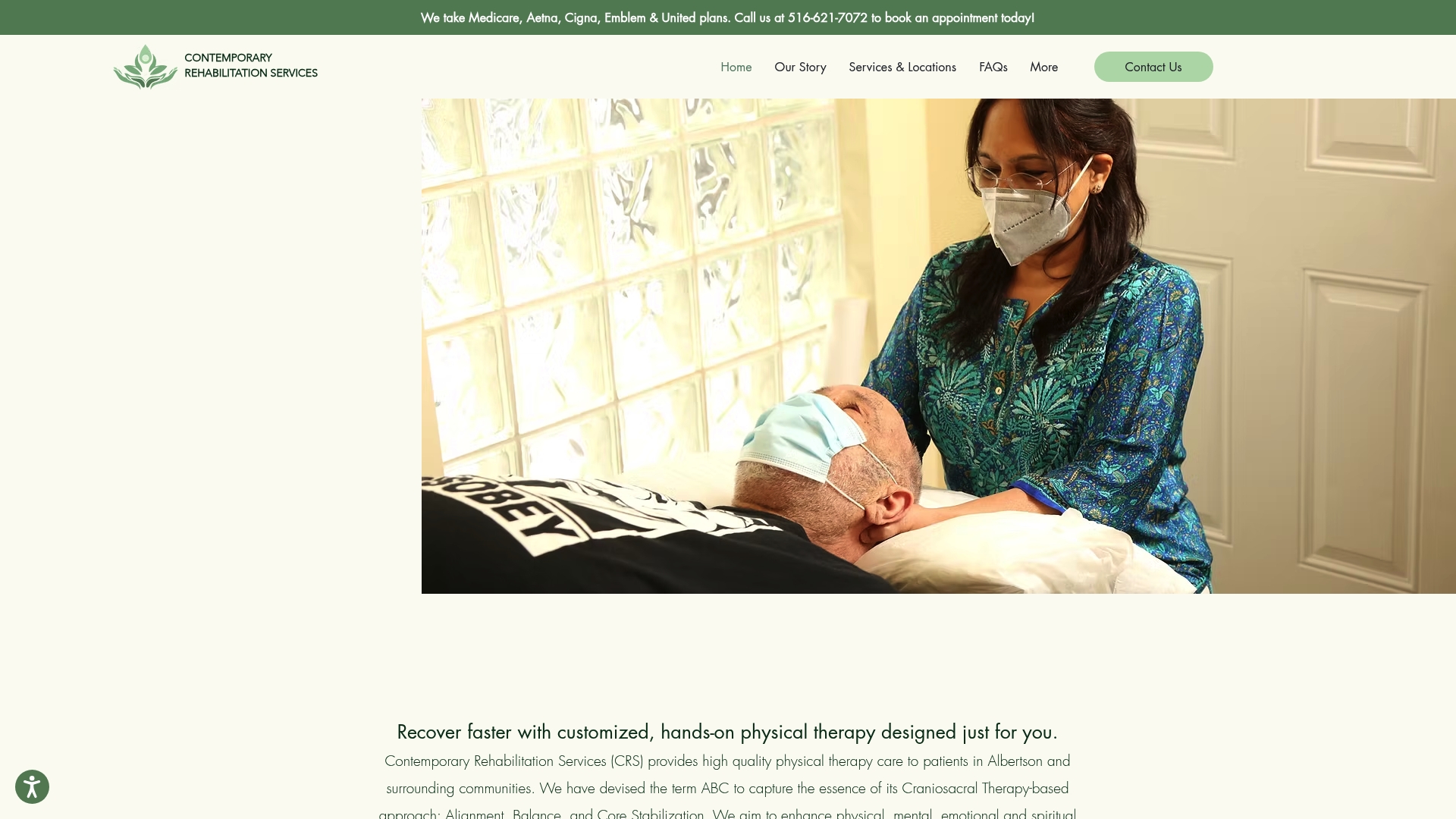
See everything we offer on our services page, or contact the clinic to ask whether visceral therapy suits your situation. We serve patients from Queens, Mineola, Roslyn, Williston Park, Westbury, Carle Place, Old Westbury and nearby Nassau County communities.
FAQ
Does visceral manipulation really work for pelvic pain?
Some people report relief, but controlled evidence is limited. A 2022 systematic review rated the evidence for myofascial manual therapies in chronic pelvic pain as low quality, with positive trends and no clear superiority over standard care. It is reasonable to try with realistic expectations and a way to measure progress.
Is visceral manipulation painful?
It should not be. The technique uses light, slow pressure, and you can ask the therapist to adjust or stop at any time. Mild tenderness or tiredness afterward can occur, but sharp or worsening pain is a reason to call your doctor.
How many sessions might I need?
It depends on your history and goals. One study protocol used 20-minute sessions once a week for five weeks, but that is a research design, not a standard. We suggest agreeing at the first visit on a short trial and a way to judge whether it is helping.
Should I see a doctor before trying it?
Yes. Pelvic pain has many causes, some of which need medical treatment. Get evaluated by your primary care physician, gynecologist, urologist or another appropriate specialist first, and seek urgent care for severe sudden pain, fever or unexplained bleeding.
Is visceral manipulation the same as craniosacral therapy?
No. Visceral manipulation works on the tissue around organs, mainly through the abdomen and pelvis. Craniosacral therapy uses very light touch at the head, spine and sacrum. Reviews of craniosacral therapy have not found clinically relevant benefits for musculoskeletal conditions, so we discuss both openly with patients.
Sources
Recommended
Comments