
NY Physical Therapy: 10 Visit Direct Access, Medicare, Work Comp

Short answer: In New York, you can often begin physical therapy without a physician referral, for up to 10 visits or 30 days, whichever comes first, as long as your therapist meets a three-year experience requirement. Medicare, Workers’ Compensation, and some private insurers still require a referral or prior authorization before they will pay. Always confirm your specific plan’s rules and hold onto your written Notice of Advice.
TL;DR:
Patients can start physical therapy in New York without a referral for up to 10 visits or 30 days if the therapist has at least three years of experience, but insurance plans may still require prior authorization.
A written Notice of Advice must be provided during treatment under direct access to prove law compliance and must be kept in patients’ records.
Medicare requires a plan of care certification, but a physician or non-physician practitioner’s order can now substitute for a referral under certain conditions starting January 1, 2025.
Workers’ Compensation claims require prior authorization from an authorized medical provider, regardless of direct access rights in other settings.
Private insurance coverage varies; calling ahead to confirm referral and authorization requirements is crucial before scheduling therapy.
Table of Contents
New York Direct Access Rules: The Law, the Limits, and the Notice of Advice
New York is a direct access state, which means the law does not require you to see a doctor before starting physical therapy. Under Article 136 of the New York Education Law, a licensed physical therapist with the equivalent of three years of full-time clinical experience may evaluate and treat you without a referral for up to 10 visits or 30 days, whichever limit is reached first.
That clock starts on your first visit, not on the date you called to book it. If you begin treatment on March 3, your 30-day window closes around April 2, regardless of how many sessions you have actually attended. Hit either cap first, the 10th visit or day 30, and your therapist needs a referral to keep treating you under this provision.
There’s a paperwork piece that matters more than most patients realize. NYSED requires the therapist to give you a written Notice of Advice explaining that you’re being treated without a referral, and to keep a copy in your chart.
Pro Tip: Ask for your own copy of the Notice of Advice at your first visit. If your insurer later questions why there’s no referral on file for those early sessions, that document is your proof the clinic followed New York law.
A few practical notes on how this plays out:
The three-year experience requirement applies to the treating therapist, not the clinic, so ask if you’re unsure.
Referrals are directive as to specific treatment methods can be problematic if they exceed a PT’s scope; a referring provider can send you for care, but shouldn’t dictate techniques outside the therapist’s judgment.
Direct access covers the legal right to treatment. It does not automatically mean your insurance will pay for it.
How Insurance and Medicare Affect Whether a Referral Is Needed
Here’s where things get confusing for a lot of New Yorkers: the law and your insurance plan are two separate systems, and they don’t always agree. You might be legally allowed to start therapy without a referral while your insurer still requires one, or a prior authorization, before it will reimburse a single visit.

Private insurance is the biggest variable. Some Aetna, Cigna, Emblem, and United Healthcare plans allow direct access to physical therapy, while others require a referral from your primary care doctor or a prior authorization before your first visit, especially for HMO plans. Calling member services before you book is the only reliable way to know which rule applies to your specific plan.
Medicare works differently again. For ongoing outpatient therapy, Medicare requires a physician or non-physician practitioner to certify your plan of care. As of January 1, 2025, a physician or NPP’s written order or referral can substitute for that signature on the initial plan of care under defined conditions, a change that speeds up how quickly clinics can get you into care while staying compliant.
If you have New York Medicaid fee-for-service coverage, there’s genuinely good news: since July 1, 2024, the state removed prior authorization for medically necessary physical, occupational, and speech therapy visits. That change cut a real administrative barrier for Medicaid beneficiaries who previously waited on approval before starting care.
Pro Tip: Before your first appointment, call the number on the back of your insurance card and ask two specific questions: “Do I need a referral for outpatient physical therapy?” and “Does my plan require prior authorization?” Write down who you spoke with and when.
Medicare: plan of care certification required, order/referral can now substitute in defined cases.
NY Medicaid FFS: no prior authorization needed for medically necessary therapy since July 2024.
Private plans: varies by insurer and plan type, verify before booking.
Workers’ Compensation and Other Exceptions Where Authorization Is Required
Direct access has a hard boundary at the workplace. If your injury happened on the job, New York’s direct access provisions do not apply. Workers’ Compensation claims require authorization from an authorized treating medical provider before a physical therapist can begin billing for care.
The state’s Workers’ Compensation Board manages this through prior authorization requests, known as PARs, processed through the Board’s OnBoard portal. Different treatment categories carry different PAR requirements, and clinics generally cannot skip this step just because a patient would otherwise qualify for direct access elsewhere.
If you’re navigating a workplace injury:
Your employer’s claims administrator or your authorized treating provider typically initiates the authorization request, not you directly.
Ask your clinic upfront whether they participate in Workers’ Compensation billing, since not all outpatient practices do.
Keep copies of any PAR approvals; billing disputes on comp claims are far more common than on standard insurance.
How to Start PT in New York: A Patient Checklist
Getting into care shouldn’t feel like a bureaucratic maze. Here’s a practical sequence that keeps you covered legally and financially:
Call your insurer first. Ask about referral requirements and prior authorization before you book anything.
Bring your insurance card and your primary care provider’s contact information to your first visit, even under direct access, in case the clinic needs to reach your doctor later.
Ask the clinic for your Notice of Advice if you’re being treated without a referral, and keep it with your records.
If a referral is needed, confirm who can legally provide one. In New York, that includes a physician, nurse practitioner, physician assistant, podiatrist, dentist, or licensed midwife, depending on the condition.
Track your visit count and start date if you began under direct access, so you know when the 10 visit or 30 day window closes.
Pro Tip: If you’re approaching your direct access limit and still need care, don’t wait until visit 10 to reach out to your doctor. Ask your clinic to contact your PCP a few visits early so a referral is ready before your window closes.
How Contemporary Rehabilitation Services Handles Referrals and Insurance in Practice
At many physical therapy clinics, most new patients can start under direct access. That means an initial evaluation can typically begin without waiting on a referral, paired with a written Notice of Advice explained at that first visit.
Because payer rules don’t always match state law, clinics often reach out to a patient’s primary care provider or nurse practitioner proactively when a referral or plan of care certification will be needed for billing, particularly for Medicare patients. Some clinics accept Medicare, Aetna, Cigna, Emblem, and United Healthcare, and offer both in-person and telehealth sessions, including manual and craniosacral therapy approaches.
In-person and telehealth physical therapy sessions
Manual therapy techniques including craniosacral and myofascial work
Coordination of billing with Medicare and private insurers
When Direct Access Makes Sense, and When It Doesn’t
Direct access works well for acute, straightforward musculoskeletal issues, a strained hamstring, a stiff shoulder after a fall, general low back pain without alarming symptoms. It’s built for exactly that kind of case.
Where it gets riskier is when symptoms suggest something beyond a therapist’s scope: numbness that spreads, unexplained weight loss, fever alongside joint pain, or any sudden weakness. Those symptoms warrant a physician’s eyes first, not because a physical therapist can’t help eventually, but because ruling out a systemic cause matters more than speed. The smartest approach combines urgency with documentation: verify your coverage before you walk in, keep every Notice of Advice and plan of care on file, and lean toward an experienced local therapist rather than the first search result when you’re starting care under direct access.
— CRS Wellness
Ready to Start Physical Therapy Without the Runaround?
Contemporary Rehabilitation Services gives Nassau County and Queens patients a faster path into care than the typical referral chase. Because the clinic already coordinates directly with primary care providers on plan of care certifications and accepts Medicare, Aetna, Cigna, Emblem, and United Healthcare, most patients can begin under direct access without the back and forth of hunting down a referral before their first visit.
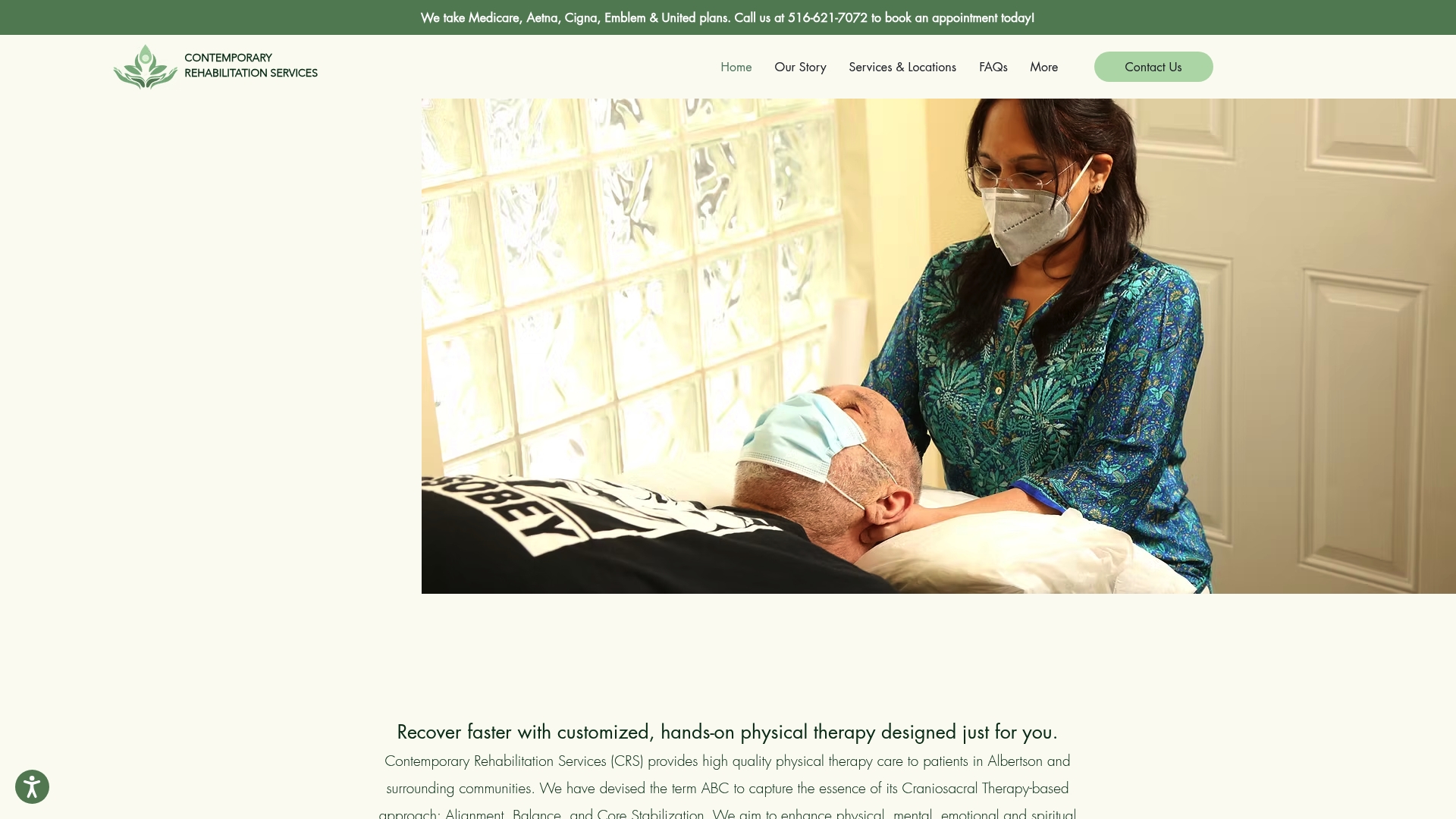
Sessions are available both in-person and by telehealth, and the mother-daughter team’s individualized approach includes manual therapy, craniosacral work, and other techniques tailored to your specific condition. Before your first visit, bring your insurance card and your primary care provider’s contact information so the clinic can handle any necessary paperwork on your behalf. Ready to get started? Visit the Contemporary Rehabilitation Services booking page, or check the full range of therapy services offered before your appointment. Patients near Albertson can also find location details on the Albertson physical therapy page.
This article is general information, not a substitute for advice from a qualified doctor. Consult a qualified healthcare professional about your own circumstances before acting on anything here.
Sources
FAQ
Do I need a referral for physical therapy in New York?
Not always. New York law allows a qualified physical therapist to treat you without a referral for up to 10 visits or 30 days, though your specific insurance plan may still require one for coverage purposes.
How do I get a physical therapy referral?
A referral can come from a physician, nurse practitioner, physician assistant, podiatrist, dentist, or licensed midwife, depending on your condition. Call your insurer first to confirm whether a referral is required, then ask your provider’s office to send it directly to your chosen physical therapy clinic.
Do you typically need a referral for physical therapy?
It depends on the type of claim and your insurer, not just state law. Medicare requires plan of care certification, Workers’ Compensation always requires authorization from a treating provider, and private insurance varies by plan.
What is the 8 minute rule in physical therapy?
The 8-minute rule is a Medicare billing guideline that determines how many timed treatment units a therapist can bill based on the total minutes of one-on-one care provided during a session. It affects how clinics bill Medicare, not whether a patient needs a referral to be seen.
Does Medicaid require prior authorization for physical therapy in New York?
No, not for medically necessary visits. New York State Medicaid fee-for-service removed prior authorization for physical, occupational, and speech therapy starting July 1, 2024.
Recommended
Comments