
Holistic physical therapy: Your guide to whole-body healing
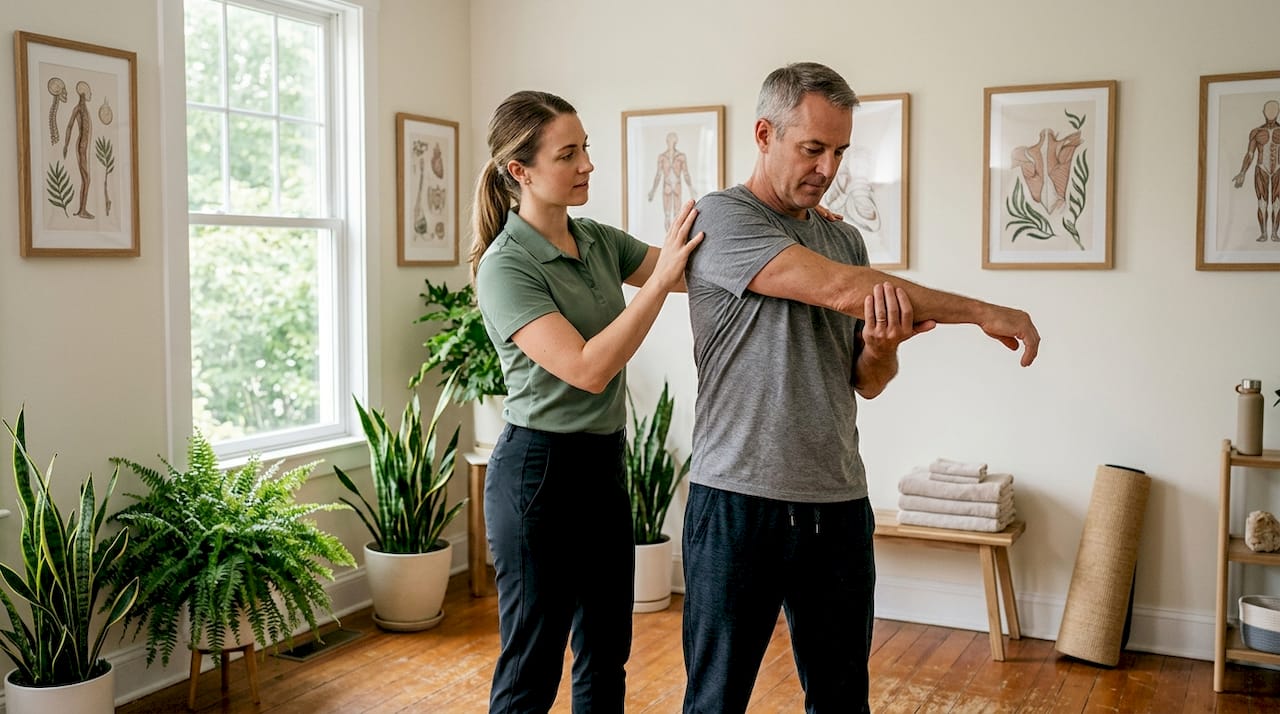
You’ve done the exercises. You’ve attended your appointments. Yet the pain keeps coming back, or never fully went away. If that sounds familiar, you’re not alone. Many residents across Queens and Nassau County find that standard physical therapy helps with the immediate injury but misses the bigger picture. Holistic physical therapy takes a different path, treating you as a complete person rather than a collection of symptoms. This guide will explain what holistic PT means, how it compares to conventional care, and how local options like craniosacral therapy can offer real relief when other approaches fall short.
Table of Contents
Key Takeaways
Point | Details |
Whole-person focus | Holistic physical therapy addresses physical, emotional, and mental well-being for deeper healing. |
Ideal for complex cases | People with chronic, recurrent issues often benefit most when standard therapy fails. |
Alternative therapies included | Craniosacral therapy, breathwork, and psychomotor methods are key tools for holistic PT. |
Personalized care plans | Treatment is customized for your unique needs, not just your diagnosis. |
What is holistic physical therapy?
Holistic physical therapy is care that looks at the entire person, not just the injured tissue or painful joint. Where conventional physical therapy typically focuses on a specific diagnosis, like a herniated disc or a torn rotator cuff, holistic PT asks a broader question: what is affecting this person’s ability to heal? That includes physical factors, yes, but also mental stress, emotional history, lifestyle, and social environment.
The core principles of holistic PT are straightforward:
Whole-body balance: Every system in your body influences every other. Pain in your lower back may connect to how you breathe, how you sleep, or how you handle daily stress.
Root cause focus: Rather than managing symptoms, holistic PT tries to identify and address the underlying reasons pain or dysfunction persists.
Personalized care plans: There is no one-size-fits-all protocol. Your therapist builds a plan based on your unique physical condition, history, and goals.
Mind-body connection: Mental and emotional wellbeing directly influence physical recovery. Holistic PT acknowledges this link and works with it.
Alternative and integrative therapies: Techniques like craniosacral therapy, breathwork, and psychomotor rehabilitation (a method that integrates movement with psychological awareness) expand the toolkit beyond standard exercise and modalities.
Research published in the International Journal of Physical Therapy found that physiotherapists often overlook mental and emotional aspects, effectively addressing only about 20% of the whole-person picture through conventional methods. Holistic PT is designed specifically to close that gap.
This distinction matters because many patients who do not respond to conventional care are not failing PT. Their care is simply not accounting for the full range of factors driving their condition. Adopting a holistic approach to recovery can change the trajectory for people who feel stuck.
Holistic vs. conventional PT: Key differences
Now that you know what holistic PT means, it is essential to see how it stands out from the standard approach. Both styles aim to reduce pain and restore function, but they operate with very different frameworks.
Feature | Holistic PT | Conventional PT |
Treatment style | Individualized, adaptive | Protocol-based, standardized |
Primary focus | Whole person (body, mind, emotions) | Specific injury or diagnosis |
Techniques used | Manual therapy, CST, breathwork, movement therapy | Exercises, electrical modalities, ultrasound |
Mental/emotional consideration | Central to the plan | Rarely included |
Personalization | High, continuous reassessment | Low to moderate |
Goal | Long-term root cause resolution | Short-term symptom relief |
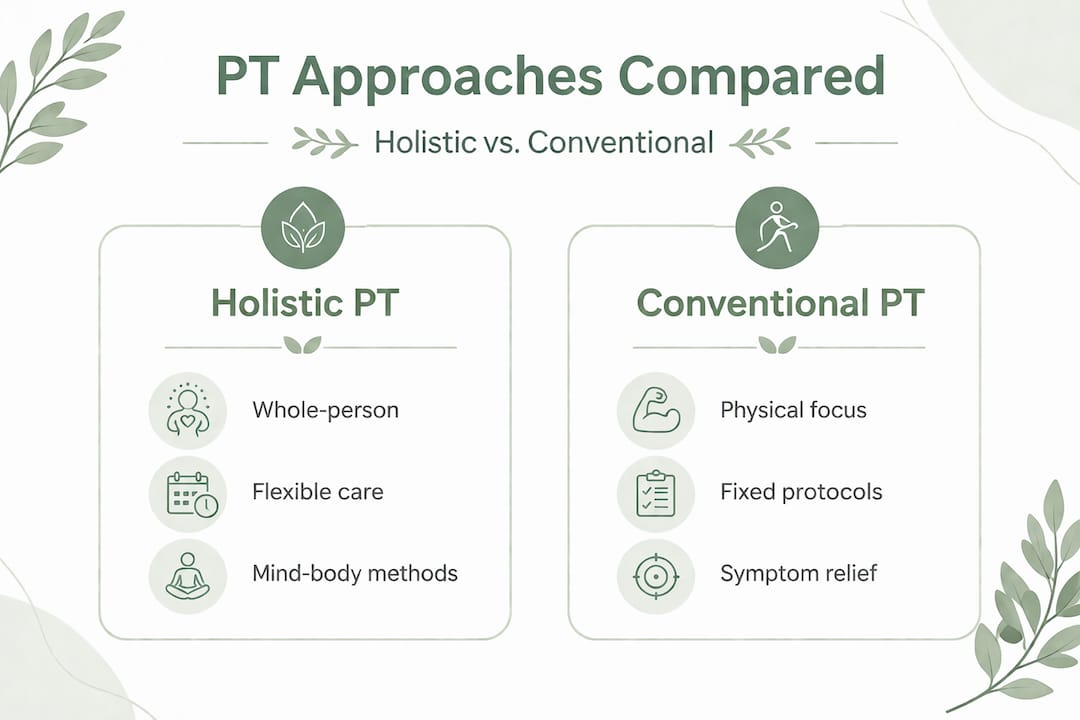
Conventional PT excels when the problem is clear, acute, and isolated. A post-surgical knee rehabilitation, for example, follows a well-established timeline and benefits from structured protocols. But for chronic pain that comes and goes, stress-related tension, or conditions where standard treatment has repeatedly failed, the checklist approach often falls short.
Holistic PT acknowledges that whole-body balance over protocol-based or machine-driven treatments produces better outcomes for complex cases. It is not that conventional PT is wrong. It is simply built for a different type of problem.
How to determine if holistic PT is right for you:
Ask yourself if your pain has persisted longer than three months despite standard treatment.
Consider whether stress, sleep problems, or emotional challenges seem to make your symptoms worse.
Reflect on whether you have received a diagnosis that feels incomplete or does not fully explain your experience.
Check if you have been told your imaging is “normal” but you still feel pain every day.
Think about whether you want a care plan that evolves with you rather than following a fixed schedule.
If two or more of those apply to you, holistic PT is likely worth exploring. When you are choosing the right therapy path, asking your prospective therapist directly about their approach to mental and emotional factors can tell you a lot quickly.
Pro Tip: When calling a clinic, ask: “How do you address stress or emotional factors in your treatment plans?” A holistic PT provider will have a clear, confident answer. A clinic that looks puzzled by the question is likely focused only on physical protocols.
Who benefits most from holistic physical therapy?
After understanding the differences, you may wonder who truly needs or benefits most from the holistic model. The honest answer is that a wide range of people can benefit, but some groups see especially dramatic improvements when they make the switch.
People with the following conditions tend to respond particularly well:
Chronic pain (lasting more than 12 weeks, especially when its source is unclear)
POTS (postural orthostatic tachycardia syndrome, a nervous system condition causing dizziness and fatigue on standing)
Fibromyalgia and widespread musculoskeletal pain
TMJ disorder (jaw pain and dysfunction related to the temporomandibular joint)
Stress-related tension and headaches, especially cervicogenic (neck-related) headaches
Post-traumatic or post-surgical cases where healing has stalled
Psychosomatic symptoms, meaning physical symptoms triggered or worsened by psychological stress
Anxiety-related movement disorders, where fear of pain limits normal activity
Research highlights that holistic PT is ideal for edge cases where standard care fails, specifically because it integrates psychomotor physiotherapy and breathwork for psychosomatic concerns. Psychomotor physiotherapy uses conscious, guided movement to help the nervous system reset unhelpful patterns that contribute to chronic pain or dysfunction.
Consider someone in Nassau County who has been dealing with persistent neck pain for two years. Imaging shows minor disc changes, but nothing that fully explains the severity of symptoms. Standard PT provided temporary relief, but the pain returned every time. A holistic PT evaluation might reveal that elevated stress, poor breathing mechanics, and restricted craniosacral rhythm are all contributing. Treating those layers together produces the kind of lasting change that treating the neck in isolation never could.
If chronic pain is part of your story, learning about chronic pain relief options that incorporate these techniques is a natural next step. For those specifically dealing with ongoing neck and back pain therapy needs, evidence-based holistic strategies can provide meaningful structure for recovery.
Alternative therapies in holistic PT: Craniosacral therapy and more
If you fit the profile above, you may wonder what specific therapies holistic PT uses to achieve results. Several key techniques distinguish holistic PT from a standard clinic visit.
Here is a brief overview of what each therapy addresses:
Craniosacral therapy (CST): Gentle, hands-on treatment that works with the rhythm of cerebrospinal fluid (the fluid surrounding your brain and spinal cord) to release tension in the central nervous system. It is particularly effective for headaches, jaw pain, trauma recovery, and chronic fatigue.
Breathwork: Structured breathing exercises that calm the nervous system, reduce pain sensitivity, and improve posture-related dysfunction. Breathing patterns directly affect spine mechanics and muscle tension.
Psychomotor rehabilitation: A therapy that links movement awareness with psychological patterns. It helps patients break cycles of guarded, fear-driven movement that often keep chronic pain alive long after the original injury has healed.
Manual therapy: Hands-on joint mobilization and soft tissue work tailored to your specific restrictions, not a generic sequence.
Movement re-education: Teaches you how to move in ways that reduce load and stress on vulnerable areas, addressing the habits that may have contributed to your problem in the first place.
Therapy | Description | Ideal condition | Key benefit |
Craniosacral therapy | Gentle pressure along spine and skull | Headaches, TMJ, chronic fatigue | Nervous system reset |
Breathwork | Guided breathing techniques | Stress, posture issues, chronic pain | Reduces pain sensitivity |
Psychomotor rehab | Movement linked with psychological awareness | Trauma, anxiety, chronic pain | Breaks guarded movement cycles |
Manual therapy | Hands-on joint and soft tissue work | Joint stiffness, post-surgical care | Restores mobility and circulation |
Movement re-education | Retraining movement patterns | Recurrent injuries, postural dysfunction | Long-term injury prevention |
Safety and personalization are central to how these therapies are used. A skilled holistic PT practitioner does not apply every technique to every patient. They assess your specific situation, check for contraindications (reasons a technique might not be appropriate), and adjust the plan continuously based on your response.
For those curious about craniosacral therapy benefits in depth, or wanting a practical walkthrough through a craniosacral pain relief guide, there are excellent resources available to help you understand what to expect. If part of your care plan involves home exercises, learning how to do safe at-home PT exercises correctly makes a significant difference in outcomes.
The real value of holistic PT: Beyond protocols and checklists
Here is something worth saying plainly: the physical therapy profession is built on efficiency. Protocols exist because they work well for the majority of patients, and there is genuine value in that. But efficiency is not the same as effectiveness for everyone.
We see this regularly in practice. A patient arrives having completed two or three rounds of conventional PT for the same problem. The exercises were correct. The modalities were appropriate. Yet the pain returned. When we look at the full picture, something else is almost always present. Elevated baseline stress that keeps muscles in a state of constant guarding. A breathing pattern that loads the cervical spine with every breath. A history of trauma that has made the nervous system hypersensitive to any perceived threat.
Research confirms that conventional PT emphasizes physical protocols over the broader human context, and that gap is where many patients fall through. The contrarian truth is that the most “efficient” approach is often the least effective for the most complex cases.
Holistic PT is not a rejection of evidence. It is an expansion of what counts as evidence. Your emotional state, your nervous system’s baseline tone, your breathing habits, and your sense of agency in your recovery are all measurable, all real, and all treatable. Practitioners who explore expert PT advantages in a holistic context tend to produce outcomes that surprise patients who had given up on feeling better.
Pro Tip: Look for a therapist who asks about your sleep, your stress levels, and your daily habits during the evaluation. If the intake process only covers your injury location and range of motion, the approach is likely protocol-based rather than person-centered.
The checklist approach has real advantages for straightforward cases. But humanity and adaptability drive lasting healing in complex ones. If you have been an “outlier” in the conventional system, holistic PT may not be an alternative. It may simply be the right fit.
Find holistic physical therapy near Queens and Nassau County
If holistic PT seems right for you or a loved one, finding a qualified local provider is the practical next step.
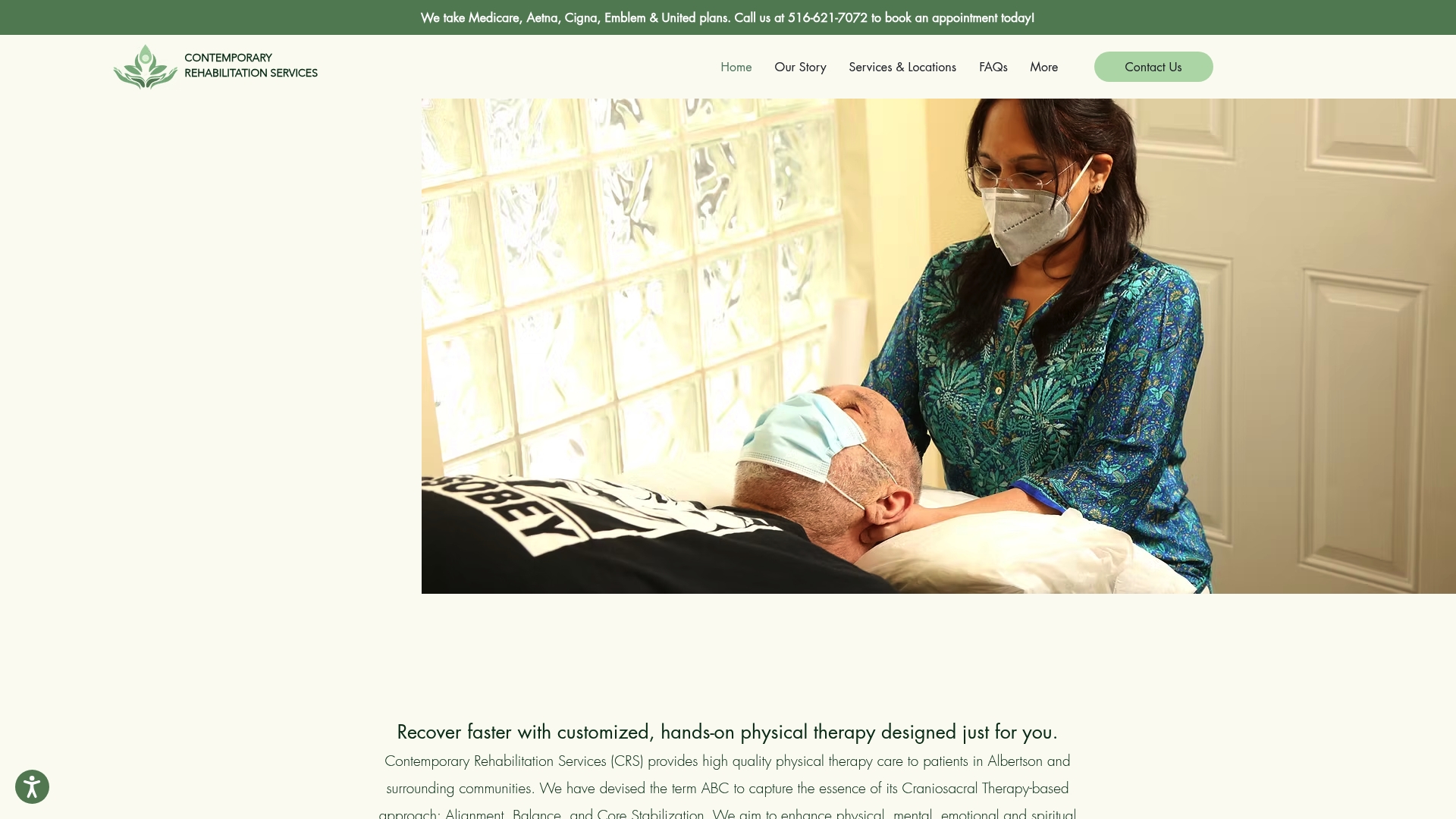
At Contemporary Rehabilitation Services, we offer personalized holistic physical therapy for residents throughout Queens and Nassau County, including craniosacral therapy, manual therapy, and individualized rehabilitation plans. Our Roslyn holistic therapy and Albertson craniosacral therapy locations are staffed by experienced therapists who take your whole story seriously. We accept Medicare, Aetna, Cigna, Emblem, and United Healthcare plans, so getting started is more accessible than you might think. Explore our holistic therapy services and reach out today to schedule a consultation. You deserve care that actually fits you.
Frequently asked questions
How does holistic physical therapy differ from regular physical therapy?
Holistic PT treats the whole person by addressing physical, mental, and emotional factors together, while conventional PT typically focuses only on specific injuries or symptoms. Research shows that conventional approaches address only about 20% physical of the whole-person picture.
Who should consider holistic physical therapy?
People with complex, chronic, or psychosomatic conditions who have not seen results with standard PT benefit most, particularly those with chronic pain, POTS, or stress-related dysfunction. Holistic PT is designed for edge cases where conventional care consistently falls short.
What types of therapies are included in holistic PT?
Holistic PT often integrates craniosacral therapy, breathwork, psychomotor physiotherapy, and targeted manual therapies into a personalized plan. These integrative techniques for psychosomatic issues are selected and adjusted based on each patient’s response throughout the care process.
Is holistic physical therapy available in Queens and Nassau County?
Yes, residents can access holistic PT options including craniosacral therapy through local practices like Contemporary Rehabilitation Services in Albertson, NY, which specializes in whole-person care for the Queens and Nassau County communities.
Recommended
Comments