
15.7% Lower Dropout: Virtual Physical Therapy For Back Pain In The US

Virtual physical therapy can effectively relieve many cases of back pain when it includes personalized exercise, education, and clinician follow-up. Research directly comparing digital and in-person physiotherapy for chronic low back pain has found similar improvements in pain and function, and the American Physical Therapy Association now maintains formal telerehabilitation guidance. Medicare has also expanded telehealth allowances for therapy services. Virtual physical therapy back pain care is not right for everyone, though, and knowing the exceptions matters just as much as knowing it works.
TL;DR:
Virtual physical therapy offers comparable pain and function improvements to in-person care for chronic low back pain, with lower dropout rates indicating better adherence.
Success depends on patient motivation, reliable internet, and guidance that is individualized and evidence-based, not just generic exercise videos.
It is suitable for mechanical or chronic pain without red-flag symptoms, but those with new neurological deficits or systemic signs must seek in-person evaluation immediately.
Proper setup, including camera positioning, lighting, and minimal equipment, enhances the effectiveness of remote movement correction.
Insurance coverage varies; Medicare now expands telehealth allowances, and many commercial plans cover virtual PT if certain conditions are met.
Table of Contents
How Virtual Physical Therapy for Back Pain Actually Works
A virtual visit is not a video call where someone hands you a printout of stretches. It starts with a real evaluation: your therapist takes a detailed history, watches you move on camera, and often uses patient-reported measures to gauge how your pain limits daily function.
From there, care rests on a few pillars:
Individualized exercise prescription tailored to your specific movement limitations, not a generic back pain packet
Education on posture, load management, and pain science so you understand what’s happening in your body
Behavioral strategies, sometimes borrowing cognitive behavioral techniques, to address fear of movement
Remote monitoring through check-ins, symptom logs, or brief video reassessments
Delivery varies by clinic and need. Synchronous video visits work best for hands-on coaching and form correction. Asynchronous programs, where you follow a prescribed plan and check in periodically, suit patients who are more independent. Many clinics blend both, sometimes alongside occasional in-person visits, in a hybrid model that captures the convenience of remote physical therapy without losing clinical oversight entirely.
What the Evidence Actually Shows
The strongest data point comes from a 2023 randomized controlled trial comparing a digital exercise-based program against conventional in-person physiotherapy for chronic low back pain. Patients in both groups improved similarly on pain and disability measures.
The dropout gap: Only 15.7% of patients in the digital care group dropped out, compared with 34.3% in the conventional physiotherapy group. That’s a meaningful signal about convenience driving adherence, not just clinical equivalence.
A broader look across the research tells a more cautious story. A systematic review and meta-analysis examining telerehabilitation for chronic low back pain found no statistically significant difference between telerehab and conventional rehab on pooled pain and disability outcomes, though the authors flagged substantial heterogeneity across studies. In plain terms, virtual care isn’t proven superior, but it holds its own.
That finding lines up with guideline-level support. The APTA’s telerehabilitation clinical practice guideline stresses that effective virtual care requires individualized, evidence-based planning, not recycled exercise videos. Separately, the American College of Physicians recommends exercise and other nonpharmacologic approaches as first-line treatment for chronic low back pain, ahead of medication.
RCT evidence shows parity in outcomes with better adherence in digital care
Systematic reviews confirm no clear inferiority, with caveats about study quality
Guidelines from APTA and ACP both support structured movement-based care as a first-line response
Who Benefits Most, and Who Should Skip Straight to In-Person Care
Good candidates for virtual PT typically share a few traits. Here’s what tends to predict success:
The pain is mechanical or chronic, not the result of a new traumatic injury or unexplained onset
You can physically participate in guided movement and follow instructions over video without needing hands-on correction for safety
You have reliable access to a device, internet connection, and a quiet space to move
You’re motivated to engage, since virtual programs depend more on self-direction between sessions
The program includes interactive components like live check-ins rather than a static video library
Some symptoms are non-negotiable reasons to seek in-person or emergency care instead. New loss of bowel or bladder control, progressive leg weakness, severe numbness, unexplained weight loss, fever, or a history of cancer alongside new back pain all point toward something beyond mechanical strain. MedlinePlus lists these as red flags requiring prompt evaluation, and no virtual program should attempt to manage them remotely. A responsible telehealth clinician screens for these at intake and has a clear plan to refer you out immediately if they appear.
Inside a Typical Virtual PT Program for Back Pain
Most programs follow a predictable arc, even though the specifics vary by clinic and diagnosis. The initial evaluation usually runs 30 to 60 minutes, covering your history, movement patterns, and goals in detail. Follow-up sessions are shorter, typically 20 to 45 minutes, and many back pain programs run for six to eight weeks before reassessment.
Exercise selection depends on what’s driving your pain, but common categories include:
Motor-control exercises that retrain how your spine and hips coordinate during daily movement
Progressive strengthening for the muscles supporting the lower back and pelvis
Flexibility work targeting hips, hamstrings, and thoracic mobility
Graded exposure, where you gradually reintroduce movements you’ve been avoiding out of fear
Education often runs alongside exercise, sometimes borrowing brief cognitive behavioral techniques to address pain-related anxiety. Progress gets tracked through pain scales, functional disability measures like the Oswestry Disability Index, and simple functional tests such as how long you can stand or how far you can bend before symptoms limit you.
Setting Up for a Session That Actually Helps
The technical side of virtual physical therapy back pain care matters more than most people expect. A few adjustments before your session make a real difference in what your therapist can actually see and correct.
Position your camera at hip height so your therapist can watch your spine and pelvis move, not just your face. Good lighting and a stable Wi-Fi connection prevent the choppy video that makes form correction nearly impossible. Keep a towel, sturdy chair, and a resistance band nearby since most home programs lean on simple, accessible equipment rather than gym machines.

Before the visit, wear clothing you can actually move in, jot down what’s changed since your last check-in, and log into the platform a few minutes early to troubleshoot audio or video issues.
Pro Tip: Test your camera angle by recording a 10-second video of yourself doing a squat before your first session. If you can’t see your own knees and hips clearly on playback, your therapist won’t be able to either.
Adherence tends to break down between sessions, not during them. Short daily exercise windows, calendar reminders, and regular clinician check-ins all support consistency, and simply tracking small wins, like an extra five minutes of walking without pain, keeps motivation from fading around week three.

Insurance Coverage for Telehealth Physical Therapy
Coverage for remote physical therapy has shifted substantially in recent years, and 2026 brings updated federal guidance worth understanding before you book. CMS has clarified Medicare telehealth allowances for therapy services, including coding details like the KX modifier threshold, set at $2,480 for combined PT and speech-language pathology services in 2026. This threshold determines when additional documentation is required.
Commercial coverage is less consistent. Aetna, Cigna, Emblem, and United Healthcare plans often cover telehealth PT, but benefits, copays, and prior authorization rules vary by plan and sometimes by state.
Before your first session, take these steps:
Check your specific plan’s telehealth PT benefit, not just its general PT coverage
Ask the clinic to verify your insurance and confirm any copay or authorization requirements upfront
Request an itemized estimate if cost is a concern, especially for cash-pay visits
Medicare beneficiaries should also review current PT benefit details since telehealth allowances have been extended on a rolling basis rather than made permanent.
How Contemporary Rehab Services Approaches Telehealth for Back Pain
Contemporaryrehabservices runs telehealth PT sessions alongside in-person care, accepting Medicare, Aetna, Cigna, Emblem, and United Healthcare. The clinic’s mother-daughter team applies its integrative, manual-therapy-informed assessment approach to remote visits, translating hands-on clinical judgment into exercise prescription, education, and movement coaching over video, even when direct manual techniques like visceral therapy require an in-person follow-up.
When booking, ask about the clinician’s experience with your specific condition, what a first virtual session actually covers, and how the clinic verifies insurance before your visit. Those three questions tend to reveal whether a program is built around individualized care or just repackaged exercise videos.
Why the “Just Do Videos at Home” Advice Misses the Point
The biggest misconception about virtual physical therapy back pain care is that it’s just in-person PT with the drive removed. That framing undersells what actually makes it work and oversells what a generic exercise app can do. The RCT evidence showing lower dropout in digital care wasn’t measuring a video library. It was measuring structured, individualized programs with real clinician oversight, which is precisely what the APTA’s guideline insists on: telerehab succeeds or fails based on therapeutic alliance, not on bandwidth.
Conventional advice tends to frame virtual PT as either a full replacement for in-person care or a lesser substitute. Both framings are wrong. The honest read of the evidence is that virtual care removes barriers, primarily time and access, without doing much to change biology. That’s exactly why the red flags matter so much. A remote program can’t lay hands on your spine to rule out something serious, so the burden shifts to careful screening at intake.
If you take one thing from the research, prioritize finding a program that emphasizes relationship and individualization over one that promises convenience alone. Convenience without oversight is where virtual care underdelivers.
— CRS Wellness
Ready to Start Telehealth Physical Therapy for Back Pain?
If your back pain is mechanical, chronic, or flaring up without red-flag symptoms, a virtual visit with Contemporaryrehabservices gets you started without waiting for an in-office opening or driving in while you’re in pain. Booking a telehealth consult means a therapist checks your insurance, asks about your symptoms and history, and gives you a clear next step, such as a virtual program, a hybrid plan, or a referral if needed.
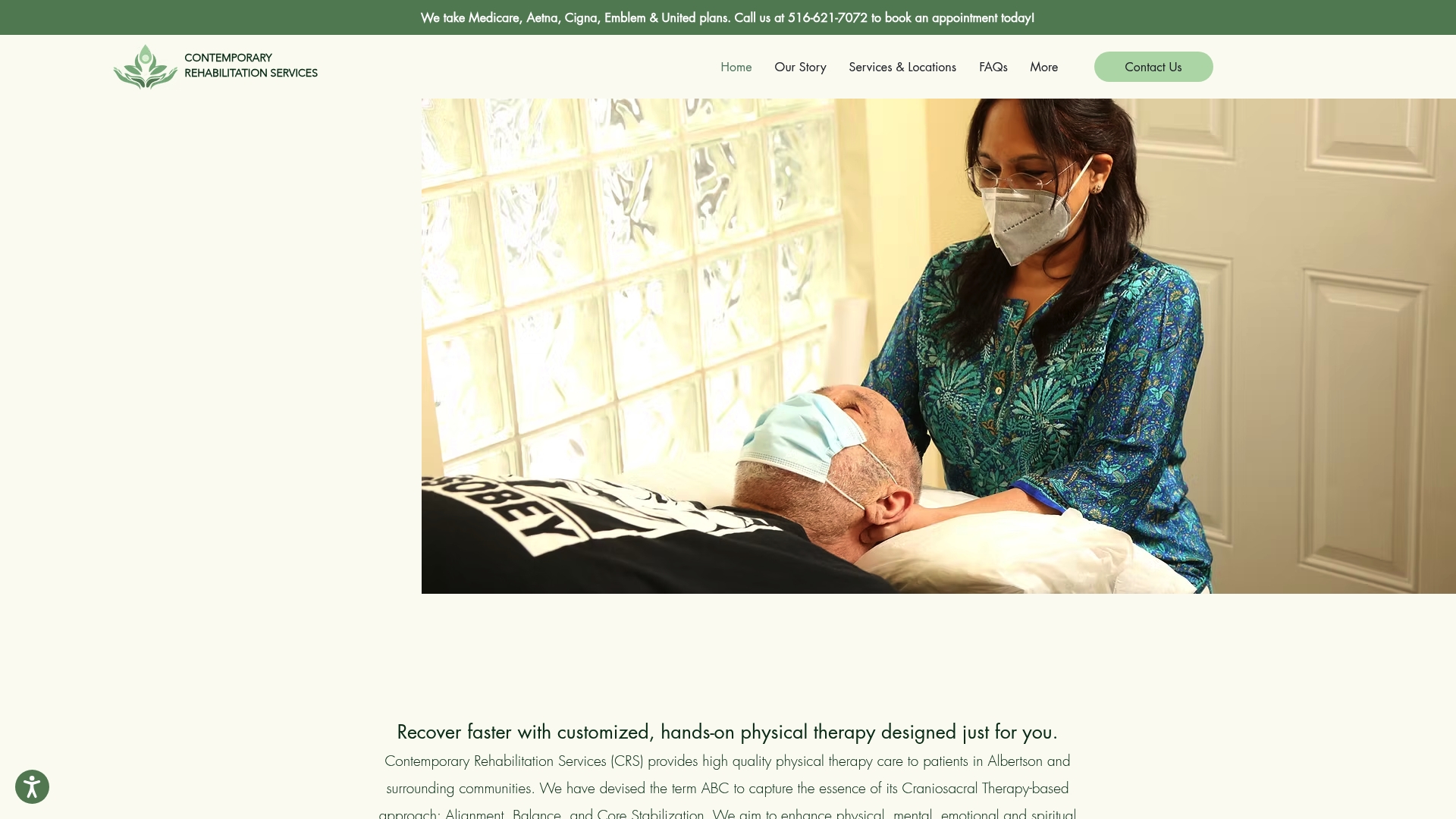
The initial consult covers exactly what you’d want it to: insurance verification for Medicare, Aetna, Cigna, Emblem, or United Healthcare, a triage conversation about your specific pain pattern, and a straightforward recommendation for what comes next. Visit the telehealth PT services page to see scheduling options, or browse the full service catalog if you’re weighing virtual care against hands-on approaches like joint mobilization or myofascial therapy. Before your visit, double check your coverage details, and if you notice any red-flag symptoms like new numbness or bladder changes, seek in-person or emergency care first.
Sources
For readers who want to verify the clinical evidence directly: the randomized controlled trial on digital versus in-person care, the APTA telerehabilitation clinical practice guideline, the systematic review and meta-analysis on telerehabilitation, and CMS guidance on therapy services billing cover the core research and coverage rules referenced throughout this guide.
This article is general information, not a substitute for advice from a qualified doctor. Consult a qualified healthcare professional about your own circumstances before acting on anything here.
FAQ
Can You Do Telehealth for Back Pain?
Yes. Telehealth physical therapy is a well-supported option for mechanical and chronic low back pain, with research showing similar outcomes to in-person care for many patients. It’s not appropriate for red-flag symptoms like new numbness, bladder changes, or unexplained weight loss, which need in-person evaluation.
What Are Three Exercises That Can Help With Lower Back Pain?
Motor-control exercises that retrain how your spine and hips coordinate, progressive strengthening for the core and hip muscles, and gentle flexibility work for the hamstrings and hips are common starting points. A virtual PT program tailors the exact exercises to your specific movement pattern rather than using a one-size-fits-all list.
What Could Be Causing Extreme Tightness in the Lower Back?
Tightness often comes from muscle guarding around an irritated joint or disc, prolonged poor posture, or weakness elsewhere in the body forcing the lower back to overwork. A virtual evaluation can usually identify the movement pattern behind the tightness, though sudden severe tightness with other neurological symptoms warrants in-person assessment.
Does Insurance Cover Virtual Physical Therapy?
Coverage varies by plan, but many commercial insurers, including Aetna, Cigna, Emblem, and United Healthcare, cover telehealth PT under certain conditions. Medicare has expanded telehealth allowances for therapy services, with specific billing rules updated for 2026, so verifying your specific benefit before booking is worth the extra few minutes.
How Much Does Telehealth PT Cost at Contemporaryrehabservices?
Pricing for telehealth PT sessions is available directly through the clinic rather than published online. Contact Contemporaryrehabservices to confirm current rates and to check your insurance coverage before scheduling.
Recommended
Comments