
Physical Therapy Success Factors: Your 2026 Guide

Physical therapy success factors are defined as the clinical, behavioral, and environmental conditions that determine how fully a patient recovers function, reduces pain, and sustains mobility after treatment. Research published in 2026 confirms that patient adherence is the strongest single predictor of outcomes, with exercise adherence alone predicting DASH scores at β = −0.34 (p < 0.001). That number matters because it tells you that what you do between sessions counts as much as what happens during them. Understanding these factors before you start therapy gives you a real advantage in your recovery.
1. Physical therapy success factors: why adherence comes first
Adherence to prescribed exercises and scheduled sessions is the foundation of every successful rehabilitation outcome. A 2026 scoping review found that adherence predicts improvements in both pain and function across patients with chronic musculoskeletal conditions, making it the most consistently reported success driver in the literature. This means that even the most skilled therapist cannot fully compensate for a patient who skips sessions or ignores home exercise programs.
Several factors shape whether you will stick with your program:
Self-efficacy: Patients who believe they can complete their exercises consistently do so at higher rates.
Mood and depression: Poor exercise adherence developed in 45.3% of older inpatients, with depressive symptoms identified as an independent predictor after multivariate adjustment.
Therapist communication: Clear explanations of why each exercise matters increase follow-through.
Supervision quality: Patients who feel monitored and supported maintain routines longer than those left to self-manage without check-ins.
Pro Tip: Ask your therapist to explain the purpose of every exercise in plain language. When you understand the “why,” you are far more likely to complete the “what” at home.
2. What role does the patient-therapist relationship play in outcomes?
The therapeutic alliance, meaning the working relationship between you and your physical therapist, directly shapes your satisfaction, motivation, and functional recovery. A cross-sectional study of 340 patients found that therapist respect was the strongest predictor of patient satisfaction (β = 0.671, p < 0.001). That is not a soft finding. It means the interpersonal quality of your care predicts outcomes almost as powerfully as the clinical techniques being applied.

The same study revealed a gap worth knowing about. Mean satisfaction scores for therapist listening were 1.95 out of the maximum, and time adequacy scored 2.30, both among the lowest-rated items despite overall high satisfaction. Patients feel the difference when a therapist rushes or fails to listen, and that feeling erodes trust and engagement over time.
Here is what strong therapeutic alliance looks like in practice:
Your therapist asks about your daily life, not just your symptoms.
You feel comfortable reporting pain or setbacks without fear of judgment.
Your therapist adjusts the plan based on your feedback, not just a protocol.
You leave each session with a clear understanding of your progress.
Pro Tip: If you feel unheard after two or three sessions, say so directly. A good therapist will welcome the feedback. If the dynamic does not improve, it is reasonable to request a different provider within the same clinic.
3. How psychological, social, and nutritional factors influence recovery
Physical therapy is not purely mechanical. Your mental state, social environment, and nutritional status all shape how well your body responds to treatment. Research using an integrated biopsychosocial model found that anxiety and catastrophizing predicted poorer functional outcomes (β = −0.28 and β = −0.31, respectively), while social support (β = 0.26) and nutritional status (β = 0.24) predicted better recovery.
These findings point to a clear pattern: patients who arrive at therapy already managing significant psychological distress face a steeper climb. That does not mean recovery is out of reach. It means these factors need to be addressed alongside the physical work.
Here are four practical ways to strengthen the non-physical side of your recovery:
Screen for mood early. Ask your therapist whether your clinic assesses anxiety or depression at intake. Clinics that do this can adjust your program or refer you for additional support before distress derails your progress.
Build a support network. Patients with active social support, whether from family, friends, or a structured group, show measurably better outcomes. Even one consistent person who checks in on your exercises makes a difference.
Prioritize protein and anti-inflammatory foods. Nutritional status directly affects tissue repair. A diet rich in lean protein, omega-3 fatty acids, and vegetables supports the physical adaptation your therapy is trying to create.
Challenge catastrophic thinking. Pain catastrophizing, the tendency to expect the worst from every symptom, is a documented barrier to recovery. Cognitive strategies taught by a psychologist or counselor can reduce this pattern and improve your therapy results.
4. How administrative and logistical factors affect your recovery
System-level factors are among the most overlooked physical therapy success factors, yet the data on them is clear. Longer waiting times negatively correlate with functional outcomes (β = −0.19, p = 0.02), meaning that delays in getting appointments are not just inconvenient. They actively slow your recovery. Every week spent waiting is a week your condition can worsen or your motivation can fade.
Administrative factor | Effect on outcomes |
Long appointment wait times | Negatively correlated with function (β = −0.19) |
Inadequate therapist time per session | Lower satisfaction and reduced patient trust |
Poor scheduling flexibility | Missed sessions and inconsistent attendance |
Strong administrative communication | Higher appointment adherence and follow-through |
Therapist availability per session also matters. When patients feel their therapist is stretched thin, they report lower satisfaction and are less likely to ask questions or disclose problems. Clinics that manage caseloads carefully and give therapists adequate time per patient see better engagement across the board. When you are evaluating a clinic, ask directly how many patients each therapist sees per hour. The answer tells you a great deal about the quality of attention you will receive.
5. How goal setting shapes engagement and motivation
Personalized goal setting is one of the most effective therapy techniques for sustaining patient engagement across a full course of treatment. The GAS-Back study, which applied goal attainment scaling to patients with chronic low back pain, reported 93% patient satisfaction and 89% clinician adherence, with the majority of patients setting at least three individualized goals. Those numbers reflect what happens when patients feel ownership over their own recovery plan.
Generic goals like “reduce pain” or “improve strength” are far less motivating than specific, personal targets such as “return to my morning walk by week six” or “carry groceries without discomfort.” Specific goals give you a concrete benchmark for measuring therapy progress and a reason to stay consistent when motivation dips. Work with your therapist to set at least three goals at the start of treatment, and revisit them at each milestone appointment.
6. How technology and behavior-change programs boost long-term adherence
Technology is changing how patients stay engaged between clinic visits, and the evidence supports its use. A 2026 randomized controlled trial protocol tested a six-month online exercise program with automated delivery and adherence tracking in knee replacement rehabilitation, demonstrating that structured digital programs can sustain engagement well beyond the in-person phase of care.
The tools making the biggest difference include:
Telehealth check-ins: Video appointments between in-person sessions catch problems early and keep patients accountable without requiring travel.
Automated reminders: Text or app-based prompts for home exercises significantly reduce the “I forgot” barrier, especially in the first four weeks of a program.
Video exercise libraries: Patients who can watch a correct demonstration of their exercises at home make fewer errors and report higher confidence in their technique.
Adherence tracking dashboards: When patients can see their own completion rates, they are more likely to maintain consistency, similar to how step-count apps influence daily walking behavior.
Pro Tip: Before your first session, ask whether the clinic offers a digital exercise platform or telehealth follow-up options. Clinics that integrate technology into their programs tend to produce better long-term outcomes, particularly for patients managing chronic conditions.
Key takeaways
Physical therapy success depends on combining strong patient adherence, a trusting therapist relationship, psychological resilience, and logistical access to consistent care.
Point | Details |
Adherence is the top predictor | Exercise adherence predicts functional outcomes more reliably than any other single factor. |
Therapist respect drives satisfaction | Therapist interpersonal behavior, especially respect and listening, is the strongest satisfaction predictor. |
Psychological factors are measurable barriers | Anxiety and catastrophizing independently worsen outcomes; social support and nutrition independently improve them. |
Administrative quality affects recovery | Waiting times and session length directly influence function and patient trust. |
Technology extends engagement | Digital programs and telehealth sustain adherence beyond the clinic and into daily life. |
What I have learned from watching patients succeed and struggle
I have seen patients with objectively similar injuries take completely different recovery paths, and the difference almost never comes down to the exercises themselves. The patients who recover fastest are the ones who treat therapy as a two-way conversation rather than a passive service. They ask questions, they report setbacks honestly, and they hold themselves accountable to their home programs even when motivation is low.
What surprises most people is how much the administrative side of care matters. Patients who wait three weeks for their first appointment after an injury often arrive demoralized and deconditioned. That gap is not neutral. It sets the tone for the entire course of treatment. When you are choosing a clinic, the speed of your intake appointment is a signal worth paying attention to.
The research on psychological distress is also underused in practice. Most clinics do not screen for anxiety or depression at intake, even though the data clearly shows these factors predict outcomes. If you are managing significant stress or mood challenges alongside a physical injury, bring it up with your therapist directly. The factors influencing rehabilitation are broader than most patients realize, and the best therapists know how to account for all of them.
My honest recommendation: go into therapy with written goals, a support person who will check in on your home exercises, and a willingness to give your therapist direct feedback. Those three things alone will put you ahead of the majority of patients walking through the door.
— Tj
Start your recovery on the right foot with Contemporaryrehabservices
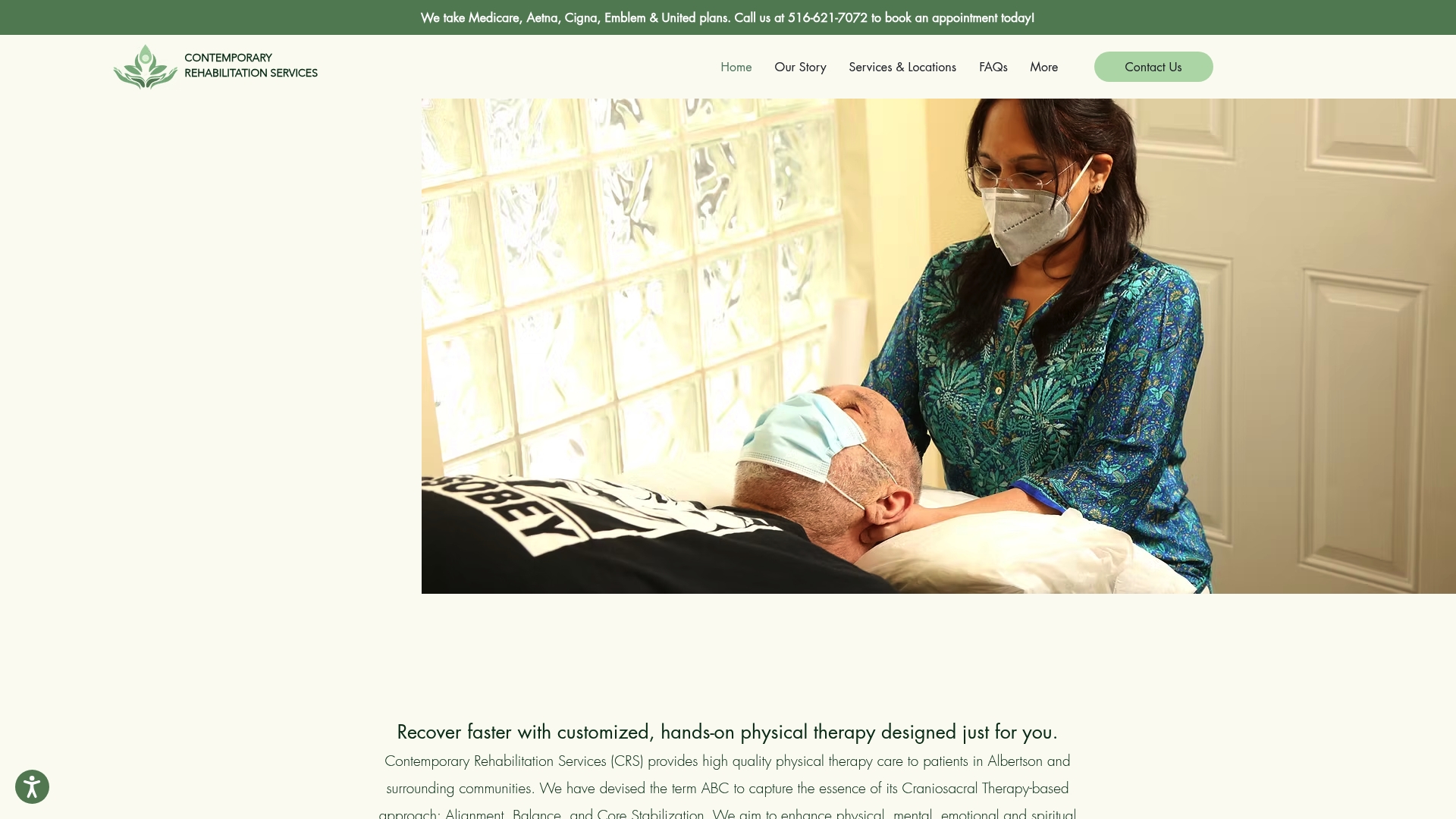
Contemporaryrehabservices is a boutique physical therapy clinic in Albertson, NY, serving patients across Queens and Nassau County with personalized, evidence-based care. The clinic accepts Medicare, Aetna, Cigna, Emblem, and United Healthcare plans, making access straightforward for most patients in the area. Every program at Contemporaryrehabservices is built around the success factors covered in this article: clear communication, individualized goal setting, and consistent therapist availability. If you are ready to start a therapy program designed around your specific recovery goals, or if you want to learn more about the clinic’s approach, visit the Albertson location page to schedule your first appointment.
FAQ
What is the strongest predictor of physical therapy success?
Patient adherence to prescribed exercises is the strongest predictor of physical therapy outcomes. A 2026 scoping review found exercise adherence predicted DASH scores at β = −0.34 (p < 0.001), outperforming other clinical variables.
How does the patient-therapist relationship affect recovery?
Therapist respect and interpersonal behavior are the strongest predictors of patient satisfaction, with a β of 0.671 in a study of 340 patients. Higher satisfaction directly supports motivation and consistent attendance, both of which drive better functional outcomes.
Can anxiety or depression slow my physical therapy progress?
Yes. Anxiety and pain catastrophizing independently predict poorer functional outcomes in rehabilitation research. Patients managing these conditions benefit from early screening and, when needed, referral to psychological support alongside their physical therapy program.
Does waiting time for an appointment really affect my recovery?
Longer appointment waiting times negatively correlate with functional outcomes (β = −0.19, p = 0.02). Getting into care quickly after an injury or flare-up preserves both physical condition and patient motivation.
How can technology improve my physical therapy results?
Digital tools like telehealth check-ins, automated exercise reminders, and video libraries reduce the most common adherence barriers. A 2026 RCT protocol demonstrated that a six-month online exercise program with adherence tracking sustained engagement well beyond the in-person phase of knee replacement rehabilitation.
Recommended
Comments