
Clinician 3 Phase Timeline for Spinal Fusion Physical Therapy Patients

Most patients begin formal outpatient physical therapy 6 to 12 weeks after spinal fusion. Before then, gentle guided movement and a home exercise program under your surgeon’s direction protect the healing fusion while limiting deconditioning. Recovery follows three broad phases: early protection and walking, motor control and stabilization, then progressive strengthening and return to daily life, all while honoring BLT precautions (no bending, lifting over 5 to 10 pounds, or twisting) for about 12 weeks.
TL;DR:
Most patients should begin outpatient physical therapy between 6 and 12 weeks after surgery, focusing on motor control, strengthening, and functional recovery.
During the first six days, gentle guided movement such as ankle pumps, short walks, and log-rolling are key to protecting the fusion and preventing complications.
BLT precautions, including no bending, lifting over 10 pounds, or twisting, are essential for roughly 12 weeks, with walking pushing toward 15 to 30 minutes daily during recovery.
Outpatient therapy emphasizes motor control training and gradual progression, with objective markers like walking tolerance and incision healing guiding therapy advancement.
Insurance coverage generally includes Medicare part B for medically necessary therapy, with typical patient responsibilities of 20% coinsurance after the deductible.
Table of Contents
What happens in the first six days after surgery
The first week after spinal fusion is about protecting the surgical site while keeping your body moving enough to avoid complications. Your care team’s goals are simple: control pain and swelling, keep blood flowing well enough to prevent clots, support your lungs, and get you walking short distances as soon as it is safe.
You will likely be encouraged to stand and walk within a day of surgery, even if it is only to the bathroom and back. Nurses or a hospital physical therapist typically teach you how to log-roll, meaning you turn your whole body as one unit rather than twisting at the waist, when getting in and out of bed. This single habit does more to protect a fresh fusion than almost anything else you will learn this week.
A basic home exercise program during this window usually includes:
Ankle pumps to support circulation and reduce clot risk.
Deep diaphragmatic breathing to keep your lungs clear after anesthesia.
Short, frequent walks, even just a few minutes at a time, several times a day.
Gentle bed mobility using the log-roll technique for every position change.
You are not aiming for intensity here. You are aiming for frequency, brief bursts of movement spaced throughout the day rather than one long session. Pay attention to how your body responds. Some soreness and fatigue are expected, but pain that spikes sharply during an activity is a signal to stop and rest.
Call your surgeon’s office promptly if you notice a fever, increasing redness or warmth around the incision, new drainage, or any new numbness or weakness in your legs. These are not symptoms to wait out. Early clinical guidance on rehabilitation after cervical and lumbar spine surgery supports early, guided movement over strict immobilization for most patients, precisely because gentle activity reduces complications without threatening the fusion.
Weeks 1 through 6: protected activity and preparing for outpatient therapy
This stretch of recovery is where BLT precautions matter most. Standard postoperative protocols from institutions like Wexner Medical Center commonly enforce no bending, lifting, or twisting for roughly 12 weeks, with lifting limits often set between 5 and 10 pounds, about the weight of a gallon of milk.
Statistic: Hospital rehabilitation protocols commonly restrict lifting to 5 to 10 pounds for about 12 weeks after lumbar fusion, a window that roughly matches the time your body needs to begin forming solid bone across the fusion site.
Walking remains your main tool during this phase. Most protocols encourage building toward 15 to 30 minutes of total daily walking, broken into several shorter walks rather than one long outing. Some surgeons prescribe a lumbosacral brace for the first 6 to 12 weeks, while others rely on the hardware placed during surgery and skip bracing altogether. This remains genuinely debated among spine surgeons, and a brace is never meant to replace the motor-control training that comes later.
By the end of this phase, your surgeon is typically looking for a few signs that you are ready to graduate to outpatient PT:
Your incision has healed without signs of infection.
Your pain is manageable with non-opioid medication, or your narcotic use is clearly decreasing.
You can walk household distances and manage basic transfers without help.
You have no new or worsening neurological symptoms.
Driving usually stays off the table until your surgeon clears you, particularly if you are still taking narcotics or wearing a brace that limits your ability to turn and check blind spots.
Weeks 6 through 12: structured outpatient PT begins
Once your surgeon signs off, outpatient physical therapy becomes the engine of your recovery. Programs commonly run for 6 to 8 weeks, with a typical total of 12 to 24 visits, scheduled one to three times per week depending on your progress and how far you live from the clinic.
This phase focuses on retraining the muscles that support your spine, not just building general fitness. A typical outpatient program includes:
Neutral-spine motor control training, teaching your deep core and back muscles to stabilize your spine during everyday movement.
Low-load endurance work, such as sustained walking or stationary cycling, to rebuild aerobic tolerance without straining the fusion.
Neural mobilization techniques, gentle gliding movements that help nerves move more freely if they were irritated by the original condition or the surgery itself.
Gait training, correcting any lingering limp or compensation pattern that developed before surgery or during early recovery.
Manual therapy as tolerated, including soft tissue work or gentle joint mobilization within the limits your surgeon has set.
Therapists generally advance your exercise intensity based on how you respond, not a fixed calendar. If you can complete a set of exercises with good form and no delayed pain flare the next day, that is usually the signal to add repetitions, resistance, or a new movement. If a specific exercise consistently increases your symptoms, a good therapist adjusts rather than pushes through it.
Months 3 through 6 and beyond: strengthening and getting back to life
Somewhere around the 12-week mark, most patients receive clearance for heavier loading and more functional training, assuming healing is on track. This is where physical therapy starts to look less like careful rehabilitation and more like real strength training.
Typical progressions build gradually:
Basic bridging exercises evolve into single-leg bridges as core control improves.
Hip hinge patterns are introduced with light resistance, then loaded gradually over weeks.
Carrying tasks, like holding a grocery bag or a laundry basket, are reintroduced at low weights and increased slowly.
Balance and functional movement drills prepare you for uneven ground, stairs, and daily tasks you have avoided since surgery.
Return to work or sport is guided by objective markers rather than a set date on the calendar: how you tolerate sitting or standing for the hours your job requires, how your spine responds to the specific demands of your role, and how consistent your home exercise routine has become.
Pro Tip: Keep doing your stabilization exercises even after formal therapy ends. The muscles that protect a fused spine need ongoing work, not a finish line.

Ongoing maintenance matters here. Stiffness tends to creep back in when people stop their home program the moment they feel better, so most therapists send patients home with a long-term routine designed to prevent that backslide.
Exercises you can expect at each stage of recovery
Early on, your home exercise program is intentionally simple. Ankle pumps done in sets of 10 to 20 repetitions roughly once an hour while you are awake help circulation without stressing your back at all. Diaphragmatic breathing and short walks round out this stage.
As you move into the stabilization phase, exercises get more targeted:
Abdominal bracing, gently drawing in your core without holding your breath, held for a few seconds and repeated in short sets.
Modified bird-dog, extending one arm or one leg at a time while keeping your spine neutral, a smaller and safer version of the traditional exercise.
Heel slides, sliding one heel toward your hips while lying down, to reintroduce hip movement without spinal loading.
Once you reach the strengthening phase, exercises are staged with progressively heavier loads: bodyweight bridges before weighted ones, partial squats before full-depth squats, and light resistance bands before free weights. Progress is measured in how well you tolerate the load, not how quickly you add weight.
Statistic: A systematic review of 18 randomized controlled trials involving 1,402 patients found that exercise therapy and multimodal rehabilitation produce measurable short-term improvements in pain and disability after lumbar fusion, even though the certainty of evidence is currently rated low.
Certain symptoms during exercise are not something to push through. Stop and call your clinician if you notice increased pain radiating down a leg, new weakness, or numbness that is spreading rather than settling. These are red flags that your program needs adjusting, not signs that you need to try harder.
Everyday adjustments: sitting, sleeping, and getting through the day
Daily life after spinal fusion involves a lot of small adaptations. Sitting tolerance is one of the most common questions, and the honest answer is that it depends on your comfort, but most patients do well limiting continuous sitting to 20 to 30 minutes early on, then standing and walking briefly before sitting again.
A few practical habits make a real difference:
Use a firm, supportive chair rather than a soft couch whenever possible, since firmer seating makes it easier to keep your spine in a neutral position.
If you use a recliner, choose one with good lumbar support and avoid fully reclined positions that flex your spine awkwardly getting in and out.
Sleep on your back or side with a pillow between your knees or under your knees to keep your spine in a neutral alignment overnight.
Reachers, sock aids, and long-handled shoehorns reduce the need to bend during dressing, which matters most in the first 12 weeks.
Bathroom transfers deserve extra care in the early weeks. A raised toilet seat and a grab bar reduce the twisting and bending that BLT precautions are designed to prevent, and they are inexpensive enough that most patients pick them up before surgery rather than after.
Why mindset matters just as much as exercise
Pain after spine surgery is not purely physical. How you think about pain, and how much you fear movement, genuinely shapes how well you recover. This is the idea behind cognitive-behavioral physical therapy, or CBPT, which blends standard exercise with strategies borrowed from cognitive-behavioral therapy.
A randomized controlled trial of 86 adults found that a targeted CBPT program started around six weeks after surgery produced significantly greater improvements in pain, disability, and physical performance at three months compared to a standard education program. That is a meaningful difference for a relatively low-cost addition to standard therapy.
Patients who received graded activity, pain education, and structured goal setting alongside their exercises showed better outcomes than those who received exercise instruction alone.
CBPT typically includes graded activity pacing, plain-language education about what pain does and does not mean after fusion, relaxation techniques, and collaborative goal setting with your therapist. It tends to help most if you notice yourself avoiding movement out of fear rather than physical limitation, a pattern clinicians call fear-avoidance or kinesiophobia. If that sounds familiar, it is worth asking your therapist directly whether a CBPT-informed approach is part of your plan.
How your therapist decides when to advance your program
Progression through recovery is not guesswork. Therapists rely on specific, observable markers to decide when you are ready for more.
Walking tolerance of 15 to 30 minutes without a significant pain flare afterward.
A healed incision with no signs of infection or ongoing drainage.
Decreasing reliance on narcotic pain medication.
Independence with basic transfers, like getting in and out of bed or a car.
Many clinics also use standardized functional tests to track progress objectively, including the Timed Up and Go test, a five-repetition sit-to-stand test, and a 10-meter walk test. These give both you and your surgeon a concrete number to compare visit over visit, rather than relying on a vague sense of feeling better.
Bring these numbers, along with your home exercise log and any symptom changes, to your surgical follow-up appointments. A therapist’s written progress note paired with your own notes on pain and function gives your surgeon a much clearer picture than a general update.
What insurance actually covers for post-fusion PT
Cost and coverage questions can add unnecessary stress to an already demanding recovery, so it helps to understand the basics before your first appointment.
Medicare Part B covers medically necessary outpatient physical therapy once a physician certifies the plan of care. Beneficiaries generally pay 20% coinsurance after meeting the Part B deductible.
Statistic: The 2026 Medicare Part B deductible is $283, after which most beneficiaries are responsible for 20% of the Medicare-approved amount for covered outpatient therapy services.
A few practical steps smooth out the logistics:
Ask your clinic to verify your specific insurance benefits before your first visit, since coverage details vary by plan even within Medicare.
If your therapy needs extend past typical thresholds, ask your provider about documentation requirements, since continued medically necessary care can still be covered with proper certification.
Ask whether telehealth PT sessions are an option for check-ins or home program adjustments, particularly if travel to a clinic is difficult early in recovery.
Our own guide on Medicare coverage for physical therapy walks through certification requirements and deductible details in more depth if you want the fuller picture before scheduling your first appointment.
What is normal, and what is not, as you recover
Recovery from spinal fusion is rarely a straight line. Pain is typically highest in the first few weeks, then improves gradually, with many patients noticing meaningful gains by three to six months as strength and confidence build.
Some symptoms tend to linger longer than patients expect. Morning stiffness is common for months after surgery, and intermittent numbness or tingling, if a nerve was involved before surgery, can take months to fully resolve as the nerve heals. Patient-reported experiences on forums like Mayo Clinic Connect echo this variability, with some sensory changes resolving slowly over an extended period.
Certain symptoms are never just part of the process. Contact your surgeon immediately if you experience:
Progressive weakness in your legs, rather than gradual improvement.
New bowel or bladder changes.
Fever or chills.
A wound that opens, drains, or shows spreading redness.
These are not symptoms to monitor at home. They warrant a same-day call to your surgical team.
Why the exercise part is only half the recovery
The physical therapy world often treats spinal fusion recovery as purely a matter of loading tissue correctly and building strength on schedule. That framing misses something important: two patients with nearly identical surgical results can have very different outcomes based on how much they fear movement and how they interpret normal post-surgical soreness.
The evidence on cognitive-behavioral physical therapy backs this up more directly than most people realize. A program that spends real time on pain education and graded activity, not just exercise prescription, produces better outcomes than exercise alone. That is not a soft, secondary detail. It is a measurable clinical finding that deserves the same attention as the exercise dosing itself.
If there is one thing patients underestimate, it is this: progress that feels slower than a rigid timeline predicts is not necessarily a sign that something has gone wrong. Healing timelines vary, and a program that adjusts to your actual response, rather than a printed schedule, tends to serve you better in the long run.
— CRS Wellness
Getting evaluated for post-fusion physical therapy
Individualized rehabilitation programs for patients recovering from spinal fusion commonly combine hands-on manual therapy with graded, motor-control focused progressions like those described throughout this guide. Many practices accept Medicare, Aetna, Cigna, Emblem, United Healthcare, and cash payments, providing patients multiple coverage options.
Sessions are typically one-on-one, often led by experienced therapists focused on individualized treatment planning rather than a one-size-fits-all protocol. Craniosacral therapy, myofascial work, joint mobilization, and neuromuscular re-education are among the therapies available when recovery requires more than standard exercise progressions.
To make the most of your first evaluation, bring your surgical report, a current medication list, and written clearance from your surgeon outlining any restrictions still in place. That paperwork lets your therapist build a plan that respects your surgeon’s precautions from day one rather than guessing at them.
Starting physical therapy after spinal fusion
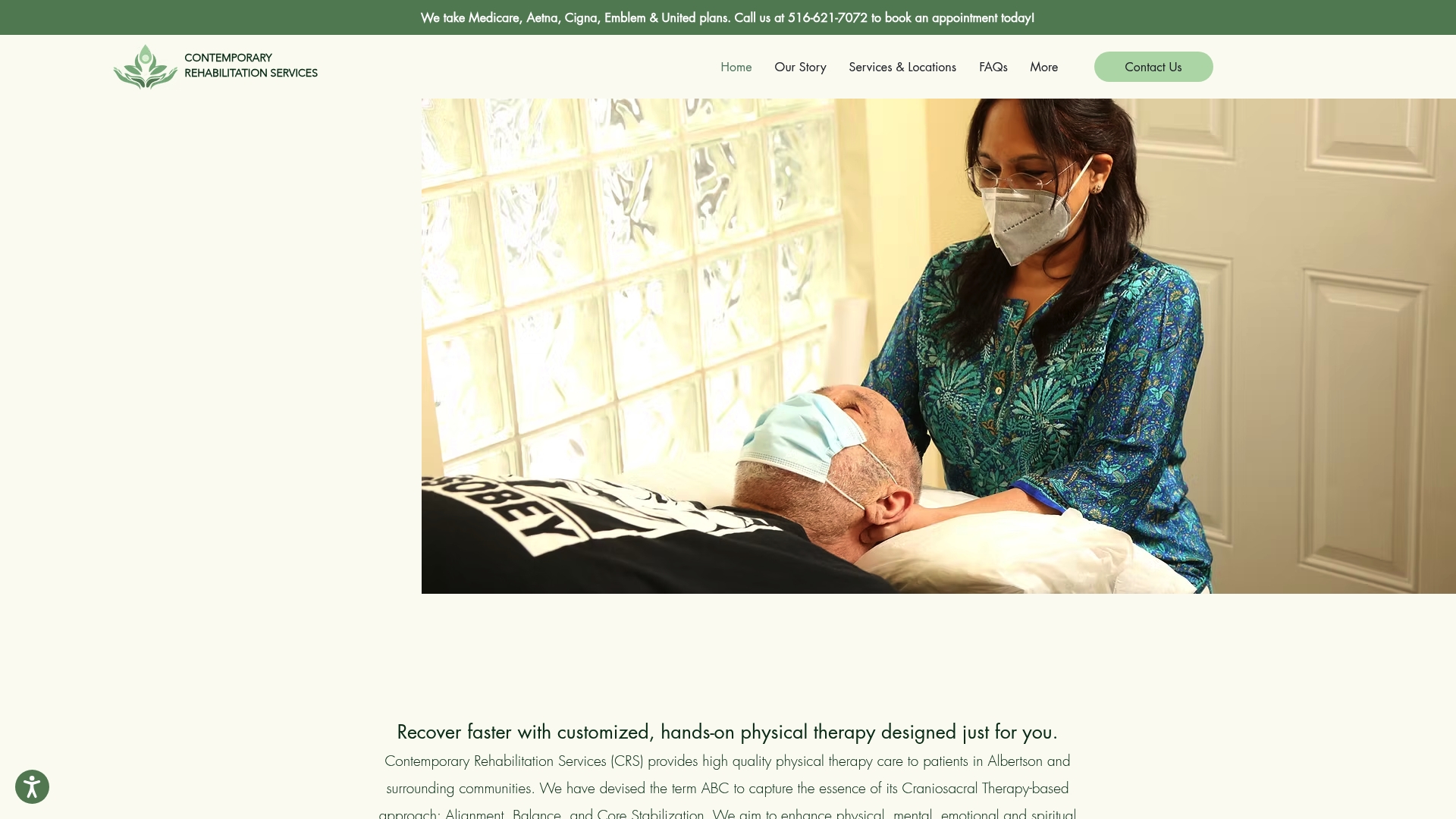
Getting back on your feet after spinal fusion works best with a plan built specifically around your surgery, your surgeon’s precautions, and how your body is actually responding, not a generic printout. Individualized in-person physical therapy and telehealth PT sessions for patients needing flexibility early in recovery are commonly available, alongside manual therapy techniques like joint mobilization and neural mobilization combined with CBPT-informed programming.
Getting started is straightforward:
Bring your surgical report, current medication list, and any written surgeon restrictions to your first visit.
Ask about insurance verification ahead of time so coverage questions are settled before you begin.
Ask whether a telehealth session makes sense for your first check-in if travel is still difficult.
Explore the full range of services, including craniosacral therapy, myofascial therapy, and joint mobilization, or find location details for Albertson and Williston Park. To schedule an evaluation and start building your recovery plan, visit Contemporaryrehabservices.
This article is general information, not a substitute for advice from a qualified doctor. Consult a qualified healthcare professional about your own circumstances before acting on anything here.
Sources
FAQ
What kind of back exercises are recommended after spinal fusion?
Early exercises focus on gentle movement like ankle pumps and walking, then progress to core stabilization work such as abdominal bracing and modified bird-dog exercises. By three months or later, many patients add progressive strengthening like bridging and light resistance training once cleared by their surgeon.
Can I sit after spinal fusion, and if so, how long should I sit?
Yes, sitting is generally fine in short intervals, but most patients do best limiting continuous sitting to about 20 to 30 minutes early in recovery before standing and walking briefly. A firm chair with good lumbar support makes longer sitting more comfortable as healing progresses.
Should you do physical therapy after spinal fusion?
Yes, structured physical therapy is a central part of recovery, with outpatient programs typically starting between 6 and 12 weeks after surgery. Evidence suggests that programs combining exercise with cognitive-behavioral strategies produce better pain and function outcomes than exercise alone.
Can I use a recliner after lumbar fusion surgery?
A recliner can work if it offers firm lumbar support and you avoid fully reclined positions that flex your spine awkwardly when getting in or out. Many patients find a supportive chair with good back alignment more comfortable and easier to move in and out of during the first weeks of recovery.
Recommended
Comments