
Best Spineandsportsrehabny.com Alternatives in Queens & Long Island
- tjdontplay
- 1 day ago
- 9 min read

If you’re searching for spineandsportsrehabny.com alternatives in Queens and Long Island, the short answer is this: Contemporaryrehabservices in Albertson, NY is the top recommended pick, alongside a handful of other clinic types worth considering based on your insurance, condition, and preference for hands-on care.
Here’s the shortlist at a glance:
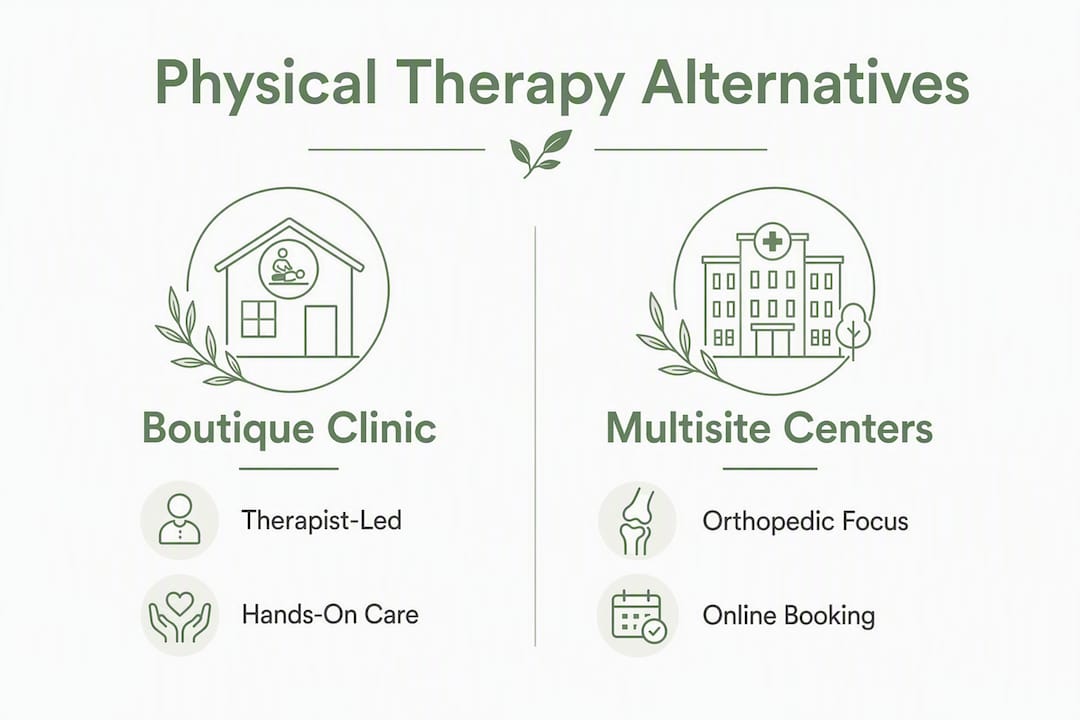
Boutique therapist-led clinic (recommended): Contemporaryrehabservices, Albertson, NY. Accepts Medicare, Aetna, Cigna, Emblem Health, and United Healthcare. Specializes in manual therapy, craniosacral therapy, and myofascial release.
Long Island multisite orthopedic center: Larger group practices with multiple Nassau County locations, typically strong on orthopedic and sports PT but with variable therapist continuity.
Mobile and telehealth PT option: Virtual or home-visit providers suited to patients with mobility limitations or scheduling constraints.
Community hospital outpatient program: Hospital-affiliated rehab units offering broad medical support, useful when comorbidities or post-surgical needs require on-site specialist access.
Contemporaryrehabservices stands out because it accepts the major insurers most Queens and Nassau County patients carry, keeps care therapist-led rather than aide-driven, and offers a range of manual therapies that many high-volume clinics skip. Research from NCBI confirms that patient education and a sustainable home-exercise plan are among the strongest predictors of long-term functional improvement, which is exactly the model a boutique clinic is built around.
Table of Contents
How do these physical therapy alternatives compare side by side?
Physical therapy can be delivered in many settings, from specialized clinics to hospitals to virtual platforms, according to the Cleveland Clinic. The table below maps the four main alternative types so you can match options to your priorities before you pick up the phone.
Dimension | Boutique therapist-led clinic | Long Island multisite orthopedic center | Mobile / telehealth PT | Community hospital outpatient |
Best for / patient fit | Chronic pain, manual therapy needs, insurance clarity | Post-surgical ortho, sports injuries, multi-specialty needs | Mobility-limited, homebound, or remote patients | Complex comorbidities, post-acute hospital discharge |
Areas served | Queens, Nassau County (Long Island) | Nassau / Suffolk County, select Queens locations | Anywhere with internet; home visits vary | Varies by hospital system |
Core services | Manual therapy, craniosacral, MFR, joint mobilization, neuromuscular re-ed | Orthopedic PT, sports PT, post-op rehab | Video PT consults, home-exercise coaching | Orthopedic, neurologic, geriatric PT |
Insurance & payment | Medicare, Aetna, Cigna, Emblem, United, cash | Varies; most accept major commercial plans | Varies — check with provider | Medicare, Medicaid, major commercial plans |
Typical session length | 45 min, one-on-one | 30–45 min; may involve aides | 30–45 min video | 30 min; group or individual |
Price range (self-pay) | Varies — check with clinic | Varies — check with clinic | Varies — check with clinic | Varies — check with clinic |
Key differentiator | Consistent therapist contact, insurance transparency | On-site imaging access, multi-specialty referral | Convenience, continuity for home-exercise adherence | Immediate specialist escalation if needed |
Pros / cons | Pro: personalized, hands-on. Con: single location | Pro: broad services. Con: variable therapist continuity | Pro: flexible. Con: no hands-on techniques | Pro: full medical backup. Con: less PT-focused time |
For full booking details and service breakdowns, see the clinic profiles below.
Which clinic type is the right fit for your recovery?
Contemporaryrehabservices (boutique therapist-led, Albertson, NY)
At a glance: Serves Queens and Nassau County from a single Albertson location. In-person and virtual sessions available.
Core services:
Craniosacral therapy (gentle hands-on technique addressing the nervous system)
Myofascial release (MFR) for soft-tissue restrictions
Joint mobilization and neuromuscular re-education
Visceral therapy and individualized rehab programs
Sports and orthopedic physical therapy
Insurance accepted: Medicare, Aetna, Cigna, Emblem Health, United Healthcare, and cash payments.
Pros:
One-on-one therapist time every session, not aide-supervised exercise
Accepts the major plans most Queens and Long Island patients carry
Offers both in-person and virtual options for follow-up care
Cons:
Single location (Albertson), so commute matters if you live in eastern Nassau or Suffolk
Smaller facility means fewer on-site imaging resources
Booking note: Contact Contemporaryrehabservices directly to verify your specific plan’s in-network status and ask about wait times for an initial consult. No referral is required for most commercial plans, though Medicare may require a physician order depending on your state.
Pro Tip: Ask specifically whether your insurer requires a prior authorization before your first visit. Clinics that handle authorization in-house, like Contemporaryrehabservices, reduce the risk of treatment delays.
Long Island multisite orthopedic center (category)
At a glance: Group practices with two or more Nassau or Suffolk County locations. Often affiliated with orthopedic surgeon groups.

Core services: Orthopedic PT, sports PT, post-surgical rehab, balance and fall prevention.
Insurance: Most accept major commercial plans and Medicare; Medicaid acceptance varies.
Pros:
On-site imaging or fast imaging referral through affiliated surgeons
Multiple locations reduce commute burden
Cons:
Therapist continuity is less consistent; you may see different clinicians across visits
High patient volume can mean shorter hands-on time per session
Booking note: Online portals are common; expect a 1–2 week wait for new patients at busy practices. Confirm whether your assigned therapist (not an aide) will perform hands-on work each visit.
Mobile and telehealth PT option (category)
At a glance: Virtual video sessions or in-home visits. Best suited to patients who cannot travel or need support between in-person appointments.

Core services: Video-based exercise coaching, home-program supervision, postural assessment, and follow-up check-ins. Telehealth can deliver video consultations and remote monitoring that support in-person sessions effectively.
Insurance: Varies widely; telehealth PT coverage improved significantly after 2020 but confirm your plan’s current policy.
Pros:
Maximum scheduling flexibility
Useful for maintaining home-exercise adherence between clinic visits
Cons:
Cannot deliver hands-on techniques (manual therapy, MFR, joint mobilization)
Not appropriate as a sole treatment for acute musculoskeletal injuries
Booking note: Most telehealth PT platforms allow direct booking online. Verify licensure: your therapist must be licensed in New York State to treat you remotely.
Community hospital outpatient program (category)
At a glance: Rehab units attached to hospital systems across Queens and Long Island. Stand-alone clinics often provide more consistent therapist-to-patient interactions, while hospital units offer broader immediate medical support.
Core services: Orthopedic, neurologic, geriatric, and pediatric PT; post-acute discharge rehab.
Insurance: Medicare and Medicaid accepted broadly; most major commercial plans accepted.
Pros:
Immediate escalation path if your condition requires specialist intervention
Useful after surgery or hospitalization when medical oversight is still needed
Cons:
PT sessions may be shorter and less hands-on in high-volume hospital units
Scheduling can be slower due to administrative layers
Booking note: A physician referral is typically required. Insurance authorization is usually handled by the hospital system, but confirm timelines before your first appointment.
How do you choose the right physical therapy clinic?
Choosing well comes down to five core criteria, in this order of priority.
Therapist-led hands-on care. Confirm that a licensed physical therapist (not a PT aide or technician) performs your hands-on treatment every session. This is the single most important question to ask.
Insurance in-network status. Verify your specific plan and plan tier, not just the insurer name. “We accept Aetna” does not always mean your Aetna HMO plan is in-network.
Therapist credentials and specialization. Look for a Doctor of Physical Therapy (DPT) degree and relevant certifications such as Orthopedic Clinical Specialist (OCS) or manual therapy certifications.
Session length and frequency. One-on-one sessions of sufficient length are standard for effective manual therapy. Shorter sessions often signal a high-volume model.
Home-exercise program and patient education. Effective physical therapy requires active patient participation outside the clinic for long-term recovery. Ask whether the clinic provides a written or app-based home program.
Questions to ask on your first call:
Does a licensed PT perform hands-on therapy at every visit, or do aides handle most of the session?
Are you in-network with my specific plan (not just my insurer)?
Do you handle prior authorization in-house?
What does a typical treatment plan look like for my condition, and how many sessions should I expect?
What outcome measures do you use to track my progress?
Red flags to watch for:
Clinics that push you to purchase a large package of sessions before you’ve had an evaluation
Vague answers about who performs hands-on therapy
No clear home-exercise plan discussed at the initial evaluation
Frequent therapist changes with no explanation
For most acute musculoskeletal problems, a course of multiple sessions is a reasonable starting estimate, though your therapist should reassess and adjust that number based on your progress. Self-pay rates vary by clinic and region; always ask for the cash-pay rate upfront if you’re uninsured or out-of-network.
You can also review how to select the best PT clinic for your recovery for a deeper checklist before you call.
Why does therapist-led, hands-on care matter for your recovery?
Hands-on therapist intervention combined with a tailored home-exercise program improves functional outcomes for the majority of musculoskeletal problems. That’s not a marketing claim; it’s the consistent finding across clinical literature.
Physical therapy aims to relieve pain, improve movement, and teach patients what they can do at home to continue recovery. The home component matters as much as the clinic visit. A therapist who spends 45 minutes with you but sends you home with no program has done half the job.
Manual techniques like myofascial release and joint mobilization prepare tissue for movement in ways that unsupervised exercise alone cannot replicate, according to the Cleveland Clinic. Patients who plateau on exercise-only protocols often respond quickly once a skilled therapist addresses the underlying tissue restriction.
“Quality PT is measured more by consistent therapist engagement and appropriate hands-on techniques than by having the latest equipment alone.” — Franciscan Health
When to choose a boutique therapist-led clinic:
Your condition is musculoskeletal (back pain, neck pain, joint dysfunction, sports injury)
You want consistent one-on-one time with the same therapist
Your insurer is Medicare, Aetna, Cigna, Emblem, or United Healthcare
When a hospital outpatient program makes more sense:
You were recently discharged from a hospital and need medical oversight
Your condition involves neurological complications or multiple comorbidities
You need on-site imaging or immediate specialist escalation
Pro Tip: Before your first appointment anywhere, call your insurer and ask for the clinic’s in-network status by NPI number, not just by name. This prevents surprise bills after your first visit.
What credentials should your physical therapist have?
The minimum credential for a licensed physical therapist in New York State is a Doctor of Physical Therapy (DPT) degree, which replaced the master’s-level entry requirement. Beyond the DPT, look for board certifications from the American Board of Physical Therapy Specialties (ABPTS). The most relevant for Queens and Long Island patients seeking sports rehab or spine rehabilitation services are:
Orthopedic Clinical Specialist (OCS): Indicates advanced training in musculoskeletal conditions, joint mobilization, and post-surgical rehab.
Sports Clinical Specialist (SCS): Focused on athletic injury prevention, performance, and return-to-sport protocols.
Certified Manual Therapist (CMPT) or Fellow of the American Academy of Orthopaedic Manual Physical Therapists (FAAOMPT): Signals advanced hands-on technique training.
For craniosacral therapy and myofascial release, therapists typically complete post-graduate continuing education through programs like the Upledger Institute (craniosacral) or the Myofascial Release Treatment Centers curriculum. These are not board certifications, but they indicate deliberate specialization.
When evaluating any clinic, ask whether the therapists hold active New York State licensure and whether their certifications are current. A clinic that displays therapist bios with credentials on its website is generally more transparent than one that does not.
Key Takeaways
Contemporaryrehabservices is the top-recommended alternative for Queens and Nassau County patients seeking therapist-led, insurance-friendly physical therapy with a manual therapy focus.
Point | Details |
Therapist-led care first | Confirm a licensed PT performs hands-on work every session before booking anywhere. |
Verify in-network status | Ask for your plan’s in-network status by NPI number, not just the insurer name. |
Home program matters | A clinic without a structured home-exercise plan delivers only half the recovery benefit. |
Boutique vs. hospital | Choose a boutique clinic for musculoskeletal conditions; hospital outpatient for post-acute or complex medical needs. |
Contemporaryrehabservices | Accepts Medicare, Aetna, Cigna, Emblem, and United Healthcare; serves Queens and Nassau County with therapist-led manual therapy. |
What patients often get wrong when switching clinics
Most people switching from one physical therapy provider to another focus almost entirely on location and wait time. Those matter, but they’re not what determines whether you actually get better.
The real question is who puts their hands on you and for how long. A clinic that books 45-minute slots but spends 30 of those minutes on a hot pack and unsupervised exercise is not delivering the same care as one where a therapist is actively working with you the entire time. That distinction rarely shows up on a clinic’s website, which is why you have to ask directly.
Patients with chronic spine pain or persistent soft-tissue problems tend to benefit most from a boutique approach, where the same therapist tracks your progress week to week and adjusts technique accordingly. Hospital outpatient programs are genuinely the better choice after a major surgery or when your condition requires specialist oversight, but for the majority of people searching for sports rehab facilities or spine rehabilitation services in Queens and Long Island, a therapist-led boutique clinic offers more consistent hands-on time per dollar spent.
Insurance transparency is the other underrated factor. Clinics that handle prior authorization in-house and clearly explain your out-of-pocket costs upfront remove a significant source of stress from recovery. That’s worth weighting heavily in your decision.
Contemporaryrehabservices: a local option worth calling first
If you’ve been comparing rehabilitation centers alternatives and want a clinic that combines hands-on manual therapy with straightforward insurance billing, Contemporaryrehabservices in Albertson, NY is worth a direct call. The clinic offers in-person and virtual physical therapy, with specialties including craniosacral therapy, myofascial release, joint mobilization, and neuromuscular re-education — the kind of therapist-directed work that makes a measurable difference for musculoskeletal conditions.
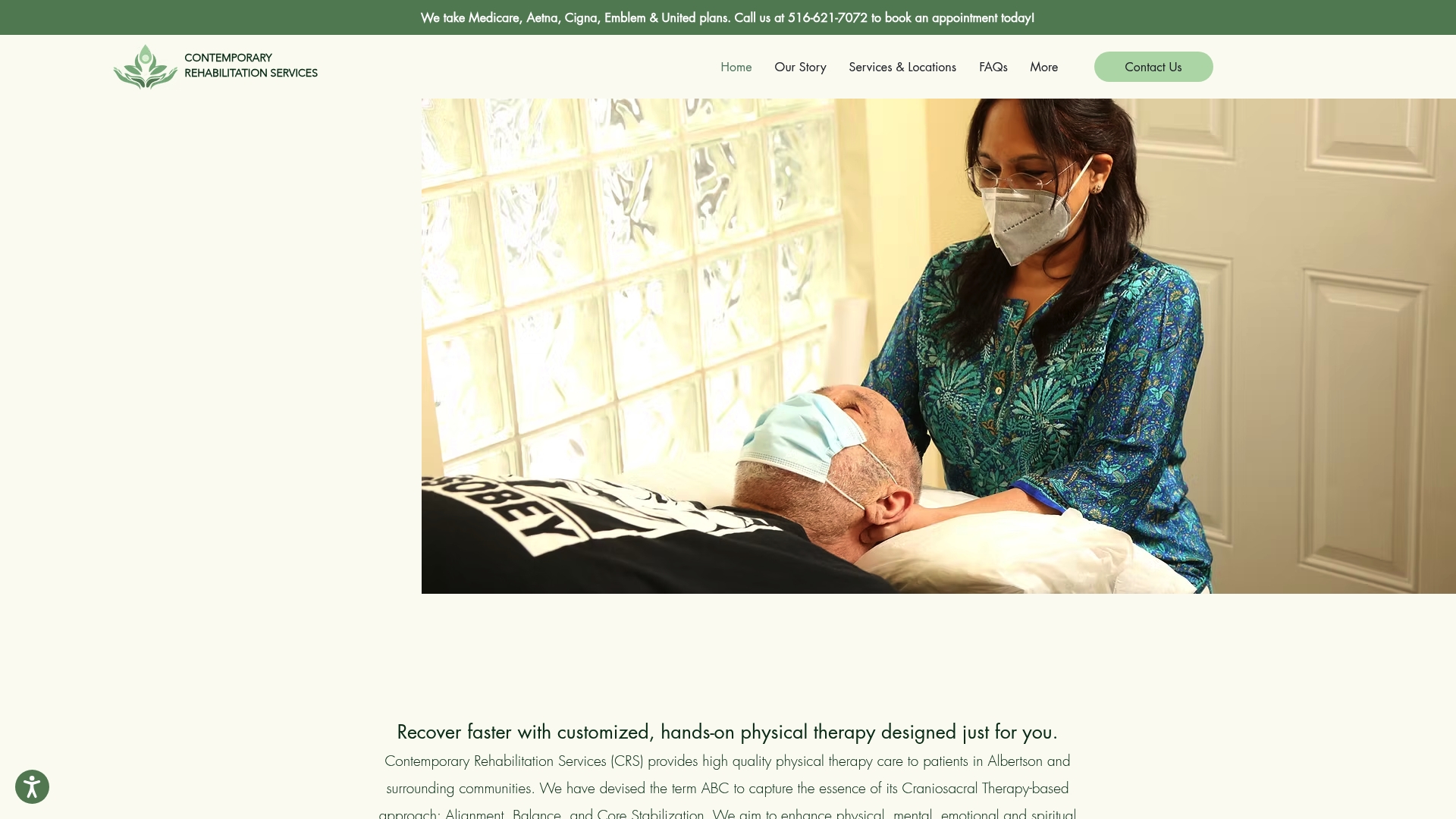
Contemporaryrehabservices accepts Medicare, Aetna, Cigna, Emblem Health, and United Healthcare, and serves patients across Queens and Nassau County. The clinic’s full therapy offerings are listed on its services page, where you can also find location details and contact information. If you’re ready to book an initial consultation or want to confirm your insurance is accepted, reach out directly — the team can walk you through coverage and what to expect at your first visit.
Sources
These sources informed the treatment definitions, evidence for hands-on therapy, and distinctions between clinic types used throughout this article. Insurance and pricing details vary by clinic and plan; always contact the clinic directly and call your insurer to confirm current in-network status before booking.
Recommended
Comments