
Visceral Manipulation for Chronic Low Back Pain: What to Know

Visceral manipulation can reduce pain and improve function short-term for some people with chronic low back pain when combined with conventional physical therapy. That is the practical takeaway from the current clinical evidence. Think of it as an adjunct to an active rehabilitation program, not a standalone fix. Before trying any visceral work, you and your clinician should screen for red flags, because certain medical conditions make manual abdominal therapy unsafe.
Key Takeaways
Visceral manipulation may reduce pain and improve function short-term for some patients with chronic low back pain when combined with active physical therapy, but the overall evidence quality remains low to moderate.
Point | Details |
Adjunct, not standalone | Positive RCTs tested OVM combined with PT, not visceral manipulation alone. |
Evidence is mixed | Two systematic reviews reached opposite conclusions; individual trial results vary. |
Screen before starting | Red flags like unexplained weight loss, fever, or bowel dysfunction require medical evaluation first. |
Measure outcomes | Use the Oswestry Disability Index or a pain scale at baseline and every four sessions to track progress. |
Contemporaryrehabservices | Offers visceral and manual therapy within active PT programs in Nassau County and Queens, accepting Medicare, Aetna, Cigna, Emblem, and UnitedHealthcare. |
Table of Contents
What the research shows about visceral manipulation and low back pain
What happens in a visceral manipulation session and who provides it
Safety, red flags, and when not to try visceral manipulation
How visceral manipulation fits into a real-world rehab program
Limitations in the evidence and a practical recommendation for patients
How Contemporaryrehabservices approaches visceral and manual therapy for low back pain
Contemporaryrehabservices offers hands-on low back pain care near you
Primary trials, systematic reviews, and clinical guidelines to read next
What the research shows about visceral manipulation and low back pain
The evidence is genuinely mixed, and that honesty matters when you are deciding whether to try this approach.
On the positive side, a multi-center single-blind RCT enrolled 86 patients with chronic mechanical low back pain and found that osteopathic visceral manipulation (OVM) added to physical therapy produced significantly greater improvements in pain, depression, and functional impairment than sham OVM added to the same PT protocol. Those differences held at four-week follow-up. A separate RCT of 76 volunteers with functional constipation and chronic nonspecific low back pain found OVM reduced pain intensity and improved Oswestry Disability Index scores at six weeks and at three-month follow-up compared with sham OVM.
Not every trial agrees. Some studies with sham controls found no meaningful advantage from adding visceral techniques to usual care, which reflects real trial-to-trial variability rather than a clear consensus.
At the pooled-evidence level, a systematic review and meta-analysis concluded that visceral osteopathy produced no significant benefits for pain, disability, or physical function, and rated the overall quality of evidence as very low. A 2023 systematic review found similarly poor-quality evidence across most trials but noted that a small number of low-risk-of-bias studies did report long-term pain reduction when visceral fascial therapy was combined with standard physical therapy.
Clinical implication: The American College of Physicians guideline positions exercise and multidisciplinary rehabilitation as first-line care for nonradicular low back pain. Visceral manipulation sits in the adjunct category, supported by some positive trials but not yet by consistent high-quality evidence.
Trial / Review | Design | Key Finding | Evidence Quality |
Multi-center OVM RCT (86 patients) | Single-blind RCT with sham control | OVM + PT superior to sham + PT at 4 weeks | Moderate |
OVM + constipation RCT (76 patients) | RCT with sham control | Reduced pain and disability at 6 weeks and 3 months | Moderate |
Panagopoulos et al. (2015) | RCT with placebo control | No significant benefit from adding visceral manipulation | Low |
Systematic review and meta-analysis | Pooled analysis | No significant benefit; GRADE evidence very low | Very low |
2023 BMC systematic review | Systematic review of RCTs | Positive long-term effects in low-risk-of-bias trials only | Low to moderate |
What happens in a visceral manipulation session and who provides it
A session typically runs 45–60 minutes and follows a structured sequence. Here is what you can expect:
Intake and history review. Your clinician takes a detailed history, asking about your pain pattern, digestive health, prior surgeries, and any symptoms that could signal a serious underlying condition.
Red-flag screening. Before any hands-on work, the therapist checks for warning signs (see the safety section below) that would require medical evaluation first.
Postural and movement assessment. You may be asked to stand, walk, and perform simple movements so the clinician can observe how your spine and pelvis move.
Visceral palpation. The therapist uses gentle abdominal palpation to assess the mobility and motility of organs, looking for areas of restricted gliding or abnormal fascial tension.
Targeted visceral technique. Gentle, sustained pressure is applied to restricted regions, typically the intestines, liver, or bladder areas, depending on your presentation. The force is light, nothing like spinal manipulation.
Integration with spinal and soft-tissue work. Most clinicians combine visceral techniques with joint mobilization, myofascial release, or neuromuscular re-education in the same session.
Home exercise assignment. You leave with specific exercises to reinforce what was done manually.
The RCTs that showed positive results applied OVM twice weekly across multiple sessions. In clinical practice, programs of 8–12 sessions are common, though your clinician will reassess regularly and adjust.
In the U.S., visceral manipulation is provided by licensed physical therapists (DPT) with post-graduate visceral therapy training, doctors of osteopathic medicine (DO) with osteopathic visceral certification, and some appropriately trained manual therapists. Credentials matter here; not every PT or DO has this specialized training.
How visceral manipulation might reduce low back pain
Researchers propose several pathways, none of them fully proven in humans but all biologically plausible.
Viscera-fascia tethering is the most cited hypothesis. Organs are suspended by fascial ligaments that connect to the spine, pelvis, and diaphragm. When an organ loses normal mobility, perhaps from prior surgery, inflammation, or chronic postural stress, the resulting fascial tension can alter spinal loading and contribute to pain. Think of it like a rope attached to a tent pole: if the rope shortens on one side, the pole tilts.
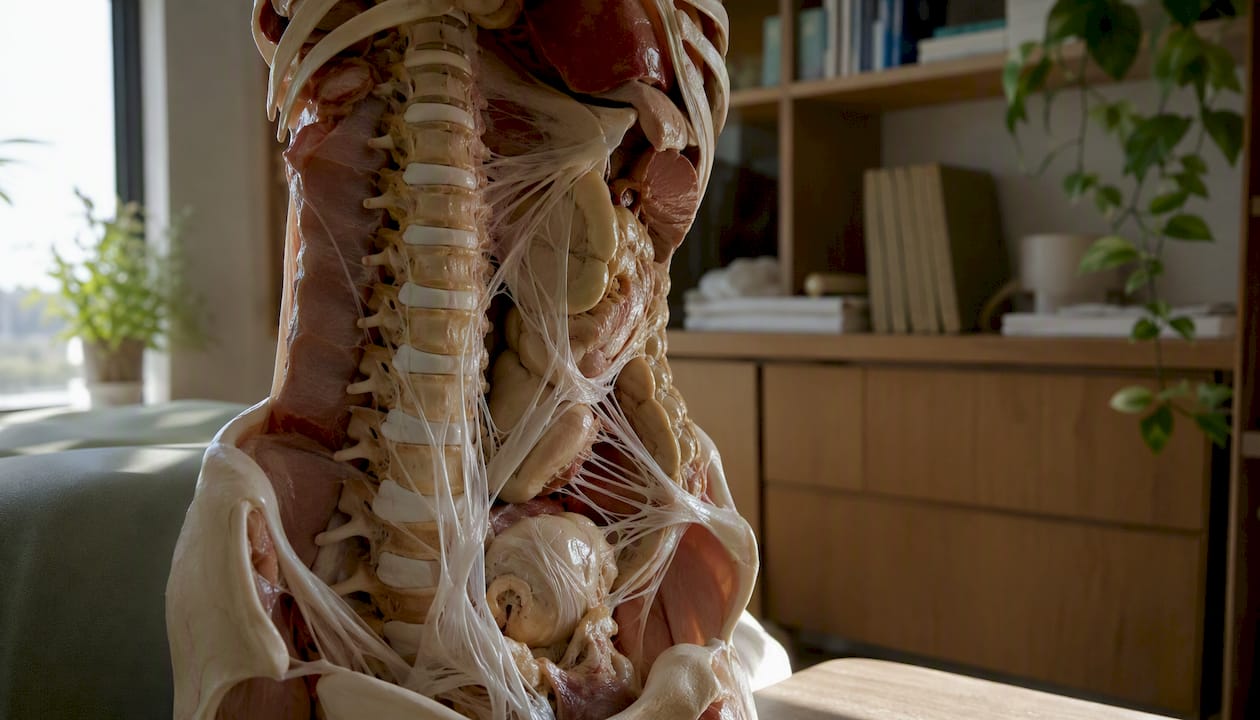
Neurophysiologic modulation offers a second pathway. Visceral afferent nerves share spinal cord segments with somatic structures. Abnormal visceral input can sensitize dorsal horn neurons, lowering the pain threshold in the corresponding back region. Gentle manual input to the viscera may reduce that afferent drive.
Fascial sliding and tissue mobility round out the picture. Reduced sliding between fascial layers can restrict movement and generate pain signals. Restoring that sliding, even briefly, may allow patients to move more freely and participate more fully in active exercise.
These mechanisms are plausible and internally consistent, but they remain working hypotheses. That is precisely why clinical trials with sham controls are the right standard for testing whether the technique actually works, rather than relying on the theory alone.
Safety, red flags, and when not to try visceral manipulation
Visceral manipulation is generally well-tolerated in appropriately screened patients. Mild soreness in the abdomen or back for 24–48 hours after a session is the most commonly reported side effect in trials. Serious adverse events are rare when proper screening is done.
Red flags that require medical evaluation before any manual therapy:
New or worsening pain with unexplained weight loss (possible malignancy)
Fever, chills, or night sweats alongside back pain
History of cancer with new spinal symptoms
Saddle anesthesia, bladder or bowel dysfunction (possible cauda equina syndrome)
Severe trauma preceding the pain onset
Pain that is constant, progressive, and unrelieved by any position
Contraindications and caution situations for visceral work specifically:
Recent abdominal surgery (within 6–12 weeks, or longer depending on healing)
Suspected or confirmed visceral disease (active inflammatory bowel disease, aortic aneurysm, appendicitis)
Pregnancy: some visceral techniques are modified or avoided, particularly in the first trimester; always disclose pregnancy to your clinician
Unstable medical conditions such as uncontrolled hypertension or active infection
Anticoagulant therapy at high doses: increased bruising risk with abdominal pressure.
Adults](https://www.aafp.org/pubs/afp/issues/2024/0300/chronic-low-back-pain.html), and the vast majority have non-specific presentations where visceral work is safe to consider after screening. If any red flag is present, your clinician should refer you for appropriate medical workup before proceeding.
How visceral manipulation fits into a real-world rehab program
The positive RCTs did not test visceral manipulation alone. They tested it as an addition to conventional physical therapy, and that distinction shapes how responsible clinicians use it.
A typical protocol drawn from trial designs and practice patterns looks like this: weeks 1–2 focus on assessment, patient education, and gentle visceral techniques combined with pain-neuroscience education; weeks 3–6 add progressive active exercise, posture training, and neuromuscular re-education alongside continued visceral work; weeks 7–12 shift emphasis toward independent exercise, functional movement, and gradual return to daily activities, with visceral sessions tapering as function improves.
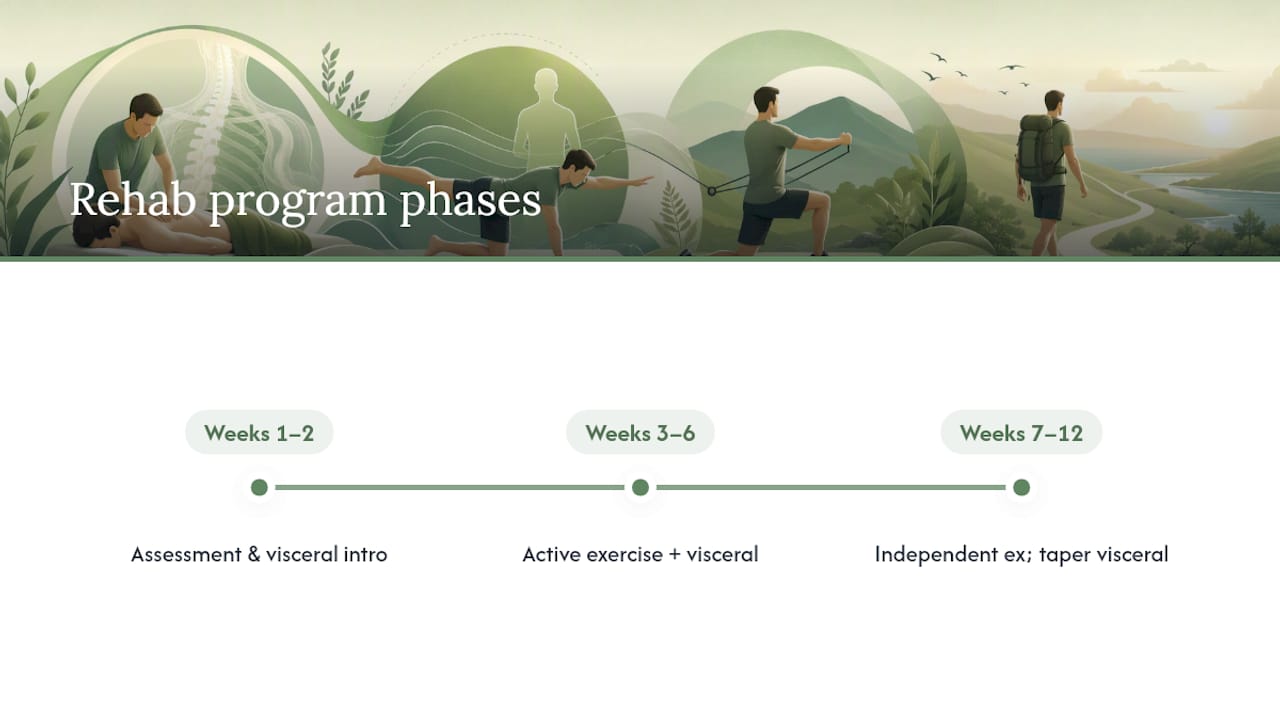
Integrating visceral work with active exercise matters because the manual component can reduce guarding and allow patients to move more freely, which then makes the exercise component more effective. Neither element works as well in isolation.

Realistic outcome expectations: some patients notice reduced pain and easier movement within the first two to four sessions. Others need six or more sessions before a clear trend emerges. If there is no measurable change in pain or function after 8–10 sessions, continuing visceral-focused treatment is unlikely to help, and the plan should be reassessed.
Pro Tip: Ask your clinician to use a validated outcome measure, such as the Oswestry Disability Index or a numeric pain rating scale, at baseline and every four sessions. Objective tracking removes guesswork and tells both of you whether the approach is working.
How to choose a qualified clinician in the U.S.
Choosing the right provider is as important as choosing the right technique. Here is what to look for and what to ask.
Credential checklist:
Licensed physical therapist (DPT) with documented post-graduate training in visceral manipulation or visceral fascial therapy
Doctor of osteopathic medicine (DO) with specific osteopathic visceral manipulation training
Clinician who integrates visceral work into a broader active rehabilitation program, not as a standalone treatment
Membership or certification from a recognized manual therapy organization (e.g., APTA-affiliated continuing education, osteopathic credentialing bodies)
Questions to ask at your first visit:
What specific training have you completed in visceral manipulation, and how recently?
How will you measure whether the treatment is working?
Will visceral techniques be combined with exercise and movement training?
How many sessions do you typically recommend before reassessing?
Do you coordinate with my primary care physician or specialist?
Insurance and cost: Visceral manipulation billed under a physical therapy visit code is often covered by major insurers when performed by a licensed PT as part of a documented rehabilitation plan. Ask your insurer whether manual therapy is covered under your plan and whether a referral is required. Billing under complementary or alternative medicine codes may not be covered. Accepted plans at Contemporaryrehabservices include Medicare, Aetna, Cigna, Emblem, and UnitedHealthcare.
Pro Tip: Look for clinics that embed visceral work inside a broader active rehab program rather than offering it as a standalone session. The evidence for benefit comes from combined protocols, not visceral techniques alone.
Limitations in the evidence and a practical recommendation for patients
The honest picture is this: the research base for visceral manipulation and low back pain is small, heterogeneous, and inconsistent. Most trials have limited sample sizes, variable follow-up periods, and different outcome measures, making direct comparison difficult. The two systematic reviews in this space reached opposite conclusions, which reflects genuine uncertainty rather than a settled debate.
Patients most likely to benefit are those with suspected visceral mobility restrictions (a history of abdominal surgery, digestive symptoms alongside back pain, or a pattern of pain that standard PT has not fully resolved). Patients with clear structural pathology, radiculopathy, or red-flag presentations are less likely to benefit from visceral work and need different primary care.
A stepwise approach makes the most sense. Start with a thorough screening to rule out red flags and serious pathology. Establish a baseline with a validated outcome measure. Begin with guideline-recommended active care: exercise, education, and movement-based rehabilitation. If pain and function have not improved meaningfully after four to six weeks, a trial of visceral manipulation within that active program is a reasonable next step. Measure outcomes at regular intervals and reassess after 8–10 sessions. If there is no clear trend toward improvement, redirect the plan.
How Contemporaryrehabservices approaches visceral and manual therapy for low back pain
Contemporaryrehabservices, based in Albertson, NY and serving Nassau County and Queens, integrates visceral and manual therapy techniques into individualized physical therapy plans for patients with chronic or non-specific low back pain.
The clinic’s approach includes:
Comprehensive intake with red-flag screening and baseline outcome measurement
Individualized treatment plans that combine visceral techniques with joint mobilization, myofascial therapy, and neuromuscular re-education
Progressive active exercise programs to reinforce manual therapy gains
Patient education on soft tissue mobilization and body alignment to support home exercise adherence
Regular outcome reassessment to guide clinical decision-making
Accepted insurance plans include Medicare, Aetna, Cigna, Emblem, and UnitedHealthcare. To request an evaluation, visit the Munsey Park location page or contact the Albertson clinic directly.
Why we include visceral work in some patients’ plans
When a patient has not responded fully to standard physical therapy for chronic low back pain, and their history suggests a visceral component, such as prior abdominal surgery, digestive symptoms, or a pain pattern that does not fit a purely musculoskeletal picture, adding visceral techniques to their active program often allows them to move more freely and engage more fully in exercise. We are not claiming it cures structural spine disease. We use it as one tool within a measured, evidence-aware plan, and we track outcomes at every stage. If the data does not show improvement, we change course. That is what responsible care looks like.
Contemporaryrehabservices offers hands-on low back pain care near you
Chronic low back pain does not resolve on its own for most people, and sorting through treatment options can feel exhausting. Contemporaryrehabservices provides in-person physical therapy in Albertson, NY, serving Nassau County and Queens, with clinicians trained in visceral and manual therapy techniques. Treatment plans are individualized, outcome-tracked, and built around active rehabilitation, not passive treatment alone.
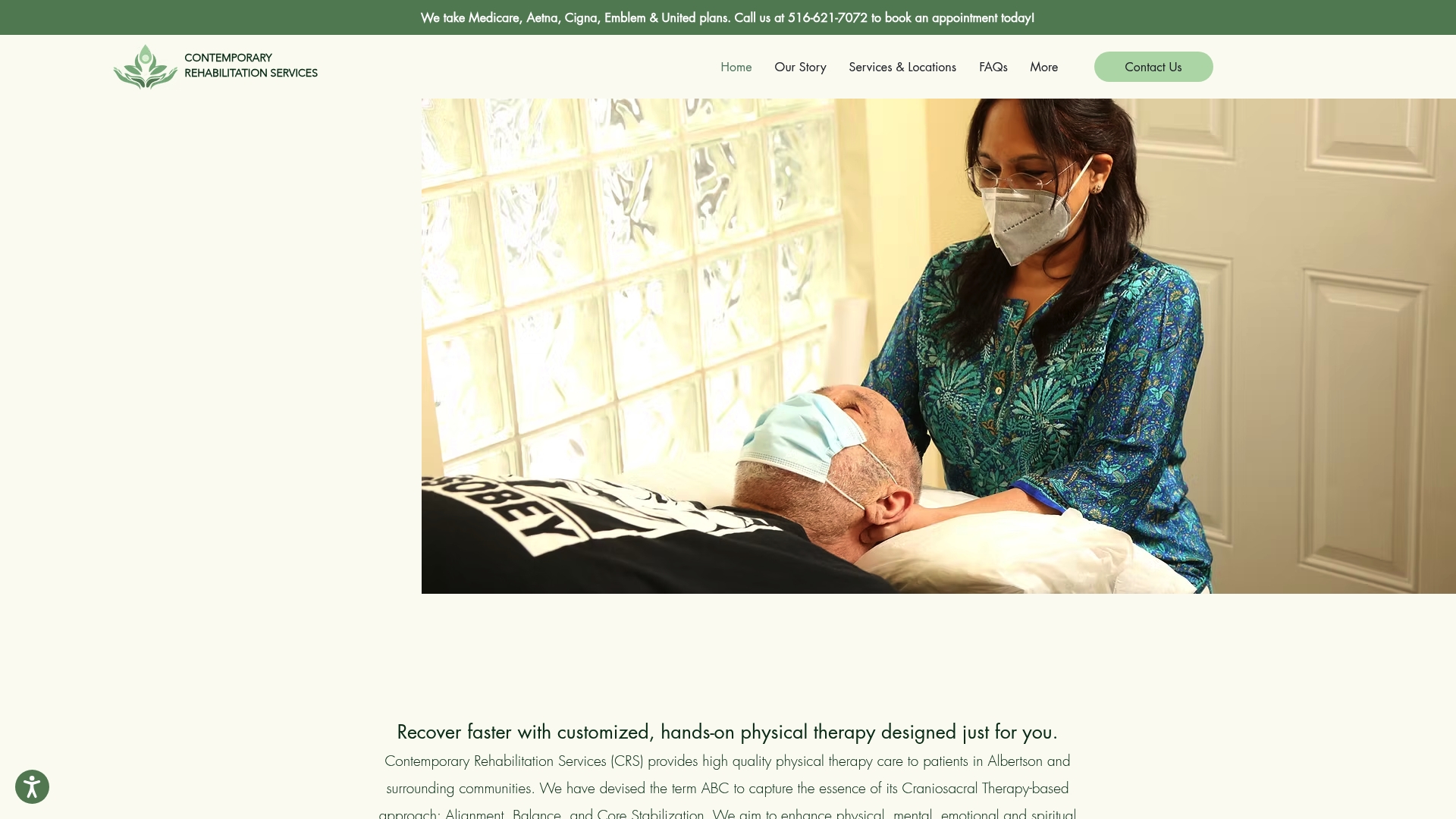
The clinic accepts Medicare, Aetna, Cigna, Emblem, and UnitedHealthcare, so coverage is straightforward for most patients. If you are ready to find out whether visceral or manual therapy belongs in your plan, book an evaluation in Albertson or check availability at the Russell Gardens location. A licensed clinician will assess your presentation, screen for contraindications, and build a program around what the evidence actually supports.
Primary trials, systematic reviews, and clinical guidelines to read next
Multi-center RCT: OVM + PT vs. sham OVM + PT in chronic mechanical low back pain — 86-patient trial showing superior outcomes with OVM added to PT
RCT: OVM for functional constipation and chronic nonspecific low back pain — 76-patient trial with 3-month follow-up showing pain and disability improvements
Panagopoulos et al. (2015): Visceral manipulation vs. placebo for low back pain — null-result RCT representing negative trial evidence
Systematic review and meta-analysis: Visceral osteopathy for low back pain — pooled analysis rating overall evidence as very low
2023 BMC systematic review: Visceral fascial therapy RCTs — identifies low-risk-of-bias trials with positive long-term effects
ACP guideline: Nonpharmacologic care for nonradicular low back pain — positions exercise and multidisciplinary rehab as first-line treatment
StatPearls: Low back pain evaluation and management — clinical summary covering red-flag screening and manual therapy evidence
AAFP: Chronic low back pain in adults — prevalence data and active-care management guidance
This article is general information, not a substitute for advice from a qualified doctor. Consult a qualified healthcare professional about your own circumstances before acting on anything here.
Sources
Recommended
Comments