
What Is a PT Consultation? Your 2026 Guide
- tjdontplay
- a few seconds ago
- 7 min read

A physical therapy consultation is defined as a structured clinical interaction where a licensed physical therapist evaluates your movement, identifies the source of pain or dysfunction, and builds a personalized care plan. Known formally as an initial evaluation, this appointment sets the entire foundation for your recovery. At Contemporaryrehabservices in Albertson, NY, this process is designed to be clear, comfortable, and focused entirely on your goals. Understanding what to expect before you walk in removes the anxiety and helps you get more from every minute of your session.
What is a PT consultation and what does it include?
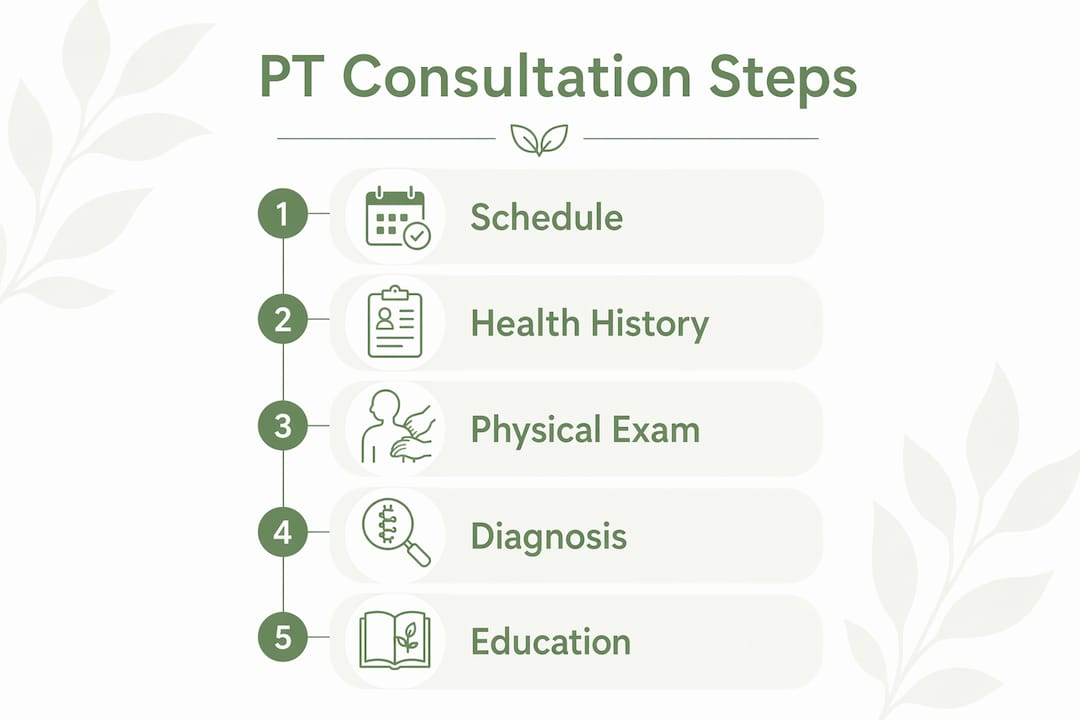
A physical therapy consultation, or initial evaluation, is a comprehensive assessment that covers your health history, physical function, and treatment goals in a single appointment. It is not a generic checkup. Every component is chosen to give your therapist a complete picture of how your body moves and where it struggles.

A standard initial evaluation typically lasts between 45 and 90 minutes. That time allows for thorough examination rather than a rushed overview.
The session generally covers:
Health and movement history: Your therapist asks about past injuries, surgeries, medications, and daily activity levels.
Postural and structural assessment: Standing posture, spinal alignment, and limb symmetry are observed.
Range of motion and strength testing: Your therapist measures how far joints move and how muscles perform under load.
Balance and gait analysis: Walking patterns and stability are evaluated, especially for patients with neurological or orthopedic concerns.
Functional movement tasks: You may be asked to squat, reach, or perform movements specific to your daily life or sport.
Goal setting conversation: Your therapist asks what you want to achieve, whether that is returning to work, playing with grandchildren, or running a 5K.
The session closes with education. Your therapist explains what the findings mean, what is causing your symptoms, and what a realistic treatment plan looks like. This is not a passive experience. You leave with answers, not just a follow-up appointment.
Pro Tip: Write down your three most limiting symptoms before your appointment. Patients who arrive with specific complaints help their therapist focus the evaluation and build a more targeted plan.
What are the benefits of a PT consultation early?
Seeking a physical therapy consultation early prevents minor movement problems from becoming serious, expensive conditions. Waiting until pain becomes unbearable often means the problem has already changed how you move, creating secondary issues that take longer to resolve.
Direct access to physical therapists is now available in all 50 U.S. states and the District of Columbia. You do not need a physician’s referral to book your first appointment. That access matters because it removes a barrier that historically delayed care by weeks.
The financial benefit is real. Patients who use direct access report average savings of $1,500–$1,800 in total health costs per episode of care. Fewer specialist visits, less imaging, and reduced reliance on medication all contribute to that number.
Early consultation also serves patients who are not yet injured. Key benefits include:
Fall prevention for older adults: 1 in 4 adults aged 65 and over fall each year. Balance and strength training introduced through an early consultation significantly reduces that risk. Contemporaryrehabservices offers targeted programs for older adults in Nassau County and Queens.
Prehabilitation before surgery: Starting physical therapy before a scheduled surgery can accelerate post-surgical recovery. Most patients do not know this option exists until it is too late to use it.
Chronic condition management: Conditions like arthritis, diabetes-related neuropathy, and chronic back pain respond well to early, consistent physical therapy intervention.
Reduced reliance on imaging and medication: A skilled therapist can identify the mechanical cause of pain without an MRI in many cases, saving both time and cost.
Physical therapists also address balance training, gait, flexibility, and home safety, contributing to overall quality of life well beyond pain relief. For older adults specifically, the role of PT in aging extends into independence and daily confidence.
How do complimentary consultations differ from initial evaluations?
Not every appointment labeled a “consultation” is the same. The distinction matters for your expectations, your insurance, and the level of care you receive.
A complimentary discovery visit is informational only, with no hands-on diagnosis. These sessions typically run 15–30 minutes. The therapist answers your questions, explains what physical therapy can address, and helps you decide whether to book a full evaluation. No clinical findings are documented, and no treatment plan is created.
An initial evaluation is comprehensive, billable, and clinical. It produces a formal diagnosis, a documented treatment plan, and a baseline for measuring your progress. Insurance plans, including Medicare, Aetna, Cigna, Emblem, and United Healthcare, typically cover initial evaluations when medically necessary.
Appointment type | Duration | Clinical diagnosis | Billable | Purpose |
Complimentary visit | 15–30 minutes | No | No | Information and fit assessment |
Initial evaluation | 45–90 minutes | Yes | Yes | Full assessment and care planning |
Patients often book a complimentary visit first when they are unsure whether physical therapy is right for their situation. That is a reasonable approach. The risk is assuming the complimentary visit is equivalent to a full evaluation and then feeling surprised when the therapist cannot provide a diagnosis or treatment plan on the spot.
Pro Tip: When calling to book, ask directly: “Is this a complimentary discovery visit or a billable initial evaluation?” That one question prevents billing surprises and sets the right expectations before you arrive.
Knowing how to spot trustworthy wellness providers before you book also helps you choose a clinic that is transparent about appointment types and costs from the start.
How should patients prepare for their PT consultation?
Preparation directly affects the quality of your evaluation. A therapist who has complete information can build a more accurate and effective plan from day one.
Follow these steps before your appointment:
Gather your medical history. Bring a list of past surgeries, injuries, and diagnoses. Include any imaging reports such as X-rays or MRI results if you have them.
List your current medications. Some medications affect pain perception, balance, and muscle function. Your therapist needs this context.
Document your symptoms clearly. Note when pain started, what makes it worse, what makes it better, and how it affects your daily routine.
Prepare your goals. Think about what you want to be able to do again. Specific goals like “walk without a cane” or “return to gardening” help your therapist prioritize the evaluation.
Wear appropriate clothing. Loose, comfortable clothing that allows access to the affected area is best. Shorts work well for knee or hip evaluations. A tank top helps for shoulder assessments.
Bring supportive footwear. The shoes you wear daily tell your therapist a great deal about your gait and foot mechanics. Bring the pair you use most often.
Bring assistive devices. If you use a cane, walker, brace, or orthotic, bring it to the appointment. Your therapist will want to observe how you use it.
Know your insurance details. Confirm your plan covers physical therapy and whether you need a referral. Contemporaryrehabservices accepts Medicare, Aetna, Cigna, Emblem, and United Healthcare.
Write down your questions. Patients who ask questions during their consultation leave with a clearer understanding of their condition and a stronger commitment to their plan.
Key Takeaways
A PT consultation is the most important appointment in your physical therapy experience because it determines the accuracy and direction of every session that follows.
Point | Details |
Consultation vs. evaluation | A complimentary visit is informational; an initial evaluation is clinical, billable, and produces a treatment plan. |
Direct access saves money | All 50 states allow direct PT access, with potential savings of $1,500–$1,800 per care episode. |
Early consultation prevents escalation | Addressing movement issues early reduces the risk of surgery, chronic pain, and costly imaging. |
Preparation improves outcomes | Bringing medical history, goals, and questions helps your therapist build a more targeted plan from day one. |
Fall prevention is a key benefit | 1 in 4 adults over 65 fall annually; early PT consultation for balance training directly reduces that risk. |
Why the consultation is the most undervalued part of therapy
Most patients think the “real” therapy starts when the hands-on treatment begins. I disagree. The consultation is where outcomes are actually decided.
When a therapist takes the time to understand not just your pain but your life, your work, your fears, and your goals, the entire treatment plan changes. I have seen patients who had been to multiple providers without improvement finally get traction after one thorough evaluation that identified a movement pattern nobody had caught before. The trust built during the consultation phase is what drives patients to follow through with their home exercise programs. Without that trust, compliance drops and outcomes suffer.
The other misconception I encounter regularly is that a consultation is only for people in pain. Prehabilitation is one of the most underutilized strategies in surgical preparation, and it starts with a single consultation. Patients who come in before their knee replacement or rotator cuff repair consistently recover faster than those who wait. The consultation gives the therapist a baseline and gives the patient a head start.
My advice: treat the consultation as seriously as you would treat a surgical consult. Prepare for it, participate in it, and ask every question you have. The more you put into that first hour, the more you get out of every session that follows.
— Tj
Physical therapy at Contemporaryrehabservices starts here
Contemporaryrehabservices is a boutique physical therapy clinic in Albertson, NY, serving patients across Nassau County and Queens. The clinic accepts Medicare, Aetna, Cigna, Emblem, and United Healthcare, making professional care accessible without financial guesswork.
Whether you are recovering from an injury, preparing for surgery, managing a chronic condition, or simply ready to move better, the process starts with one appointment. Contemporaryrehabservices offers thorough initial evaluations and ongoing care built around your specific goals. Book your physical therapy consultation in Albertson, NY, and take the first step toward feeling and moving better. The team is ready to answer your questions and build a plan that fits your life.
FAQ
What is a PT consultation exactly?
A PT consultation, formally called an initial evaluation, is a structured appointment where a licensed physical therapist assesses your movement, identifies the source of pain or dysfunction, and creates a personalized treatment plan. It typically lasts 45–90 minutes.
Do I need a doctor’s referral for a PT consultation?
No. All 50 U.S. states allow direct access to physical therapists without a physician’s referral. You can book a consultation directly with a clinic like Contemporaryrehabservices.
How is a complimentary consultation different from an initial evaluation?
A complimentary consultation is a brief, informational visit with no clinical diagnosis and no billing. An initial evaluation is comprehensive, clinically documented, and typically covered by insurance when medically necessary.
What should I bring to my first PT appointment?
Bring your medical history, a list of current medications, any imaging reports, comfortable clothing, your everyday footwear, and any assistive devices you use. A written list of your symptoms and goals also helps your therapist build a more focused plan.
Can a PT consultation help with fall prevention?
Yes. Physical therapists assess balance, strength, and gait during the consultation and design targeted programs to reduce fall risk. This is especially relevant for adults over 65, who fall at a rate of 1 in 4 per year.
Recommended