
What Is Movement Therapy? A Patient's Guide to Healing
- tjdontplay
- 11 minutes ago
- 6 min read

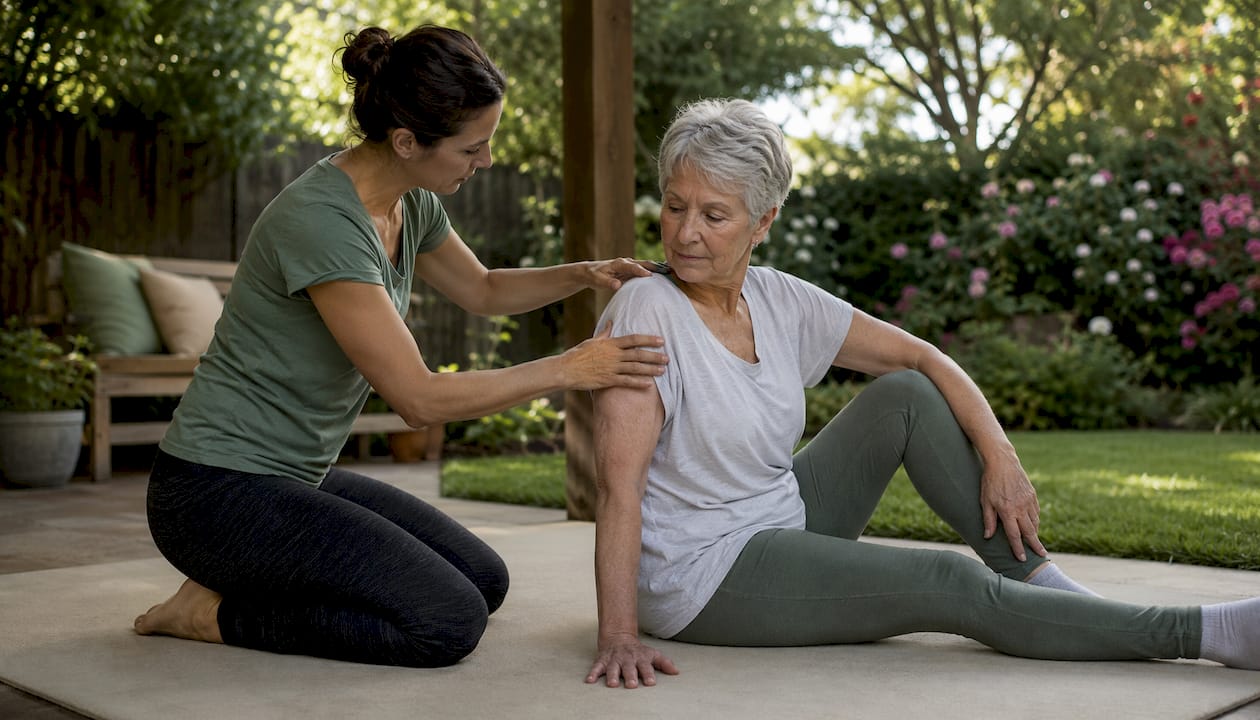
Movement therapy is the intentional use of structured physical movement to promote healing across your body, mind, and emotions. It draws from both Eastern traditions like Yoga, Tai Chi, and Qigong, and Western clinical approaches like the Feldenkrais Method and Alexander Technique. Unlike a standard gym workout, movement therapy is purposeful, guided, and tailored to your specific recovery needs.
Here is what movement therapy addresses:
Physical recovery: improved range of motion, balance, coordination, and pain relief
Emotional health: reduced anxiety, better self-esteem, and greater emotional openness
Cognitive function: sharper attention, memory support, and body awareness
Social and spiritual well-being: connection, self-expression, and inner calm
The American Dance Therapy Association (ADTA) defines dance/movement therapy as “the psychotherapeutic use of movement to promote emotional, social, cognitive, and physical integration of the individual.” That definition captures the core of what all movement therapy aims to do: treat the whole person, not just the symptom.
Table of Contents
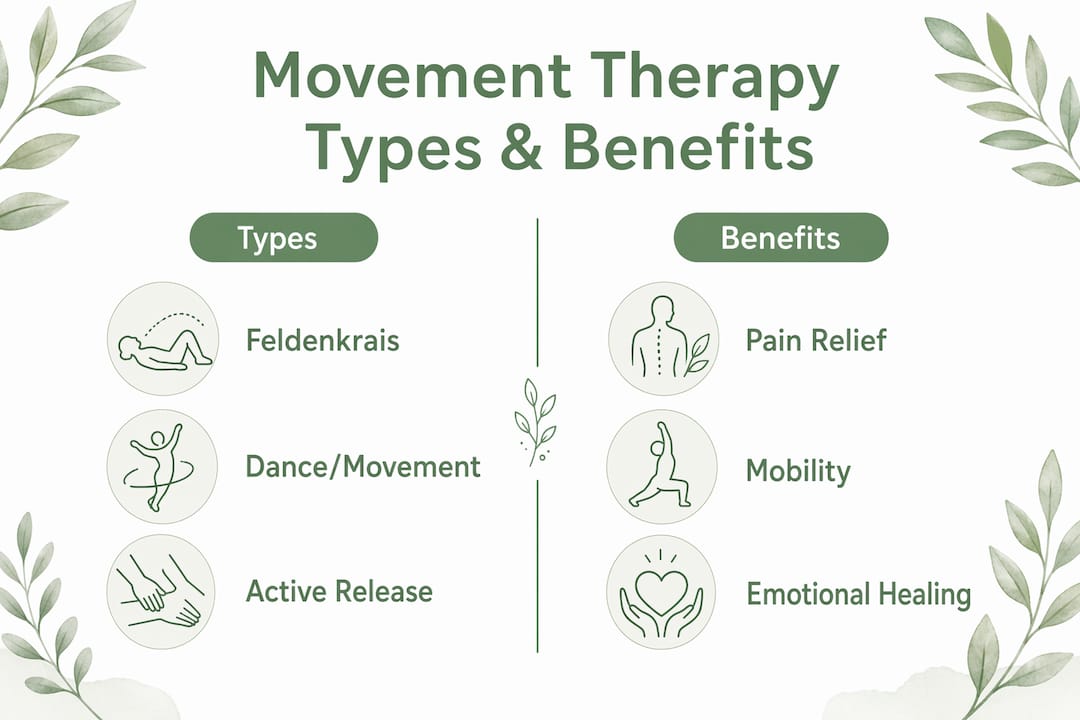
What are the main types of movement therapy?
Movement therapy encompasses a broad range of Eastern and Western approaches, each with a distinct method and clinical focus.
Western approaches:
Feldenkrais Method: Uses gentle, repetitive movement sequences to retrain the brain’s movement patterns. It is especially useful for patients recovering from neurological conditions or chronic pain, because it works through awareness rather than force.
Alexander Technique: Focuses on correcting habitual posture and movement patterns that cause strain. Practitioners teach patients to move with less effort by realigning the relationship between the head, neck, and spine.
Eastern approaches:
Yoga: Rooted in early Indian civilization, the word “yoga” comes from the Sanskrit “yuj,” meaning “to unite.” It combines breath, posture, and mindfulness to improve flexibility, strength, and mental calm.
Tai Chi: A slow, flowing martial art practiced as a meditative movement sequence. Research supports its use for balance improvement, fall prevention, and stress reduction in older adults.
Qigong: Focuses on aligning breath, movement, and intention to regulate the body’s energy. It is widely used in rehabilitation for chronic conditions and fatigue management.
Method | Origin | Primary Focus | Common Clinical Use |
Feldenkrais Method | Western | Brain and movement reeducation | Neurological rehab, chronic pain |
Alexander Technique | Western | Posture and movement efficiency | Musculoskeletal pain, balance |
Yoga | Eastern | Unity of breath, body, and mind | Flexibility, stress, general rehab |
Tai Chi | Eastern | Meditative flow and balance | Fall prevention, older adults |
Qigong | Eastern | Energy alignment and breath | Fatigue, chronic conditions |
These methods are not mutually exclusive. A skilled therapist may integrate physical therapy modalities from multiple traditions to match your recovery goals.
Is movement therapy clinically effective and safe?
The short answer is yes, with the right practitioner and plan. A meta-analysis on movement-based interventions found a moderate overall effect size (dw=0.59) for interventions that combine physical activity with cognitive and behavioral elements, covering motor skills, mental health, and social-emotional outcomes.
Safety depends heavily on who is leading your sessions. The Rutgers Brandt Center stresses that clinical movement therapy outcomes depend on facilitator expertise and certifications. A credentialed therapist conducts an individual assessment before designing your program, which is what separates therapeutic movement from generic exercise.
Key safety considerations include:
Certification matters: Look for credentials such as Registered Dance/Movement Therapist (R-DMT) for psychotherapeutic work, or a licensed physical therapist trained in movement-based techniques.
Individualized planning: Your therapist should assess your condition, goals, and limitations before your first session.
Contraindications: Certain conditions, such as acute fractures or severe cardiovascular instability, require medical clearance before beginning movement therapy.
Ongoing monitoring: A qualified therapist adjusts your program as your function improves, rather than following a fixed script.
Movement therapy differs from generic exercise precisely because it integrates cognitive and behavioral approaches tailored to your individual needs. That personalization is what drives better rehabilitative outcomes.
What benefits can you expect from movement therapy?
Movement therapy addresses your body and mind at the same time, which is why its benefits tend to build on each other over multiple sessions.
Physical benefits include:
Greater ease and range of movement, increased balance, strength, and flexibility
Improved muscle tone and coordination
Cardiovascular conditioning and pain relief
Relief from rheumatic, neurological, spinal, and stress-related disorders
Psychological and emotional benefits include:
Reduced anxiety and emotional distress expressed through the body, including anxiety attacks and eating disorders
Increased self-esteem and improved self-image
Enhanced communication skills and greater tolerance of others
Greater emotional openness and creativity
Research on dance-based clinical interventions confirms that integrating movement therapy into a broader rehabilitation plan leads to cumulative improvements across sessions, rather than immediate results. Patience and consistency matter.
Pro Tip: Ask your therapist to incorporate movement therapy alongside your existing physical therapy plan. The combination tends to produce faster functional gains than either approach used alone, particularly for patients managing chronic pain or neurological conditions.
You can also explore how manual therapy supports mobility as a complementary tool within your recovery program.
How does dance/movement therapy differ from general movement therapy?
Not all movement therapy is dance/movement therapy (DMT), and the distinction matters when you are choosing a provider.
DMT is a psychotherapeutic practice requiring specialized certification, such as the R-DMT credential issued through the ADTA. It treats the mind and body as an integrated whole, using movement as the primary mode of both assessment and intervention. A dance/movement therapist observes how you move, interprets what that reveals about your emotional and cognitive state, and designs interventions accordingly.
Key features of DMT:
Rooted in the belief that nonverbal communication is as important as verbal language
Uses body movement to address emotional, social, physical, and cognitive integration
Requires clinical assessment and individualized treatment planning
Practiced in clinical or therapeutic settings by credentialed professionals
General movement therapy is a broader category. It includes therapeutic arts and movement-based practices that may be led by paraprofessionals or fitness instructors without clinical certification. These can still be beneficial, but they do not carry the same clinical rigor or psychotherapeutic depth as DMT.
The ADTA also clarifies that no dance background is required to benefit from DMT. The focus is on functional movement and body awareness, not performance.
How Contemporaryrehabservices approaches movement therapy in Albertson, NY
Contemporaryrehabservices is a boutique physical therapy clinic in Albertson, NY, serving patients across Nassau County and Queens. The clinic’s approach draws from both Eastern and Western movement therapy traditions, integrating techniques like Yoga, Tai Chi, the Feldenkrais Method, and the Alexander Technique into individualized rehabilitation programs.
What sets Contemporaryrehabservices apart:
Certified physical therapists who design movement-based programs around your specific diagnosis and recovery goals
Integration of neurological rehabilitation with movement therapy for patients managing conditions like stroke, Parkinson’s disease, or chronic pain
Accepted insurance plans: Medicare, Aetna, Cigna, Emblem Health, and United Healthcare
A calm, professionally designed clinic environment that supports focused, restorative work
Pro Tip: If you are unsure whether movement therapy is right for your condition, bring a list of your current symptoms and medications to your first consultation. Your therapist can match the right technique to your needs from the first session.
Contemporaryrehabservices also partners with practitioners trained in Active Release Technique and Fascial Stretch Therapy, both of which complement movement therapy for patients dealing with soft tissue restrictions or limited mobility.
Ready to start movement therapy near Albertson, NY?
Contemporaryrehabservices offers certified, personalized movement therapy for patients in Albertson, Nassau County, and the surrounding Queens area. Whether you are recovering from a neurological condition, managing chronic pain, or rebuilding strength after surgery, the clinic’s therapists build a program around your body and your goals.
Most major insurance plans are accepted, including Medicare, Aetna, Cigna, Emblem Health, and United Healthcare. You do not need a referral to inquire. Visit the Albertson clinic page to check availability and schedule your first appointment today.
Key Takeaways
Movement therapy combines structured physical movement with cognitive and emotional elements to support full-body rehabilitation, and its effectiveness depends on certified practitioners and individualized treatment plans.
Point | Details |
What movement therapy is | A broad practice using structured movement to improve physical, emotional, cognitive, and spiritual health. |
Eastern and Western methods | Yoga, Tai Chi, and Qigong complement Western approaches like the Feldenkrais Method and Alexander Technique. |
Clinical effectiveness | A meta-analysis found significant positive effects for movement-based interventions combining physical and cognitive elements. |
DMT vs. general movement therapy | Dance/movement therapy (DMT) requires clinical certification such as R-DMT and focuses on psychotherapeutic integration. |
Contemporaryrehabservices | Offers certified movement therapy in Albertson, NY, accepting Medicare, Aetna, Cigna, Emblem Health, and United Healthcare. |
Recommended
Comments