
What Is Sports Injury Rehab: Your Recovery Guide
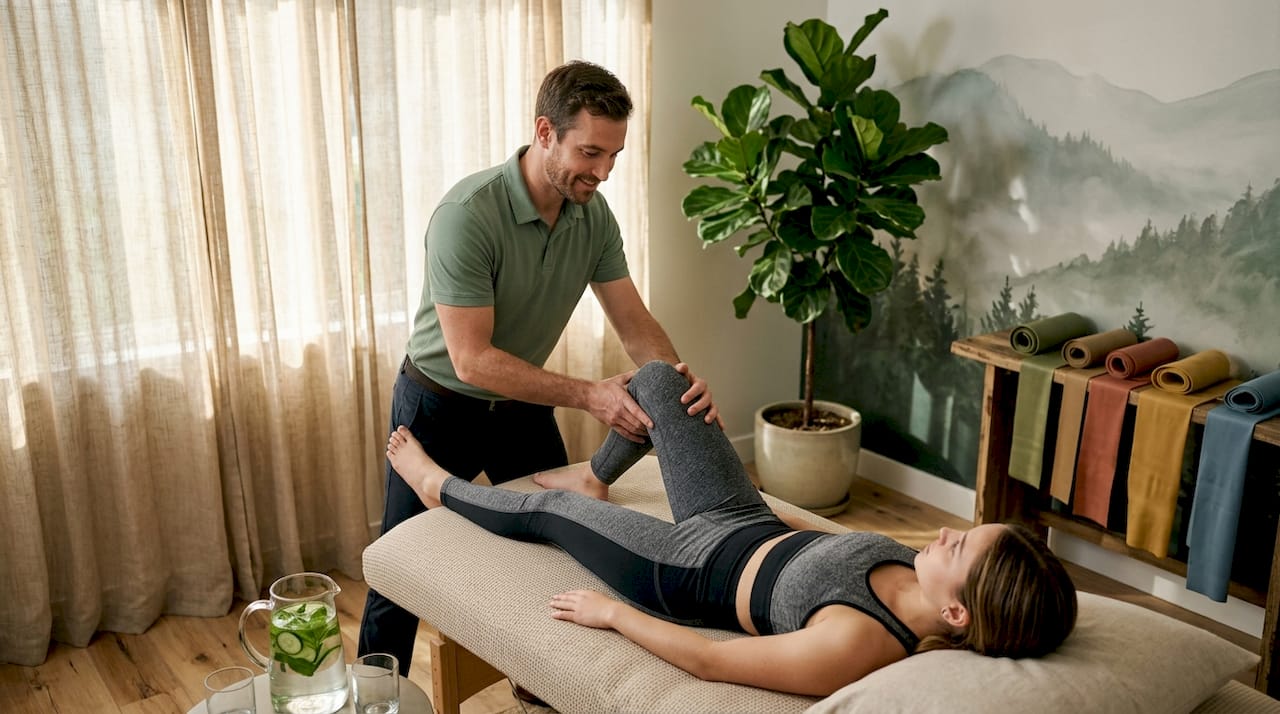
If you’ve recently been sidelined by a sports injury, you may have heard that rest and time are all you need to recover. That’s one of the most common misconceptions about what is sports injury rehab. True sports rehabilitation is a structured, evidence-based process designed to restore your body’s function, rebuild strength, and prepare you for a safe return to activity. It goes far beyond waiting for pain to subside. This guide walks you through how sports rehab actually works, what to expect at each stage, and how to make the most of your recovery.
Table of Contents
Key takeaways
Point | Details |
Rehab is more than rest | Sports injury rehab follows structured phases from pain control to sport-specific training. |
Criteria-based protocols reduce re-injury | Meeting objective milestones like strength symmetry and hop tests cuts re-injury risk by up to 47%. |
Personalization improves outcomes | Programs tailored to your sport, injury, and goals produce better recovery and motivation. |
Psychological readiness matters | Fear of re-injury can cause movement compensations that set back full recovery. |
Early professional assessment is key | Starting structured rehab under professional guidance shortens recovery and reduces chronic setbacks. |
What is sports injury rehab, exactly
Sports rehab, by definition, is a clinical process that systematically restores physical function after an injury. It is not simply a list of exercises your doctor hands you at discharge. The sports rehab definition centers on rebuilding your body’s ability to handle the physical demands of your sport safely and sustainably.
Rehab functions as a continuum that focuses on rebuilding workload tolerance, not just eliminating symptoms. That distinction matters more than most people realize. You can feel pain-free at rest and still be nowhere near ready to sprint, jump, or change direction at full speed.
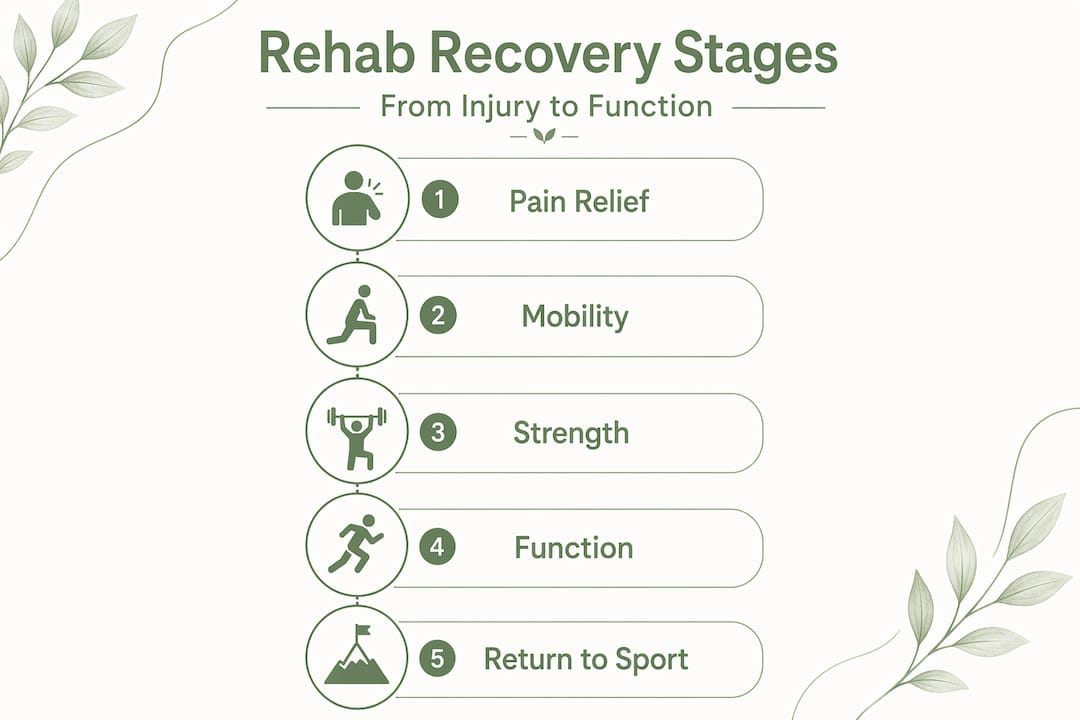
Most structured rehab programs move through four distinct phases:
Pain control and protection: Reducing swelling, managing inflammation, and preventing further damage. Physical therapists typically apply the RICE method early, which stands for rest, ice, compression, and elevation, alongside modalities such as ultrasound, cold therapy, and soft tissue work.
Mobility restoration: Gradually recovering your joint’s range of motion through targeted stretching and gentle movement.
Strength rebuilding: Progressive resistance training that targets the muscles supporting the injured area.
Functional and sport-specific training: Recreating the movements, speeds, and forces your sport demands, so your body is prepared before you step back on the field.
How long you spend in each phase depends on the severity of the injury, your baseline fitness, and how your body responds to treatment. A mild ankle sprain might move through all four phases in three weeks. An ACL reconstruction can take nine to twelve months or longer.
Pro Tip: Don’t skip the functional training phase just because your pain is gone. Pain relief is step one, not the finish line.
Why criteria-based rehab beats time-based clearance
For decades, return-to-sport decisions were guided by one question: “How long has it been?” Six weeks post-surgery? Clear to play. Three months after a hamstring tear? Back on the field. That approach has a significant flaw. The calendar tells you nothing about whether your body is actually ready.
Modern sports rehabilitation now uses criteria-based protocols, which tie your progression to objective physical and psychological benchmarks rather than fixed timelines. Criteria-based return-to-play protocols reduce re-injury rates by up to 47% compared to time-based clearance. That is not a small difference. That is nearly half the re-injury risk removed by simply asking better questions before clearing you to compete.
Here is what those objective measures typically look like:
Criterion | What it measures | Common benchmark |
Limb Symmetry Index (LSI) | Strength difference between injured and uninjured side | ≥90% symmetry |
Hop tests | Functional power and landing mechanics | ≥90% vs. uninjured limb |
Range of motion | Joint mobility restoration | Full or near-full compared to baseline |
Psychological readiness | Confidence and fear-of-reinjury scores | Validated questionnaire scores |
Pain and swelling | Response to loading | Minimal or none at target workload |
Return-to-sport readiness after ACL reconstruction, for example, depends on meeting functional milestones like these, not just a calendar date. The same logic applies to PCL reconstruction, where benchmarks including range of motion, strength symmetry, and hop tests guide safe progression back to sport.
Pro Tip: Ask your physical therapist which specific criteria you are being measured against. If the answer is vague, push for objective benchmarks. Knowing your numbers gives you a concrete target to work toward.
How personalized rehab programs change outcomes
You and another person with the same knee injury are not the same patient. Your body mechanics, fitness history, sport demands, age, and psychological response to injury all affect how you should be rehabbed. A one-size-fits-all approach misses too much.
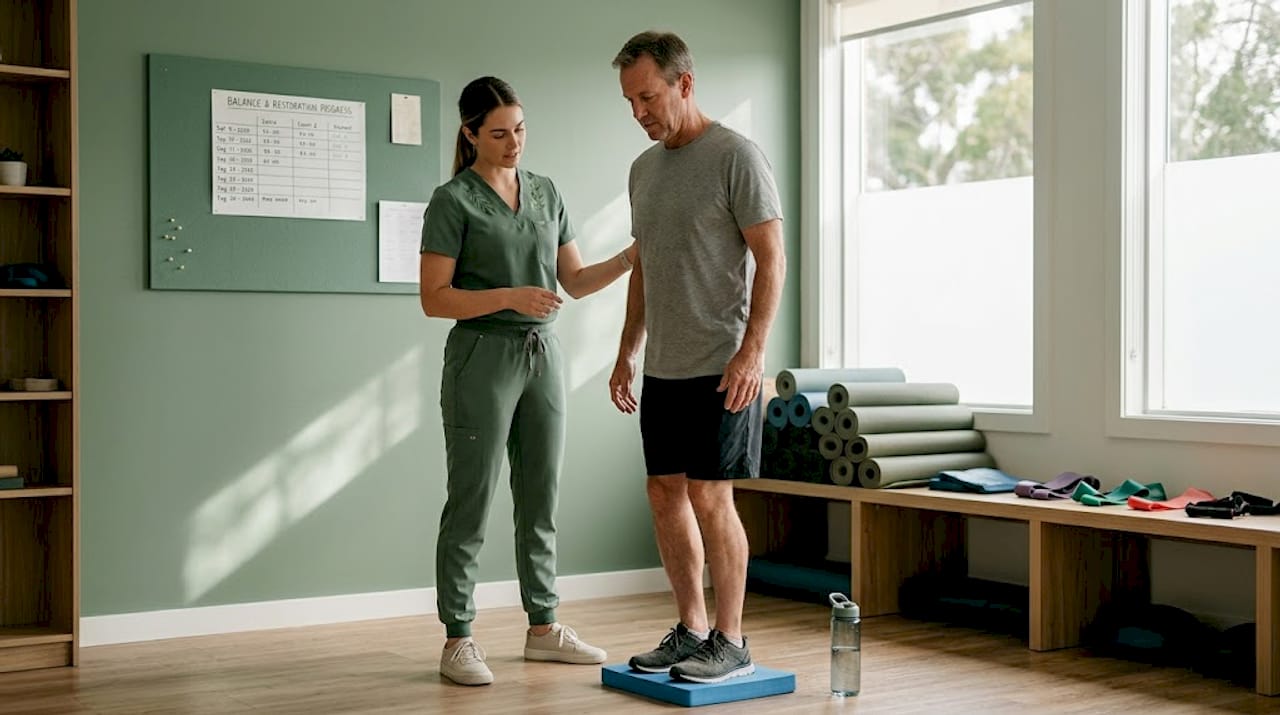
Customized rehab protocols tailored to individual physiology and sport improve recovery and reduce re-injury risks. They also improve motivation and mental health, two factors that are often undervalued in traditional recovery programs. When your program feels relevant to your goals and your sport, you show up more consistently and push through the hard days with more purpose.
Personalization in sports injury rehab typically includes:
Sport-specific exercise selection: A soccer player recovering from a hamstring strain needs different drills than a swimmer with the same injury. Sprint mechanics, lateral cuts, and acceleration loads all need to be trained before returning to the pitch.
Load management based on your response: Your therapist adjusts volume and intensity based on how your body responds session to session, not based on a fixed schedule.
Technology-assisted assessment: Tools like force plates, video gait analysis, and wearable sensors allow clinicians to spot compensations and asymmetries you cannot feel but that increase re-injury risk.
Goal alignment: Whether you are a competitive athlete trying to return to high-level competition or a recreational runner hoping to get back to weekend jogs, your program should reflect your specific goal.
Accessibility can be a barrier. Not everyone has access to a clinic with advanced technology. But the core of personalization, listening carefully to your body’s signals and adjusting accordingly, can happen in any competent physical therapy setting. Physical therapy for athletes at a clinic that understands sports demands is a significant advantage over general rehab settings.
Avoiding the most common rehab pitfalls
Knowing how sports rehabilitation works is one thing. Executing it consistently without making costly mistakes is another. The following steps address the most common reasons athletes plateau, re-injure, or prolong their recovery unnecessarily.
Respect the dose-response relationship. More exercise is not always better. Tracking pain or swelling increases after sessions helps you identify when you’ve pushed too hard. If swelling or pain spikes after a session, that is your body signaling you to reduce load, not push through.
Address fear of re-injury directly. Fear of re-injury causes subconscious movement compensations that can persist even when you are physically ready to return. Psychological readiness must be assessed and treated as seriously as physical readiness.
Don’t skip follow-up appointments. Rehab is not a program you complete once and coast. Regular reassessment catches plateaus early and adjusts your program before small setbacks become big ones.
Avoid the bounce-back trap. This is when you feel better, ramp up activity quickly, experience a flare-up, then rest completely until the pain fades, only to repeat the cycle. Gradual, consistent progression prevents this entirely.
Seek multi-disciplinary support when needed. A physical therapist handles exercise and movement. A sports psychologist addresses fear and confidence. A nutritionist supports tissue repair. Complex injuries often benefit from all three.
Pro Tip: Keep a simple daily log tracking your pain level after each session on a scale of one to ten. A score that rises two or more points above your starting level is a reliable signal to dial back the intensity.
Putting your rehab knowledge into practice
Understanding sports injury treatment options is valuable. Acting on that understanding consistently is what drives real recovery. Here is how to stay actively engaged in your rehab rather than passively waiting for results:
Set measurable weekly goals with your therapist. Phrases like “feel better” are not targets. “Achieve 120 degrees of knee flexion by week four” is a target.
Learn your objective benchmarks. Know your LSI score, your hop test results, and your strength ratios. These numbers tell you where you are in the process far more accurately than pain levels alone.
Practice your home exercise program correctly. Quality over quantity. Five perfect repetitions produce better results than fifteen sloppy ones.
Communicate openly with your therapist. If an exercise causes sharp pain or if you are feeling psychologically stuck, say so. Rehab adjusts to you, not the other way around.
Prepare for return to sport gradually. Before going back to full competition, work through modified practice, non-contact drills, then contact drills. Each step should meet your criteria before advancing.
The importance of rehab for athletes is not just physical. It is the process of rebuilding your confidence in your body alongside your physical capacity. Those two things return together or they don’t fully return at all.
My take on what actually matters in sports rehab
I’ve worked with enough recovering athletes to say this with conviction: the biggest mistakes in rehab happen not from doing too little, but from misunderstanding what the goal actually is. People treat rehab like a countdown. Once the pain is gone, they assume they’ve crossed the finish line. They haven’t.
The criteria-based frameworks I’ve seen work consistently are those that treat the body as a system that needs to earn the right to return to sport, not just heal. An athlete whose knee is pain-free but whose quadriceps strength is only 72% of the other leg is not ready to cut at full speed. That gap will show up eventually, usually as a re-injury.
The psychological side is, in my experience, the most underestimated piece. I’ve seen physically capable athletes move tentatively, guard their injured side, and lose trust in their body. That mistrust shows up as performance loss and, often, as new compensatory injuries. Addressing fear explicitly, with validated tools and honest conversations, is not optional. It’s the work.
My practical advice: advocate for yourself. Ask what criteria you are being measured against. Push back on “just give it more time” without objective evidence. Find a clinic that sees you as an individual, not as a diagnosis. You deserve a program built around your body, your sport, and your goals.
— Tj
Ready to start your recovery at Contemporaryrehabservices
If you’re in Nassau County or Queens and ready to move from confusion to clarity in your recovery, Contemporaryrehabservices is built for exactly this. Their boutique physical therapy clinic in Albertson, NY uses evidence-based, criteria-driven approaches tailored to each patient’s sport, injury type, and personal goals. They accept Medicare, Aetna, Cigna, Emblem, and United Healthcare plans, so getting started doesn’t have to mean navigating insurance stress alone.
You can book an appointment at their Albertson physical therapy location or explore options at Herricks and Williston Park. Review their full therapy services to understand what a personalized rehab plan at Contemporaryrehabservices looks like for your specific situation.
FAQ
What is the sports rehab definition in simple terms?
Sports injury rehab is a structured clinical process that restores physical function and prepares athletes for a safe return to sport. It moves through phases of pain control, mobility restoration, strength rebuilding, and sport-specific training.
How does sports rehabilitation work, step by step?
Physical therapists assess your injury, apply early management strategies like RICE, then guide you through progressive exercise phases. Progression is tied to objective benchmarks like strength symmetry and movement quality, not just how much time has passed.
What are the main types of sports injury recovery methods?
Types of sports injury recovery include physical therapy, aquatic therapy, massage therapy, cold and heat modalities, ultrasound, and sport-specific functional training. Most comprehensive rehab programs combine several of these based on the injury and the individual.
Why is rehab important even after pain goes away?
Pain relief means inflammation is resolving, but strength, movement quality, and workload tolerance may still be significantly below what your sport demands. Returning too early without meeting objective criteria increases re-injury risk substantially.
How long does sports injury rehab typically take?
Duration varies widely based on injury severity and individual response. Minor sprains may resolve in two to four weeks with structured rehab, while major reconstructions like ACL surgery can require nine to twelve months of progressive rehabilitation.
Recommended
Comments