
Why Gentle Touch Therapy Works for Real Healing

Most people assume that healing requires force. If a treatment doesn’t hurt a little, it probably isn’t working. That assumption is exactly why so many people overlook why gentle touch therapy deserves serious attention. This approach uses slow, intentional, minimal-pressure contact to activate your body’s own healing systems, and the science behind it is far more compelling than the myth of “no pain, no gain.” Whether you’re managing chronic pain, anxiety, or the physical effects of stress, understanding how gentle touch therapy helps could change how you think about recovery entirely.
Table of Contents
Key takeaways
Point | Details |
Light touch triggers healing | Gentle contact activates nerve fibers that reduce cortisol and release oxytocin within minutes. |
Strong evidence for pain and mood | Touch-based interventions reduce depression scores by approximately 30% and show measurable pain relief in clinical studies. |
Consent is non-negotiable | Safe gentle touch therapy uses ongoing verbal consent protocols, not a one-time agreement at the start of a session. |
Technique matters more than pressure | Practitioners use body weight and slow movement, not muscular force, to produce deeper tissue release. |
It complements other therapies | Gentle touch works well alongside physical therapy, craniosacral therapy, and conventional pain management. |
Why gentle touch therapy works: the science
The idea that a feather-light touch can produce meaningful physiological change sounds counterintuitive. But the explanation is grounded in how your nervous system is wired.
Your skin contains specialized nerve fibers called C-tactile afferents. These fibers respond specifically to slow, gentle, skin-level contact. When activated, they send signals directly to the brain’s emotional processing center, the amygdala, communicating one simple message: you are safe. That signal triggers a cascade. Gentle touch activates C-tactile fibers, causing cortisol levels to drop and prompting the release of oxytocin, the hormone associated with trust and calm. Your autonomic nervous system shifts from its sympathetic “fight or flight” mode into the parasympathetic state where healing, digestion, and restoration actually happen.
This shift occurs within minutes. That speed matters because chronic stress keeps your body locked in a defensive state, where muscles stay tight, inflammation persists, and pain signals remain amplified. Gentle touch therapy interrupts that cycle without triggering the body’s bracing response, which forceful pressure often causes.
Physiological Response | What Happens | Time Frame |
Cortisol reduction | Stress hormone levels decrease, reducing systemic inflammation | Within minutes |
Oxytocin release | Promotes calm, trust, and social bonding signals | Within minutes |
Parasympathetic activation | Heart rate slows, muscles relax, digestion resumes | During and after session |
Amygdala signaling | Brain receives “safety” message, reducing anxiety and pain sensitivity | Rapid onset |
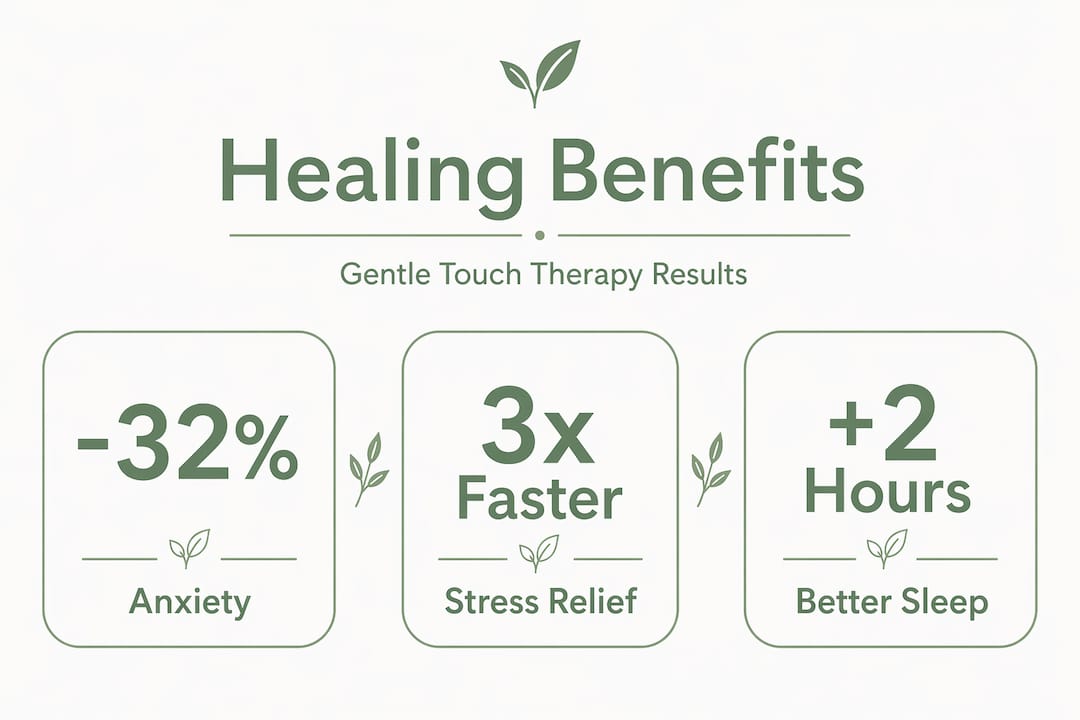
A 20-minute therapeutic touch session significantly lowered test anxiety in nursing students, with a large effect size (ηp2 = 0.771), demonstrating just how quickly skilled gentle contact can shift the nervous system. This is not relaxation by coincidence. It is a targeted neurological response.
Pro Tip: If you feel nothing happening during a gentle touch session, that is not a sign the therapy is failing. The parasympathetic shift is subtle by design. Your nervous system does not need to be forced into calm. It needs to be invited.
Benefits of gentle touch for body and mind
Understanding the benefits of gentle touch goes well beyond simple relaxation. The research points to measurable improvements across mental health, physical pain, and emotional wellbeing.

Touch-based interventions reduce depression scores by approximately 30% compared to control groups in cancer patients, with an effect size of 0.784 for pain reduction. Those are not trivial numbers. They represent real relief for people in genuinely difficult circumstances.
Here is what the evidence and clinical experience show gentle touch therapy helps with:
Chronic pain management. Gentle touch reduces pain sensitivity by calming the nervous system’s alarm response, making it useful for conditions like fibromyalgia, lower back pain, and cancer-related discomfort.
Anxiety and depression. Touch therapies improved sleep quality, depression, and anxiety in menopausal women across 18 trials involving over 1,500 participants, with effect sizes ranging from 0.79 to 1.13.
Trauma recovery. For individuals with trauma histories, gentle touch conducted within a trauma-informed framework offers a way to rebuild a sense of safety in the body without retraumatization.
Stress and emotional regulation. Regular sessions help retrain the nervous system to return to a baseline of calm more quickly after stress, rather than staying elevated.
Sports and injury recovery. Gentle touch complements hands-on physical therapy by reducing soft tissue tension and promoting circulation without aggravating inflamed areas.
Emotional processing. Many clients experience emotional releases during sessions, including tears or a sense of release, which practitioners recognize as healthy nervous system responses, not problems to stop.
It is worth noting that gentle touch therapy explained through a trauma-informed lens is especially significant. This approach treats touch as something that requires active, ongoing permission rather than passive tolerance. That distinction is what makes it genuinely therapeutic rather than just pleasant.
Core techniques and principles
Knowing that gentle touch therapy is effective is one thing. Understanding how gentle touch therapy techniques actually work in practice is another.
Intentional, slow movement. Practitioners use skeletal body weight rather than muscular force to facilitate contact. Speed is deliberately minimized because tissue releases happen when the nervous system feels there is no threat. Rushing disrupts that process.
Minimal pressure, maximum sensitivity. The goal is not to push through tissue but to contact it. The practitioner meets the body where it is and waits. Tissue that is not bracing against force will naturally begin to soften and release.
The “Ask and Wait” consent model. Every touch point begins with a verbal request and waits for clear, enthusiastic confirmation from the client. This is not just a formality. The Ask and Wait model is standard practice in trauma-informed gentle touch training and is essential for building the therapeutic trust that makes the work effective.
The professional container. Sessions operate within a clear professional framework that includes clothing policies, defined physical boundaries, and protocols for managing any unexpected emotional or physical responses. Sessions are reset if boundaries become unclear.
Managing emotional releases. If a client begins crying, laughing, or expressing anxiety during a session, a skilled practitioner does not try to suppress that response. They slow down, check in verbally, and let the nervous system complete its own process.
Pro Tip: Ask your practitioner to explain their consent protocol before your first session. A qualified therapist will welcome that question and answer it clearly. If they seem uncomfortable with it, that is useful information.
What to expect from your first session
One reason people hesitate to try gentle touch therapy is not skepticism about whether it works. It is uncertainty about what will happen and whether they will feel safe. Here is what a thoughtful, professional session looks like.
Safety and informed consent are the foundation of every reputable practice. Client agency is central to how skilled practitioners approach every session, meaning you are always in control of what happens to your body.
Before your first session, ask these questions:
What training and credentials does this practitioner hold in gentle touch or related modalities?
What is the consent protocol, and can I stop or adjust the session at any time?
What should I wear, and what areas of the body will be addressed?
How do you handle emotional releases if they occur during a session?
Do you use safety cards or signals for clients who prefer non-verbal communication?
During the session itself, you might notice warmth, tingling, a sense of heaviness in your limbs, or a sudden emotional wave. These are normal responses. You might feel very little at first, especially if your nervous system is highly guarded. That changes over sessions.
Signs that a practice is operating safely include clear verbal check-ins, full clothing throughout the session, a consistent and professional demeanor, and no pressure to continue if you express discomfort. Signs that something is off include vague answers to consent questions, boundary-blurring language, or any touch that feels sexual or disrespectful. Trust your instincts and communicate directly.
How gentle touch compares to other modalities
People exploring holistic therapy often wonder whether gentle touch therapy is just a softer version of massage, or how it differs from therapeutic touch or craniosacral therapy. These distinctions matter for choosing what fits your situation.
Modality | Pressure Level | Primary Goal | Consent Protocol | Best For |
Swedish massage | Light to moderate | Muscle relaxation, circulation | Standard intake | Stress relief, general tension |
Deep tissue massage | Moderate to heavy | Structural tissue release | Standard intake | Chronic muscle tightness |
Therapeutic touch | Near-zero (energy field) | Energy balancing | Standard intake | Anxiety, emotional support |
Gentle touch therapy | Minimal, skin-level | Nervous system regulation | Ongoing verbal consent | Trauma recovery, pain, anxiety |
Craniosacral therapy | Extremely light (5 grams) | CNS rhythm regulation | Standard and ongoing | Headaches, chronic pain, TMJ |
The key distinction for gentle touch therapy is the combination of minimal pressure and ongoing consent protocols. Gentle or moderate pressure yields better outcomes than forceful approaches because it avoids triggering the body’s defensive bracing response. That is the insight other modalities often miss.
Gentle touch therapy is not a replacement for physical therapy or medical care. It works best as part of a broader plan, particularly for people whose pain or emotional distress has a strong nervous system component. If you are exploring holistic physical therapy as part of your recovery, gentle touch is a natural and compatible addition.
My take on why gentle touch gets underestimated
I have worked alongside people navigating chronic pain, trauma, and treatment fatigue for years, and the pattern I see most often is this: they have tried everything that felt appropriately intense and gotten partial results. When someone suggests gentle touch, the immediate reaction is skepticism. Shouldn’t healing feel like work?
In my experience, that skepticism is the therapy’s biggest obstacle. The clients who benefit most from gentle touch are often the ones whose nervous systems have been in overdrive for so long that any additional force triggers more guarding rather than release. What they need is not more pressure. It is a consistent, unhurried signal that their body is safe.
What I have also found is that the quality of consent in a session matters as much as the technique itself. A client who feels in control throughout the process allows their nervous system to actually settle. One who feels uncertain or passive stays guarded, even with the most skilled touch. The “deeper is better” myth is not just outdated. It actively discourages people from exploring therapies that would genuinely help them.
If you have been hesitant about touch-based therapy, whether because of past experiences or uncertainty about what it involves, the answer is not to push through discomfort. It is to find a practitioner who takes consent seriously enough that you never have to.
— Tj
Ready to explore gentle touch therapy near you?
At Contemporaryrehabservices, the focus is on whole-person care that meets you where you are. The team specializes in gentle, client-centered approaches that include craniosacral therapy, hands-on physical therapy, and related modalities, all within a safe and professional environment. Contemporaryrehabservices accepts Medicare, Aetna, Cigna, Emblem, and United Healthcare plans, making personalized care accessible across Queens and Nassau County. Whether you are in Albertson, Williston Park, or nearby, there is a convenient location ready to support your recovery. Visit the Albertson physical therapy location, explore services in Herricks, NY, or browse all available therapies to find the right fit for your goals.
FAQ
What is gentle touch therapy?
Gentle touch therapy is a hands-on approach that uses minimal pressure and slow, intentional contact to activate the body’s parasympathetic nervous system, promoting relaxation, pain relief, and emotional regulation. It differs from massage in its emphasis on nervous system response over structural tissue manipulation.
Is gentle touch therapy effective for pain relief?
Yes. Clinical research shows touch-based interventions achieve a pain reduction effect size of 0.784 and reduce depression scores by approximately 30% in cancer patients, with similar benefits documented for anxiety and sleep quality.
Why choose gentle touch therapy over deep tissue massage?
Gentle touch therapy avoids the body’s defensive bracing response that deeper pressure can trigger, making it more effective for people with high nervous system sensitivity, trauma histories, or chronic pain conditions where forceful treatment increases guarding rather than releasing it.
How many sessions does gentle touch therapy take to work?
Some people notice a shift in their nervous system state after a single session, particularly a sense of calm or reduced anxiety. Sustained benefits for chronic pain or emotional regulation typically develop over four to eight sessions as the nervous system learns to respond more consistently.
What should I look for in a qualified gentle touch therapist?
Look for clear training credentials in trauma-informed care or related touch modalities, a specific and transparent consent protocol, and a willingness to answer your questions directly before the first session begins.
Recommended
Comments