
Why PT for Posture: Your 2026 Guide to Better Alignment
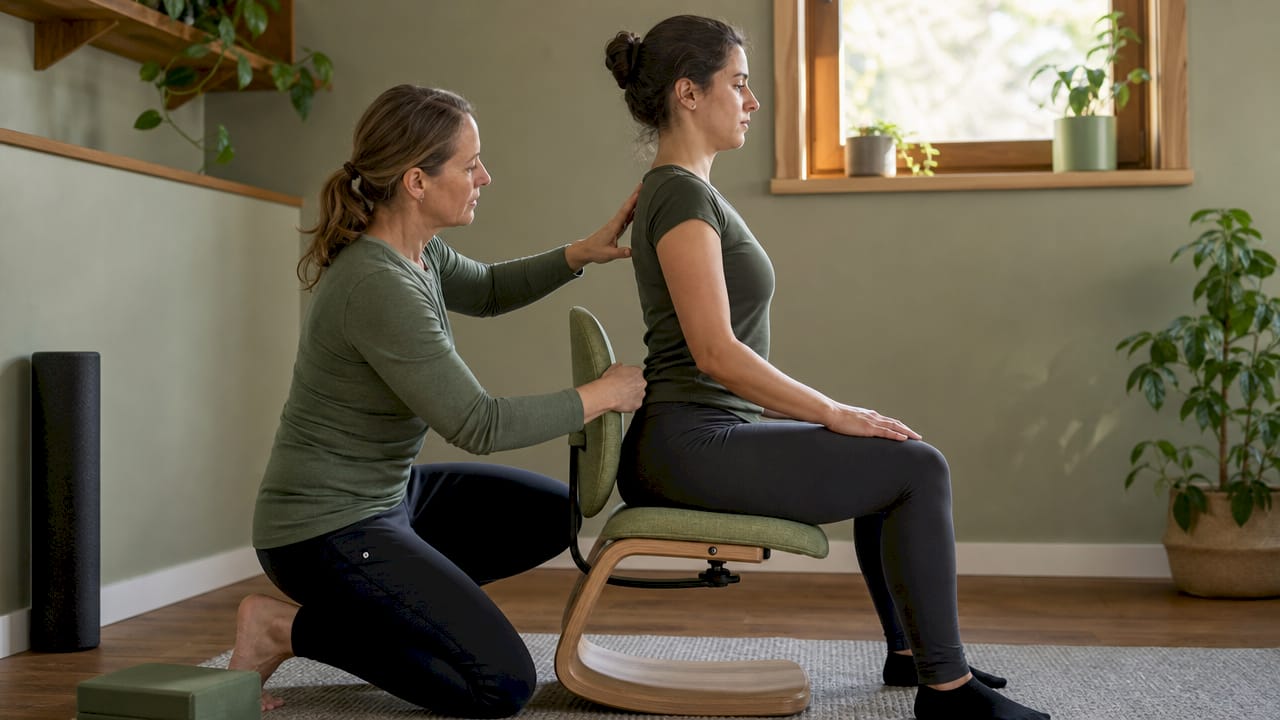
Physical therapy for posture correction is a targeted clinical approach that improves the body’s alignment by addressing muscle imbalances, retraining movement patterns, and building the neuromuscular control needed for lasting change. If you have been told to “just sit up straight” and found it impossible to maintain, there is a reason. Poor posture is not a habit problem alone. It is a physical problem, and physical therapy treats it at the source. This guide explains why PT for posture works, what the science says, and what you can realistically expect from treatment.
Why does physical therapy improve posture so effectively?
Physical therapy corrects posture by targeting the specific muscles, joints, and movement patterns that pull your body out of alignment. The most common pattern therapists treat is Upper Crossed Syndrome, a condition where tight chest and neck muscles overpower weak upper back and deep neck flexors. This imbalance causes forward head posture, rounded shoulders, and increased thoracic kyphosis, the exaggerated curve in the upper back.
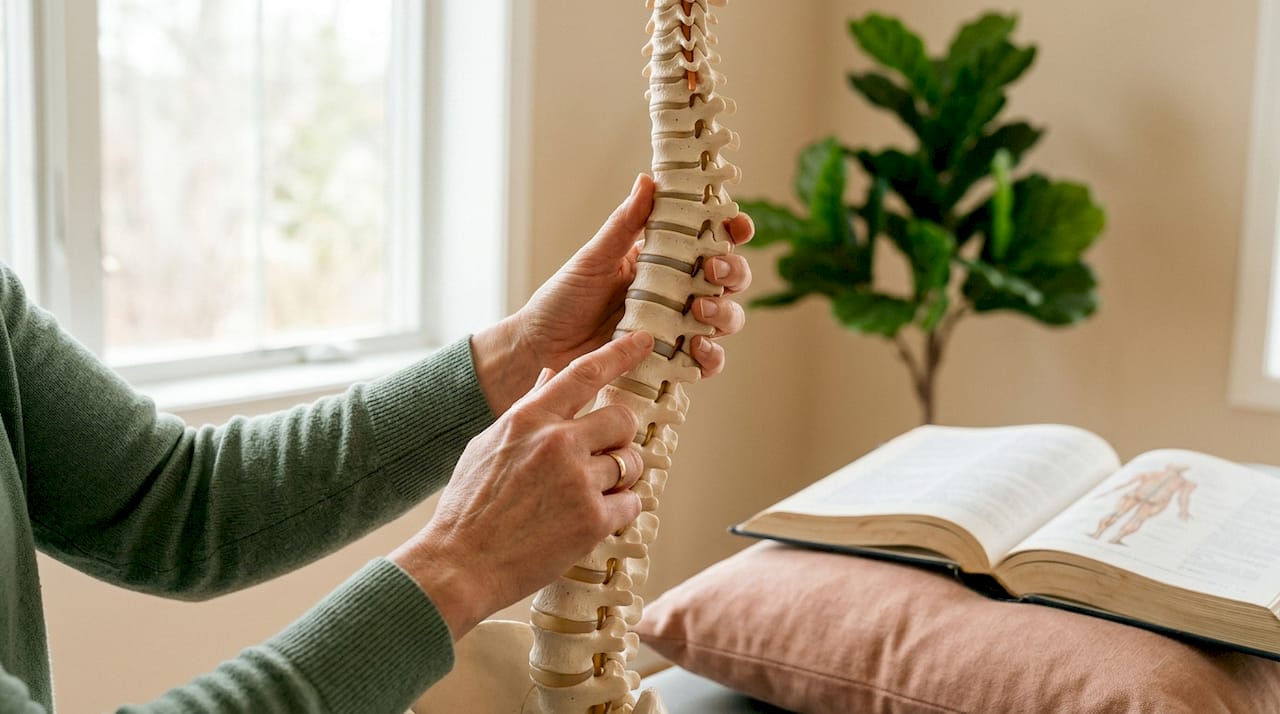
The research behind PT’s effectiveness is strong. A meta-analysis of 28 randomized controlled trials involving 901 participants found that corrective exercises produce large improvements in forward head, forward shoulder, and thoracic kyphosis angles, with standardized mean differences between −1.49 and −1.70. That is a statistically significant result, meaning the changes are real and measurable, not just perceived.
Neuromuscular training adds another layer of benefit. A meta-analysis of 19 trials with 605 participants showed that neuromuscular training improves postural stability with a pooled effect size of around 0.96 SMD. This type of training works by reweighting the sensory signals your body uses to stay balanced, specifically proprioceptive, vestibular, and visual inputs. When those signals are better integrated, your body holds alignment without conscious effort.
Pro Tip: Start tracking your posture angles with a simple photo from the side, taken weekly. Visible changes in head and shoulder position often appear before you feel any difference, and that visual feedback keeps you motivated.
Point | Details |
Posture angle improvements | Meta-analysis shows large, statistically significant reductions in forward head and shoulder angles. |
Neuromuscular training gains | Pooled effect size of 0.96 SMD for postural stability improvements across 19 trials. |
Core stabilization benefit | Adding core exercises to postural correction produces greater spinal alignment gains than posture work alone. |
Symptom relief timeline | Pain and function improvements often lag behind alignment gains and require additional graded strengthening. |
What does a physical therapy posture program actually include?
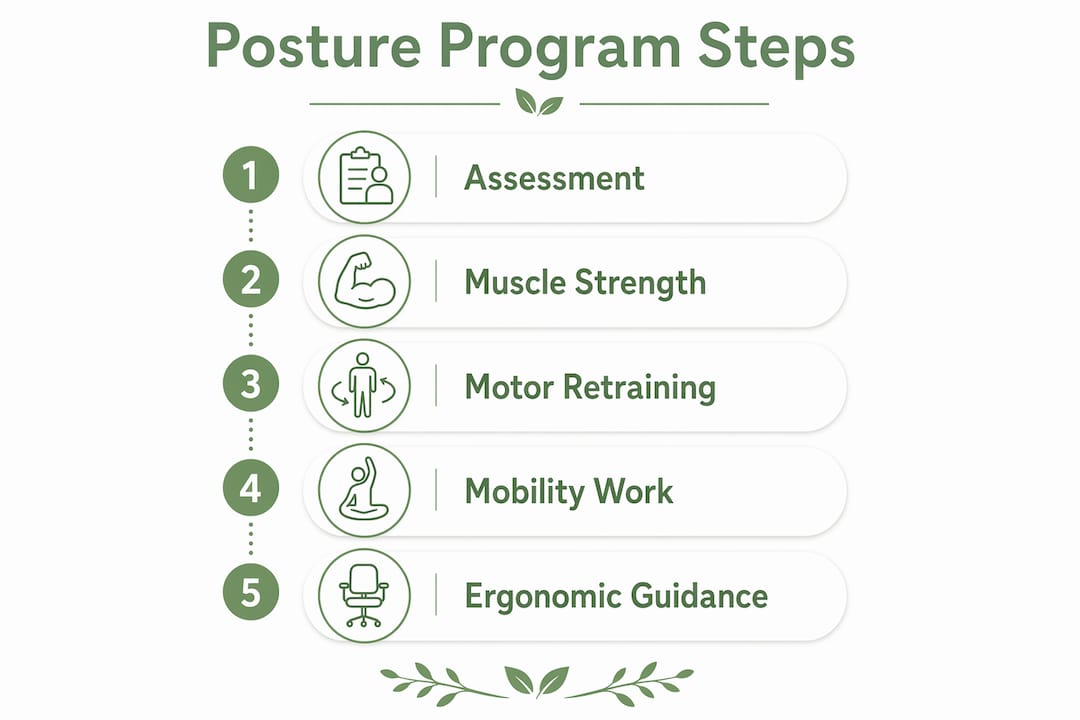
A well-designed posture program targets multiple systems at once. Therapists at clinics like Contemporaryrehabservices do not rely on a single exercise. They build programs around four core components.
Muscle strengthening. The upper back, neck, and core are the primary targets. Weak scapular stabilizers and deep cervical flexors are the most common contributors to poor posture in desk workers and older adults. Strengthening these muscles gives your spine the support it needs to stay aligned.
Mobility and flexibility work. A stiff thoracic spine cannot extend properly, which forces the neck and lower back to compensate. Thoracic mobility exercises and shoulder stretches restore the range of motion needed for upright posture.
Motor control retraining. This is where PT separates itself from generic exercise videos. Therapists use task-specific practice and movement awareness drills to retrain how your body moves, not just how it looks standing still. Combining core, neck, scapular, and joint mechanics exercises produces better outcomes than any single-component approach.
Behavioral and ergonomic guidance. Harvard Health recommends taking desk breaks every 30 minutes and strengthening upper back and core muscles to prevent worsening kyphosis. Your therapist will translate this into specific habits for your daily routine, including chair height, screen position, and how you carry bags or hold your phone.
Pro Tip: Avoid treating posture as a static position to hold. Physical therapy programs focus on dynamic motor retraining through movement rather than rigid “sit up straight” cues. Progress stalls when patients try to freeze in a “correct” position instead of building the movement control to return to alignment naturally.
How does better posture translate to pain relief?
This is where expectations need to be realistic. Posture correction and pain relief are related, but they do not always move together at the same pace. Understanding this distinction will help you stay committed to your program even when your back still aches after your alignment has visibly improved.
Alignment improves first. Research consistently shows large posture angle improvements from corrective exercises. However, pain and function improvements may be limited and inconsistent after the same interventions. Your spine may be straighter before your pain fully resolves.
Pain relief requires graded strengthening. A meta-analysis of 35 randomized controlled trials with 2,132 participants found that Pilates, walking, and tai chi reduce pain and improve function in low-back pain populations. These are not posture-specific exercises. They work by building activity tolerance and general movement capacity alongside alignment correction.
Monitoring both outcomes separately matters. Clinicians who track alignment and symptoms separately can adjust treatment more accurately. If your posture angles are improving but pain persists, your therapist knows to add graded loading or activity-based work rather than simply repeating the same postural drills.
Patience is part of the protocol. Typical PT programs run at roughly three sessions per week for six weeks as a starting point. That frequency allows enough stimulus for neuromuscular and endurance adaptations to take hold. Expecting full pain resolution in two weeks sets you up for frustration and early dropout.
The takeaway is straightforward. Physical therapy for posture is not a quick fix for pain. It is a structured process that corrects alignment first, then builds the strength and movement capacity that leads to lasting comfort.
What practical steps support posture improvement alongside PT?
You spend roughly one hour in a PT session and the other 23 hours in your regular life. What you do outside the clinic matters. These steps reinforce what your therapist is building.
Practice balance and proprioception work at home. Simple exercises like single-leg standing, heel-to-toe walking, and resistance band rows target the same neuromuscular pathways your PT sessions train. Consistency between sessions accelerates results.
Set a desk break timer for every 30 minutes. Prolonged sitting compresses spinal discs and shortens hip flexors, both of which pull posture out of alignment. A brief stand and walk resets muscle tension and gives your spine a break.
Use supportive seating with lumbar support. A chair that supports your lumbar curve reduces the muscular effort needed to stay upright. Pair this with a monitor at eye level to reduce forward head load.
Do your home exercise program consistently. Your therapist will prescribe specific exercises between sessions. Skipping them slows progress significantly. Three sessions per week in the clinic mean nothing if you are undoing the work the other four days.
Learn about postural imbalances in desk workers to understand how your daily environment contributes to the problem. Awareness of the cause helps you make smarter choices throughout the day.
If you want to understand how poor posture causes muscle tightness and body pain, that connection is well-documented and worth understanding before your first PT session.
Key takeaways
Physical therapy corrects posture by combining targeted strengthening, motor retraining, and ergonomic guidance, with research showing large, measurable alignment improvements and meaningful pain relief when programs are followed consistently.
Point | Details |
Alignment improves measurably | Meta-analysis of 901 participants shows large, statistically significant posture angle corrections from corrective exercises. |
Core training amplifies results | Adding core stabilization to postural correction produces greater spinal alignment and pain reduction than posture work alone. |
Pain relief takes longer | Symptom improvements often lag behind alignment gains and require graded strengthening and activity work. |
Frequency and duration matter | Three sessions per week for six weeks is a standard starting point for meaningful neuromuscular adaptation. |
Home habits reinforce PT | Desk breaks every 30 minutes, home exercises, and ergonomic adjustments accelerate clinic-based progress. |
What I have learned from treating posture in real patients
The most common mistake I see is patients who come in expecting posture correction to feel like flipping a switch. They want to leave session three standing tall and pain-free. That is not how the body works, and setting that expectation does more harm than good.
What actually happens is more interesting. Alignment changes show up on measurement before patients feel them. A patient’s forward head angle improves by several degrees, their therapist can see it in the photos, but the patient still reports neck tension. That gap is real, and it is not a sign that therapy is failing. It is a sign that the nervous system needs more time to catch up to the structural correction.
The other thing I have found is that patients who understand posture as a movement skill, not a position to hold, stick with their programs longer. When you realize that “good posture” means your body can return to alignment automatically during daily tasks, the work becomes purposeful. You are not trying to freeze in place. You are building a reflex.
Patience and persistence are not just motivational words here. They are clinical requirements. The research supports programs of six weeks or more at meaningful frequency. Patients who drop out at week two because they do not feel different yet are leaving before the adaptation window opens. The ones who stay see real, lasting change in both their alignment and their comfort.
— Tj
Posture care at Contemporaryrehabservices
Contemporaryrehabservices is a boutique physical therapy clinic in Albertson, NY, serving patients across Queens and Nassau County. The clinic accepts Medicare, Aetna, Cigna, Emblem, and United Healthcare plans, making evidence-based posture care accessible without financial guesswork.
The team at Contemporaryrehabservices builds posture programs around the same multimodal approach the research supports: targeted strengthening, motor control retraining, thoracic mobility work, and ergonomic guidance. Whether you are dealing with forward head posture from desk work, upper back rounding, or general alignment concerns, the clinic offers physical therapy services in Searingtown, NY and surrounding areas. You can also review the full range of therapy options available to find the right fit for your needs. Schedule a consultation and get a program built around your specific posture pattern.
FAQ
What does physical therapy do for posture?
Physical therapy corrects posture by strengthening weak postural muscles, improving thoracic mobility, and retraining the neuromuscular patterns that control alignment. Research shows large, measurable improvements in forward head and shoulder angles with consistent PT programs.
How long does it take to see posture improvement with PT?
Most programs run at three sessions per week for at least six weeks before significant neuromuscular adaptation occurs. Alignment improvements often appear before pain or functional symptoms fully resolve.
Does PT actually relieve pain from poor posture?
PT produces consistent posture angle improvements, but pain relief may be less predictable and often requires additional graded strengthening and activity-based work alongside postural correction exercises.
What exercises does PT use for posture correction?
Therapists commonly prescribe scapular strengthening, deep cervical flexor training, thoracic extension mobility work, and core stabilization exercises. Core stabilization combined with postural correction produces better spinal alignment outcomes than posture exercises alone.
Can I improve my posture without seeing a physical therapist?
Home exercises and ergonomic habits help, but a physical therapist identifies your specific muscle imbalances and movement faults. Self-directed programs often miss the motor control retraining component that makes posture improvements last. For desk workers in particular, a professional assessment from a posture-focused PT practice provides a more targeted starting point.
Recommended
Comments