
Your Step by Step Guide to Rehab After Injury
- tjdontplay
- May 27
- 9 min read

Recovery from an injury or surgery can feel overwhelming, especially when you don’t know where to start. Having a clear step by step guide to rehab makes the difference between a slow, frustrating recovery and one that moves forward with purpose. Rehabilitation is personalized care aimed at regaining the abilities you need for daily life, and it works best when approached in a structured, goal-driven way. This guide walks you through every stage of the rehab process explained in plain language, from your first medical assessment to achieving real independence at home.
Table of Contents
Key takeaways
Point | Details |
Start with a physician referral | Your doctor’s referral sets specific goals and safety precautions that guide your entire rehab plan. |
Begin early and safely | Starting gentle passive exercises as soon as you are medically stable prevents complications and speeds recovery. |
Progress in stages | Rehab advances from passive movement to active exercise to full independence through deliberate, monitored steps. |
Track milestones honestly | Recognizing plateaus early lets you and your team adjust the plan before small setbacks become bigger problems. |
Caregiver involvement matters | Educating family members on safety and daily living tasks significantly improves long-term outcomes. |
The step by step guide to rehab: preparing before you begin
Most people think rehab starts the day they walk into a therapy clinic. It actually starts before that, and the preparation phase shapes everything that follows.
Getting your physician referral right
Your doctor’s referral is more than a permission slip. It contains your diagnosis, specific therapy goals, and critical precautions like weight-bearing limits or heart rate restrictions. Physician referrals must state specific goals and precautions so your therapist can build a measurable, safe treatment plan from day one. If your referral is vague or missing restrictions, ask your doctor to clarify before your first therapy appointment.
Building your rehab team
Rehab is rarely a one-person operation. Depending on your condition, your team may include:
A physical therapist (PT) to address mobility, strength, and pain
An occupational therapist (OT) to help you perform daily tasks safely
A counselor or psychologist if emotional health is affected
A social worker to coordinate home care or equipment needs
Your caregiver or a family member who will support you at home
Rehab is a coordinated, team-based plan tailored to your specific deficits and goals, not a single treatment delivered in isolation.
Preparing your home environment
Before discharge from a hospital or before outpatient sessions begin, take a hard look at your living space. Remove loose rugs, install grab bars in the bathroom, and clear pathways between rooms. Your therapist may conduct a home safety evaluation, but you can get ahead of it by thinking through where you spend most of your time and what tasks you will struggle with first.
Preparation task | Why it matters |
Confirm referral details with your doctor | Prevents unsafe or misaligned therapy goals |
Identify your full rehab team | Covers all aspects of recovery, not just physical |
Prepare a safe home space | Reduces fall risk and supports early independence |
Arrange caregiver support | Ensures you have help during the most dependent phase |
Pro Tip: Ask your physician to include specific precautions in writing before your first therapy visit. Unclear rehab goals or missing precautions can lead to unsafe therapy sessions, and having everything documented protects you.
Starting therapy safely: early rehab execution
Once you are medically stable, therapy begins. This phase feels slow for many people, but the early steps are where complications are either prevented or created.
Why early movement matters more than you think
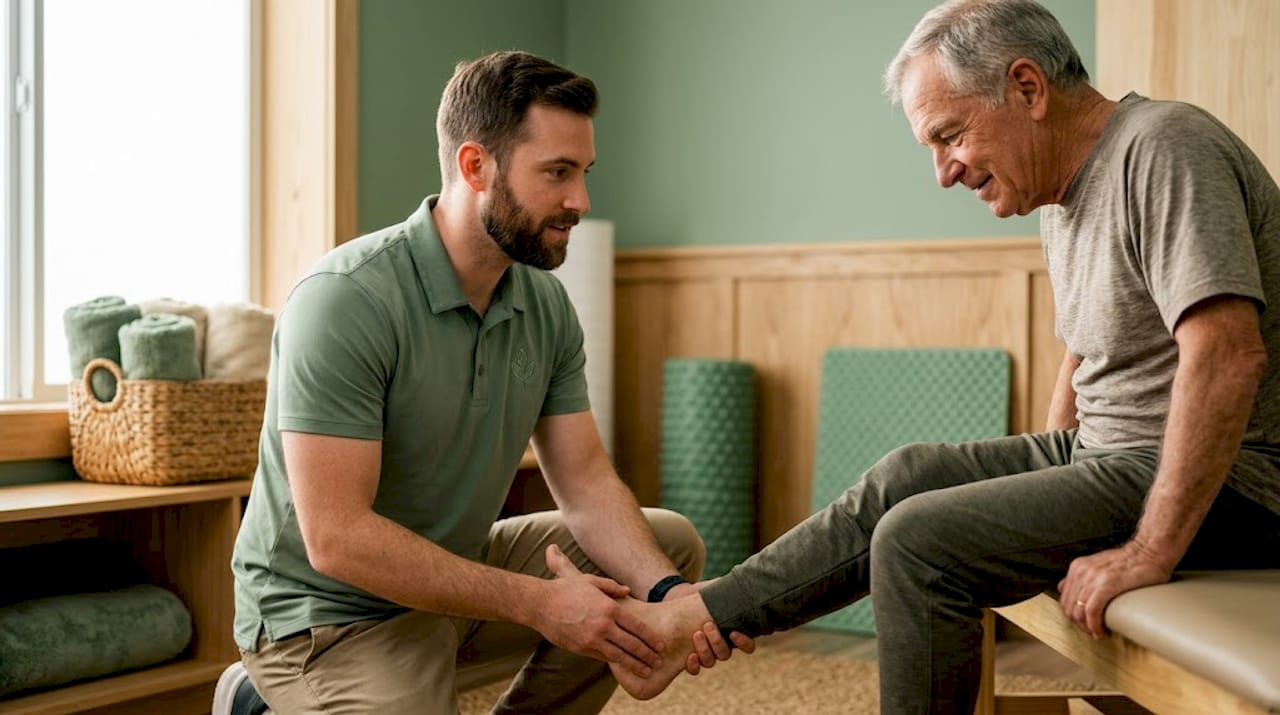
Early rehab should begin as soon as you are medically stable, even if that means only gentle positioning and passive range-of-motion exercises performed several times a day. For patients who cannot yet move a limb on their own, a therapist moves the joint through its range to prevent contractures, which are painful, permanent shortenings of muscle tissue. Starting this process within 24 to 48 hours of stability is standard practice, not an aggressive approach.
Your first therapy sessions: what to expect
Here is how early rehab typically unfolds in a stepwise rehab plan:
Passive range-of-motion exercises. Your therapist gently moves your affected joints through their full range. You are not doing the work yet. The goal is circulation, flexibility, and contracture prevention.
Safe positioning and transfers. You learn how to move from bed to chair, chair to standing, with the least risk of falls or strain on surgical sites.
Breathing and circulation exercises. Especially after surgery, deep breathing and ankle pumps reduce the risk of pneumonia and blood clots.
Early weight-bearing (if cleared). Your physician’s referral will specify how much weight you can put through a limb. Your PT works within that limit precisely.
Introduction to assistive devices. Assistive devices like braces and walkers are introduced early to support safe movement before strength returns.
Occupational therapy for basic daily tasks. Your OT begins with the simplest tasks: getting dressed, brushing your teeth, managing medications safely.
Respecting therapy precautions
Monitoring therapy precautions is not optional. Weight-bearing limits exist because bone or tissue that has not healed cannot tolerate full load without damage. Heart rate limits during cardiac rehab exist because overexertion is dangerous. Treat these restrictions as hard boundaries, not suggestions.
Pro Tip: Keep a small notebook or use your phone to track what exercises you did, how they felt, and any pain or swelling you noticed. This log becomes a powerful tool when your therapist needs to decide whether to progress or pull back.
For safe guidance on performing exercises outside the clinic, the team at Contemporaryrehabservices has put together practical advice on home exercise safety worth reading before you start any home program.
Progressing rehab: building strength and independence
After the early phase stabilizes your condition and prevents complications, the focus shifts to regaining real function. This is where rehab starts to feel more demanding, and where many patients see the most visible progress.
Moving from passive to active exercise
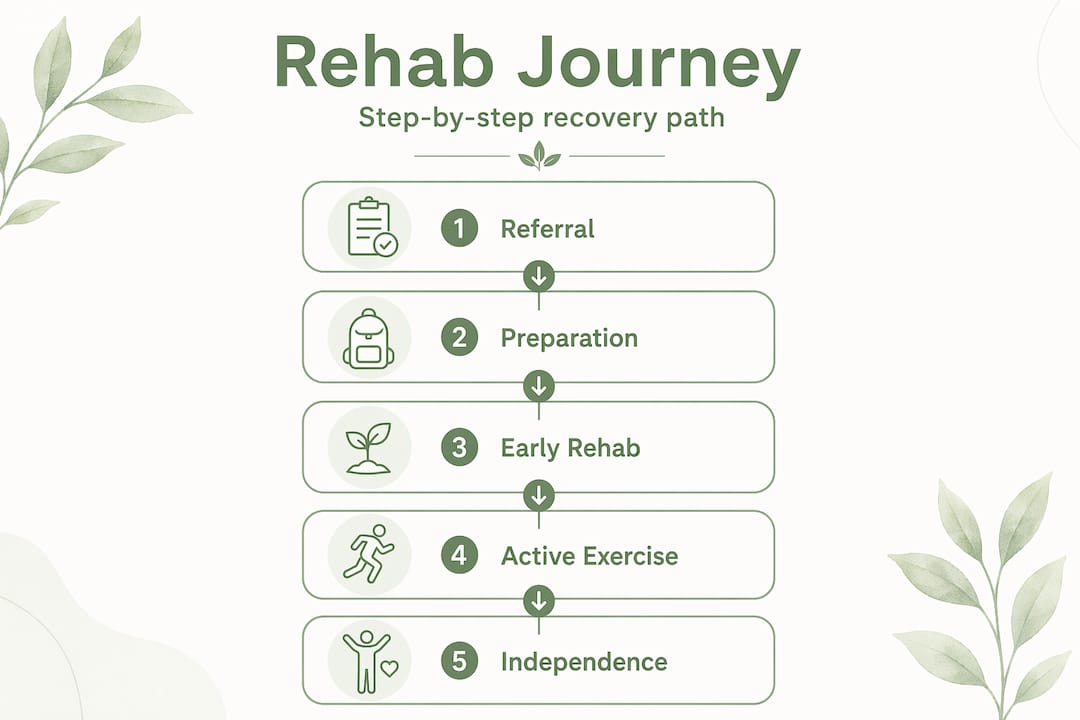
The transition from passive to active exercise happens when your body can generate its own movement. Active-assisted exercises come first, meaning your therapist or a strap helps you complete the motion. Then active exercises where you move on your own. Then resistive exercises where you work against added weight or resistance bands. Each step is deliberate, and your therapist sets the pace based on your strength and pain response.
Ambulation training: the stages of learning to walk again
Mobility training progresses safely through specific stages with assistive devices integrated throughout. The typical sequence looks like this:
Parallel bars: You walk between two stable rails, taking full weight through your arms
Walker or rollator: More freedom, less support, requires balance and coordination
Forearm crutches or standard crutches: Demands significantly more upper body strength
Single-point cane: Used on the stronger side to reduce load on the recovering limb
Independent walking: The goal, achieved when strength and balance are sufficient
Skipping stages is one of the most common reasons people fall and re-injure themselves. Your physical therapy progression should always move forward based on performance, not impatience.
Occupational therapy: restoring daily life
While your PT focuses on movement and strength, your OT focuses on function. Rehab goals prioritize daily living tasks like grooming, cooking, and medication management before broader quality-of-life goals are added. Your OT may recommend adaptive equipment like long-handled shoe horns, grab bars, or one-handed cutting boards to help you manage independently while your recovery continues.
Rehab phase | Physical therapy focus | Occupational therapy focus |
Early (week 1-2) | Passive range of motion, positioning | Basic hygiene, transfers |
Middle (week 3-6) | Active exercise, ambulation training | Cooking, dressing, medication management |
Advanced (week 7+) | Strength, balance, return to activity | Home management, work tasks, driving assessment |
Family and caregiver education is woven throughout this phase. A caregiver who understands how to assist without taking over supports independence far better than one who does everything for the patient.
Tracking progress and handling setbacks
A stepwise rehab plan is not always linear. Understanding what good progress looks like, and what to do when it stalls, keeps you moving forward rather than spiraling into frustration.
Recognizing meaningful milestones
Progress in rehab is rarely dramatic from day to day. Look for weekly improvements: walking a few more steps, needing less assistance with a task, sleeping with less pain. These small wins compound. Realistic timelines vary widely. A total knee replacement typically takes three to six months to reach full function. A stroke may require a year or more of sustained therapy. Your therapist will set individualized timelines based on your specific diagnosis and response.
When progress stalls
Plateaus happen in almost every recovery. Common causes include:
Pushing too hard and triggering a pain or swelling flare
Not doing your home exercise program consistently
Mood disturbances or lack of motivation slowing physical progress
An underlying issue like infection or hardware failure that needs medical attention
Motivation, social support, and patient education significantly affect how quickly people recover. If you are struggling emotionally, tell your rehab team. Many clinics can connect you with counseling support.
“Your rehab team cannot fix what they do not know about. If something hurts differently, if you are not sleeping, if your motivation has dropped, say it out loud. Honest communication is your most practical rehab tool.”
When progress genuinely stalls despite good adherence, your therapist may request additional sessions, modify your treatment approach, or refer you back to your physician to investigate medical causes. Extended therapy is a tool, not a failure.
My honest take on what rehab really requires
Over the years working with patients recovering from surgeries, sports injuries, and neurologic events, I’ve learned that the patients who recover best share one quality: they stay curious about their own progress rather than anxious about their pace.
I’ve seen people rush through the early passive exercise phase because it “doesn’t feel like real therapy.” Those same patients often end up with contractures or chronic stiffness that adds months to their recovery. I’ve also seen patients who were told they’d never walk independently again reach that goal by trusting the process and pushing back, respectfully, when they thought more was possible.
What I tell every patient is this: your rehab goals need to be yours. Not your surgeon’s idea of “good enough” and not what your neighbor achieved after their hip replacement. What do you want to be able to do six months from now? Cook dinner? Walk your dog? Return to work? Start there, and build your whole plan around that answer.
Family involvement is also something I think gets undervalued. The caregiver who understands why you shouldn’t carry full weight on a limb yet, and who knows how to help you stand safely, is part of your clinical team even if they never set foot in the clinic. Invest time in teaching the people around you what you are doing and why.
The rehab process explained simply comes down to this: show up, do the work within your precautions, communicate honestly, and trust that small daily progress adds up to something real.
— Tj
Start your recovery with expert guidance
If you are ready to put this guide into practice with professional support, Contemporaryrehabservices offers physical and occupational therapy tailored specifically to injury and surgical recovery in Albertson, NY, serving Queens and Nassau County. The clinic accepts Medicare, Aetna, Cigna, Emblem, and United Healthcare plans, making access straightforward for most patients.
Whether you are just starting your recovery or feeling stuck in the middle of it, the team at Contemporaryrehabservices can build a personalized plan around your specific goals and precautions. Explore the full range of physical and occupational therapy services available, or reach out directly to schedule your initial evaluation. You can also learn more about orthopedic rehab options if surgery recovery is your primary concern.
FAQ
What is the first step in a rehab plan?
The first step is obtaining a physician referral that clearly states your diagnosis, therapy goals, and any precautions such as weight-bearing limits. This document guides your entire treatment plan and keeps therapy safe from the start.
How soon after surgery should rehab begin?
Rehab should begin as soon as you are medically stable, which is often within 24 to 48 hours for many procedures. Early passive exercises and positioning can begin even before you are strong enough to move on your own.
How long does a typical rehab process take?
Recovery timelines vary widely depending on the injury or surgery. A joint replacement may take three to six months, while more complex neurologic recovery can take a year or longer with consistent therapy.
What should I do if my progress has stalled?
Tell your rehab team immediately. A plateau may signal overexertion, missed home exercises, a mood issue, or a medical complication. Your therapist can modify the plan or refer you back to your physician if needed.
Does insurance cover physical and occupational therapy?
Most major insurance plans cover medically necessary rehabilitation. Contemporaryrehabservices accepts Medicare, Aetna, Cigna, Emblem, and United Healthcare, so contact the clinic directly to confirm your specific coverage before your first visit.
Recommended
Comments