
Advantages of Gentle Physical Therapy for Pain Relief

Gentle physical therapy is a hands-on treatment method that delivers real pain relief and improved mobility without straining your body. The advantages of gentle physical therapy go well beyond comfort. Research shows it achieves a 76% treatment completion rate compared to 60% for intense therapy approaches. That gap matters because patients who finish their programs recover more fully. Clinically, this approach is known as gentle manual therapy, and it works by regulating your nervous system, reducing stress hormones like CRH and ACTH, and modulating pain signals at the neurological level. The result is a safer, more sustainable path to recovery.
1. How does gentle physical therapy work to relieve pain?
Gentle physical therapy works by stimulating mechanoreceptors, the sensory receptors in your joints and soft tissues, to block incoming pain signals. This process is called hypoalgesia, and it means your body actually perceives less pain during and after treatment. Mechanoreceptor activation creates a neurological “gate” that interrupts the pain pathway before signals reach the brain.
Beyond pain blocking, gentle movement reduces muscle guarding. When your muscles are braced against expected pain, they restrict joint motion and create a cycle of stiffness. Controlled, low-force techniques break that cycle by signaling to your nervous system that movement is safe. Your muscles relax, your joints move more freely, and circulation improves through the treated tissue.

Gentle therapy also regulates the autonomic nervous system by dampening HPA-axis activity. The HPA axis controls your stress hormone output. When it calms down, your body shifts from a defensive state into a healing state. That shift is what makes gentle techniques so effective as a starting point for active rehabilitation.
Pro Tip: Ask your therapist to explain what they feel in the tissue during treatment. Understanding the feedback loop between touch and nervous system response helps you stay relaxed, which makes the technique more effective.
2. Key benefits of gentle therapy compared to intense methods
Gentle therapy outperforms intense manual therapy on several measurable outcomes. The differences are not subtle.
Higher completion rates. Patients receiving gentle approaches complete their programs at a 76% rate versus 60% for intense therapy groups. Finishing a program is the single biggest predictor of lasting recovery.
Lower stress hormone output. Sustained gentle techniques reduce CRH and ACTH levels. Excessive manual force does the opposite. It activates the HPA axis, raises cortisol, and can actually increase pain sensitivity.
No fight-or-flight activation. Intense or unexpected pressure triggers a defensive nervous system response. Gentle movement signals safety, preventing hyperarousal and allowing the body to accept treatment rather than resist it.
Immediate pain reduction. Patients often feel relief within the first session. That early win builds confidence and encourages continued participation in the full rehab plan.
Reduced anxiety symptoms. Manual therapy decreases anxiety scores alongside physical pain measures. For patients dealing with chronic pain, the emotional relief is just as meaningful as the physical improvement.
Safer for sensitive nervous systems. Patients with chronic pain, fibromyalgia, or trauma histories have nervous systems already running in overdrive. Gentle techniques meet them where they are, rather than pushing past their tolerance threshold.
Better sleep and cardiovascular markers. Clinical evidence shows manual therapy can improve sleep quality and lower systolic blood pressure. These are downstream effects of nervous system regulation, not just tissue change.
3. How gentle therapy fits into a full rehabilitation plan
Gentle manual therapy is the starting point, not the finish line. Think of it as the door-opener that makes active exercise possible.
It creates a window for movement. Manual therapy provides temporary relief that allows you to perform strengthening exercises you could not tolerate before. That window is where real recovery begins.
It does not build strength on its own. Passive treatment alone does not prevent injury recurrence. Your muscles need active loading to rebuild capacity and protect your joints long-term.
It prepares tissue for exercise. Improved circulation and reduced muscle guarding after a gentle session mean your body responds better to therapeutic exercise. You get more out of every rep.
It supports gradual load tolerance. Jumping into intense exercise too soon risks re-injury. Gentle therapy allows your nervous system to adapt at a pace that matches your actual tissue readiness.
Combining both approaches produces the best outcomes. Active rehabilitation builds the long-term strength that manual therapy alone cannot provide. The two methods work together, not in competition.
Patients who rely solely on manual therapy without progressing to active exercise often plateau. They feel better temporarily but do not develop the physical resilience to stay better. A well-structured plan at Contemporaryrehabservices always pairs hands-on treatment with a progressive exercise program tailored to your condition.
4. Common gentle physical therapy techniques and their advantages
Each technique in gentle physical therapy targets a specific part of the pain and mobility problem. Understanding what each one does helps you ask better questions and get more from your sessions.
Technique | What it does | Primary advantage |
Joint mobilization | Controlled passive movement of a joint through its range | Reduces stiffness, stimulates joint lubrication, and restores accessory motion |
Soft tissue mobilization | Gentle pressure applied to muscles and fascia | Releases tension, improves circulation, and reduces muscle guarding |
Massage therapy | Rhythmic manual pressure on soft tissue | Promotes relaxation, increases blood flow, and lowers cortisol |
Heat and cold therapy | Thermal application to target tissue | Reduces inflammation, eases spasm, and prepares tissue for movement |
Gentle electric pulse therapy | Low-level electrical stimulation (e.g., TENS) | Modulates pain signals and supports tissue healing without force |
Joint mobilization deserves special attention. It is a gentle, controlled passive movement that improves joint range of motion by stimulating the production of synovial fluid, the natural lubricant inside your joints. Patients with arthritis or post-surgical stiffness often respond quickly to this technique because it addresses the mechanical restriction directly without causing pain.
Soft tissue mobilization and massage therapy work on the muscular layer. They reduce the protective tension your body builds up around a painful area. Once that tension releases, you can move more freely and exercise more effectively. The benefits of manual therapy extend beyond the session itself because improved circulation accelerates tissue repair between appointments.
Key takeaways
Gentle physical therapy works because it regulates the nervous system, reduces stress hormones, and creates a safe healing environment that supports both immediate pain relief and long-term recovery through active rehabilitation.
Point | Details |
Higher completion rates | Gentle therapy achieves 76% program completion versus 60% for intense approaches. |
Nervous system regulation | Gentle techniques reduce CRH and ACTH, shifting the body from defense to healing. |
Pain relief mechanism | Mechanoreceptor stimulation blocks pain signals before they reach the brain. |
Manual therapy as a foundation | Hands-on treatment opens the door for active exercise, which builds lasting strength. |
Best results require both | Combining gentle manual therapy with progressive exercise prevents injury recurrence. |
Why gentle therapy is the most underrated tool in rehab
I have worked with patients across Nassau County who came in convinced that more pressure means faster results. That belief is understandable. We associate effort with progress. But the nervous system does not work that way.
What I have seen repeatedly is that patients with chronic pain or past trauma respond to forceful treatment by bracing harder, not relaxing. Their pain scores go up, their attendance drops, and they stop coming. Gentle therapy breaks that pattern. When the body feels safe, it stops guarding. When it stops guarding, it can actually heal.
The part that surprises most patients is how quickly they feel the difference. Not after weeks of treatment, but often after the first session. That early relief is not a placebo. It is the nervous system responding to a signal it has not received in a long time: that movement does not have to hurt.
My strongest clinical observation is this: physical therapy myths about “no pain, no gain” keep people away from treatment that could genuinely change their lives. Gentle therapy is not the easy option. It is the precise option. And for patients with sensitive or overloaded nervous systems, it is the only option that actually works.
— Tj
Gentle physical therapy at Contemporaryrehabservices
Contemporaryrehabservices is a boutique physical therapy clinic in Albertson, NY, serving patients across Queens and Nassau County. The clinic accepts Medicare, Aetna, Cigna, Emblem, and United Healthcare plans, so accessing care is straightforward for most patients.
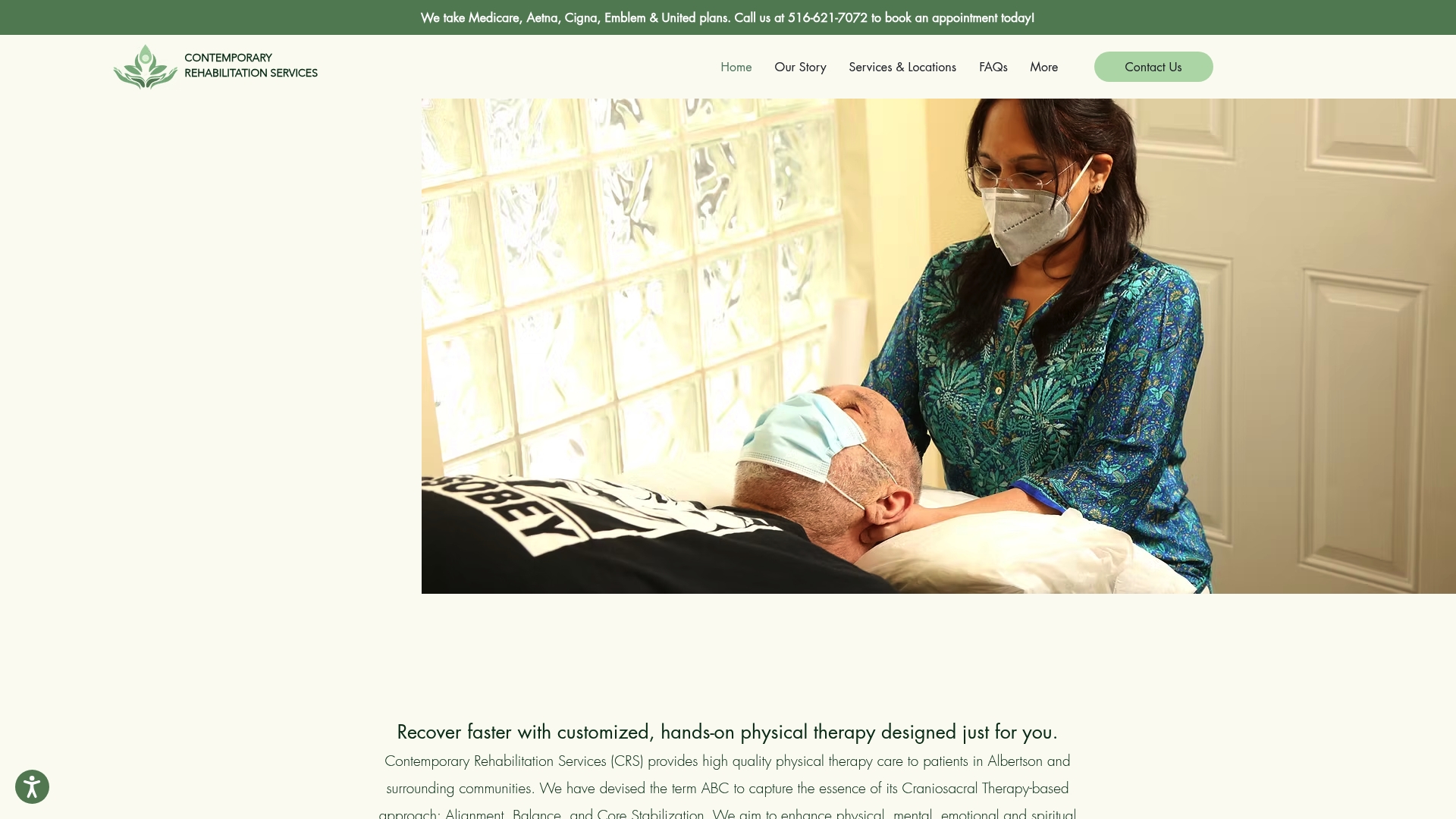
The team at Contemporaryrehabservices builds personalized treatment plans that pair gentle manual therapy with progressive active rehabilitation. Every plan starts with a thorough assessment of your pain, mobility, and nervous system tolerance. From there, certified therapists apply techniques matched to your specific condition and comfort level. If you are ready to experience specialized gentle therapy in a supportive, patient-centered setting, contact Contemporaryrehabservices to schedule your consultation today.
FAQ
What is gentle physical therapy?
Gentle physical therapy is a hands-on treatment approach that uses low-force manual techniques to relieve pain, reduce muscle tension, and improve joint mobility without triggering stress responses in the body.
How does gentle therapy work for chronic pain?
Gentle techniques stimulate mechanoreceptors that block pain signals and regulate the autonomic nervous system, reducing the hyperarousal that makes chronic pain worse over time.
Is gentle physical therapy effective for seniors or post-surgical patients?
Gentle physical therapy is particularly well-suited for seniors and post-surgical patients because it improves joint mobility and circulation without placing excessive stress on healing tissue or sensitive joints.
How many sessions does gentle physical therapy take to show results?
Many patients notice reduced pain and improved movement after their first session. Full recovery typically requires a course of treatment combined with active rehabilitation exercises for lasting results.
Does Contemporaryrehabservices offer gentle physical therapy near me?
Contemporaryrehabservices provides gentle rehabilitation services in Albertson, NY, with locations serving Queens and Nassau County, and accepts most major insurance plans including Medicare.
Recommended
Comments