
4 Week Carpal Tunnel Physical Therapy Plan Backed by 2026 Guidelines
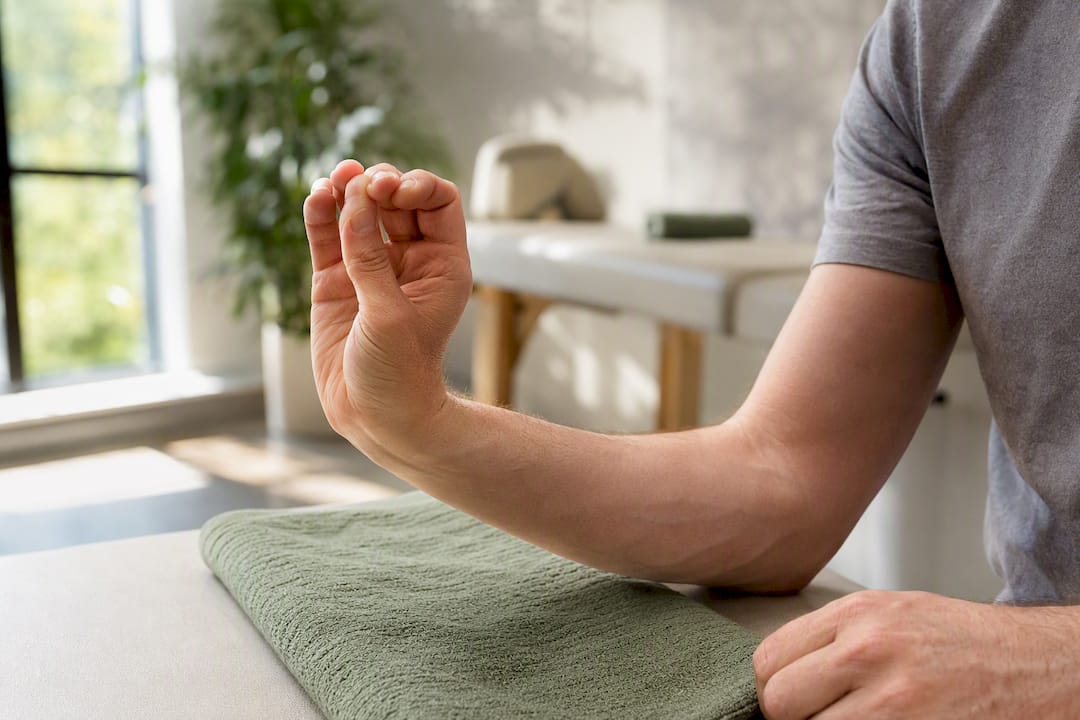
Physical therapy helps most people with mild-to-moderate carpal tunnel syndrome, and for many it can delay or even avoid surgery altogether. If your symptoms limit daily function, start with a neutral wrist splint at night and gentle nerve and tendon glides, then schedule a PT evaluation. Seek urgent care instead if you notice progressive weakness, constant numbness, or visible thinning at the base of your thumb.
TL;DR:
Tendon gliding and nerve exercises can improve symptoms for most cases but require personalized progression and should be stopped if they increase numbness.
Manual therapy offers short-term pain relief but is best used alongside exercises and ergonomic changes, especially for less severe cases.
Night splinting helps reduce pressure during sleep, but should be snug, not tight, and stopped if symptoms worsen or increase numbness.
Ergonomic adjustments, such as maintaining wrist neutrality at work and taking microbreaks, are essential to sustain treatment benefits over time.
Recovery typically takes a few months, with early improvements in pain and function; severe or longstanding symptoms may require surgical evaluation.
Table of Contents
What Does Carpal Tunnel Physical Therapy Include?
A carpal tunnel physical therapy evaluation starts with your history and a functional check, not just an X-ray or a nerve conduction report. Your therapist will ask when symptoms flare (typing, driving, gripping a phone overnight) and run a set of provocative tests designed to reproduce the tingling or numbness in a controlled way.
What a typical evaluation covers:
Phalen’s test, Tinel’s sign, and the Durkan compression test to gauge nerve irritability
Sensory testing with tools like Semmes-Weinstein monofilaments and static two-point discrimination
Grip and pinch strength measurements to establish a baseline
A functional goals conversation: what tasks are hardest right now (jars, keyboards, steering wheels)
From there, hand therapy for carpal tunnel usually combines patient education, activity changes, splinting, nerve and tendon gliding, progressive strengthening, and manual therapy as needed. The 2026 APTA clinical practice guideline recommends exactly this kind of layered approach, built around orthoses and tailored exercise rather than any single fix. Clinicians track progress with symptom severity scales, sleep disruption counts, and simple grip or pinch tests, not a stopwatch on the calendar.
What Exercises Help Carpal Tunnel Syndrome?
The best exercises for carpal tunnel work the median nerve and the tendons around it without provoking a flare. Below is a sequence many hand therapists use as a starting template. Treat it as a foundation to discuss with a PT, not a substitute for one.
Median nerve glides. Start with your wrist and fingers relaxed at your side. Extend your wrist and fingers, then gently extend your thumb, and finally tilt your head away from that hand for a mild stretch. Hold each position 3 to 5 seconds. Do 5 to 10 gentle reps, once or twice daily to start.
Tendon glides. Move your hand through five shapes in sequence: straight fingers, hook fist, full fist, straight fist, and tabletop. Do 5 to 10 reps of the full sequence, 3 to 4 times a day.
Wrist flexion and extension stretches. With your elbow straight, gently bend your wrist up and then down, using your opposite hand for light overpressure. Hold 15 to 20 seconds per direction, 2 to 3 times daily.
Gentle wrist mobilizations. Slow, small circles and side-to-side wrist motion help maintain joint mobility between stretching sessions.
Strengthening. Once symptoms allow, usually around 2 to 3 weeks in, add a soft ball squeeze, light resistance-band wrist extension, and pinch holds using a clothespin or putty. Start with 2 sets of 10, a few times a week.
A systematic review of physiotherapy interventions for CTS found tendon gliding and related conservative techniques produce short- to mid-term symptom improvement, though study quality varies across trials. That variability is exactly why dosage and progression matter more than chasing a “perfect” exercise list.
Pro Tip: If any exercise leaves you with more numbness than you started with, and it lingers more than a few minutes, stop and scale back. Carpal tunnel rehab exercises should feel neutral or mildly stretchy, never sharp or electric.
Do Manual Therapy and Modalities Actually Work?
Manual therapy earns a real, if limited, role in carpal tunnel physical therapy. A 2024 study of 533 participants found manual therapy produced superior short-term pain relief over one to three months compared with other conservative approaches, while surgery delivered more durable gains in hand function at 6 to 12 months. That is not an argument against manual therapy. It is a reason to use it as a bridge, not a finish line.
What the evidence supports and does not:
Cervical and upper-extremity joint mobilization plus soft-tissue work can ease symptoms short-term and support function.
The 2026 APTA guideline specifically advises against iontophoresis, phonophoresis with corticosteroids, and magnet therapy for nonsurgical CTS.
Ultrasound and TENS show mixed, limited evidence. Neither should anchor a treatment plan on its own.
Manual therapy works best as an adjunct to exercise and ergonomic changes, individualized to what your evaluation actually finds.
If you want a broader breakdown of how these tools compare, Contemporaryrehabservices covers the full modality landscape in its physical therapy modalities guide.
When Should You Wear a Wrist Splint?
Night splinting is first-line treatment for a reason: your wrist tends to flex or curl during sleep, which raises pressure inside the carpal tunnel exactly when you are not around to correct it. A neutral splint (wrist held straight, not bent up or down) blocks that motion.
Wear the splint nightly for at least several weeks before judging whether it is helping.
Consider daytime or task-specific splinting during activities that reliably trigger symptoms, like extended typing or driving, and reduce wear time as symptoms calm down.
The splint should feel snug, not tight enough to leave marks or cut off circulation.
If a splint increases numbness or tingling instead of easing it, stop and check the fit with a clinician rather than pushing through it.
How Do You Reduce Wrist Strain at Work and Home?
Ergonomic changes are not an afterthought to carpal tunnel therapy without surgery. They are what keeps the gains from your exercises from evaporating the moment you sit back down at your desk.
Set your keyboard low enough that your wrists stay neutral, not cocked upward, and reduce your typing strike force.
Alternate mouse hand position or switch to a vertical mouse to unload repetitive strain.
Build in microbreaks every 30 to 45 minutes to reset wrist position.
At night, keep wrists straight; a pillow tucked alongside your torso can stop your hand from curling under you.
For cooking, gardening, or tool use, switch grips periodically and pace tasks instead of powering through in one long session.
Posture upstream of the wrist matters more than most people expect. Forward head posture and tight shoulders change how your whole arm loads, and Contemporaryrehabservices explains that connection in more detail in its guide to postural imbalances for desk workers. For readers managing ergonomics in a workplace setting more broadly, this overview of ergonomic workplace adjustments offers additional practical framing.
How Long Does Carpal Tunnel Recovery Take?
Expect partial relief within a few weeks and meaningful functional gains over a few months, not overnight. Manual therapy tends to move the needle fastest early on, while a full exercise and ergonomic program builds the more lasting change.
Certain signs predict that conservative care will fall short: symptoms lasting a year or more, strongly positive provocative tests, visible thenar muscle wasting, or severe findings on electrodiagnostic testing. Mayo Clinic notes that treatment choice depends heavily on severity, and that is precisely why a fixed timeline never fits everyone.
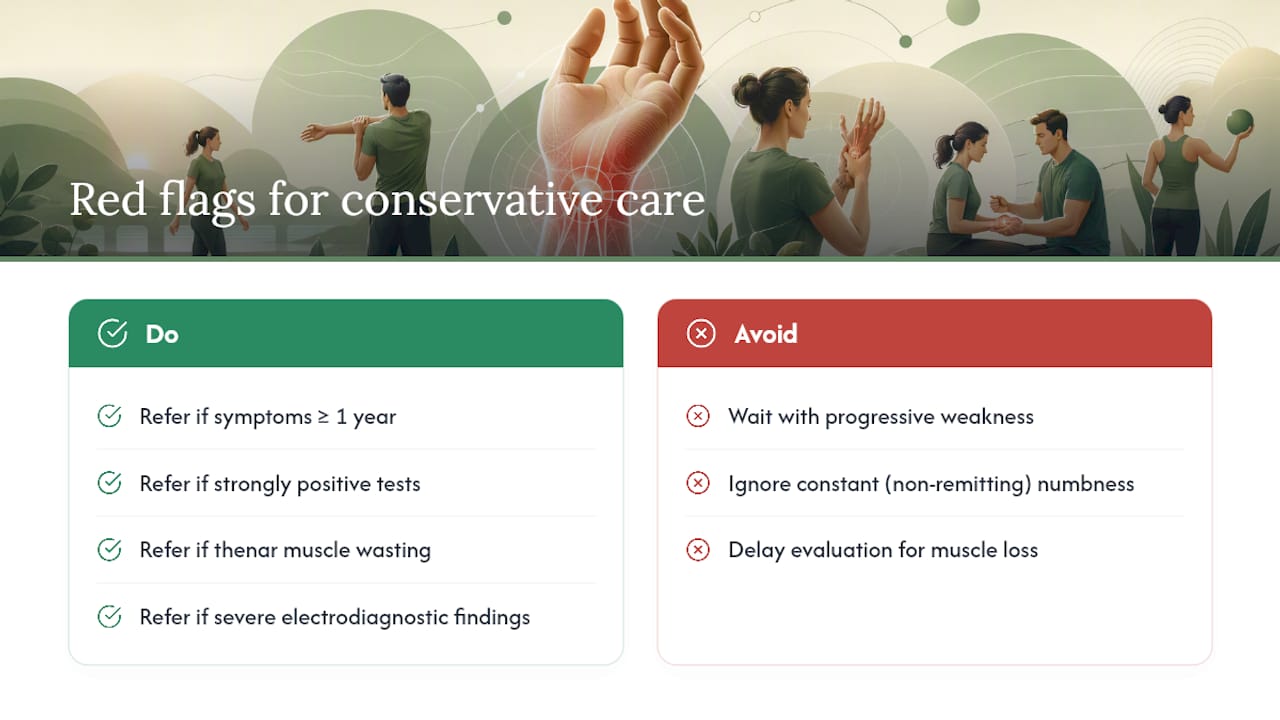
Treat these as red flags requiring prompt medical or surgical evaluation, not something to wait out: progressively worsening weakness, numbness that no longer comes and goes but stays constant, or a noticeable loss of thumb muscle bulk. If any of these show up, Contemporaryrehabservices’s guide on signs you need physical therapy right now is worth a look while you arrange care.
Your First 4 Weeks: A Starter Plan
Week 1: Learn the basics, start nightly neutral splinting, and begin gentle nerve and tendon glides plus wrist stretches.
Weeks 2 to 3: Keep the glides and stretches consistent, and layer in light strengthening (ball squeezes, pinch holds) once symptoms allow.
Week 4: Reassess. Track pain on a 0 to 10 scale daily, count night wakings, and retest grip strength or a timed functional task like buttoning a shirt.
If there is no meaningful improvement after this structured trial, or symptoms worsen, that is your cue to escalate toward electrodiagnostic testing and a surgical consult, per the same threshold clinicians use to judge conservative failure in a physiotherapy interventions review. The ChoosePT physical therapy guide frames this well: progress should be judged by function, not by the calendar alone.
Why This Approach Beats the “Just Rest It” Advice
Most generic carpal tunnel advice online still tells people to “rest the wrist and see what happens.” That advice undersells what a structured program actually does. The gap is not exercises versus no exercises. It is a targeted, progressive plan versus a scattershot one.
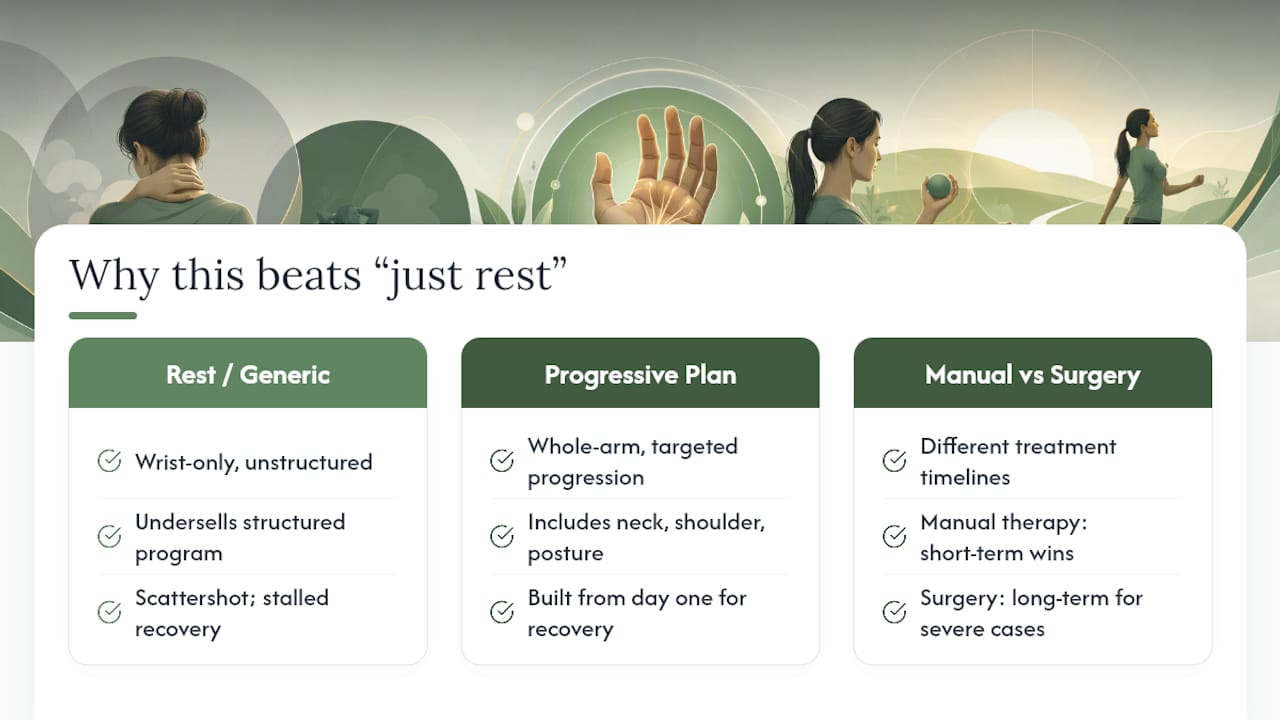
Where conventional wisdom gets it wrong is treating carpal tunnel as an isolated wrist problem. The strongest predictor of a stalled plan is not skipping glides, it is ignoring the neck, shoulder, and posture patterns feeding tension down the arm in the first place. The 2026 APTA guideline reflects this shift toward a whole-arm, biopsychosocial view rather than treating the tunnel in isolation, and that reframing changes how a program should be built from day one.
The other overlooked nuance: manual therapy and surgery are often framed as competitors, but the 2024 trial data suggests they solve different timelines. Manual therapy wins the short game. Surgery wins the long game for more severe cases. Knowing which game you are actually playing, based on symptom duration and severity, matters more than picking a side early.
— CRS Wellness
Ready to Start? Booking Your First Visit
Contemporaryrehabservices gives you a hands-on evaluation and a tailored plan instead of a generic handout, whether you come in person or start with a virtual visit.
Your first visit typically includes the same evaluation described above: symptom history, provocative testing, grip and function measurements, and a conversation about your goals, followed by a home program you can start that day. Insurance acceptance varies; please check the provider’s website or contact them directly to understand current payment options and insurance coverage. Sessions are available in person or virtually.
If you are near Nassau County or Queens, the Albertson clinic is the primary location for scheduling a carpal tunnel evaluation, or you can browse the full list of therapies offered before booking. Call or book online to get a PT evaluation on the calendar this week rather than waiting for symptoms to decide the next step for you.
Sources
Recommended
Comments