
Craniosacral rhythm: Science, benefits, and real-world use
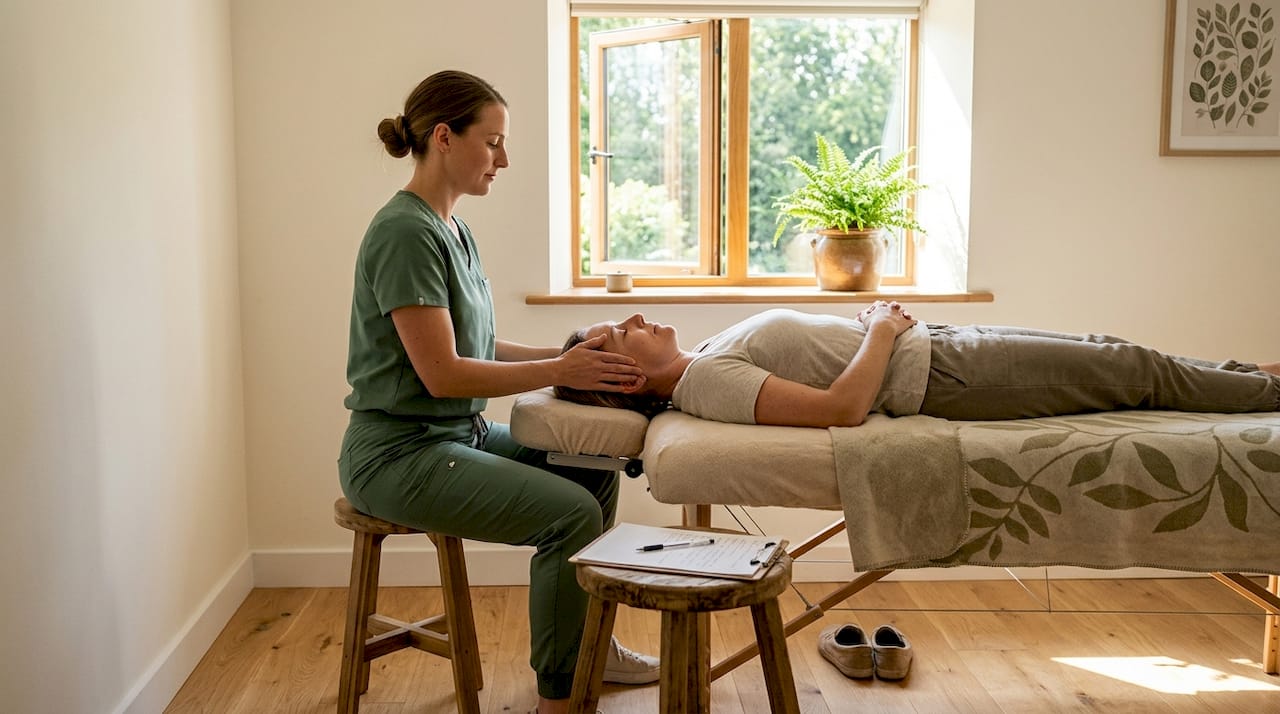
Craniosacral rhythm is one of those terms that sounds like it belongs on a wellness spa menu, but it’s actually a measurable physiological process studied by researchers, practiced by licensed therapists, and debated in peer-reviewed journals. If you’ve been searching for pain relief in Queens or Nassau County and stumbled across craniosacral therapy, you may have wondered whether this is real medicine or just a trendy alternative treatment. The honest answer sits somewhere in the middle, and understanding where science agrees and where it doesn’t can help you make better decisions about your care. This article breaks it all down clearly.
Table of Contents
Defining craniosacral rhythm: What it is and where it comes from
Exploring the scientific debate: Evidence, skepticism, and new perspectives
How craniosacral rhythm influences therapy and wellness practices
Applying craniosacral rhythm awareness: What it means for pain relief seekers
A fresh perspective: The uncomfortable truth about craniosacral rhythm
Get support for pain relief and holistic healing with CRS Wellness
Key Takeaways
Point | Details |
Scientific debate | There is ongoing disagreement about the existence and reliability of craniosacral rhythm. |
Practical benchmarks | A typical craniosacral rhythm is about 6 cycles per minute with a 58 micrometer amplitude. |
Subjectivity matters | Assessment of rhythm depends heavily on practitioner skill and subjective palpation. |
Therapeutic potential | Some users experience pain relief and relaxation, although the scientific evidence is mixed. |
Defining craniosacral rhythm: What it is and where it comes from
Craniosacral rhythm, often abbreviated as CSR, refers to subtle, rhythmic movements or oscillations that occur within the body’s craniosacral system. That system includes the brain, spinal cord, and the membranes and cerebrospinal fluid (CSF) that surround them. The idea is that these oscillations can be felt by a trained practitioner’s hands and may reflect the state of the nervous system and overall health.
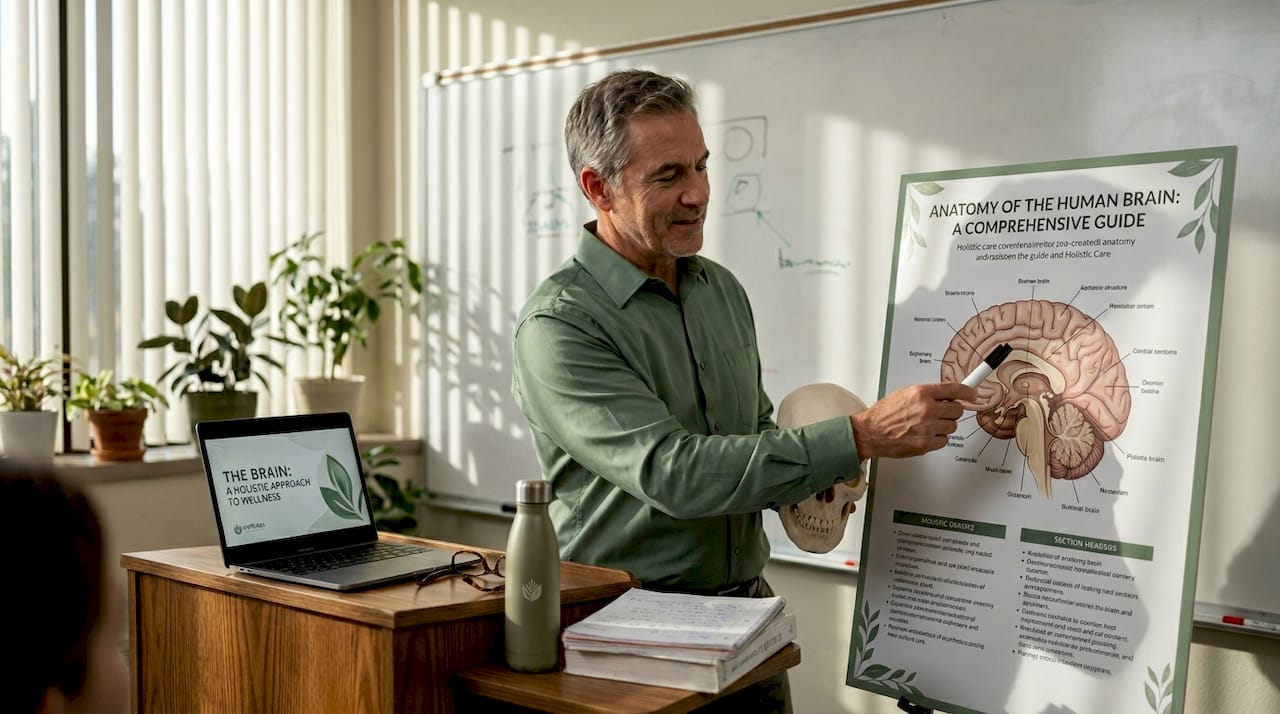
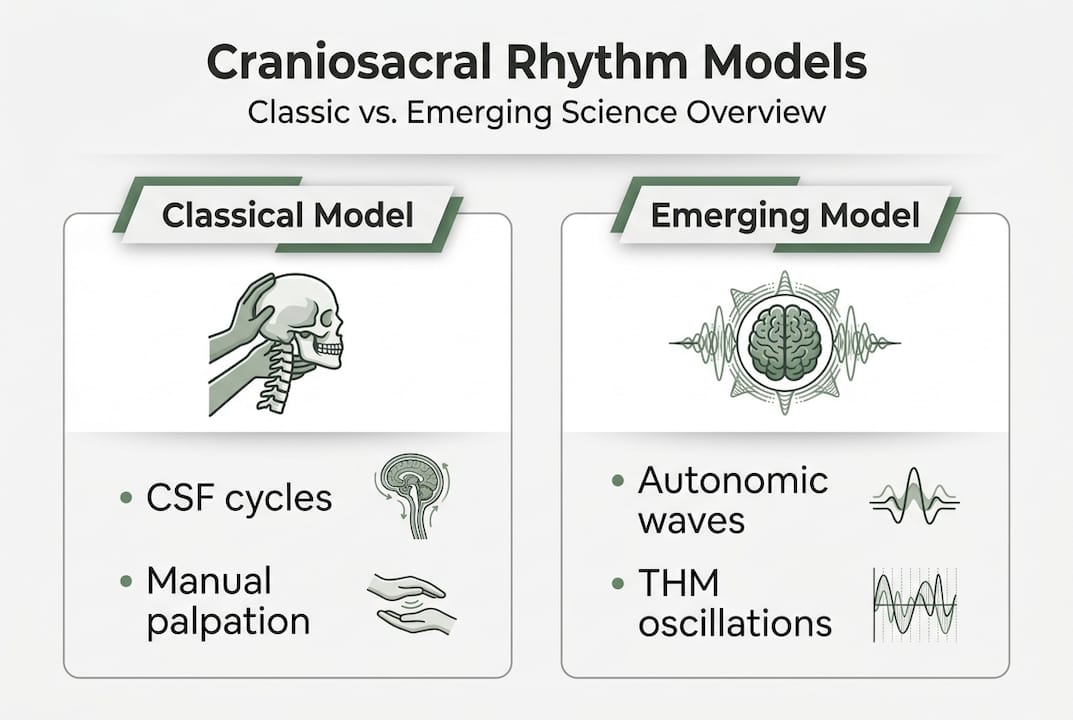
The concept was originally developed by osteopath William Garner Sutherland in the early 1900s, and later expanded by John Upledger in the 1970s and 1980s. Their original model suggested that fluctuations in cerebrospinal fluid production caused rhythmic flexion and extension of the cranium (skull) and sacrum (the large bone at the base of the spine). This became the foundation of craniosacral therapy as most people know it today.
However, recent research supports neurogenic vasomotion, meaning the oscillations are more likely linked to Traube-Hering-Mayer (THM) waves or autonomic nervous system oscillations rather than CSF pressure changes. THM waves are slow, rhythmic pressure fluctuations in the cardiovascular and nervous systems that occur naturally in the body. The amplitude of the craniosacral rhythm has been measured at approximately 58 micrometers in amplitude, which is tiny but potentially detectable by skilled hands.
This shift in thinking is significant. It moves the conversation away from a model that critics found anatomically implausible toward one grounded in established neurophysiology.
Key anatomical players in craniosacral rhythm
The cranium: The skull, made up of multiple bones that were once thought to shift slightly during CSR
The sacrum: The triangular bone at the base of the spine, believed to mirror cranial movement
Cerebrospinal fluid (CSF): The clear fluid that cushions and protects the brain and spinal cord
Dural membranes: The tough connective tissue layers that encase the brain and spinal cord
The autonomic nervous system: Now considered a likely driver of the rhythmic oscillations observed
Craniosacral rhythm at a glance
Feature | Classical model (Sutherland/Upledger) | Emerging model (THM/autonomic) |
Source of rhythm | CSF pressure fluctuations | THM waves and autonomic oscillations |
Cranial bone movement | Yes, believed to occur | Not well-supported anatomically |
Normative rate | 6 to 12 cycles per minute | 6 cycles per minute |
Amplitude | Not precisely defined | Approximately 58 micrometers |
Scientific support | Disputed | Growing, more plausible |
To understand how this rhythm is used in practice, it helps to first read about what is craniosacral therapy and the core principles behind it.
The takeaway here is that the “what” of craniosacral rhythm has evolved. It is no longer framed purely as CSF pushing bones around, but as a measurable physiological signal tied to the nervous system. That is a more credible foundation, and it’s changing how thoughtful practitioners approach their work.
Exploring the scientific debate: Evidence, skepticism, and new perspectives
Here’s where things get interesting. Craniosacral therapy sits in an uncomfortable space: too well-established to dismiss outright, but not well-evidenced enough to be fully embraced by mainstream medicine. Understanding both sides helps you evaluate it fairly.
The skeptics make valid points
Critics of craniosacral therapy raise several serious concerns. First, there is the question of anatomical plausibility. Adult cranial bones are largely fused, which makes the original theory of skull bones shifting with CSF pressure difficult to accept. Second, inter-rater reliability in palpation is low, meaning two trained practitioners often detect different rhythms in the same patient. That is a significant problem for a therapy that relies on subjective assessment. Third, meta-analyses have consistently found insufficient high-quality evidence to draw firm clinical conclusions.
Some researchers have gone further, calling the Sutherland model pseudoscience and suggesting that any benefits reported by patients are likely due to the placebo effect, therapeutic touch, or simply the relaxation that comes from lying quietly while someone gently touches your head and spine.
“Critics argue no anatomical basis for cranial bone movement in adults, low inter-rater reliability in palpation, effects likely placebo; meta-analyses show insufficient high-quality evidence.” (PMC11853516)
These are fair criticisms. No honest practitioner should ignore them.
But the emerging science adds nuance
The paradigm shift from CSF to THM waves and autonomic oscillations changes the conversation. If craniosacral rhythm is actually a reflection of autonomic nervous system activity, it becomes much more plausible as a real, measurable phenomenon. Autonomic dysregulation is well-documented as a factor in chronic pain, anxiety, and a range of health conditions. A therapy that addresses this system is not inherently implausible.
Furthermore, researchers note that skilled palpators with extensive training can distinguish CSR more reliably than novice practitioners. This suggests that the inter-rater reliability problem may partly reflect training differences, not a fundamental flaw in the concept itself.
Classical versus emerging models: A comparison
Aspect | Classical model | Emerging model |
Mechanism | CSF pressure cycles | Autonomic and THM oscillations |
Clinical validity | Widely disputed | More biologically plausible |
Palpation reliability | Low overall | Improves with expert training |
Placebo risk | High concern | Still a concern, but less dismissible |
Research quality | Mostly weak | Growing body of better studies |
Pro Tip: When evaluating any alternative therapy, look for practitioners who acknowledge both the evidence and its limits. A good craniosacral therapist should welcome your questions, not deflect them.
Exploring the unique benefits of craniosacral therapy in the context of this debate gives you a more grounded picture of what to realistically expect from a session.
The bottom line: the science is incomplete, but it is not nothing. There is enough biological plausibility and patient-reported benefit to warrant thoughtful clinical consideration, particularly for people who haven’t found relief through conventional approaches alone.
How craniosacral rhythm influences therapy and wellness practices
So how does this science translate into what actually happens during a session? Understanding the practical side helps you know what to expect and how to evaluate whether a practitioner is working responsibly.
How therapists assess craniosacral rhythm
A trained therapist typically begins by resting their hands lightly on different parts of your body, often the skull, sacrum, feet, or ribcage. They are not applying pressure but rather tuning in to subtle sensations. What they’re detecting, according to the updated model, is likely a combination of autonomic nervous system activity, cardiovascular pulsations, and fascial movement.
Here’s a step-by-step look at a typical assessment:
Initial contact: The therapist gently places their hands on the cranium or feet to begin feeling for rhythm and symmetry.
Rhythm evaluation: They assess the rate, amplitude, and quality of the perceived rhythm. A normative rate of 6 cycles per minute serves as a reference point.
Restriction identification: Areas where the rhythm feels reduced, irregular, or absent may indicate tissue tension or nervous system dysregulation.
Gentle intervention: Using extremely light touch, the therapist works to release restrictions and encourage the body’s natural self-correction.
Reassessment: After techniques, the therapist re-evaluates to see if the rhythm has shifted toward a more balanced pattern.
Why benchmarks matter
The normative benchmark of 6 cycles per minute and approximately 58 micrometers of amplitude gives practitioners a reference point, but the updated research strongly cautions against over-reliance on palpation alone. Subjective assessment has its limits. That’s why experienced therapists combine rhythm palpation with patient history, symptom patterns, and other clinical information.
Pro Tip: If you’re exploring craniosacral therapy for pain relief, ask your therapist how they integrate rhythm assessment with other clinical findings. A practitioner who relies solely on palpation without considering your full health picture may not be giving you the best care.
What this means for pain management and relaxation
Many patients in Nassau County and Queens report meaningful improvements in pain, stress, and sleep after craniosacral sessions. Whether this is driven by direct neurophysiological effects, the calming power of therapeutic touch, or both is still being studied. But the practical impact is real for many people.
You can learn more about what to expect by reading this step-by-step craniosacral therapy guide, which walks through how sessions are structured for pain relief goals.
For those seeking local care, our craniosacral therapy in Albertson page outlines specifically how we approach this work at our clinic. Our therapists are trained to combine craniosacral rhythm assessment with evidence-informed physical therapy techniques for a truly integrated experience.
The key takeaway: craniosacral rhythm assessment is a starting point for therapy, not an endpoint. It informs the practitioner’s hands-on approach and helps personalize the session to what your body needs that day.
Applying craniosacral rhythm awareness: What it means for pain relief seekers
If you’re a patient or caregiver in Queens or Nassau County looking for alternative approaches to chronic pain or tension, this section is for you. Understanding craniosacral rhythm is useful, but knowing how to use that understanding when choosing care is even more valuable.
What you should know before your first session
CSR is assessed subjectively. Even with biological plausibility established, palpation remains an imprecise science. Skilled palpators distinguish CSR better, but practitioner training and experience matter enormously.
Results vary by individual. Your rhythm, health history, and nervous system state all influence what a therapist detects and how your body responds to treatment.
It works best as part of a broader plan. Craniosacral therapy tends to produce the best outcomes when combined with physical therapy, lifestyle modifications, and other evidence-based care.
Insurance coverage varies. When provided by a licensed physical therapist as part of a broader treatment plan, craniosacral techniques may be covered. We accept Medicare, Aetna, Cigna, Emblem Health, and United Healthcare at our clinic.
Setting realistic expectations is key. Many patients report feeling deeply relaxed after sessions. Some experience significant pain relief. Others notice more gradual changes over multiple visits.
Questions to ask a craniosacral therapist before you commit
What is your training and certification in craniosacral therapy?
How do you integrate CSR assessment with other clinical information?
Have you worked with patients who have my specific condition or symptoms?
How many sessions do you typically recommend before evaluating progress?
Can craniosacral therapy be combined with my existing physical therapy plan?
These questions put the conversation on solid ground. A good practitioner will appreciate them.
Pro Tip: Don’t be discouraged if you don’t notice dramatic changes after your first session. Many people experience subtle shifts in tension, sleep quality, or mood before broader pain relief sets in. Track your symptoms between sessions to give your therapist useful feedback.
For those dealing with long-term pain, craniosacral therapy for chronic pain is worth exploring. And if you’re not sure whether physical therapy in general is right for your recovery path, this overview of physical therapy in rehabilitation can help clarify your options.
The most important thing is that you feel informed and respected in your healthcare decisions. Craniosacral rhythm is a real physiological concept with real practical implications, and you deserve to understand it before you commit to care.
A fresh perspective: The uncomfortable truth about craniosacral rhythm
Here’s something most articles won’t tell you: the debate around craniosacral rhythm is actually good for patients.
When a therapy has vocal critics and defenders, it forces practitioners to be more rigorous. At our clinic, we don’t use craniosacral rhythm assessment as a magic diagnostic tool. We use it as one lens among many, one that helps us tune into how your nervous system is responding and where tension patterns may be limiting your healing.
The uncomfortable truth is that much of medicine involves skilled interpretation of imperfect signals. Craniosacral palpation is not unique in being subjective. Blood pressure readings vary between practitioners. Pain scores are inherently personal. What matters is whether the information gathered guides better care.
Patients who benefit most from craniosacral therapy tend to approach it with open curiosity, not blind faith. They ask questions, track their symptoms, and combine it with physical therapy and lifestyle changes. That combination is where the real results happen.
Learn more about what craniosacral therapists do to see how this approach is applied by qualified clinicians who understand both the science and its limits.
Get support for pain relief and holistic healing with CRS Wellness
If you’re ready to take the next step toward pain relief and holistic healing in Queens or Nassau County, CRS Wellness at our Albertson, NY clinic is here to help.
We offer physical therapy and craniosacral therapy services designed around your individual needs, not a one-size-fits-all protocol. Our therapists bring both scientific knowledge and clinical sensitivity to every session. We accept Medicare, Aetna, Cigna, Emblem Health, and United Healthcare, so getting started may be more accessible than you think. Explore our therapies to see the full range of what we offer. You can also visit our Roslyn craniosacral therapy and Albertson craniosacral therapy pages to learn what care looks like in your area. Contact us today to schedule your consultation.
Frequently asked questions
Is craniosacral rhythm scientifically proven?
While some studies identify measurable oscillations in the body, many experts dispute its clinical validity due to insufficient high-quality evidence and the subjective nature of palpation-based assessment.
Can craniosacral therapy help with chronic pain?
Evidence is mixed, but many people report genuine pain relief and relaxation following treatment, which may be linked to skilled palpation and holistic assessment guiding personalized therapeutic work.
What is the typical craniosacral rhythm rate?
Research identifies a normative craniosacral rhythm of 6 cycles per minute with an amplitude of approximately 58 micrometers, though individual variation is common.
Is craniosacral rhythm the same for everyone?
No. Rhythm varies based on health status, nervous system activity, and practitioner skill, and palpation subjectivity means even experienced therapists may perceive it differently in the same patient.
Recommended
Comments