
How craniosacral therapy eases your symptoms: Science explained
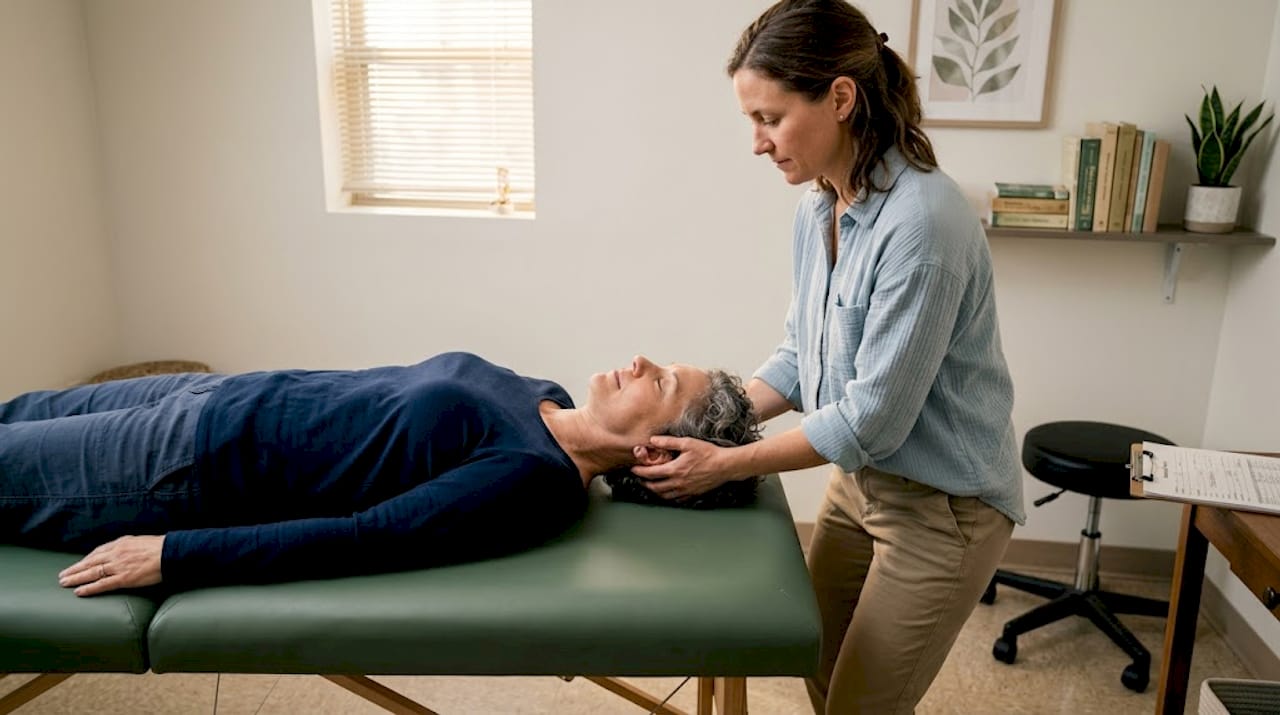
Living with persistent headaches, jaw tension, neck pain, or stress that simply won’t quit is exhausting. When conventional treatments plateau and you’re still searching for relief, it’s natural to look beyond the usual options. Craniosacral therapy (CST) is gaining real traction among people in Queens and Nassau County who want a gentle, hands-on approach that works alongside traditional physical therapy. This article breaks down exactly what CST is, which symptoms it may ease, what the research actually shows, and how to decide whether it’s the right next step for you.
Table of Contents
Key Takeaways
Point | Details |
Gentle, hands-on relief | Craniosacral therapy is a light-touch method often used for easing chronic pain, tension, and stress-related symptoms. |
Reported benefits | Research suggests headaches, neck and back pain, and TMJ issues often respond to CST, though results vary. |
Evidence is evolving | Some studies show positive effects for pain relief, but overall scientific support remains mixed. |
Best as complementary care | CST works well when combined with other therapies and a holistic wellness approach. |
Understanding craniosacral therapy: What it is and how it works
Craniosacral therapy is a gentle, hands-on treatment that uses an extremely light touch, roughly the weight of a nickel (about 5 grams), to assess and release restrictions in the craniosacral system. That system includes the membranes and cerebrospinal fluid (the clear fluid that cushions your brain and spinal cord) that surround and protect your central nervous system. CST is a gentle, hands-on therapy that uses light touch to release restrictions in the craniosacral system, helping restore natural rhythm and fluid motion throughout the body.
During a typical session, you lie fully clothed on a treatment table while a trained therapist places their hands on areas like your skull, spine, and sacrum (the triangular bone at the base of your spine). The therapist listens for subtle rhythmic movements in the craniosacral system and uses gentle pressure to encourage normal motion where restrictions are found. Sessions usually last between 45 and 60 minutes, and most people describe the experience as deeply relaxing.
To understand what is craniosacral therapy at a practical level, think of it this way: the craniosacral system has its own subtle rhythm, separate from your heartbeat or breathing. When that rhythm is disrupted by injury, stress, or chronic tension, the effects can ripple through your entire body. CST aims to restore that balance.
Here is a quick overview of what CST involves:
Touch pressure: Approximately 5 grams, lighter than most people expect
Target areas: Skull, spine, sacrum, and surrounding soft tissues
Session length: Typically 45 to 60 minutes per visit
Clothing: You remain fully clothed throughout
Practitioner training: Performed by licensed physical therapists, osteopaths, or certified CST practitioners
“The goal of craniosacral therapy is not to force change but to create the conditions in which your body’s own self-correcting mechanisms can do their work.” This principle shapes how every session is approached, making CST one of the gentler options available in integrative care.
CST is generally considered safe for most adults and is increasingly being offered within physical therapy practices as a complementary tool rather than a standalone cure.
Top symptoms reported to ease with craniosacral therapy
Now that you know what CST is, let’s look at the symptoms that may improve the most with this method.
Research and clinical reports point to a consistent cluster of symptoms that respond well to CST. If you’ve been managing any of the following, CST may be worth exploring as part of your care plan.
Commonly reported symptoms that may improve with CST:
Headaches and migraines: One of the most frequently cited benefits, with some patients reporting fewer episodes and reduced severity
Neck and back pain: Gentle spinal work and fascial release (releasing tension in the connective tissue around muscles) can ease chronic stiffness
TMJ discomfort: The temporomandibular joint, the “sliding hinge” connecting your jaw to your skull, responds well to the subtle decompression techniques used in CST
Stress and anxiety symptoms: The deeply relaxing nature of CST activates the parasympathetic nervous system, which is your body’s “rest and digest” mode
Post-concussion symptoms: Emerging evidence suggests CST may help with lingering headaches, brain fog, and sensitivity after a concussion
Sleep disturbances: Patients often report improved sleep quality following a course of CST sessions
Reported symptom relief includes chronic pain in the back, neck, and joints, as well as headaches, migraines, TMJ issues, post-concussion recovery, and stress-related anxiety.

Symptom | Frequency of reported relief | Strength of clinical evidence |
Chronic headaches/migraines | Very common | Moderate |
Neck and back pain | Very common | Moderate |
TMJ discomfort | Common | Moderate |
Stress and anxiety | Common | Low to moderate |
Post-concussion symptoms | Emerging | Preliminary |
Sleep disturbances | Reported anecdotally | Low |
It’s important to note that individual responses vary. CST is not a cure-all, and what works well for one person may produce only mild results for another. Effective chronic pain management typically requires a layered approach, and CST fits best as one piece of a broader plan.
You can also explore how CST may relieve chronic pain when combined with traditional physical therapy techniques for a more complete treatment strategy.
Pro Tip: If you’ve already tried massage, chiropractic care, or standard physical therapy without full relief, CST may address a different layer of tension that those approaches didn’t reach. Ask your therapist whether craniosacral therapy in Albertson is available and appropriate for your specific symptoms.
Scientific evidence: How strong is the proof for symptom relief?
Before making a decision, it’s important to understand what the science really says.
The research on CST is growing, but it’s not without its limitations. Here’s an honest look at what studies have found.
A significant body of work supports CST’s potential. Meta-analyses show significant effects on pain and physical function, and randomized controlled trials (RCTs, the gold standard in clinical research) report meaningful headache reductions and improved quality of life following CST. However, the same reviews acknowledge that evidence quality is low to moderate and inconsistent across studies.
What the research supports:
Statistically significant reductions in chronic pain intensity compared to control groups
Fewer headache days per month in migraine sufferers after a course of CST
Improved physical function and reduced disability scores in chronic back pain patients
Positive effects on anxiety and stress-related symptoms, likely tied to deep relaxation
Where the evidence is weaker:
Study sample sizes are often small, making it harder to generalize results
Blinding participants in touch-based therapy is difficult, which can inflate perceived benefits
Placebo and relaxation effects may account for a meaningful portion of reported improvement
Long-term outcomes beyond three to six months are rarely tracked
Evidence category | Finding | Quality rating |
Chronic pain reduction | Significant improvement vs. control | Moderate |
Headache frequency | Fewer episodes after CST | Moderate |
Quality of life | Improved scores reported | Low to moderate |
Anxiety and stress | Positive short-term effects | Low |
Pregnancy-related pain | No consistent benefit vs. sham | Low |
A useful resource for understanding this nuance is our craniosacral therapy guide, which walks through what to expect at each stage of treatment.
The bottom line is that CST shows real promise, especially for headaches and chronic pain, but it works best when you go in with realistic expectations. It is a supportive therapy, not a replacement for evidence-based medical care.
Criticisms, limits, and who benefits most from CST
Of course, every therapy has its critics and limits, so here’s what you need to know.
CST is not without controversy. Some researchers and clinicians question whether the core mechanisms behind it, specifically the idea of detecting craniosacral rhythm, are scientifically valid. Critics argue that inter-rater reliability (whether two therapists agree on what they feel) is low, and that much of the benefit may come from the therapeutic relationship and relaxation response rather than any specific anatomical correction.
Proponents cite relaxation and parasympathetic benefits, while critics point to unproven mechanisms and placebo effects. Importantly, CST is considered safe for all ages, but many studies have methodological issues that limit how strongly we can interpret their findings.
Key limitations to keep in mind:
Placebo and relaxation effects are real and may contribute significantly to reported outcomes
Therapist skill and training vary widely, which affects results
Not all insurance plans cover CST, though some do under physical therapy benefits
CST has not been shown to be superior to sham treatment for certain pregnancy-related pains
Who tends to benefit most:
Adults with chronic, tension-related headaches or migraines
Individuals with persistent neck or back pain that hasn’t fully responded to other treatments
People dealing with TMJ discomfort or jaw tension
Those managing stress-related physical symptoms, such as tight shoulders or poor sleep
“The gentleness of CST makes it particularly appealing for individuals who find more aggressive manual therapies uncomfortable or who are in a sensitive recovery phase.”
For children, preliminary evidence suggests short-term developmental improvements in some populations, but these results are early-stage and should be interpreted cautiously. CST is generally safe for infants and older adults when delivered by a well-trained provider.
If stress is a primary driver of your symptoms, pairing CST with mindfulness for anxiety practices can enhance the overall calming effect. You can also learn more about how CST for stress relief works as part of a broader wellness strategy.
Pro Tip: Always ask a potential CST provider about their specific training and certification. A licensed physical therapist with formal CST training offers both the manual therapy expertise and the clinical judgment to integrate CST safely with your overall care plan.
Choosing craniosacral therapy: When it makes sense and how to decide
With a balanced view, here’s how to decide if craniosacral therapy could be a good fit for you.
Making this decision doesn’t have to be complicated. The following checklist can help you identify whether CST aligns with your current situation and goals.
You have persistent tension or pain that hasn’t fully resolved with standard physical therapy, massage, or chiropractic care
Your symptoms are stress-related or involve the nervous system, such as chronic headaches, jaw clenching, or sleep disruption
You prefer a gentle, non-invasive approach and find more aggressive manual therapies uncomfortable
You are open to a complementary therapy that works alongside, not instead of, your primary medical treatment
You have realistic expectations and understand that CST may reduce symptoms rather than eliminate them entirely
You have access to a qualified provider who is a licensed physical therapist or certified CST practitioner with documented training
Expert nuance confirms that the benefits of CST likely arise from a combination of gentle touch and the therapeutic alliance between patient and provider, and that larger, well-designed RCTs are still needed to fully establish its efficacy.
Combining CST with other physical therapy modalities, such as therapeutic exercise, myofascial release, or postural correction, tends to produce better outcomes than CST alone. Think of it as adding a layer of gentle nervous system support to an already solid rehabilitation foundation.
For residents of Queens and Nassau County, access to qualified CST providers within a physical therapy setting is an important factor. Knowing that your therapist can assess your whole musculoskeletal picture, not just one technique, gives you a significant advantage in achieving lasting relief. Explore the unique CST benefits that a multidisciplinary approach can offer when CST is integrated thoughtfully into your plan.
Pro Tip: Start with a consultation rather than committing to a full course of sessions. A good CST-trained physical therapist will assess whether your symptoms are likely to respond and will set clear, measurable goals with you before treatment begins.
Our perspective: What practitioners and patients should really expect
At this point, it’s wise to pause for a fresh perspective, one rooted in experience as well as evidence.
Here is what we’ve observed working with patients across Nassau County and Queens: the most meaningful symptom relief from CST rarely comes from a single mechanism. It comes from the combination of intentional, skilled touch and the sense of being genuinely heard and cared for during a session. That therapeutic relationship matters more than most clinical studies measure.
We believe practitioners have a responsibility to be transparent. CST is best positioned as a complementary therapy, not a primary treatment. Patients who walk in expecting a miracle often walk out disappointed. But patients who come in understanding that CST can reduce tension, calm the nervous system, and support recovery alongside other therapies? They tend to report meaningful improvements.
Understanding what craniosacral therapists really do in a session helps set that expectation clearly. The greatest gains come when CST is part of a broader wellness strategy that includes movement, stress management, and open communication with your care team.
Start your craniosacral therapy journey with local experts
Ready to explore craniosacral therapy for yourself?
At our boutique physical therapy clinic in Albertson, NY, we offer CST as part of a personalized, integrative approach to care. We serve patients throughout Queens and Nassau County and accept Medicare, Aetna, Cigna, Emblem, and United Healthcare plans, so accessing quality care is more straightforward than you might think.
Whether you’re dealing with chronic headaches, jaw tension, neck pain, or stress-related symptoms, our team is here to help you figure out whether CST is the right fit. Browse our therapy services to see the full range of treatments we offer, or visit our Albertson physical therapy location page to learn more about our clinic. You can also explore everything available at our craniosacral therapy clinic and book a consultation to get started.
Frequently asked questions
What symptoms are most likely to improve with craniosacral therapy?
CST is most frequently reported to help with headaches, neck and back pain, stress-related symptoms, and TMJ discomfort, with reported symptom relief also extending to chronic joint pain and post-concussion recovery in some patients.
Is craniosacral therapy safe for children or older adults?
CST is generally considered safe for all ages, including infants and older adults, and preliminary findings suggest short-term benefits for some pediatric populations when delivered by a well-trained provider.
How much scientific evidence supports CST for symptom relief?
Meta-analyses show significant effects on pain and function, especially for chronic pain and headaches, but overall evidence quality remains mixed and more high-quality research is still needed.
Can CST be combined with other physical therapy treatments?
Yes, CST is commonly and effectively used alongside traditional physical therapy techniques such as therapeutic exercise and myofascial release, often producing better outcomes than either approach alone.
Are there any symptoms or conditions where CST may not help?
CST has not consistently shown effectiveness for acute injuries or certain pregnancy-related pains, and some meta-analyses found no significant difference between CST and sham treatment for specific pregnancy pain conditions, with results varying between individuals.
Recommended
Comments