
Hands-on therapy: Benefits, evidence, and how it works
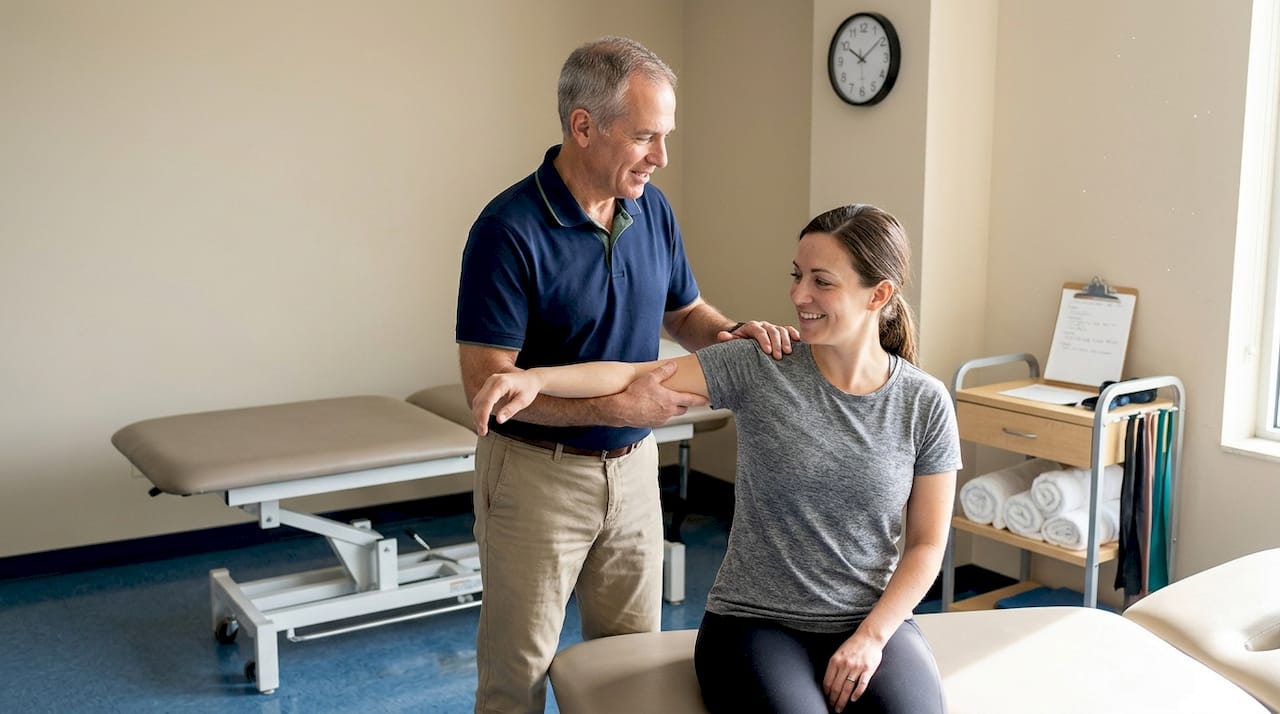
Most people picture a physical therapist putting patients through exercise routines when they think of PT. Stretches, resistance bands, balance boards. That picture is incomplete. Hands-on therapy, sometimes called manual therapy, is a distinct category of treatment where a trained therapist uses their hands directly on your body to reduce pain, restore movement, and calm your nervous system. For people in Queens and Nassau County dealing with injury recovery, chronic stress, or stubborn aches that exercise alone hasn’t resolved, understanding hands-on therapy can open the door to a more effective path forward.
Table of Contents
Key Takeaways
Point | Details |
Evidence-backed support | Hands-on therapy complements exercise and is supported for pain and stress relief in scientific studies. |
Best as adjunct treatment | Manual and craniosacral therapies work best with, not instead of, other therapies and medical care. |
Individualized care matters | Effective therapy depends on provider skill, communication, and tailoring the approach to you. |
Know before you book | Ask about your therapist’s training and how hands-on methods fit into your overall recovery plan. |
Defining hands-on therapy: More than just massage
Hands-on therapy is a broad clinical term covering manual techniques applied by a licensed therapist during a session. It is not a spa treatment, and it is not general massage. The intent, training required, and expected outcomes are fundamentally different.
In clinical practice, hands-on therapy includes several distinct approaches:
Joint mobilization: Gentle, guided movement of a stiff or restricted joint to restore normal range of motion
Soft tissue mobilization: Targeted pressure and movement applied to muscles, fascia (the connective tissue wrapping your muscles), and tendons
Myofascial release: Sustained pressure on tight fascial tissue to reduce tension and improve flexibility
Craniosacral therapy (CST): A very light-touch technique focused on the membranes and fluid surrounding the brain and spinal cord, which we explain in detail in our guide to craniosacral therapy basics
Trigger point therapy: Direct pressure on specific muscle knots that refer pain to other areas of the body
The difference between hands-on therapy and general massage comes down to clinical reasoning. A licensed physical therapist performing manual therapy has assessed your condition, identified a specific impairment, and chosen a technique designed to address that impairment. A massage therapist provides general relaxation and muscle work, which has its own value, but it is not the same clinical process.
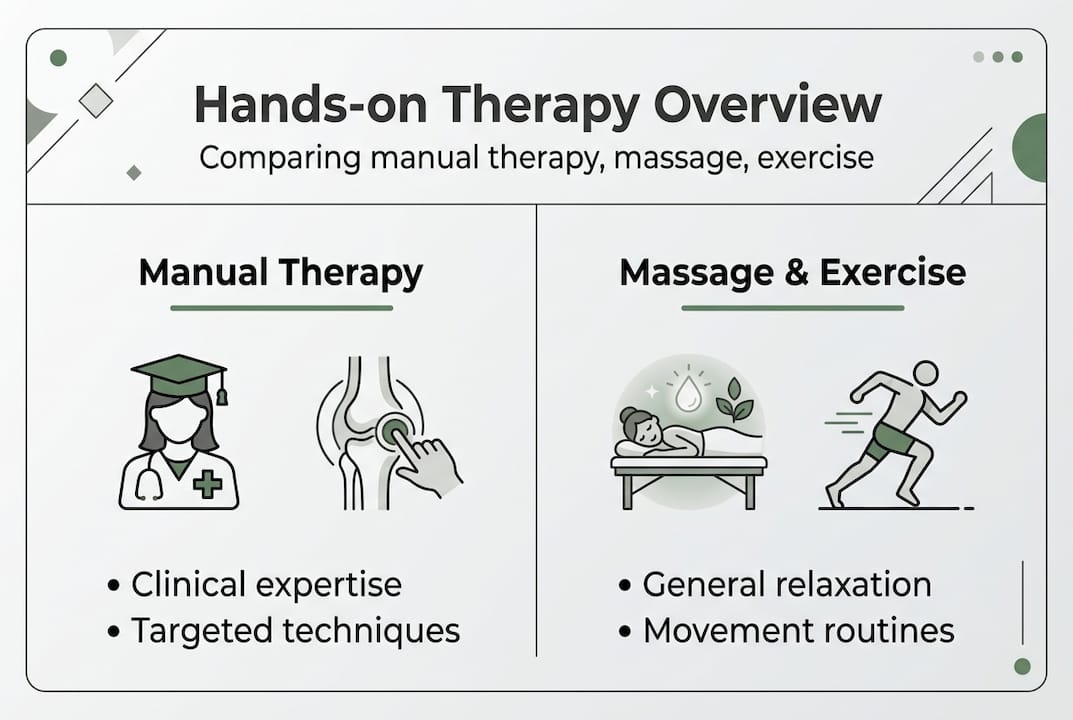
Here is a quick comparison to clarify the differences:
Feature | Hands-on (manual) therapy | General massage | Exercise-based PT |
Clinical assessment first | Yes | Sometimes | Yes |
Targets specific impairments | Yes | Rarely | Yes |
Affects joints and fascia | Yes | Muscles only | Indirectly |
Requires licensed PT | Yes | No | Yes |
Used for injury recovery | Yes | Supportive | Yes |
Evidence base | Strong to moderate | Moderate | Strong |
Research confirms that manual therapy as adjunct to exercise is evidence-supported, while CST shows preliminary positive results in some randomized controlled trials (RCTs) but is best used as a complementary approach rather than a standalone treatment.
Hands-on therapy is used for a surprisingly wide range of conditions. Neck and back pain are the most common reasons people seek it, but therapists also use these techniques for headaches, TMJ (jaw joint) dysfunction, post-surgical recovery, sports injuries, and even stress management in adults. In children, some approaches are being studied for developmental support.
Pro Tip: Not all hands-on therapies carry equal evidence. Before starting, ask your provider about their specific training, how long they have practiced the technique, and what outcomes you should realistically expect in your first four to six weeks.
How does hands-on therapy work? The science and the experience
Once you understand what hands-on therapy is, the next question is: how does it actually work inside the body? The answer involves both physical and neurological mechanisms working together.
Here is what a typical session looks like, step by step:
Assessment: Your therapist reviews your history, observes your posture, and tests the movement and sensitivity of affected areas. This takes roughly 10 to 15 minutes and shapes everything that follows.
Hands-on technique: The therapist applies the chosen method, whether joint mobilization, CST, or soft tissue work, with careful attention to your feedback. Techniques are adjusted in real time based on how your body responds.
Active integration: After hands-on work, you may be guided through gentle movements or breathing exercises to help your nervous system “accept” the changes made during the session.
Home plan: Most sessions end with specific recommendations for movement, posture, or self-care between appointments.
The physiological effects are well documented. Manual techniques stimulate mechanoreceptors (pressure and movement sensors) in joints and soft tissue, sending signals that reduce pain perception at the spinal cord level. This is called gate control, where non-painful sensory input effectively “crowds out” pain signals. Techniques like CST appear to also influence the autonomic nervous system, the part of your body that governs the stress response.
In a randomized controlled trial, craniosacral therapy significantly increased oxytocin in stressed individuals, with median levels rising from 54.71 to 57.77 pg/mL (p=0.026). Oxytocin is often called the “bonding hormone” and plays a key role in reducing anxiety and promoting a sense of calm.
That is a meaningful finding. It suggests that CST is not simply a placebo but may genuinely influence stress hormones at a measurable level. For individuals in Nassau County dealing with chronic stress, anxiety, or tension headaches, learning how CST reduces stress is an important part of evaluating your options.
Beyond hormones, hands-on therapy also reduces muscle guarding. When you are injured or in pain, surrounding muscles tighten involuntarily to protect the area. This protective tension can outlast the original injury and become a pain source in itself. Skilled manual therapy breaks that cycle by sending safety signals to the nervous system, allowing muscles to finally relax.
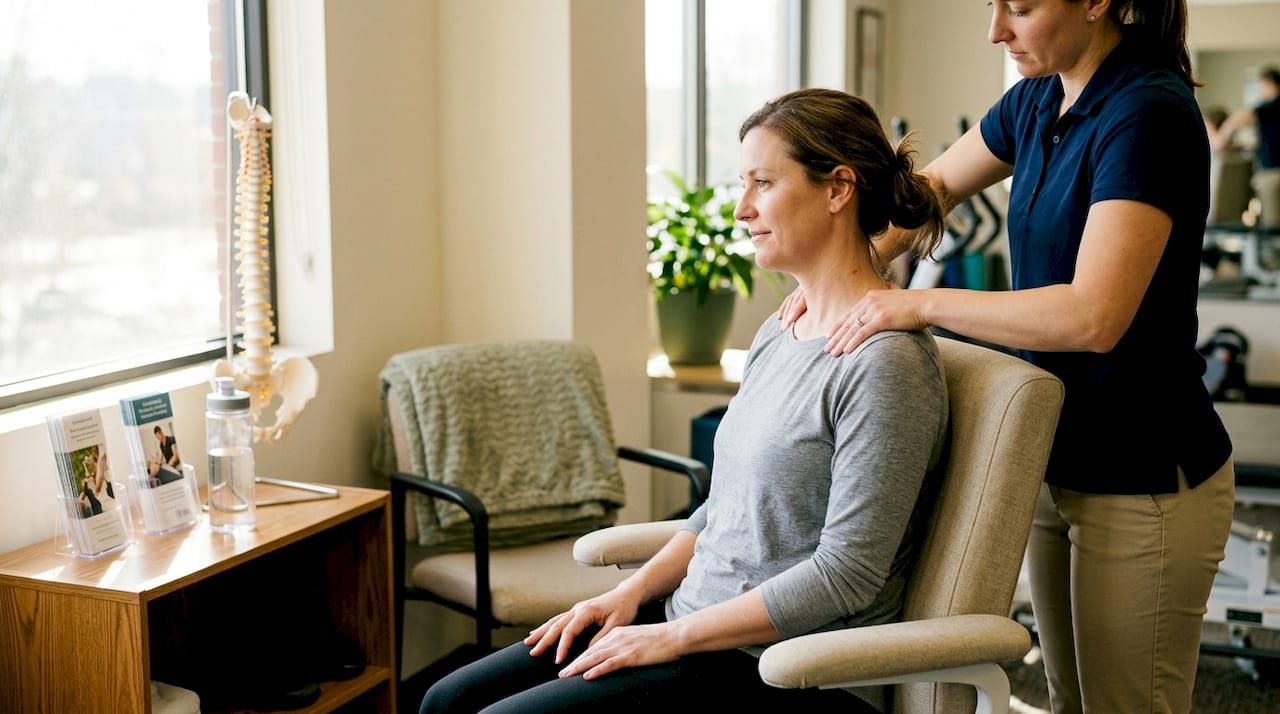
Understanding what therapists do during a session helps you arrive prepared and get more from each visit.
Pro Tip: Tell your therapist exactly what you feel during each technique, whether pressure, warmth, tingling, or discomfort. Hands-on therapy works best as a two-way conversation, not a passive experience.
What does the evidence say? Clinical results and limitations
Research on hands-on therapy has grown significantly over the past two decades. Here is an honest look at what the evidence shows, what it does not show, and what that means for you.
Therapy type | Evidence for pain | Evidence for stress | Evidence for function | Limitation |
Manual therapy (joint mob.) | Strong | Moderate | Strong | Varies by condition |
Craniosacral therapy (CST) | Moderate (headaches) | Promising (hormonal) | Early stage | Small trial sizes |
Soft tissue massage | Moderate | Good (short term) | Moderate | Not condition-specific |
Exercise-based PT | Very strong | Moderate | Very strong | Requires patient effort |
The picture that emerges is nuanced. Manual therapy for joint and soft tissue issues has strong research behind it, particularly for neck pain, low back pain, and shoulder dysfunction. It is widely recognized as a first-line clinical tool when combined with therapeutic exercise.
CST occupies a more cautious corner of the research world. CST evidence, not standalone confirms it is promising for stress, headaches, and some developmental improvements in children, but current evidence is limited and it should not be used as a sole treatment. That said, dismissing it entirely would also be inaccurate. The RCT on oxytocin and CST demonstrated statistically significant hormone changes after five weeks of treatment, which points toward real physiological effects worth taking seriously.
Realistic benefits you can expect from hands-on therapy:
Noticeable reduction in muscle tension and local pain within the first two to four sessions
Improved joint range of motion, especially in the neck, shoulders, and lower back
Short-term stress relief and a measurable sense of calm following CST sessions
Better sleep quality reported by many patients during courses of manual treatment
Support for chronic pain evidence when integrated into a broader rehab plan
One area generating real interest is pediatric therapy. Children’s therapy approaches that include gentle manual techniques show short-term developmental gains, though more research is needed before strong recommendations can be made.
The honest message is this: hands-on therapy is not a miracle cure. But when it is used alongside exercise and patient education, the evidence supports it as a meaningful part of recovery and stress management. If you have been searching for CST for natural pain relief and wondering whether it is worth trying, the research says it is reasonable to explore, especially under the guidance of a qualified therapist.
Is hands-on therapy right for you? What to know before booking
Deciding whether to pursue hands-on therapy does not need to be overwhelming. Breaking it down into clear steps makes the process manageable.
Three steps for starting hands-on therapy:
Research the specific technique. There is a difference between a physical therapist trained in joint mobilization and one certified in craniosacral therapy. Know what you are looking for based on your symptoms. Stress and headaches? CST may be a good fit. Post-injury stiffness? Joint mobilization is likely the better starting point.
Schedule a consultation before committing. A good therapist will conduct a full evaluation before recommending a technique. If you are offered treatment on your very first contact without any assessment, that is a warning sign.
Ask the right questions about training and integration. Credentials matter, but so does how the therapist integrates hands-on work with movement and education. The unique CST benefits available through specialized training are quite different from general massage, and you deserve to understand what you are receiving.
Evidence confirms that CST as complementary treatment, not a standalone approach, produces the best outcomes. That means your therapist should be weaving hands-on work into a broader plan that includes movement, lifestyle guidance, and clear goals.
Questions to bring to your first session:
What specific technique will you use, and why is it appropriate for my condition?
How many sessions should I expect before seeing results?
Does this clinic accept my insurance, including Medicare, Aetna, Cigna, Emblem, or United Healthcare?
How will hands-on therapy work alongside any exercises or other treatments I am currently doing?
What should I do at home between sessions to support my progress?
Understanding the role of parents in therapy is also valuable if you are exploring hands-on options for your child, since family involvement significantly affects outcomes in pediatric cases.
Pro Tip: Always ask how your hands-on therapy will complement your other treatments. A skilled therapist actively coordinates with your other healthcare providers rather than working in isolation, and that coordination is often what makes the difference between short-term relief and lasting results.
You are a good candidate for hands-on therapy if:
You have musculoskeletal pain that has not resolved with rest alone
You experience tension headaches or chronic neck and shoulder tightness
You are managing high stress levels that are affecting your sleep or daily function
You are recovering from an injury and have been cleared for manual treatment by your doctor
You want a natural, drug-free approach to support your overall recovery plan
A fresh perspective: Why hands-on therapy is more than the sum of its parts
Here is something most articles on this topic will not tell you: the technique is only half of what makes hands-on therapy work. The other half is the therapeutic relationship itself.
In our experience working with patients across Nassau County and Queens, the biggest outcomes consistently come from sessions where the therapist listens carefully, adjusts their approach in real time, and educates the patient about what is happening in their body. Hands-on work creates a window of reduced pain and increased tissue flexibility. What happens inside that window, the movement practice, the breathing, the patient’s understanding of their own body, determines whether results last.
Most people arrive expecting to be passive recipients of treatment. The best outcomes happen when you stay engaged, ask questions, and understand why each technique is being used. Learning how to reduce stress naturally through CST is a good example: the therapy works better when you understand that it is influencing your nervous system, not just relaxing tight muscles.
We would challenge you to seek out a therapist who individualizes every session rather than applying the same protocol to every patient. That adaptability is what separates truly effective hands-on care from a routine that simply checks boxes.
Find quality hands-on therapy near Queens and Nassau County
If this article has given you clarity on what hands-on therapy involves and how it could support your recovery or stress relief, the next step is finding the right local provider.
At Contemporary Rehab Services, we offer specialized hands-on therapies at our Albertson and Roslyn physical therapy locations, making access straightforward for residents across Nassau County and Queens. Our therapists are trained in manual therapy, craniosacral therapy, and integrative approaches that blend touch with movement and education. We accept Medicare, Aetna, Cigna, Emblem, and United Healthcare plans. Explore our full range of therapy services or reach out directly to schedule a consultation at our Albertson craniosacral therapy clinic. Personalized, hands-on care is closer than you think.
Frequently asked questions
What conditions can hands-on therapy treat?
Hands-on therapy can help manage pain, recover from injuries, relieve stress, and support developmental needs in children when used alongside other treatments. Manual therapies and CST evidence confirms support for musculoskeletal pain, stress reduction, and some developmental improvements.
Is craniosacral therapy safe for children?
Early research suggests craniosacral therapy has short-term developmental benefits for children, but more study is needed; always consult a qualified therapist before starting treatment.
Can hands-on therapy replace standard physical therapy exercises?
No. Manual therapy adjunct evidence consistently supports using hands-on therapy as a complement to exercise and medical care, not as a replacement for either.
How quickly can I expect results with hands-on therapy?
Some people experience relaxation or mild pain relief after just a few sessions, but CST short-term findings show that meaningful results often emerge over four to five weeks of consistent treatment.
Does insurance cover hands-on therapeutic treatments?
Coverage varies widely depending on your plan and the specific technique used. Contact your insurance provider directly, and reach out to your therapy clinic to confirm which plans they accept before your first appointment.
Recommended
Comments