
Clinician Evidence: Small Trials on Craniosacral Therapy for Migraines

Summary: small randomized trials suggest craniosacral therapy can reduce migraine frequency, pain intensity, and disability scores for some people, but the overall evidence base remains limited and inconsistent. If you are considering it, talk with your neurologist or primary care provider first, keep taking any proven preventive medication, and track your headaches before and after treatment so you can judge whether it is actually helping you.
TL;DR:
Small randomized trials suggest craniosacral therapy may reduce migraine frequency and disability scores, but larger studies are needed to confirm these effects.
Typical treatment involves weekly sessions lasting 30 to 60 minutes over four to eight weeks, focusing on light touch around the skull, spine, and sacrum.
The possible mechanisms include fascia tension release and autonomic nervous system regulation, though direct evidence remains limited and mostly theoretical.
CST appears safe for healthy adults when performed by trained practitioners, but those with recent head trauma or neurological conditions should consult a healthcare provider first.
Effectiveness should be monitored through headache diaries and disability scales, with treatment discontinued if no improvement after four to eight weeks.
Table of Contents
What the best studies and reviews say about CST for migraine
Typical CST protocols used for migraine (what trials and clinics actually do)
Plausible mechanisms: how CST might affect migraine biology and symptoms
What a session feels like, and how to measure whether it’s helping you
How to integrate craniosacral therapy with your neurologist or headache specialist plan
Comparison of CST with other manual therapies for migraine management
How to book craniosacral therapy and what a first visit covers
What the best studies and reviews say about CST for migraine
If you have searched for craniosacral therapy migraine relief, you have probably found a mix of glowing testimonials and skeptical warnings. The honest answer sits in between, and it comes down to a small but genuinely interesting body of clinical trial data.
A randomized controlled trial published in 2022 tested a structured craniosacral therapy protocol against a sham treatment in people with migraine. The craniosacral therapy protocol trial found that participants receiving real CST had lower pain intensity, fewer migraine days, reduced disability on the HIT-6 and HDI scales, and less reliance on medication compared with the sham group, and these gains held up at the one-month follow-up. That combination of outcomes, pain, frequency, disability, and medication use, is what clinicians look for when deciding whether a therapy is doing something meaningful rather than producing a placebo response alone.
An earlier feasibility study looked at whether CST could even be studied properly in a migraine population. The feasibility study on CST for migraine delivered eight weekly sessions and compared them against a low-strength static magnet attention control. Participants who received CST reported fewer headache hours per day along with improvements on both HIT-6 and MIDAS scores relative to the control group. Because this was designed as a feasibility trial rather than a definitive efficacy trial, its main contribution was proving that a rigorous CST study is possible and worth scaling up, which later trials have since done.
A more recent single-center, randomized cross-over trial added further support. The randomized cross-over trial on CST efficacy and safety compared standardized CST sessions with light-touch sham treatment and reported statistically significant reductions in both HIT-6 scores and headache frequency after the CST rounds. The design, where each participant crossed over between real and sham treatment, strengthens confidence that the effect was not simply due to who got assigned which group, though the authors themselves called for larger trials before drawing firm conclusions.
Here is where the evidence sits at a glance:
Randomized trials generally use validated tools like HIT-6, MIDAS, and visual pain scales to measure change, which gives readers a way to interpret and compare results.
Multiple small trials report reduced headache frequency, lower pain intensity, and improved HIT-6 or MIDAS scores after CST compared with sham or attention-control treatments.
Improvements in at least one trial were maintained at one-month follow-up, suggesting the effect is not purely immediate or short-lived.
A systematic review of the broader evidence base reached a more cautious conclusion, and that caution matters.
Small, well-designed trials of craniosacral therapy report reductions in migraine frequency and HIT-6 disability scores compared with sham treatment, according to the randomized controlled trial protocol. That is a genuinely encouraging signal, but it comes from a handful of studies, not a large or fully replicated body of work.
That caution comes directly from the literature review process itself. A systematic review of the clinical evidence for craniosacral therapy concluded that, across the modality as a whole, there is not yet enough high-quality evidence to definitively support CST for any specific therapeutic effect. The review pointed to small sample sizes, inconsistent use of sham controls, and variable protocol descriptions as recurring weaknesses. In plain terms, the individual migraine trials described above look promising, but they have not yet been replicated at a scale that would satisfy a strict evidence bar.
So what is established, and what is not? What is established: several small randomized trials, including sham-controlled and cross-over designs, report measurable reductions in migraine frequency, pain intensity, and disability scores after CST. What is not established: whether these effects would hold up in larger, more diverse populations, whether the benefit comes from the specific techniques used or from the extended hands-on attention itself, and how CST compares directly with other established migraine treatments over the long term. That distinction, between promising early data and proven clinical benefit, is one you should carry into every other section of this article.
Typical CST protocols used for migraine (what trials and clinics actually do)
If you decide to try craniosacral therapy for migraine, it helps to know what an actual course of treatment tends to look like, both in the research and in typical clinical practice.
Across the trials described above, session parameters cluster around a fairly consistent pattern. Most protocols use once-weekly sessions lasting between 30 and 60 minutes, delivered over four to eight weeks, with some studies extending to twice-weekly sessions in a compressed format. The feasibility study used eight weekly sessions, while other trials evaluated outcomes at four weeks and again at one month after treatment ended, which is why four to eight weeks has become a common benchmark for a reasonable trial period.
During a typical session, a trained practitioner uses light touch, generally just a few grams of pressure, to assess and gently work with tension patterns around the skull, spine, and sacrum. Common techniques described in the literature and used in practice include:
Light-touch cranial and sacral holds to assess subtle rhythmic movement and tension.
Fascial unwinding, which follows areas of restriction through the connective tissue rather than forcing a release.
Dural tube techniques aimed at the membrane system surrounding the brain and spinal cord.
Respiratory diaphragm release, addressing tension where the diaphragm attaches near the base of the skull and pelvis.
Gentle cervical and cranial base work, given how often migraine and tension headaches involve upper neck tightness.
These techniques are described here in neutral, descriptive terms. No single technique has been isolated as the active ingredient in the trials, so it is more accurate to think of CST as a package of related manual approaches rather than one specific maneuver.
A conservative approach is to commit to four to eight weekly sessions before deciding whether CST is helping, mirroring the trial protocols described earlier. If you notice no change in headache frequency, pain intensity, or HIT-6 or MIDAS scores by that point, it is reasonable to reassess with your practitioner and your physician rather than continuing indefinitely on hope alone. If you are also curious about how CST is used for jaw pain, note that craniosacral therapy TMJ protocols often follow a similar cadence, since jaw tension and headache patterns frequently overlap.
Choosing the right practitioner matters as much as choosing the right protocol. Before booking, check for:
A license in a recognized health profession, such as physical therapy, occupational therapy, or massage therapy, with craniosacral-specific training on top of that base credential.
A clear intake process that screens for red flags like recent head trauma, aneurysm history, or unexplained neurological symptoms.
Willingness to coordinate with your neurologist or primary care provider and to review your current medications.
Transparent communication about realistic timelines and how progress will be measured.
Pro Tip: Bring a two-week headache log to your first appointment so your practitioner has a real baseline to compare against once treatment starts.
For a closer look at how a typical course of care unfolds visit to visit, our step-by-step craniosacral therapy guide walks through what to expect at each stage.
Plausible mechanisms: how CST might affect migraine biology and symptoms
Understanding why craniosacral therapy might help with migraines requires separating two things: mechanisms with some supporting data, and mechanisms that remain theoretical.
The most straightforward explanation involves fascia, the connective tissue that wraps muscles, nerves, and blood vessels throughout the head, neck, and spine. Chronic tension in the fascia around the cranial base and upper cervical spine could plausibly contribute to the kind of referred pain and muscular tightness that often accompanies migraine and tension headache. Gentle, sustained manual pressure is thought to influence this tissue, though the exact physiological pathway in migraine patients specifically has not been mapped in detail.
A second hypothesis centers on the autonomic nervous system, the network that regulates involuntary functions like heart rate, blood vessel tone, and stress response. Migraine involves documented autonomic and central pain processing changes, and some practitioners theorize that the slow, calming nature of CST sessions may help regulate this system, indirectly influencing pain sensitivity. This idea is consistent with general findings on manual therapy and relaxation, but it has not been directly tested as the mechanism behind the results seen in the migraine-specific trials above.
Here is how the mechanistic picture breaks down:
Fascial and myofascial tension release: plausible and consistent with general manual therapy research, though not isolated as the specific driver of migraine improvement in trials.
Autonomic nervous system regulation: a reasonable hypothesis given migraine’s known autonomic component, but not directly measured in the CST migraine trials themselves.
Central pain processing changes: theorized as a downstream effect of reduced peripheral tension and nervous system calming, largely speculative at this point.
Placebo and attention effects: acknowledged by researchers as a contributing factor in any hands-on therapy, which is exactly why sham-controlled trials matter so much.
None of this means the mechanism does not exist. It means the trials measuring migraine outcomes were not designed to prove how CST works, only whether it correlates with improvement compared with a sham treatment. That is an important distinction for you as a reader: modest mechanistic plausibility is not the same thing as proven clinical benefit, and a therapy can show a real statistical effect in a trial well before science fully explains why. If you want a deeper walkthrough of the physiological reasoning practitioners use, our page on how craniosacral therapy eases symptoms goes into more clinical detail.
Safety, adverse events, and when to get medical clearance
Craniosacral therapy is generally considered low risk for healthy adults when delivered by a trained practitioner, largely because the technique relies on such light pressure. That said, low risk is not the same as risk-free, and certain conditions warrant caution or outright avoidance.
None of the randomized trials on CST for migraine reported serious adverse events, according to the randomized controlled trial on CST and migraine, though trial reporting on minor side effects like temporary soreness or fatigue was not always detailed. That absence of serious harm across several small studies is reassuring, but it should be read alongside the same limitation raised earlier: small samples make rare adverse events harder to detect even if they occur.
Certain groups should get medical clearance before starting CST, or may need to avoid it altogether. According to guidance summarized by the National Center for Complementary and Integrative Health, people with the following conditions should talk with a physician first:
Recent head or neck trauma, including concussion within the past several weeks.
A known or suspected brain aneurysm.
Increased intracranial pressure from any cause.
Severe osteoporosis, particularly involving the skull or cervical spine.
Unstable cervical spine conditions, including recent cervical fusion or instability from injury.
Before your first session, tell your practitioner about any blood-thinning medications, recent surgeries, bleeding disorders, or neurological diagnoses. This is not a formality. A practitioner who understands your full medical picture can adjust technique or, when appropriate, refer you back to your physician before proceeding.
Medical screening should always take priority over trying a new manual therapy if you experience red-flag symptoms such as a sudden, severe headache unlike any you have had before, headache with fever and stiff neck, new neurological symptoms like weakness or vision loss, or head pain following a recent injury. Those symptoms call for urgent medical evaluation, not a craniosacral therapy appointment. For a more detailed screening checklist used in clinical practice, see our page on craniosacral therapy safety.
What a session feels like, and how to measure whether it’s helping you
Walking into a first craniosacral therapy appointment without knowing what to expect can make the experience feel more uncertain than it needs to be.

A typical visit follows a predictable arc. Your practitioner will start with an intake conversation covering your migraine history, current medications, past head or neck injuries, and any red-flag symptoms. From there, you usually lie fully clothed on a treatment table while the practitioner uses light touch, often just resting their hands on your head, neck, or sacrum, to assess tension patterns. Sessions are quiet and slow-paced, and many people feel deeply relaxed or even fall asleep. Afterward, your practitioner should explain what they observed and offer general guidance, such as staying hydrated or noting any unusual sensations over the next day or two.
Before your first session, it helps to prepare:
Bring two to four weeks of headache diary data, including frequency, intensity, and medication use.
Write down your current HIT-6 or MIDAS score if you have completed either questionnaire with your neurologist.
List every medication and supplement you take, including blood thinners.
Prepare questions about your practitioner’s training, typical treatment length, and how they will track your progress.
To know whether CST is actually working for you, track the same measures the trials used. Keep a simple headache diary noting frequency and pain intensity, and repeat the HIT-6 or MIDAS questionnaire every four weeks. Note any change in how often you reach for abortive medication, since reduced medication use was one of the outcomes improved in the craniosacral therapy protocol trial.
Pro Tip: Share your tracking data with both your CST practitioner and your prescribing physician so everyone involved in your care is working from the same numbers.
If you see no meaningful change in frequency, intensity, or disability scores after a full four to eight week course, or if your migraines worsen, that is your signal to stop and reassess with your medical provider rather than continuing indefinitely.
How to integrate craniosacral therapy with your neurologist or headache specialist plan
Craniosacral therapy works best as one part of a coordinated plan, not a replacement for evidence-backed migraine prevention.
Professional guidance from the American Headache Society generally recommends considering preventive treatment once migraines reach a meaningful frequency, and it prioritizes behavioral therapies and pharmacologic options, including CGRP-targeted medications, as first-line prevention. Complementary approaches like craniosacral therapy are positioned as adjunctive, meaning they may support a treatment plan but are not a substitute for guideline-backed prevention.
If you want to add CST to an existing treatment plan, a few practical habits help keep everything coordinated:
Tell your neurologist or headache specialist that you are starting CST, including the protocol length and session frequency.
Never stop a prescribed preventive medication because you started a complementary therapy, even if you feel improvement early on.
Share your headache diary and HIT-6 or MIDAS scores with both providers so they are working from the same data.
Ask your specialist how CST might interact timing-wise with other treatments, such as behavioral therapy sessions or medication adjustments.
A combined regimen might look like this: a patient on a CGRP-targeted preventive medication who also practices biofeedback or cognitive behavioral therapy for stress-related triggers, adding weekly CST sessions for eight weeks as an adjunct while continuing to track frequency and disability scores. The goal is not to see CST replace anything proven, but to see whether it adds measurable value on top of an established plan. Careful documentation matters here, both to avoid duplicated care and to give your medical team an accurate picture of what is actually working.
Selecting patients and practical clinic protocols
In practice, deciding whether craniosacral therapy is appropriate starts with the same screening questions raised throughout this article: recent head trauma, known aneurysm history, increased intracranial pressure, severe osteoporosis, and cervical spine instability all warrant a closer look before treatment begins, and sometimes a referral back to a physician first.
Patients who tend to do well with CST as an adjunct are those with chronic or frequent migraine who have already established a relationship with a neurologist or headache specialist, are open to tracking their symptoms consistently, and are looking for a complementary, low-intensity option rather than a standalone cure. A typical course of treatment follows the pattern described in the research: weekly sessions over several weeks, paired with patient education about posture, cervical tension, and trigger awareness alongside the hands-on work itself.
Screening always includes a review of medical history, current medications, and any neurological red flags before the first hands-on session.
Treatment plans are individualized, often combining craniosacral work with myofascial or joint mobilization techniques when cervical tension is contributing to headache patterns.
Patients are encouraged to keep a headache diary and repeat HIT-6 or MIDAS scoring so progress can be reviewed objectively at follow-up visits.
Internal outcome tracking is used to guide individual care decisions and has not been published or peer-reviewed, so it should be read as clinical observation rather than research evidence.
Migraine responses to manual therapy are highly individual, which is why careful screening and honest tracking matter more than any single technique.
**
Comparison of CST with other manual therapies for migraine management
Craniosacral therapy is not the only hands-on option for migraine, and it helps to know how it differs from more familiar approaches like massage or physical therapy.
Massage therapy typically works more directly on muscle tension, particularly in the neck and shoulders, using firmer pressure than CST’s light touch. It can ease muscular contributors to headache but is not usually studied with the same disability-scale outcomes, like HIT-6 or MIDAS, that the CST trials described earlier used. Physical therapy for headache and migraine, meanwhile, often targets cervical spine mobility, posture, and neuromuscular re-education, using joint mobilization and targeted exercise rather than the sustained light-touch holds characteristic of CST.
Where CST distinguishes itself is in its very light pressure and its focus on the cranial base, dural system, and sacrum rather than muscle bulk. For someone whose migraines seem connected to cervical tension or jaw tightness, as in craniosacral therapy TMJ cases, a combined approach using joint mobilization alongside craniosacral work may address more of the picture than either technique alone. None of these approaches has been shown to outperform the others definitively for migraine, so the right choice often depends on what feels tolerable to you and what your practitioner observes during assessment. Many patients use more than one modality within a broader plan rather than choosing a single therapy in isolation.
What actually matters when you’re weighing this decision
The evidence on craniosacral therapy for migraine is more interesting than most alternative therapies get credit for, and also more limited than enthusiastic anecdotes suggest. Both things are true at once, and readers deserve a straight answer instead of a pick.
Where conventional advice often falls short is treating this as an all-or-nothing choice: either dismiss CST entirely because the overall evidence base is thin, or embrace it uncritically because a few trials looked promising. Neither response serves you well. The trials that exist point to a real, measurable signal in migraine frequency and disability scores, not a fabricated one, but that signal came from small, specific study populations that have not yet been replicated at scale.
What should come first is not the decision to try CST, but the decision to track your migraines properly, with a diary and a validated scale like HIT-6 or MIDAS, before you start anything new. Without a baseline, you cannot tell a real effect from wishful thinking. Prioritize proven prevention with your specialist first, then treat CST as an honest experiment you measure rather than a leap of faith.
**
How to book craniosacral therapy and what a first visit covers
If you have decided that craniosacral therapy is worth trying alongside your existing migraine care, it can be offered as part of a broader set of manual therapy services designed around individualized treatment plans rather than a one-size-fits-all protocol.
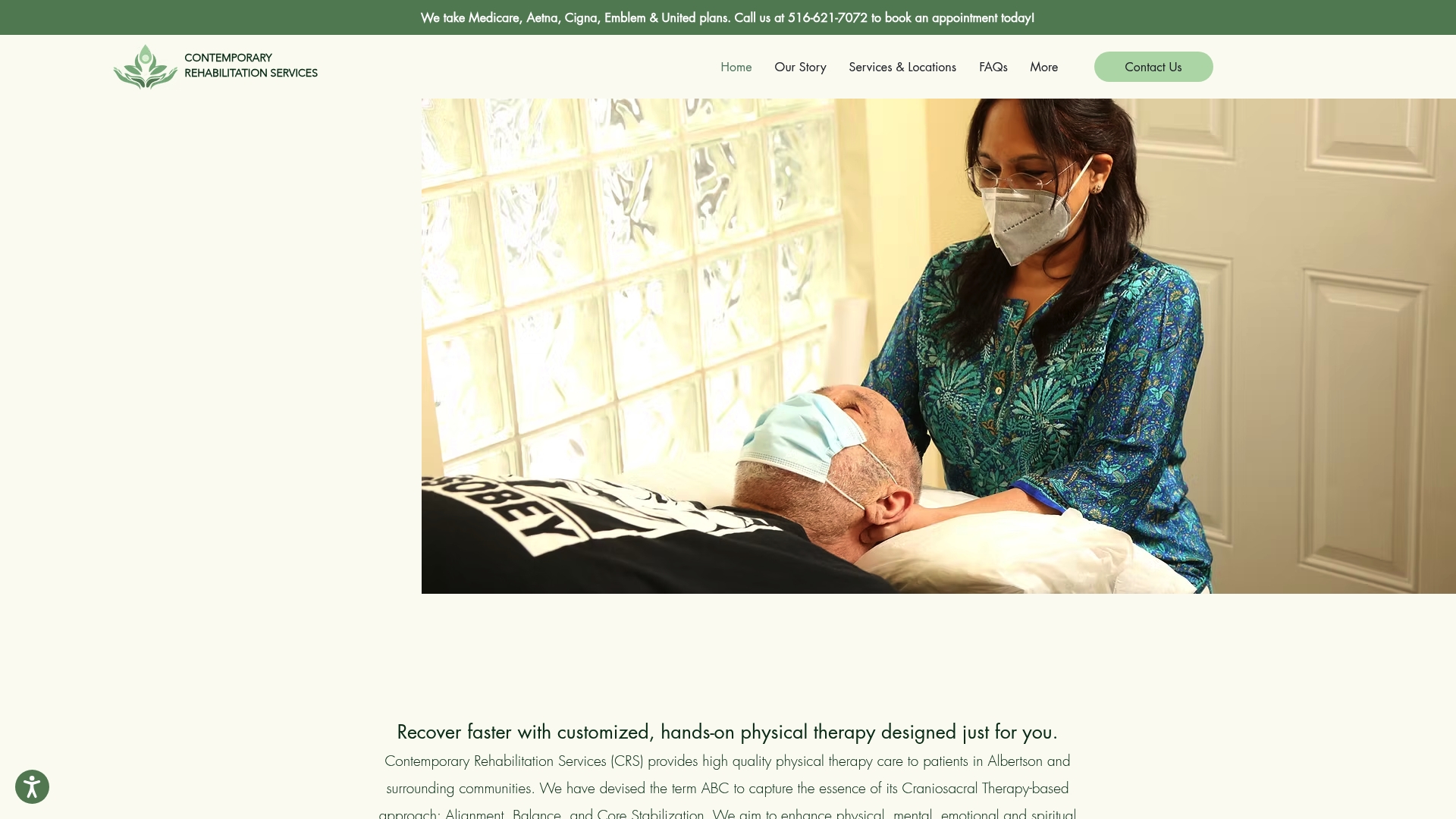
Services may include craniosacral therapy delivered as part of an individualized plan, alongside myofascial therapy, joint mobilization, and neuromuscular re-education when cervical or jaw tension contributes to your headaches. Telehealth PT sessions might be available for guidance on tracking, education, or exercise between in-person visits. Visceral and neural mobilization techniques could be part of treatment when related contributing factors are identified during assessment. Check your specific plan’s coverage for manual therapy visits, as benefits can vary by plan tier.
A new patient appointment typically starts with a full intake covering migraine history, current medications, and any red-flag symptoms, followed by a hands-on assessment and a discussion of what a realistic treatment timeline looks like. You can review our full range of manual therapy offerings on our services page or schedule a consultation directly through our clinic homepage to get started.
Sources
FAQ
What is the 5-4-3-2-1 rule for migraines?
The 5-4-3-2-1 technique is a grounding exercise, not a clinical migraine protocol: it involves naming five things you see, four you can touch, three you hear, two you smell, and one you taste to help interrupt stress or sensory overload during an episode. It is generally used as a coping tool alongside medical treatment, not as a substitute for evidence-backed migraine prevention.
What do Chinese medicine practices offer for migraines?
Traditional Chinese medicine approaches to migraine commonly include acupuncture and herbal formulas aimed at addressing patterns of energy imbalance, though the scientific evidence for these approaches varies widely and is generally considered separate from craniosacral therapy. If you are curious about combining any traditional approach with your current care, discuss it with your neurologist first to avoid interactions with your medication plan.
Who should not try craniosacral therapy?
People with recent head or neck trauma, a known or suspected brain aneurysm, increased intracranial pressure, severe osteoporosis, or unstable cervical spine conditions should get medical clearance before trying craniosacral therapy, according to safety guidance from the National Center for Complementary and Integrative Health. Anyone with sudden, severe, or unusual headache symptoms should seek urgent medical evaluation rather than booking a CST session.
Which therapy works best for migraines?
No single manual therapy has been proven definitively superior for migraine, but guideline-backed prevention, including behavioral therapies and medications such as CGRP-targeted treatments, remains the primary recommendation from the American Headache Society. Craniosacral therapy, massage, and physical therapy are generally used as adjunctive options depending on individual tension patterns and personal response.
Do migraines actually respond to craniosacral therapy?
Small randomized trials report reduced migraine frequency, pain intensity, and HIT-6 disability scores after craniosacral therapy compared with sham treatment, as shown in the randomized controlled trial on CST and migraine. The evidence is encouraging but still limited to a small number of studies, so individual results vary and should be tracked and discussed with your physician.
Recommended
Comments