
Craniosacral Therapy Safety: Evidence and Clinic Care
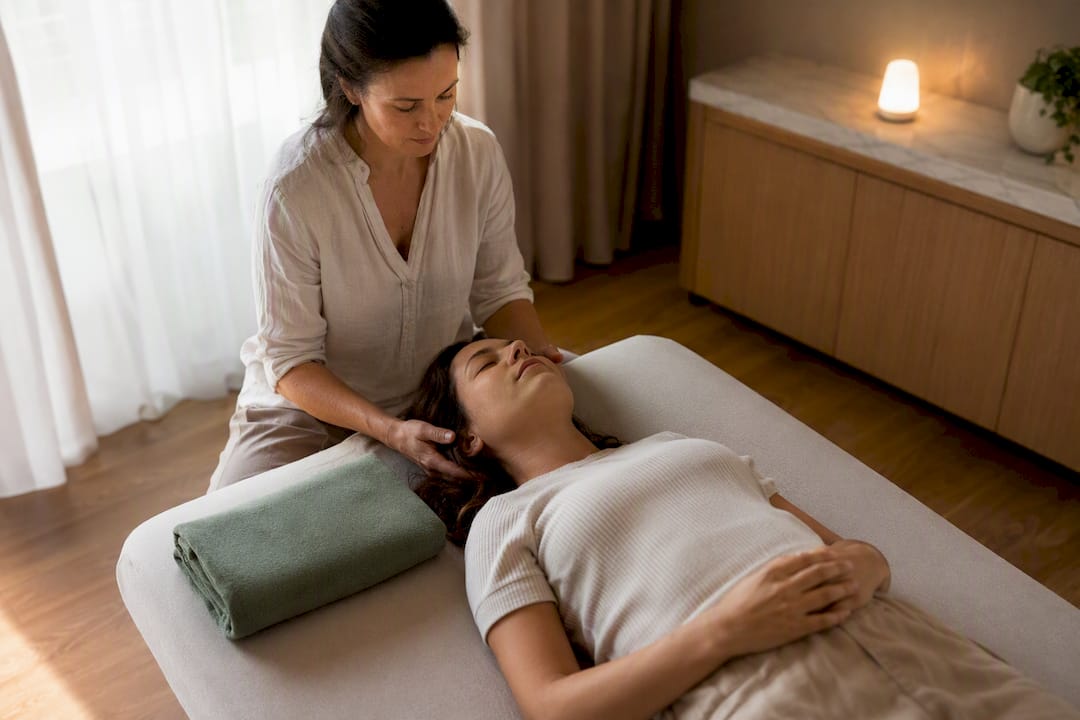
Craniosacral therapy is generally low risk for most people when it’s performed by a trained clinician, and the mild side effects that do occur, like lightheadedness or fatigue, typically pass within a day. The real caution is contraindications: recent head trauma, a diagnosed aneurysm, or a bleeding disorder should prompt medical clearance before you book a session. For most other people, going in with realistic expectations is the biggest safety step you can take.
TL;DR:
Most mild side effects like dizziness or fatigue are temporary and diminish within 24 hours, especially if patients follow post-session care advice.
Systematic reviews indicate limited high-quality evidence supporting CST’s effectiveness, with small and inconsistent treatment effects.
Absolute contraindications include recent head trauma, aneurysm, skull fracture, or active bleeding, requiring medical clearance before treatment.
Qualified practitioners should have a clinical license, documented CST training, and thorough patient screening to ensure safety.
Serious symptoms such as sudden severe headaches or neurological signs during or after treatment require immediate medical evaluation, not delayed follow-up.
Table of Contents
Understanding Craniosacral Therapy Safety: Short-Term Side Effects
Craniosacral therapy safety starts with knowing what a “normal” reaction actually looks like. This is gentle, hands-on bodywork focused on the tissues surrounding your skull, spine, and sacrum, and most people tolerate it without incident. But your body still responds to touch and to the release of physical tension, so a handful of mild reactions show up often enough that you should expect them rather than panic over them.
The most commonly reported effects include:
Dizziness or lightheadedness, usually right after the session ends
Fatigue, sometimes described as feeling “wiped out” for the rest of the day
A temporary increase in pain at the treatment site before it settles
Emotional release, which can range from mild tearfulness to a sense of unexpected calm
Mild headache, typically resolving without medication
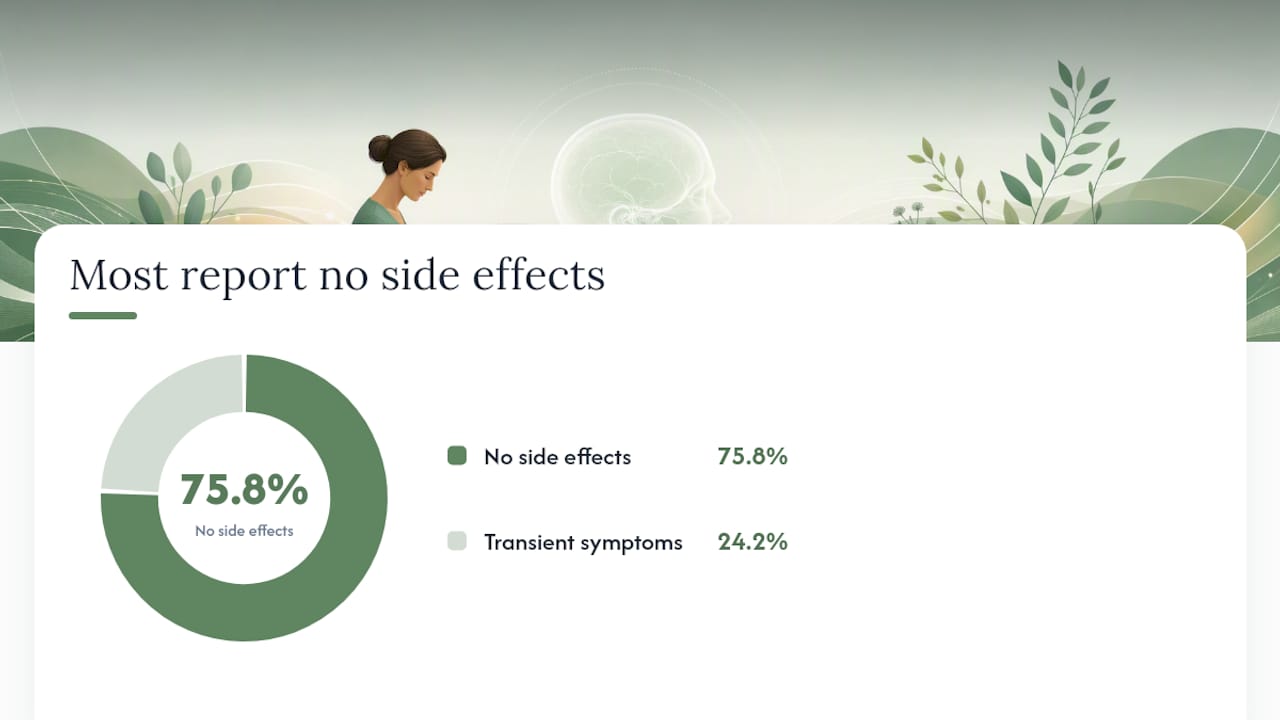
One prospective cohort study on CST in primary care found that 75.8% of patients reported no side effects at all, with the remaining minority describing transient symptoms rather than anything lasting. That’s a meaningfully different picture from a therapy with a high rate of adverse reactions, and it lines up with what the Cleveland Clinic reports: most minor adverse events are temporary, fading within about 24 hours.
Pro Tip: Keep a simple same-day log after your first session, noting energy level, pain, and mood at three points: right after treatment, that evening, and the next morning. If symptoms are still present past the 24-hour mark, that’s your signal to call your practitioner rather than wait it out.
Aftercare is straightforward. Stand up slowly after the table work ends, since a shift from lying down to upright can intensify any lightheadedness. Drink water. Give yourself permission to rest instead of running errands right after. If you notice an emotional release during or after the session, that’s a documented and generally harmless response to the release of muscular tension, not a sign that something went wrong.
Where this gets more nuanced is frequency and duration data across larger populations, since most of what’s published comes from smaller cohorts and clinical case series rather than large-scale surveillance. That’s worth keeping in mind as a limit on how confidently anyone can quote exact percentages for the general population.
What Do Systematic Reviews Say About CST Effectiveness and Safety?
The most direct answer: recent systematic reviews conclude there isn’t enough robust evidence to support CST’s clinical effectiveness across most of the conditions it’s used for. That’s a different claim than “it doesn’t work,” and the distinction matters for how you should weigh the risk-benefit equation before booking a session.
A 2024 systematic review and meta-analysis published in PMC looked across the available trials and found the evidence base too thin, and too methodologically flawed, to draw firm conclusions about clinical benefit. The recurring problems were small sample sizes, inconsistent outcome measures, and a high risk of bias in how many of the underlying trials were designed and reported.
A second review, published later in 2024, dug into subgroup analyses and found something more textured:
Some subgroup analyses did show small-to-moderate pooled effects for pain outcomes, but these signals came with wide prediction intervals and meaningful study bias. The reviewers were clear that this does not support broad clinical adoption, even though it doesn’t rule out individual benefit either.
That’s the honest middle ground: a few positive signals exist in the data, but they’re not stable enough to build a blanket recommendation on. The PMC review from October 2024 makes this point directly, noting that heterogeneity across studies undermines confidence in any pooled result.
Here’s where safety and effectiveness data diverge in an important way. Studies evaluating whether CST works are not the same studies best positioned to catch rare or delayed harms. Some cohort studies and randomized trials report few or no serious adverse events during the study period, but adverse-event reporting itself is inconsistent across the literature. Some trials track side effects rigorously. Others mention them briefly or not at all.
What this means in practice:
Absence of reported serious harm in small trials is reassuring, but it is not proof of a low serious-harm rate across the whole population of people receiving CST
Risk-of-bias tools like those used in Cochrane-style reviews consistently flag CST trials for inadequate blinding, small samples, and selective reporting
Trials with rigorous safety tracking tend to report only minor, transient effects, which supports the pattern seen in clinical practice but shouldn’t be read as a guarantee
The practical takeaway for anyone weighing craniosacral therapy safety against its evidence base: treat CST as an adjunct to established care, not a replacement for it, and hold the effectiveness claims loosely until better-designed trials exist. Reviewers behind the 2024 meta-analysis made a similar point, arguing that CST should stay in an adjunctive role until higher-quality trials close the gap in the data.
Who Should Avoid Craniosacral Therapy? Contraindications and Screening
Contraindications for craniosacral therapy fall into two tiers, and knowing which tier applies to you changes what “safe” looks like in your specific case.
Absolute contraindications, meaning CST should not be performed at all until the condition is resolved or ruled out:
Recent intracranial bleed or hemorrhage
Skull fracture, whether recent or unhealed
A diagnosed aneurysm, particularly an unruptured or unmonitored one
Unstable spinal fracture or spinal instability
Active or uncontrolled bleeding of any kind affecting the head, neck, or spine
Relative contraindications, meaning CST may still be appropriate but only with a clinician’s clearance and close monitoring:
Recent concussion or traumatic brain injury, even if mild
Severe, uncontrolled, or worsening headache with no clear diagnosis
Severe osteoporosis, given the light but direct contact involved in the technique
Current use of anticoagulant or blood-thinning medication
Complex neurological history where symptoms could mask a more serious underlying issue
A responsible intake process should catch most of these before hands ever touch your head or spine. That starts with a thorough medical history, including recent injuries, surgeries, and medications, followed by a direct check for red-flag symptoms like new numbness, vision changes, or unexplained severe headache. When any of those come up, the right next step is imaging or physician clearance before treatment, not a “let’s just try it and see” approach.
Pro Tip: If you’re on blood thinners or have a history of osteoporosis, bring your medication list and most recent bone density results to your first visit. A practitioner who skips this conversation entirely is skipping a step that matters.
This screening approach isn’t unique to CST. Other manual and light-based therapies use similar contraindication logic, and resources like this breakdown of red light therapy contraindications show how consistently trained providers across different modalities build the same kind of pre-treatment safety net. The pattern holds because the underlying principle is the same: know what’s happening inside the body before you apply anything to the outside of it.
What Happens During a Craniosacral Therapy Session?
A CST session looks nothing like deep tissue massage or joint manipulation, and that’s precisely why the safety profile differs from more forceful manual therapies. Understanding the session flow helps you recognize what’s normal and what’s worth flagging.
Sessions typically follow this arc:
Intake and history review, covering recent injuries, surgeries, medications, and the specific reason you’re seeking treatment
Initial assessment, where the practitioner evaluates posture, tension patterns, and sometimes the subtle rhythm associated with cerebrospinal fluid movement
Light-touch positioning, with hands placed gently on the skull, sacrum, or spine, using pressure often compared to the weight of a nickel
Ongoing check-ins, where the practitioner asks how you’re feeling and adjusts contact or pace accordingly
A closing conversation, covering what came up during the session and what to expect afterward
The pressure involved is genuinely light. Most patients describe it as barely perceptible contact rather than manipulation, which is part of why serious injury during a session is uncommon. That said, “light touch” doesn’t mean “no sensation.” Some people report tiredness, a wave of emotion, or a sense of releasing tension they didn’t know they were holding. Understanding the proposed mechanisms behind these symptom reports can make those in-session sensations feel less unpredictable.
The safety practices worth expecting from any practitioner include pre-session screening for the contraindications covered above, a clear informed-consent conversation about what CST can and can’t promise, and gradual position changes rather than abrupt movement, especially when you’re transitioning off the table. If a session ever proceeds without any of those elements, that’s worth noting.
How to Choose a Safe, Qualified Craniosacral Practitioner
Credentialing is the single biggest variable behind craniosacral therapy safety, because the United States has no unified certification framework for CST. Two people who both say they practice “craniosacral therapy” may have wildly different clinical backgrounds, training hours, and safety protocols behind that label, according to WebMD’s overview of the therapy.
That gap puts more responsibility on you as the patient to screen the provider, not just the technique. Look for a baseline clinical license, physical therapist, occupational therapist, or physician, combined with documented CST-specific training hours and supervised clinical practice. A license alone doesn’t guarantee CST competency, and CST training alone without a clinical license is a different risk profile entirely.
Before booking, ask directly:
What is your clinical license, and how many hours of CST-specific training have you completed?
Have you treated my specific condition before, and what did that typically involve?
Will you coordinate with my primary care provider or specialist if needed?
What does your intake and documentation process look like?
What will you ask me to consent to before we begin?
Watch for red flags that suggest a provider is cutting corners on safety. A practitioner who skips clinical intake entirely, gives vague or unverifiable answers about training, pressures you to stop other medical treatment, or promises a guaranteed cure is not practicing evidence-aware care.
Pro Tip: Ask to see documentation of training, not just hear about it. A provider confident in their credentials will show you a certificate or training record without hesitation.
A Simple Checklist for Deciding Whether to Try CST
Weighing craniosacral therapy risks against its potential benefits doesn’t require a medical degree. It requires a short, honest checklist before your first appointment.
Get a clear medical evaluation first. Confirm there’s no underlying condition that needs a different kind of care before you add CST to the picture.
Rule out the absolute contraindications. Recent head trauma, aneurysm, unstable spine, and active bleeding all mean “not yet” until cleared.
Vet the practitioner’s credentials. Licensed clinical background plus documented CST training is the combination worth looking for.
Plan for a single-session trial first. Book one visit, not a pre-paid package, and evaluate your response before committing further.
Schedule a follow-up conversation. Decide in advance how you’ll judge whether the session helped, made no difference, or caused something worth reporting.
Document everything. Note symptoms before, during, and in the 24 to 48 hours after your session.
The best-supported way to approach CST clinically is as adjunctive care, something layered alongside your existing medical treatment, not a replacement for it. That framing matters most when the evidence for a given condition is thin: a single supervised trial session with documented follow-up lets you assess your own response while limiting your overall exposure if it turns out not to be a fit.
If you do notice something worth flagging, whether it’s a symptom that outlasts 24 hours or a reaction that feels disproportionate to a light-touch session, write down the date, the specific symptom, and how long it lasted. That record is what turns a vague “something felt off” into information your practitioner or physician can actually act on.
Red Flags: When to Stop Treatment and Seek Immediate Care
Certain symptoms are never “wait and see,” whether they show up during a session, right after, or in the days that follow. These warrant stopping treatment and getting prompt medical evaluation:
Sudden, severe headache, especially if it’s described as the worst headache of your life
New weakness or numbness on one side of the body or face
Sudden vision loss or visual disturbance
Seizure activity of any kind
Loss of consciousness, even briefly
New bowel or bladder dysfunction
Any of these signs point to a possible neurological or vascular event that has nothing to do with normal CST side effects, and they need emergency evaluation, not a follow-up call scheduled for next week. If something serious happens during or shortly after treatment, document exactly what occurred, when, and report it to both your practitioner and your primary care provider. For anything on the list above, call emergency services or go to an emergency department directly rather than waiting for a callback.
How CRS Wellness Approaches Craniosacral Therapy Safety
Safety at CRS Wellness starts before a single hands-on technique is used. Every new patient goes through a comprehensive intake covering medical history, current medications, recent injuries, and the specific symptoms bringing them in, which is the same screening logic outlined earlier in this article, just applied consistently at the clinic level.
Informed consent isn’t a form you sign and forget. It’s a conversation about what CST can reasonably offer given the current evidence, what the likely sensations during treatment feel like, and what would count as a reason to pause or stop. When a patient’s history includes something more complex, a recent injury, a neurological condition, medication that affects bleeding risk, coordination with that patient’s physician or specialist happens before treatment begins, not after a concern comes up.
Because CST sits in a gray area for many insurance plans, transparency about coverage matters too. The clinic works with several major insurance plans and clarifies direct-payment costs upfront so patients aren’t guessing about what a session will actually cost. For readers who want the fuller picture on how the clinic weighs the current evidence and clinical experience behind CST, that resource goes deeper into the reasoning behind these safety practices.
Are There Long-Term Risks From Craniosacral Therapy?
Long-term or delayed adverse effects from CST appear to be rare, but “rare” and “zero” are not the same word, and the honest answer is that long-term surveillance data on CST is thin. Most published research tracks outcomes over days or weeks, not months or years, which limits what anyone can confidently say about delayed effects.
What does show up in patient-facing clinical resources is a consistent pattern: when adverse effects occur, they tend to be immediate and short-lived, not delayed and progressive. Healthline’s clinical overview describes CST as “possibly safe” when performed by a trained practitioner, while still flagging the same head and spine cautions covered earlier in this article.
The theoretical concern with any therapy involving contact near the skull or spine is that pre-existing but undiagnosed conditions, an unrecognized aneurysm, a subtle spinal instability, could be aggravated. This is exactly why contraindication screening happens before treatment rather than after, and it’s why absolute contraindications exist as a category in the first place. A thorough intake is designed to catch these risks before they become long-term problems, not to react to them afterward.
If you notice any new or worsening symptom in the days or weeks following a CST session, even something that seems unrelated, it’s worth mentioning to your physician. That’s not because CST is uniquely dangerous. It’s because any change in your health after any intervention deserves attention, and open reporting is how the profession’s understanding of rare effects improves over time.
Legal and Regulatory Status of Craniosacral Therapy
CST occupies an unusual regulatory position in the United States: it isn’t illegal, but it also isn’t a licensed profession in its own right. There’s no state licensing board for “craniosacral therapist” the way there is for physical therapists or physicians. Instead, CST is typically practiced as a technique layered onto an existing license, physical therapy, occupational therapy, massage therapy, or chiropractic care, which means the legal accountability tied to a session depends heavily on the provider’s underlying credential.
This matters for craniosacral therapy safety because it shapes who you can complain to if something goes wrong. A licensed physical therapist offering CST is accountable to their state PT licensing board. Someone offering CST with no underlying clinical license has a much thinner layer of regulatory oversight above them.
Insurance regulation adds another layer. Major U.S. insurers commonly classify CST as experimental or not medically necessary, which affects both coverage and, indirectly, the financial risk a patient takes on. AvMed’s clinical coverage policy is one example of how insurers formally categorize CST, and checking your own plan’s stance before committing to a course of treatment can prevent an unwelcome bill later. This is separate from clinical safety, but it’s part of the practical safety conversation any informed patient should have before booking.
How Are Adverse Events From CST Tracked and Reported?
There is no centralized, mandatory adverse-event reporting system specifically for craniosacral therapy the way there is for pharmaceuticals or medical devices. That’s a real gap, and it’s part of why systematic reviews consistently flag inconsistent adverse-event reporting as a limitation rather than a footnote.
Within clinical trials, safety tracking depends entirely on how rigorously each study was designed. Some trials include structured adverse-event logs and follow-up calls. Others mention side effects in a single sentence, if at all. That unevenness is precisely why researchers behind recent reviews caution against reading “few reported serious adverse events” as proof of a genuinely low risk across the broader population receiving CST outside of study settings.
At the clinic level, the responsibility shifts to the individual provider and, when applicable, their licensing board. A patient who experiences a concerning reaction should report it directly to the treating practitioner and to their primary care physician, creating a documented record even in the absence of a formal national registry. That written record matters more than it might seem: it’s the closest thing to monitoring that exists for a therapy without centralized surveillance, and it protects you if you need to escalate a concern later. Asking a prospective practitioner how they document and follow up on adverse reactions is a reasonable, and revealing, question to ask before your first session.
A Clinician’s View on Evidence, Caution, and Patient Choice
The tension in craniosacral therapy isn’t really about whether it “works.” It’s about how clinicians should act when the evidence is genuinely mixed rather than clearly positive or clearly negative. That’s an uncomfortable place to sit, but pretending the evidence is stronger than it is would be worse.
Caution shows up as process: thorough intake, real informed consent, and coordination with a patient’s broader medical care when anything in their history raises a flag. None of that requires dismissing CST outright. It requires treating it the way any reasonable adjunctive therapy should be treated, with clear eyes about what’s known, what isn’t, and who should be looped in before treatment starts.
Patients deserve to make that decision themselves, with full information rather than either false confidence or reflexive dismissal.
— CRS Wellness
Book a Screened Craniosacral Evaluation With CRS Wellness
CRS Wellness treats craniosacral therapy the way this entire article recommends: as a screened, clinically supervised session, not a walk-in wellness treatment. Every new patient completes a full intake before any hands-on work begins, covering medical history, current medications, and the specific contraindications outlined above, so you know exactly what you’re getting into before your first appointment starts.
Sessions may be billed through various insurance plans, with direct-payment options available for those whose plan classifies CST outside standard coverage. If you’re weighing a single-session trial the way this guide suggests, that’s exactly the kind of appointment CRS Wellness is built to support: a documented evaluation, a real conversation about what to expect, and follow-up rather than a one-and-done package sale. Readers near Albertson can book an evaluation at the Albertson location directly, while patients closer to Great Neck can check appointment availability at the Great Neck Plaza location page. Either way, the next step is the same: schedule the intake conversation and find out, with real screening behind it, whether CST fits your specific situation.
This article is general information, not a substitute for advice from a qualified doctor. Consult a qualified healthcare professional about your own circumstances before acting on anything here.
Sources
Recommended
Comments