
Hamstring Strain Rehab: A Phase-by-Phase Recovery Plan
- tjdontplay
- 15 hours ago
- 12 min read
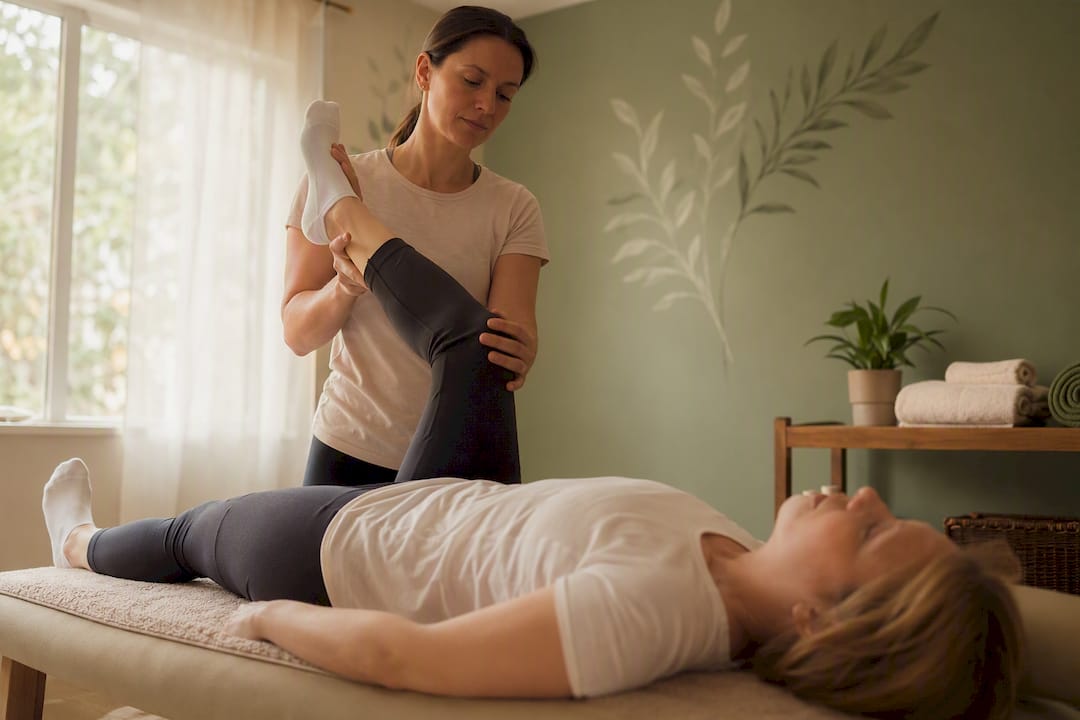
Protect the injured leg for the first 24 to 72 hours, then progress by clinical criteria, not by the calendar, into eccentric loading, trunk control, and sport-specific speed work. That is the entire strategy behind effective hamstring strain rehab, and it holds true whether you tweaked your hamstring sprinting for a bus or tore it mid-game.
The biggest mistake we see is treating rest as the goal instead of the first step. Once bleeding and acute swelling settle, usually within a few days, pain-guided movement should begin. Research on hamstring injury rehabilitation protocols consistently shows that programs built around lengthening exercises and progressive loading outperform stretch-and-rest approaches, cutting both recovery time and reinjury risk.
Here is what to do in the first days:
Protect the leg: avoid aggressive stretching, deep massage, or sprinting for at least 24 to 48 hours.
Manage swelling with brief rest, ice, and light compression if bruising or swelling develops.
Start pain-free movement early, such as short, unhurried walks, rather than staying immobile.
Track pain on a 0 to 10 scale; anything that pushes past a mild ache means you backed off too fast.
Pro Tip: If you heard or felt a “pop,” can’t bear weight, or notice bruising spreading down toward your knee within a day, stop self-managing and get evaluated. Those signs point toward a higher-grade tear or possible tendon avulsion that changes the entire rehab timeline.
Key Takeaways
Hamstring strain rehab succeeds when protection in the first 72 hours is followed by criterion-based progression through eccentric loading, trunk control, and sport-specific testing rather than a fixed calendar.
Point | Details |
Grade drives timeline | Grade 1 strains often heal relatively quickly; grade 2 to 3 tears, especially proximal ones, generally require a longer recovery period. |
Progress by criteria, not dates | Move to the next phase when pain, strength, and function hit specific benchmarks, not on a fixed schedule. |
Eccentric work is central | Nordic curl progressions and Romanian deadlift patterns rebuild the exact mechanism that causes most strains. |
Clear return-to-sport benchmarks | Aim for roughly 90% strength symmetry and passing hop and sprint tolerance tests before full activity. |
Get evaluated early when needed | Contemporaryrehabservices grades your injury, builds an individualized phase plan, and refers out for imaging when a proximal tendon issue is suspected. |
Table of Contents
What Is a Hamstring Strain, and How Serious Is Yours?
A hamstring strain is a tear in one of three muscles running down the back of your thigh: the biceps femoris, semitendinosus, or semimembranosus. Clinicians grade the injury 1 through 3, and that grade drives nearly every decision about your hamstring rehab timeline.
Grade 1 is a mild strain, a small number of fibers overstretched or micro-torn. You’ll feel tightness or a pulling sensation, maybe some soreness the next day, but you can usually still walk normally. These often resolve within a few days to a couple of weeks.
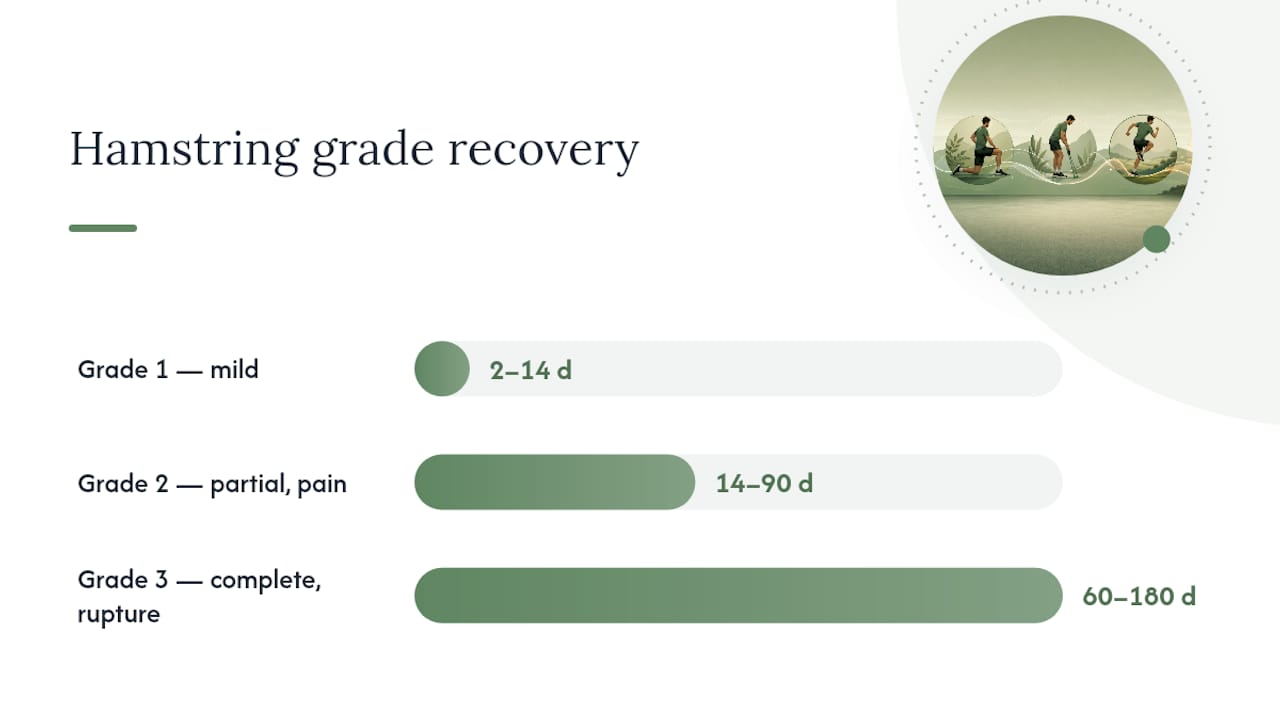
Grade 2 involves a partial tear, more fibers disrupted, often with noticeable pain, some swelling or bruising, and a limp. This is the category most recreational athletes land in, and Cleveland Clinic notes that recovery commonly stretches into weeks to a few months depending on severity.
Grade 3 is a complete rupture, sometimes with the tendon pulling away from the bone entirely, known as an avulsion. This is where things change dramatically. A grade 3 tear can require months of structured rehab, and if the tendon has retracted significantly, surgical repair may be the only path to full function.
Where the injury sits matters as much as how bad it is. A tear in the muscle belly, out in the meaty part of the thigh, tends to heal faster than one near the top, close to the sit bone (ischial tuberosity). Proximal tendon injuries near that bony attachment point carry a lower threshold for imaging and orthopedic referral because the tendon has less blood supply and more mechanical stress running through it during hip flexion and knee extension.
A few factors reliably stretch out recovery beyond what the grade alone suggests:
Involvement of the proximal free tendon rather than the muscle belly.
MRI findings showing significant retraction or a large area of muscle disruption.
A prior hamstring injury on the same leg, which raises reinjury risk substantially.
Delayed onset of proper rehab, meaning the athlete tried to “walk it off” for two or three weeks before starting structured loading.
If you’re not sure which grade you’re dealing with, that uncertainty itself is a signal. Guidance from StatPearls on hamstring injury recommends clinical evaluation, and sometimes imaging, whenever pain is severe, weight bearing is difficult, or a defect can be felt in the muscle. Guessing wrong on grade means guessing wrong on rehab pace, and that’s how a six-week injury turns into a six-month one.
How Do You Progress Through Hamstring Rehab Phases?
Hamstring rehabilitation programs work best when they’re organized around what your leg can actually do, not around a fixed number of weeks. Four phases carry you from injury to return to sport, and each has its own pass or fail markers before you move forward.
Protection and acute care. Goal: control pain and swelling, protect healing tissue. You’re ready to move on when you can walk without a limp and rest pain has dropped to mild or none, typically within 3 to 7 days for grade 1 to 2 injuries.
Range of motion. Goal: restore pain-free hip and knee movement without re-aggravating the tear. You’re ready to move on when you have close to full flexibility compared to the uninjured side and daily activities no longer provoke sharp pain.
Strength, with an emphasis on eccentric loading. Goal: rebuild the muscle’s ability to lengthen under control, since that’s the exact mechanism that causes most hamstring strains in the first place. You’re ready to move on when you can perform controlled eccentric exercises through a full range with minimal discomfort and roughly matched effort on both legs.
Power, speed, and sport-specific loading. Goal: reintroduce sprinting, cutting, and the explosive demands of your sport. You’re ready for return to play when strength and functional testing clear the benchmarks covered later in this article.
The Mass General Brigham rehabilitation protocol structures nonoperative recovery this same way, and it’s worth noting how much the phase lengths vary. A grade 1 strain might blow through all four phases in three to four weeks. A grade 2 tear with meaningful fiber disruption often needs six to eight weeks to reach sport-specific loading safely. A grade 3 injury, especially one involving the proximal tendon, can take three months or longer, and that’s assuming surgery wasn’t needed.
Pro Tip: Write down your daily pain score and one functional marker, like “walked 20 minutes pain-free” or “did 10 single-leg bridges without pulling.” This log becomes the actual evidence you and your physical therapist use to decide when you’re ready for the next phase, instead of guessing based on how many days have passed.
Age, prior hamstring injuries, and any sign of proximal tendon involvement all push toward a more conservative pace. Athletes over 35, people with a history of the same hamstring giving out before, and anyone with tenderness right up near the sit bone should plan on the longer end of every timeline estimate and lean harder on clinical guidance rather than self-directed programming.
What Exercises Actually Rehab a Pulled Hamstring?
The exercises that matter most for pulled hamstring therapy are the ones that load the muscle while it’s lengthening, not just stretching it. Systematic review evidence backs this clearly: programs built around eccentric and lengthening-type exercises reduce both time to return and reinjury rates compared with stretching-focused rehab.
Early phase: protected motion and gentle activation
This stage is about waking the tissue back up without provoking it.
Heel slides. Lying down, slide your heel toward your glute and back, 10 to 15 reps, twice daily. Stop well before any pulling sensation.
Pelvic tilts. Gentle core activation that keeps your trunk engaged without stressing the hamstring directly.
Pain-limited isometrics. A gentle hamstring curl held against light resistance for 10 to 15 seconds, several times, staying under a 3 out of 10 on discomfort.
Short pain-free walks. According to British Journal of Sports Medicine guidance, walking is generally fine and even beneficial for low-grade strains as long as it doesn’t produce a limp. For grade 2 or 3 injuries, forcing a normal gait too early can worsen the tear, so shorten the walk or use crutches if pain or limping shows up.
Home versions of this phase need nothing more than a mat and patience. Clinic versions might add light manual therapy or blood flow work, but the exercises themselves stay simple by design.
Intermediate phase: eccentric loading and stabilization
This is where the real rebuilding happens, and it’s the phase most people rush or skip entirely.
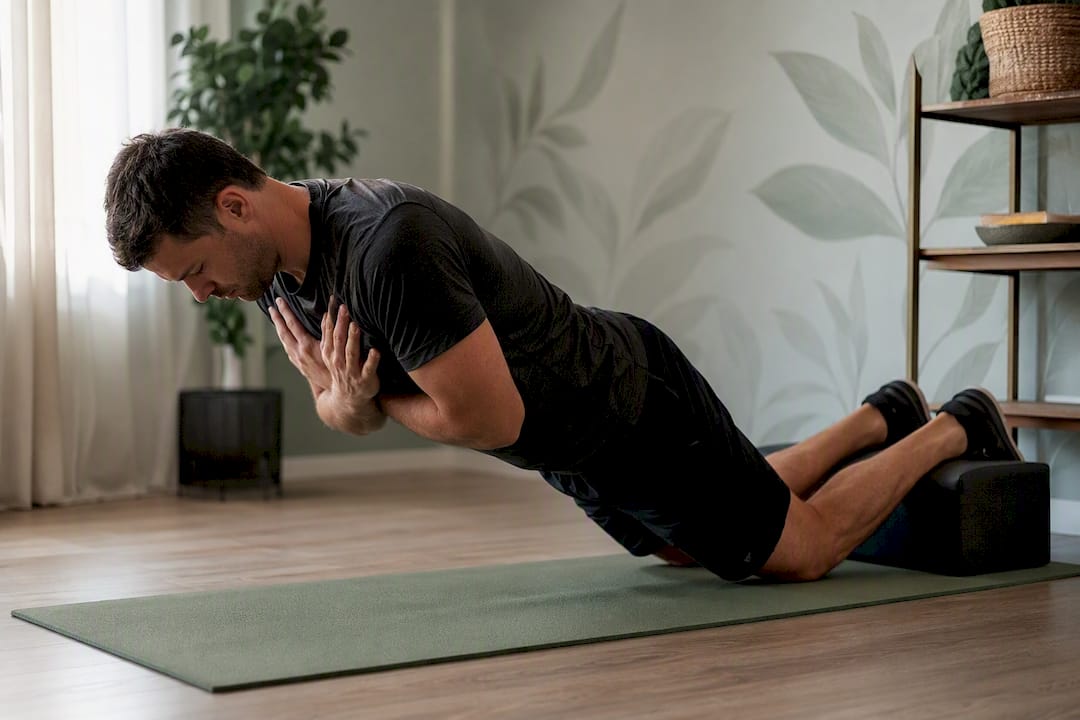
Nordic curl progressions. Start with a partial-range, assisted version, kneeling with your ankles anchored and lowering your torso forward under control. Begin with 2 sets of 4 to 6 reps, adding range and reps as strength returns.
Romanian deadlift progressions. Bodyweight hip hinges first, then light dumbbells, focusing on a slow, controlled lowering phase, 3 sets of 8 to 10.
Single-leg bridges. Build glute and hamstring co-activation, 3 sets of 10 per side, progressing to a slower tempo before adding load.
Trunk stabilization work, like dead bugs or plank variations, to support the pelvis during hip extension movements, since poor trunk control is a common contributor to hamstring overload.
A useful pain ceiling rule here: mild discomfort during the exercise that settles within an hour and doesn’t linger the next day is acceptable. Sharp pain, or soreness that’s worse 24 hours later, means you loaded too much too soon. Back off one level and rebuild from there.
Advanced phase: power, speed, and return to activity
Once strength and control are solid, the final stretch reintroduces the explosive demands your sport or activity actually requires.
Plyometric drills: bounding, hopping, and controlled jump landings that teach the hamstring to absorb force quickly.
Sprint tolerance progressions: starting with 50 to 60% effort strides over short distances, building to near-maximal speed over several sessions rather than jumping straight to a full sprint.
Change-of-direction drills: cutting and deceleration patterns specific to your sport, introduced only after straight-line sprinting is pain-free.
Sport-specific loading: kicking, jumping, or cutting patterns unique to your activity, layered in last.
If you’d rather have a structured version of this built around your specific timeline and access to hands-on guidance, a step-by-step injury recovery plan can map these phases against your actual progress rather than a generic calendar. For readers who want an outside, non-clinical resource on the earliest mobility work, SparkMed’s starter plan for mobility after injury covers safe first steps in more depth.
What Tests Confirm You’re Ready to Return to Sport?
Clearance to return isn’t a feeling, it’s a set of numbers. Modern hamstring rehabilitation programs rely on measurable benchmarks precisely because “it feels okay” has historically been a terrible predictor of reinjury.
Strength symmetry is the anchor metric. Most protocols target hamstring strength at or above roughly 90% of your uninjured leg before clearing sport-specific loading, and Cleveland Clinic’s guidance ties this kind of limb symmetry directly to lower reinjury rates. Below that threshold, the injured hamstring is still compensating, and asking it to sprint or cut exposes exactly the weakness that caused the original tear.
Hamstring-to-quadriceps ratio matters too. A hamstring that’s proportionally weak relative to the quadriceps on the same leg tends to fail first during high-speed running, since the hamstring has to decelerate the lower leg during each sprint stride. Clinicians look for a balanced ratio between the two muscle groups rather than an isolated hamstring number.
Functional tests translate strength numbers into real movement:
Single-leg hop tests for distance, comparing injured versus uninjured limb, looking for close to symmetrical performance.
Timed acceleration drills, checking whether the injured leg pushes off with confidence over the first several strides.
Repeated sprint tolerance testing, since a hamstring that holds up for one sprint but breaks down on the fifth is still not ready for a full game or match.
Imaging has a role, but it’s a supporting one, not the final word. A clean MRI doesn’t automatically mean your strength and functional testing will pass, and a lingering scar on imaging doesn’t always mean you’re not ready. The London International Consensus statement on hamstring injuries makes this point directly: return-to-play decisions should rest on individualized functional capacity, not a fixed calendar date or imaging alone. That’s the core argument for criterion-based hamstring strain rehab over a generic “eight weeks and you’re cleared” approach.
What Warning Signs Mean You Need Medical Attention?
Most hamstring strains heal well with structured rehab, but certain signs mean self-management stops and clinical evaluation starts.
Seek prompt medical attention if you experience:
A distinct “pop” felt or heard at the moment of injury, often associated with a complete tear or avulsion.
Inability to bear weight or walk even a short distance.
Severe or rapidly spreading bruising down the back of the thigh.
Numbness, tingling, or weakness that suggests nerve involvement rather than muscle injury alone.
A palpable gap or defect in the muscle, which can indicate a significant tear needing imaging.
Beyond the red flags, three routine mistakes derail more hamstring recoveries than the injury itself. The first is returning to sprinting too early because pain has faded, mistaking reduced pain for restored strength. The second is neglecting glute and trunk strength, treating the hamstring as an isolated muscle instead of part of a chain that starts at the pelvis. The third is relying on isolated stretching without ever loading the muscle, which does little to rebuild the tissue’s actual capacity to absorb force.
For long-term hamstring strain prevention, the same eccentric-focused strength work used in rehab becomes maintenance work once you’re back to full activity. Ongoing Nordic-style loading, ongoing glute and pelvic control training, and progressive conditioning through the preseason all lower reinjury risk, particularly for anyone who has already torn a hamstring once. That history alone raises your risk for a repeat injury more than almost any other single factor.
How CRS Wellness Applies This Evidence in Practice
When a patient walks into Contemporaryrehabservices with a hamstring strain, the first visit isn’t about handing over a printed exercise sheet. It’s about grading the injury accurately, checking for proximal tendon involvement, and building a phase timeline around that specific patient’s tissue, history, and goals.
We look at gait, pain location, strength deficits side to side, and functional movement before deciding how fast to progress someone into eccentric loading. A weekend athlete with a grade 1 strain and no prior injury history moves through phases differently than a returning patient with a previous tear on the same leg. Both patients follow the same evidence-based framework, but the pacing and the exercise selection shift based on what we find in that initial assessment.
A hamstring that’s rushed back to sprinting on hope instead of measured strength symmetry is a hamstring that tears again within the year. The number on the strength test matters more than how many weeks have passed.
Our patients see us in person at our Albertson clinic or through telehealth sessions when travel or scheduling makes that easier. We accept Medicare, Aetna, Cigna, Emblem, and United Healthcare, along with direct cash payment, so cost isn’t the barrier standing between a patient and starting real rehab early. When we suspect a proximal avulsion or see signs that point toward surgical evaluation, we refer out for imaging and orthopedic consultation rather than trying to rehab past a problem that needs a different kind of care.
Our Take: What the Research Actually Supports
Most hamstring advice still leans on rest and static stretching, and that’s precisely where it falls short. The evidence points the other way: muscles that tear while lengthening under load need to be retrained through lengthening under load, not coddled into stiffness.
What gets overlooked is how much reinjury risk traces back to skipping the eccentric and trunk stabilization phase entirely. Athletes feel better, assume “better” means “ready,” and sprint back into activity without ever testing strength symmetry. That gap between feeling fine and testing fine is where most second tears happen.
If you take one thing from this article, prioritize the objective benchmarks over the calendar. A grade 2 strain healed in five weeks with real strength testing beats one rushed back in four weeks on optimism alone.
— CRS Wellness
Get Individualized Hamstring Rehab Support
Contemporaryrehabservices gives you what a generic printed exercise sheet can’t: an actual grading of your injury, a phase plan built around your strength testing, and a clinician adjusting your pace in real time instead of a fixed six-week template.
That matters most in the eccentric loading phase, where pushing too hard too soon is exactly what turns a five-week recovery into a five-month one. Our team evaluates whether you’re dealing with a muscle belly strain or a proximal tendon issue that needs a more conservative approach, and we build your rehabilitation checklist around what your leg can actually do at each visit. We accept Medicare, Aetna, Cigna, Emblem, and United Healthcare, plus cash pay, and see patients in person at our Albertson clinic or through telehealth. If you’re in Nassau County or Queens and dealing with a hamstring that isn’t progressing the way it should, book an evaluation and get a real plan instead of a guess.
This article is general information, not a substitute for advice from a qualified doctor. Consult a qualified healthcare professional about your own circumstances before acting on anything here.
Sources
Recommended
Comments