
Knee Replacement Physical Therapy: A Phase-by-Phase Guide
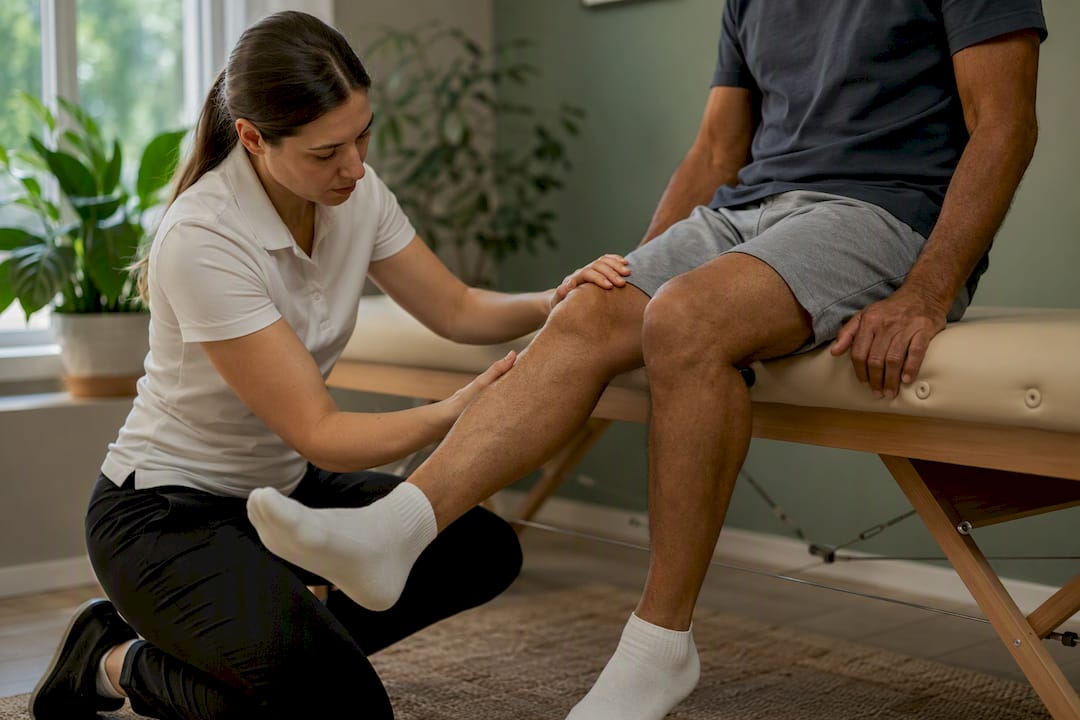
Start supervised, phase-based physical therapy within 24 hours to a few days after your knee replacement, then keep a daily home program going that moves from range-of-motion work to strengthening to endurance. This sequence is not a suggestion. It is what the APTA’s clinical practice guideline calls for, and it is the single biggest factor separating patients who feel confident at three months from those still struggling with stiffness.
Here is what your first days should include:
Ankle pumps, quad sets, straight leg raises, and heel slides starting the day of or the day after surgery.
Short, frequent sessions rather than one long workout. Two to three sets a day, spread across the day, beats one marathon effort.
Measurable gains by three months, with full strength and endurance recovery sometimes taking up to a year.
Call your clinician immediately if you develop fever, calf swelling, or a sudden loss of motion.
Key Takeaways
Supervised, phase-based physical therapy started within days of surgery, paired with consistent daily home exercises, is what drives measurable knee function gains by three months and full recovery within a year.
Point | Details |
Start early | Supervised PT should begin within 24 hours to a few days after surgery when safe. |
Follow the phases | ROM work comes first, then strength, then endurance and balance. |
Track your numbers | Log reps, pain, and swelling daily to guide safe progression. |
Watch for red flags | Fever, calf swelling, or sudden motion loss need immediate clinical contact. |
Get supervised support | Contemporary Rehab Services offers in-person and virtual sessions accepting Medicare, Aetna, Cigna, Emblem, and United Healthcare. |
Authoritative Resources for Knee Replacement Rehab
AAOS OrthoInfo Exercise Guide
AAHKS Home Exercise Handout
Table of Contents
What Are the Phases of Knee Replacement Physical Therapy?
Recovery unfolds in stages, and knowing what each one demands keeps you from panicking when week two feels harder than week one, or from getting discouraged when week eight still involves some swelling.
Immediate post-op (hospital or first days home). The focus here is basic mobility: getting out of bed safely, walking short distances with a walker, and waking up the quadriceps muscle that surgery temporarily shuts down. Swelling control starts immediately, and a physical therapist will check your gait mechanics before you leave the hospital.
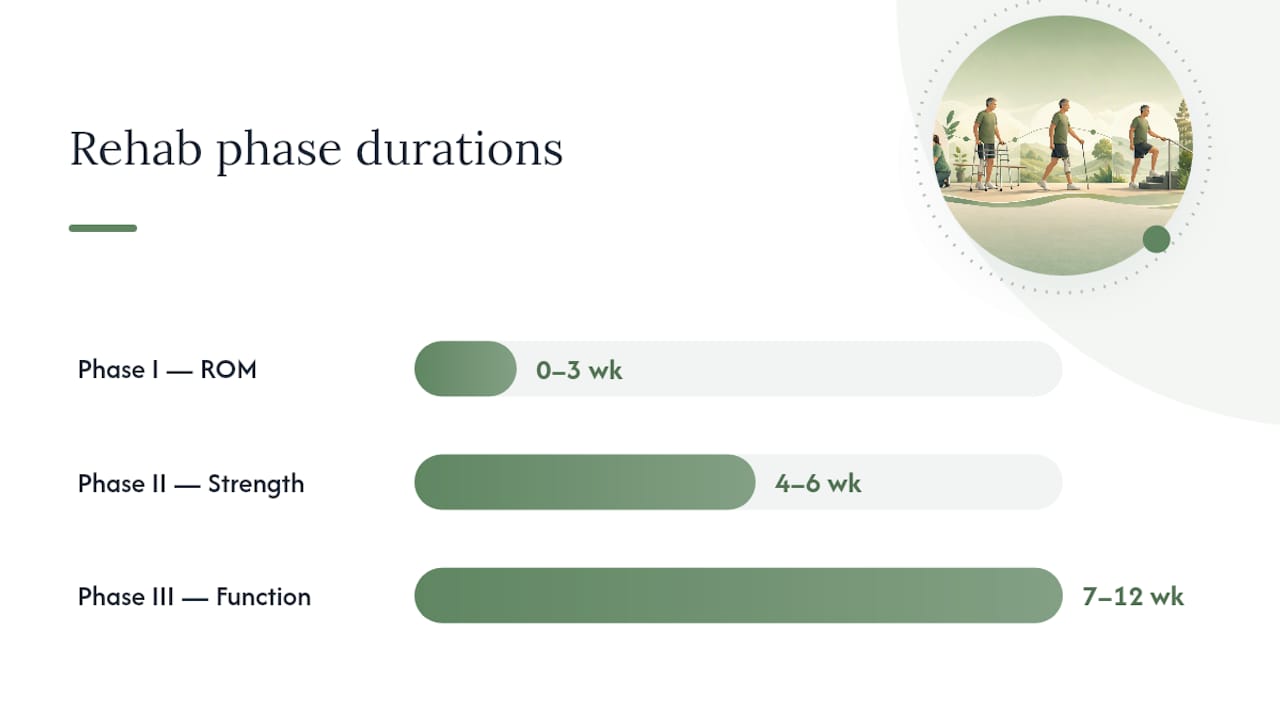
Phase I, weeks 0 to 3. This is the range-of-motion sprint. The AAHKS home exercise handout targets bending your knee to roughly 90 degrees and getting it fully straight, both essential for a normal walking pattern later. Expect home exercises two to three times daily and outpatient or home-health PT visits two to three times a week. Discharge planning milestones during this window include walking with a single cane or no device, climbing a few stairs, and managing a bathroom transfer independently.
Phase II, weeks 4 to 6. Active range of motion increases, and light resistance work enters the picture. Many patients start a stationary bike now, and PT visits often continue one to three times weekly depending on progress.
Phase III, weeks 7 to 12. Closed-chain strengthening (think mini-squats and step-ups) and balance training take over. This is when light recreational activity, like a short round of golf with a cart, becomes realistic for many patients.
Immediate phase: mobility, swelling control, quad activation.
Weeks 0 to 3: ROM to 90 degrees, daily home exercises, frequent PT visits.
Weeks 4 to 6: strength and bike work, tapering PT frequency.
Weeks 7 to 12: functional strength, balance, early recreational activity.
Beyond three months: further strengthening and, if suitable, sport-specific exercises may be incorporated before formal therapy completion.
How Do You Perform Knee Replacement Rehab Exercises Correctly?
Form matters more than intensity in the early weeks. Rushing a heel slide or skipping quad sets to “save energy” for walking is one of the fastest ways to end up stiff at week six.
Early exercises (days 1 to 21):
Ankle pumps: Point and flex your foot for 10 reps, several times an hour, to keep blood moving and swelling down.
Quad sets: Tighten your thigh muscle, pressing the back of your knee flat against the bed, holding 5 seconds, for 10 reps.
Heel slides: Slide your heel toward your buttock, bending the knee as far as comfortable, 10 reps.
Straight leg raises: Only once your quad set is solid, lift the leg straight up 6 to 12 inches, 10 reps.
Mid-phase progression (weeks 4 to 6): Add mini-squats holding a countertop, seated leg extensions with light ankle weight, and stationary cycling. The HSS exercise guide recommends pedaling backward first if forward rotation is still limited, then switching to forward pedaling as your bend improves. Step-ups on a low platform build the single-leg strength you’ll need for stairs and uneven ground.
Late-phase progression (weeks 7 and beyond): Single-leg balance work, forward lunges, resistance band training, and longer endurance sessions like walking, cycling, or pool workouts. This is also where strength progression for injury recovery principles apply directly, since you are essentially rebuilding a limb’s full working capacity.

Progression rules that actually matter: soreness should resolve within roughly two hours, swelling shouldn’t increase by more than about two centimeters after a session, and you should be able to finish your target reps without a meaningful jump in pain. If quad activation stays weak despite consistent quad sets, your therapist may add neuromuscular electrical stimulation, a small electrical current that helps the muscle fire correctly. Never try NMES without clinical guidance.
Pro Tip: Do your heel slides right after icing. The reduced swelling gives you a few extra degrees of bend you won’t get later in the day.
How Long Does It Take to Recover From Knee Replacement With PT?
Many patients leave the hospital within a few days and attend an outpatient physical therapy session soon after discharge. From there, the timeline generally follows a predictable arc, though individual pace varies with age, prior fitness, and how closely the home program gets followed.
Independent walking and light driving return for many patients by four to six weeks. Meaningful improvement in pain and mobility tends to show up around the three-month mark. Full recovery of strength and endurance, according to APTA’s patient resources, can take up to a year.
Desk-based work is often possible within two to four weeks; physically demanding jobs usually need six to twelve. Low-impact exercise like walking, swimming, and cycling gets the green light early, while high-impact sports (running, basketball, tennis) are typically discouraged well beyond six months unless your surgeon and therapist individually clear you.
Managing Pain, Swelling, and Recognizing Red Flags
Some soreness during PT is expected and even necessary. It usually fades within a couple of hours and signals that tissue is stretching and adapting, not that something is wrong.
Concerning pain is different: it worsens after rest instead of improving, limits your ability to bear weight, or arrives alongside fever. Swelling responds well to cryotherapy on a 20 minutes on, 20 minutes off schedule, combined with elevation and light compression, following the AAOS OrthoInfo protocol. If swelling spikes noticeably after a session, back off intensity the next day rather than pushing through.
Call your clinician immediately for:
Fever above 101°F
Increasing calf pain, redness, or swelling (possible blood clot)
Sudden, unexplained loss of motion
Wound drainage or spreading redness
Pro Tip: If you’re unsure whether pain is “normal soreness” or a warning sign, our guide on pain after physical therapy walks through the exact questions to ask yourself before calling.
How Should You Structure Your Daily Home Exercise Program?
Initially, exercise durations of around 20 to 30 minutes several times daily are common. Over time, sessions may consolidate into longer, less frequent periods as recovery progresses.
Track four things daily: which exercises you did, sets and reps completed, pain score (0 to 10), and visible swelling. This log becomes valuable data for your therapist, helping them tell the difference between expected soreness and an early complication.
Log exercises and reps each session, even briefly.
Note pain score immediately after exercising and again the next morning.
Track swelling with a simple visual check or tape measure.
Bring the log to every PT visit so your therapist can adjust intensity with real information.
Supervised sessions matter because your therapist has access to equipment and objective measures a living room doesn’t, including stationary bikes and NMES units that speed up quad recovery. For structuring the exercises themselves, our home PT exercise guide breaks down a full weekly plan.
Point | Details |
Daily time investment | 20–30 minutes, 2–3x daily early on; consolidates to 30–60 minutes later. |
Log four data points | Exercises, reps, pain score, and swelling, shared at each PT visit. |
Supervised sessions add value | Clinic equipment and objective testing catch problems home programs miss. |
What Mistakes Slow Down Knee Replacement Recovery?
Five patterns show up again and again in patients who stall out.
Stopping PT too early. Fatigue and feeling “good enough” lead people to skip the maintenance phase. Fix: agree on a formal discharge plan with your therapist, not a self-declared one.
Ignoring swelling and pushing through it. Fix: reduce load for a day or two and return to icing and elevation.
Compensating with poor form, often shifting weight to the other leg. Fix: request a technique check, in person or via video.
Rushing high-impact activity before tissue and strength catch up. Fix: use phase-based criteria, not calendar guesses, before returning to sport.
Not tracking progress, which hides slow declines. Fix: keep the daily log described above.
Why Clinical Guidance and Real Practice Experience Matter
Contemporary Rehab Services works with total knee replacement patients across our full range of therapy services, accepting Medicare, Aetna, Cigna, Emblem, and United Healthcare, and treats manual therapy and rehab as complementary, not competing, tools. This article draws on published guidance from APTA, AAOS, AAHKS, and HSS.
The gap between reading an exercise list and having a therapist adjust your load in real time, based on how your knee is actually responding that week, is where most of the difference in recovery speed shows up.
Do Age, Weight, or Diabetes Change Your Rehab Plan?
Rehab principles stay consistent, but pacing and precautions shift for certain patients.
Older adults often need extra attention to balance and fall prevention, since a fall during early recovery can undo weeks of progress. Sessions may include more proprioception work and a slower ramp on standing exercises, with a walker used longer before transitioning to a cane.
Patients carrying extra body weight face more mechanical load on the new joint, which makes swelling control and gradual progression especially important. Low-impact endurance work, like pool therapy or a stationary bike, often gets introduced earlier because it builds cardiovascular capacity without stressing the joint as much as land-based walking.
Patients with diabetes need closer wound monitoring, since healing can be slower and infection risk runs higher. Blood sugar control during the first few weeks directly affects tissue healing, so coordination between your surgeon, primary care provider, and physical therapist matters more than usual. Therapists working with diabetic patients also watch more carefully for numbness or delayed pain signals that could mask a developing problem.
None of these factors change the destination. They change the route and the pace, which is exactly why individualized, supervised programming outperforms a generic printed exercise sheet for these patients.
What the Research Actually Supports, and What Gets Overstated
The conventional wisdom treats knee replacement rehab like a checklist: do these exercises, hit these dates, be done. That framing sets people up to panic when their own recovery doesn’t match a printed schedule.
What the guidelines actually support is something less tidy but more honest: progression driven by how your knee responds, not by the calendar. A 68 year old with well-controlled diabetes and a 45 year old athlete might both be at “week six,” but their next appropriate exercise could look completely different.
The biggest miss I see in how this topic gets discussed online is undervaluing supervised sessions in favor of home exercise PDFs. A printed sheet cannot tell you your swelling increased 3 centimeters overnight or that your quad still isn’t firing. A therapist watching you move can. If you take one thing from this guide, prioritize consistent contact with a clinician who adjusts your plan weekly over chasing a perfect, generic timeline. The daily home exercises matter, but they work best as the second half of a partnership, not a replacement for one.
Get Supervised Knee Replacement Rehab Support Near You
Contemporary Rehab Services gives you what a home exercise sheet can’t: a therapist watching your form, measuring your actual range of motion, and adjusting your plan the same week something changes, not after a problem sets in. As a boutique clinic serving Nassau County and Queens, we treat total knee replacement patients using the same phase-based approach outlined above, backed by manual therapy techniques that support swelling control and mobility beyond standard exercise alone.
We accept Medicare, Aetna, Cigna, Emblem, and United Healthcare, along with direct payment options, so cost doesn’t have to be the reason you delay starting. Whether you’re a few days post-op or already into week six and feeling stuck, our Albertson clinic and Herricks location both offer in-person and virtual sessions built around your specific recovery stage. Call to schedule your first evaluation and get a plan that adjusts to how your knee is actually healing, not a generic printout.
Frequently Asked Questions
How long is PT after knee replacement? Most patients continue formal physical therapy for two to three months, with outpatient visits tapering from two to three times weekly early on to once weekly or less as strength returns. Some patients with slower progress or complicating factors continue longer under a modified maintenance plan.
When should I start physical therapy after knee replacement? Within 24 hours to a few days, according to APTA’s clinical practice guideline, with the exact timing depending on your surgical team’s assessment of safety and mobility.
What is the knee replacement rehab timeline in simple terms? Weeks 0 to 3 focus on regaining motion, weeks 4 to 6 add strength and light cardio, weeks 7 to 12 build functional strength and balance, and months 3 through 12 continue refining endurance and full activity tolerance.
What are the best knee therapy exercises to start with? Ankle pumps, quad sets, heel slides, and straight leg raises form the foundation, progressing to mini-squats, seated leg extensions, and stationary cycling as motion improves.
When can I stop using a walker or cane? Most patients transition from a walker to a cane within one to two weeks and drop the cane entirely by three to six weeks, though this depends heavily on balance, strength, and any other health conditions affecting stability.
This article is general information, not a substitute for advice from a qualified doctor. Consult a qualified healthcare professional about your own circumstances before acting on anything here.
Sources
Recommended
Comments