
How to start physical therapy: your step-by-step guide
- tjdontplay
- May 6
- 10 min read

Starting physical therapy can feel overwhelming before you even walk through the door. Between figuring out what your insurance covers, finding the right clinic, and wondering whether something like craniosacral therapy might help, it’s easy to put off care you actually need. Many people in Queens and Nassau County delay treatment simply because they don’t know where to begin. This guide cuts through that uncertainty. Whether you have Medicare, Aetna, Cigna, Emblem, or United Healthcare, you’ll find clear answers here about what to prepare, what to expect, and how to move forward with confidence.
Table of Contents
Key Takeaways
Point | Details |
Get a doctor’s order | Start by getting evaluated and certified for therapy by your primary physician or specialist. |
Check your insurance | Verify which services are covered to avoid unexpected costs, especially for alternative therapies. |
Follow step-by-step plan | Begin PT with an initial consult, personalized plan, and clear goals to measure success. |
Standard vs. alternative | Standard physical therapy is evidence-based and covered by most insurance; alternatives may bring out-of-pocket costs. |
Track your progress | Work with your therapist to benchmark improvements and address new needs or barriers quickly. |
What you need before starting physical therapy
Before you book your first appointment, a few key pieces need to be in place. Skipping these steps can lead to unexpected bills or insurance denials, so it’s worth taking a few days to get organized.
Medical evaluation and prescription
Medicare Part B covers outpatient physical therapy if it is medically necessary and certified by a doctor or qualified provider. That means you need a written referral or prescription from your primary care physician before therapy begins. Most private insurance plans, including Aetna, Cigna, and United Healthcare, follow a similar rule, though some allow direct access for a limited number of visits.
Insurance verification
Not all clinics are in-network with every plan. Call your insurance provider to confirm that your chosen physical therapy clinic participates in your network. Ask specifically about your deductible, copay, and coinsurance (the percentage you pay after meeting your deductible). For Medicare in 2026, you are responsible for 20% coinsurance after the Part B deductible.
Coverage thresholds
Medicare sets a therapy threshold of $2,480 for physical therapy and speech-language pathology combined in 2026. Once you reach that amount, your therapist must attach a modifier to your claims to show the care remains medically necessary. Your private insurer may set a cap on sessions per year instead of a dollar amount, so read your plan documents carefully.
Here is a quick overview to keep handy:
Requirement | Medicare | Private insurance |
Doctor’s referral | Required | Often required |
In-network clinic | Strongly recommended | Strongly recommended |
Deductible | Part B deductible applies | Plan-specific |
Coinsurance | 20% after deductible | Typically 10-30% |
Session/spending cap | $2,480 threshold (2026) | Varies by plan |
Documentation | Functional progress required | Functional progress required |
Key items to gather before your first call:
Primary care referral or prescription
Insurance card (front and back)
List of current medications and diagnoses
Photo ID
Any prior imaging like X-rays or MRIs related to your condition
Pro Tip: Ask the physical therapy clinic to verify your benefits directly before your first visit. Most clinics do this routinely, and it takes one task completely off your plate. If you want to get a head start at home, learning about safe PT exercises at home can help you understand what your therapist may assign between sessions.
Step-by-step: The process of starting physical therapy
With your prerequisites ready, follow these practical steps to start your physical therapy smoothly and without surprises.
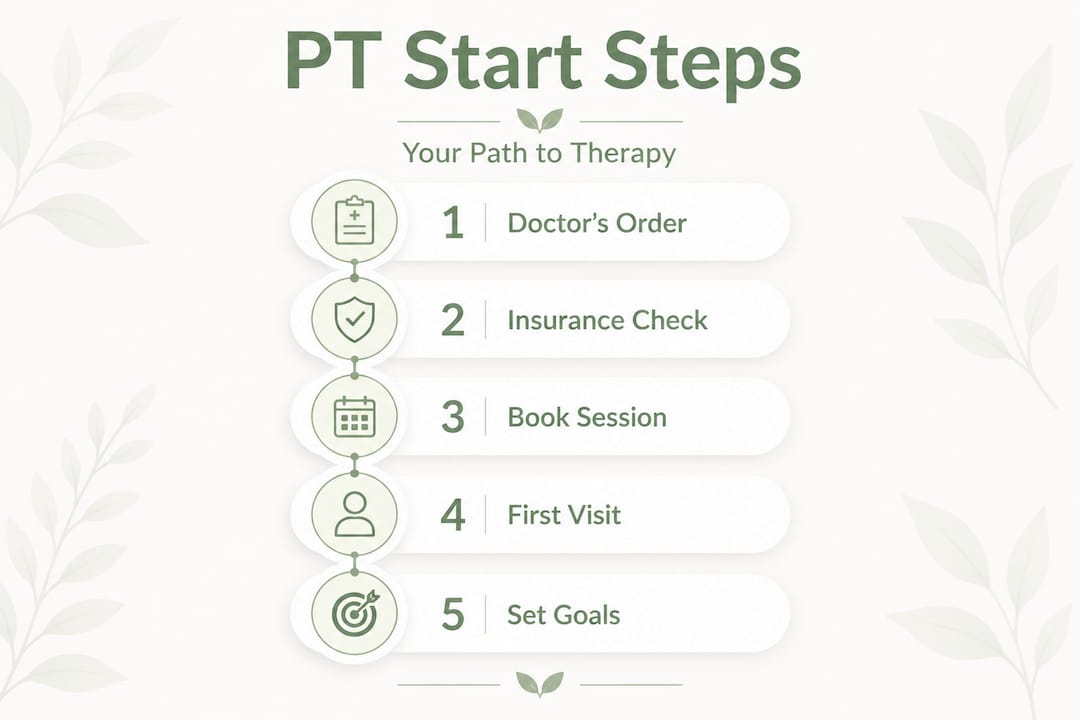
Schedule a visit with your primary care doctor. Describe your symptoms clearly and ask for a referral for outpatient physical therapy. If you have Medicare, your doctor must certify that therapy is medically necessary. Private insurance patients should also confirm whether a referral is required under their specific plan.
Verify your insurance and find an in-network clinic. Call your insurer or use their online directory to locate participating clinics near you. In Queens and Nassau County, many clinics accept Medicare, Aetna, Cigna, Emblem, and United Healthcare. Confirm your copay, coinsurance, and any session limits before committing.
Schedule your initial evaluation. This first appointment is longer than a regular session, typically 45 to 60 minutes. Your physical therapist will assess your posture, strength, range of motion, and pain levels. The steps from evaluation to personalized plan include exercises, manual therapy, and functional goal-setting tailored to your condition.
Receive and review your individualized treatment plan. After the evaluation, your therapist creates a written plan that lists your goals, the methods they will use, and a projected timeline. Make sure you understand each goal and feel comfortable asking questions. Your rehabilitation path with physical therapy is a partnership, not a one-size-fits-all program.
Attend your scheduled sessions consistently. Regular attendance is critical. Missing sessions slows your progress and can complicate insurance documentation. Most plans run two to three sessions per week for four to eight weeks, depending on your condition.
Track your progress using measurable benchmarks. You and your therapist should review your progress every few weeks. Benchmarks might include pain scores, how far you can walk, how high you can raise your arm, or whether you can return to daily activities without difficulty.
Important: Do not skip your doctor’s consultation before starting therapy. Insurance providers, including Medicare, may deny reimbursement if the required certification or referral is missing from your file. One missed step at the beginning can mean paying out of pocket for sessions that should have been covered.
What happens during physical therapy sessions?
Once you’ve started attending sessions, here’s what your physical therapy experience will look like on a practical level.
Physical therapy sessions typically last between 45 and 60 minutes. Your therapist uses a combination of hands-on techniques and guided exercises. The most common session methods covered by insurance include:
Therapeutic exercises (CPT code 97110): Strength, flexibility, and endurance training targeted to your condition.
Neuromuscular re-education (CPT code 97112): Retraining how your muscles and nervous system work together, often used after injury or surgery.
Manual therapy (CPT code 97140): Hands-on joint and soft tissue mobilization to reduce pain and improve movement.
Aquatic therapy: Water-based exercise that reduces joint stress, helpful for arthritis or post-surgical patients.
According to CMS billing guidelines, all of these methods must meet standards for Medicare billing and focus on documented functional improvement. That means your therapist keeps detailed notes showing how you are progressing toward specific functional goals, not just that you attended sessions.

Here’s how standard physical therapy compares to alternative options like craniosacral therapy:
Feature | Standard physical therapy | Craniosacral therapy (CST) |
Evidence level | Strong, evidence-based | Inconclusive, mixed research |
Medicare coverage | Yes, if medically necessary | No, considered investigative |
Private insurance coverage | Generally yes | Rarely, less than 5% of plans |
Primary focus | Strength, mobility, function | Nervous system regulation |
Documentation required | Yes, for billing | Not applicable |
Typical use | Injury, post-surgery, pain | Stress, headaches, TMJ |
Understanding how physical and craniosacral therapy can help with chronic pain can help you decide if a combined approach makes sense for your situation. For context, many patients who pursue chiropractic or complementary care also benefit from local recovery support alongside their PT program.
Pro Tip: Ask your therapist for a home exercise program during your very first session. Patients who practice exercises between clinic visits tend to recover faster and need fewer total sessions, which saves both time and money.
Exploring craniosacral and alternative therapies: What to know
While standard physical therapy is often the starting point, many people in Nassau County and Queens wonder about complementary therapies like craniosacral therapy (CST). It’s a fair question, and the answer involves understanding both the potential benefits and the real limitations.
Craniosacral therapy is a hands-on technique where a practitioner applies very light touch to the skull and spine, aiming to release tension in the connective tissue system around the brain and spinal cord. Research on craniosacral techniques shows that meta-analyses have produced inconclusive evidence for its efficacy beyond placebo effects. Because of this, Medicare and major insurers like Aetna do not cover CST, classifying it as unproven or investigative.
Here is what you need to know about CST and insurance:
Medicare does not cover craniosacral therapy under any circumstances.
Most private insurers, including Aetna, Cigna, and United Healthcare, exclude CST from covered benefits.
Fewer than 5% of insurance plans nationwide include any craniosacral therapy coverage.
CST sessions are typically paid out of pocket, ranging from $80 to $175 per session depending on location.
There is no billing code recognized by Medicare specifically for craniosacral therapy.
That said, some patients report meaningful relief from symptoms like TMJ pain, headaches, and anxiety after CST sessions. If you’re curious, learning more about what craniosacral therapy involves can help you make an informed personal decision.
The key takeaway is this: standard physical therapy should remain your primary, insurance-covered foundation. If you choose to add craniosacral therapy sessions as a complement, do so with a clear understanding that it will be an out-of-pocket expense and that the clinical evidence remains limited.
Tracking your progress and what success looks like
To finish up, it’s key to know how you’ll judge your results and adjust along the way. Physical therapy is not passive. Your active involvement in tracking progress makes a real difference in outcomes.
Common benchmarks your therapist will use:
Reduced pain scores on a 0 to 10 scale measured at each visit
Increased range of motion measured in degrees
Improved ability to perform activities of daily living (ADLs), such as climbing stairs, reaching overhead, or walking a set distance
Reduced reliance on pain medications
Return to work or recreational activities
Work with your therapist to write down specific, measurable goals from day one. For example, “reduce lower back pain from a 7 to a 3 within six weeks” is a clear goal. “Feel better” is not. Clear goals also make it easier to document your progress for insurance purposes.
Understanding your financial responsibility
Patients with Medicare pay 20% coinsurance after the Part B deductible of $283 in 2026. If you have a Medicare Supplement plan (sometimes called Medigap), it may cover that 20%. Check your supplement plan documents to confirm.
What to do if progress stalls or you need more sessions:
Ask your therapist to document your functional progress in writing.
Request a re-evaluation to adjust your treatment plan.
If you hit the Medicare $2,480 threshold, your therapist will add an Advanced Beneficiary Notice (ABN) to your file, which means your doctor still certifies that continued therapy is necessary.
For private insurance, contact your insurer directly to request a prior authorization extension if your sessions run out before your goals are met.
Progress in physical therapy is rarely perfectly linear. Some weeks you’ll feel big improvements. Others may feel slower. Trust the process, communicate openly with your therapist, and keep attending consistently.
Why clarity and evidence matter when getting started with physical therapy
We see a consistent pattern in patients who come to us after delaying care for months. The delay rarely comes from not caring about their health. It almost always comes from confusion: confusion about what insurance will pay for, confusion about whether alternative therapies might be a better fit, and confusion about what the whole process actually looks like.
That confusion is understandable. The physical therapy landscape genuinely has moving parts, and the addition of options like craniosacral therapy adds another layer of decision-making that can feel paralyzing when you’re already in pain.
Our honest perspective: the patients who recover best are the ones who start with clear expectations. They know what their insurance covers before their first visit. They understand their measurable goals by the end of the first session. And they don’t let the appeal of newer or gentler-sounding therapies replace the foundational work that evidence-based physical therapy provides.
That does not mean we dismiss alternatives entirely. We understand why someone dealing with chronic pain, headaches, or TMJ symptoms might be drawn to exploring patient choices for therapy beyond the conventional. Those conversations are worth having. But they should happen alongside a solid PT foundation, not instead of one.
The most productive thing you can do today is call your insurance company, ask the four key questions (in-network status, deductible, coinsurance, and session limits), and then call a PT clinic. That single hour of phone calls removes the biggest barrier between you and recovery.
Start your physical therapy journey in Queens and Nassau County
Taking that first step toward physical therapy is easier when you have a local team that already understands your insurance and your community.
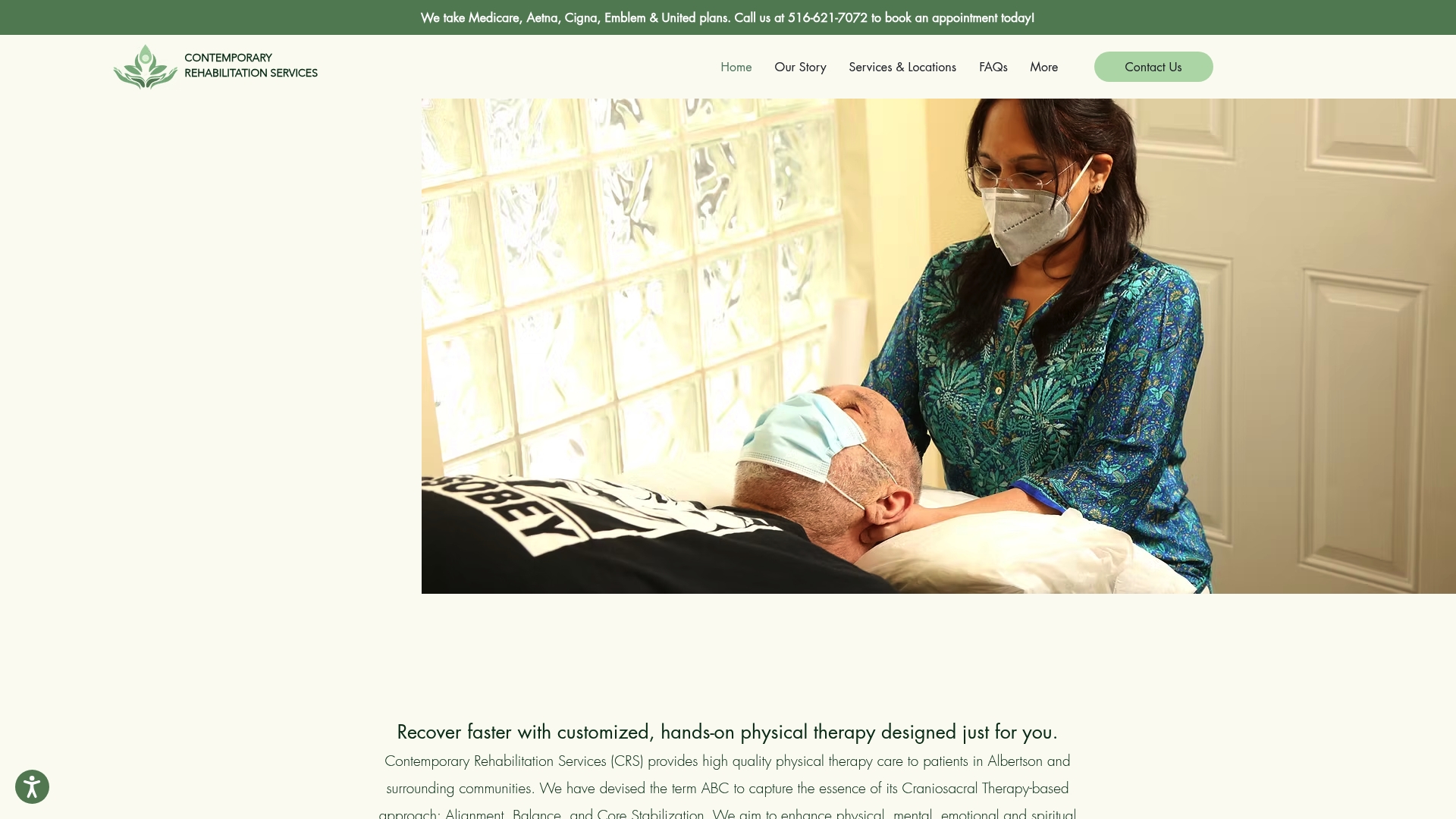
At our boutique clinic in Albertson, NY, we accept Medicare, Aetna, Cigna, Emblem, and United Healthcare, so most patients in Queens and Nassau County can begin treatment with minimal out-of-pocket cost. We verify your insurance before your first visit so there are no billing surprises. Whether you need standard physical therapy or want to ask about complementary options, we’re here to walk you through every step. Explore our full treatment options online, or find a location near you in Roslyn for PT and CST services and our primary Albertson physical therapy location. Call us today to schedule your initial evaluation.
Frequently asked questions
How do I know if Medicare will cover my physical therapy?
Medicare Part B covers outpatient PT when your doctor certifies it as medically necessary and your therapist maintains proper documentation of functional progress. Contact your Medicare plan directly to confirm your specific deductible and coinsurance amounts for 2026.
Is craniosacral therapy covered by insurance?
Most insurers, including Medicare, do not cover craniosacral therapy because it is classified as unproven or investigative. Expect to pay out of pocket if you choose to add it to your care plan.
What should I bring to my first PT appointment?
Bring your doctor’s referral, insurance card, a list of current medications, and comfortable clothing that allows free movement. If you have recent imaging like X-rays or MRIs, bring those too.
How do I track my progress in physical therapy?
Set measurable goals with your therapist from day one, such as improved pain scores or function benchmarks, and review them together every two to three weeks to confirm you’re on track.
Can I try both standard PT and alternative therapies?
Yes, and many patients do. Standard PT is recommended as your primary approach for insurance coverage and proven results, while alternatives like craniosacral therapy are considered investigative by most insurers and are typically paid out of pocket.
Recommended
Comments