
Knee Osteoarthritis Physical Therapy: What Actually Works

Yes, physical therapy works for knee osteoarthritis. It is an evidence-based, first-line treatment that reduces pain, restores function, and helps many patients delay or avoid surgery altogether. You do not need to wait until symptoms become unbearable before starting, and you do not need to accept limping through daily life as your new normal.
Here is what a well-designed program of physical therapy for knee pain typically delivers:
Meaningful pain reduction, often measured with a standard 0 to 10 pain scale
Increased quadriceps and hip strength to offload the joint
Better stair climbing, walking distance, and standing tolerance
Practical activity modification strategies you can use for years, not weeks
Guidelines from the European Alliance of Associations for Rheumatology (EULAR) and outcome tools like the WOMAC index (Western Ontario and McMaster Universities Osteoarthritis Index) give clinicians a way to track whether your knee arthritis rehab is actually working, rather than guessing. The evidence summary further down walks through exactly what the research shows and where the gaps remain.
Key Takeaways
Knee osteoarthritis physical therapy combines targeted exercise, patient education, and measurable outcome tracking to reduce pain and restore function without surgery for most patients.
Point | Details |
PT is first-line care | Guidelines from EULAR and AAOS both recommend exercise-based physical therapy before more invasive options. |
Combine exercise with education | Strength training alone underperforms a plan that also includes self-management and pacing strategies. |
Track progress with real numbers | Use WOMAC, NPRS, or the 6-Minute Walk Test to confirm your plan is working rather than guessing. |
Expect gradual, staged gains | Pain reduction often appears within a few weeks, with functional gains building over a couple of months. |
Know your red flags | Neurologic symptoms, mechanical blocks, or unresponsive pain mean it’s time to escalate care. |
Contemporaryrehabservices offers individualized plans | The Albertson clinic builds evaluation-driven programs using manual therapy and measurable outcome tracking, accepting most major insurance plans. |
Table of Contents
Knee Osteoarthritis Physical Therapy: The Condition and the Goals
Modalities and Adjuncts: What the Evidence Actually Supports
When Physical Therapy Isn’t Enough: Injections and Surgical Referral
Research Snapshot: What Guidelines Say About Knee Osteoarthritis Treatment
Getting Started with Physical Therapy at Contemporaryrehabservices
Knee Osteoarthritis Physical Therapy: The Condition and the Goals
Knee osteoarthritis develops when the cartilage cushioning your knee joint wears down faster than your body can repair it. The bone underneath reacts by thickening and sometimes forming bone spurs, while the surrounding muscles, tendons, and joint capsule adjust to the altered mechanics. That combination is what produces the stiffness, swelling, and grinding sensation most patients describe.
Physical therapy does not regrow cartilage. What it does is change the forces moving through your knee and improve the muscular support around it, which is often enough to significantly reduce pain and restore function even though the underlying joint damage remains visible on an X-ray.
A physical therapist’s goals for knee arthritis rehab generally include:
Reducing pain during daily movements like walking, stairs, and standing up from a chair
Restoring range of motion that stiffness has stolen from you
Building quadriceps and hip strength, since weak thigh muscles are strongly linked to worse OA symptoms
Improving neuromuscular control and balance so the knee moves predictably under load
Increasing overall walking tolerance and confidence in the joint
Assessment starts with a detailed history (when the pain started, what makes it worse, prior injuries) followed by a physical exam checking range of motion, strength, swelling, and gait pattern. Imaging plays a supporting role, not a leading one. Plenty of patients with severe X-ray changes have mild symptoms, and vice versa, so your therapist cares more about how the knee performs than what it looks like on a scan.
To track progress objectively, most clinics use a mix of these outcome measures:
WOMAC: a questionnaire scoring pain, stiffness, and physical function
NPRS (Numeric Pain Rating Scale): a quick 0 to 10 pain check at rest and with activity
KOOS (Knee Injury and Osteoarthritis Outcome Score): a broader function and quality-of-life measure
6-Minute Walk Test: how far you can walk in six minutes, a proxy for real-world stamina
Core Evidence-Based Components of Knee Arthritis Rehab
The strongest research on knee osteoarthritis treatment does not point to one miracle exercise or gadget. It points to a combination of components working together, which is exactly what current guidelines recommend.
Education and self-management come first, and this is not a throwaway step before the “real” treatment begins. It includes explaining what osteoarthritis actually is, correcting the common fear that movement causes damage, teaching activity pacing, and connecting weight management to symptom relief when it’s relevant. A large body of guideline evidence treats self-management education as a required component, not an optional add-on, and the EULAR panel specifically flags it as the highest implementation priority across health systems.
Exercise makes up the second pillar, and it splits into a few distinct categories:
Strength training, focused on the quadriceps and hip muscles, which are the primary shock absorbers for the knee joint
Aerobic conditioning, such as walking programs or stationary cycling, to build tolerance without overloading the joint
Flexibility work, to recover range of motion lost to stiffness and guarding
Neuromuscular and balance training, which teaches the knee to react correctly to uneven surfaces and sudden shifts in load
Supervised programs tend to outperform unsupervised home exercise on adherence and measurable outcomes. That doesn’t mean home exercises are worthless. It means that having a therapist check your form, adjust your load, and hold you accountable produces better results over time than a printed sheet of exercises left on your kitchen counter.
Manual therapy for knees, including joint mobilization and soft tissue work, sits inside the toolkit as an adjunct. It can reduce pain and stiffness enough to make active exercise more tolerable, particularly early in a program when guarding and swelling limit movement. Taping and bracing recommendations follow a similar logic: they’re tools to enable better movement, not standalone fixes.
Pro Tip: When knee pain flares during a new exercise, don’t abandon the exercise entirely. Try reducing the range of motion, cutting the load in half, or swapping to a lower-impact version (a partial squat instead of a full one) before deciding an exercise “doesn’t work” for you.
The Frontiers in Medicine 2025 review found that neuromuscular exercise programs show notable efficacy for pain reduction, reinforcing that the exercise category you choose matters as much as simply “doing exercise.”
Modalities and Adjuncts: What the Evidence Actually Supports
Adjunct modalities generate a lot of marketing buzz, so it’s worth being direct about which ones carry real evidence and which ones are best treated as optional extras.
TENS (transcutaneous electrical nerve stimulation): low-level electrical current applied through skin pads; research shows notable efficacy for short-term pain reduction
Laser therapy: light-based treatment aimed at reducing inflammation and pain, also showing meaningful pain-reduction results in recent reviews
Extracorporeal shockwave therapy: pulsed acoustic waves applied to the joint area, associated with improved WOMAC function scores in recent evidence
Aquatic therapy: exercise performed in a pool, where buoyancy reduces joint loading, useful for patients who can’t yet tolerate land-based strengthening
Bracing and taping: mechanical support to reduce pain during activity, generally viewed as helpful but with mixed-strength evidence depending on the type used
Lateral wedge insoles and acupuncture: limited or mixed evidence according to several systematic reviews, worth trying selectively rather than relying on as primary treatment
A systematic review of light-based therapies offers additional context on how photobiomodulation approaches are being studied for joint conditions like arthritis, which is useful background if your clinic offers laser as part of your plan.
The practical rule: use adjuncts to create a window of reduced pain that lets you do the exercise that actually changes your strength and function. If a modality becomes the whole plan instead of a bridge to exercise, you’re leaving the most effective part of knee osteoarthritis treatment on the table.
Sample Exercise Programs for Knee Arthritis Rehab
A program that respects where you’re starting from will look different in week one than it does in month three. Here’s how a typical progression unfolds across three phases.
Phase 1, low-load foundation, focuses on restoring basic movement and waking up the quadriceps without provoking a flare. Think wall squats, straight-leg raises, and seated knee extensions with light resistance. The goal here isn’t strength yet. It’s proving to your nervous system that movement is safe.

Phase 2, progressive strengthening, adds resistance bands, step-ups, and partial-range squats once you can move through phase 1 exercises with minimal pain. This is where quadriceps and hip strength actually start climbing, and where most of the functional gains (easier stairs, less pain standing from a chair) show up.
Phase 3, maintenance and aerobic focus, shifts toward sustaining strength while building walking tolerance and cardiovascular fitness through cycling, pool walking, or a structured walking program. This phase is designed to be sustainable indefinitely, since knee OA is a long-term condition, not a six-week fix.
Progression should follow function, not the calendar. If you can climb a flight of stairs with noticeably less pain than two weeks ago, that’s your signal to add resistance or advance to the next phase, not an arbitrary date on a schedule.
A general pain-monitoring rule used across knee arthritis rehab: mild discomfort during exercise (roughly a 2 to 3 out of 10) that settles within 24 hours is acceptable. Pain that spikes sharply during the exercise, or lingers and worsens the next day, means the load or range needs to come down. If land-based loading consistently triggers pain, aquatic therapy or stationary cycling let you keep training strength and endurance with far less joint stress, and gentler physical therapy approaches built around lower-impact strategies are worth discussing with your therapist.
Pro Tip: Blood flow restriction (BFR) training, which uses a pressurized cuff to partially restrict blood flow during low-load exercise, can build strength and muscle size comparable to heavy resistance training with far less joint stress. It’s not for everyone, and it requires clinical supervision, but ask your therapist whether it’s appropriate if high-load strengthening consistently aggravates your knee.
What a Course of Physical Therapy for Knee Pain Looks Like
Physical therapy for knee pain gets delivered a few different ways, and each has a place depending on your circumstances. In-person individual sessions give you the most hands-on correction and manual therapy access. Group classes cost less and add a social accountability element that some patients find motivating. Aquatic sessions suit anyone whose pain makes land-based exercise difficult early on. Telehealth works well for check-ins, program adjustments, and coaching once you’ve learned proper form, though it can’t replace hands-on assessment for a new or worsening problem.
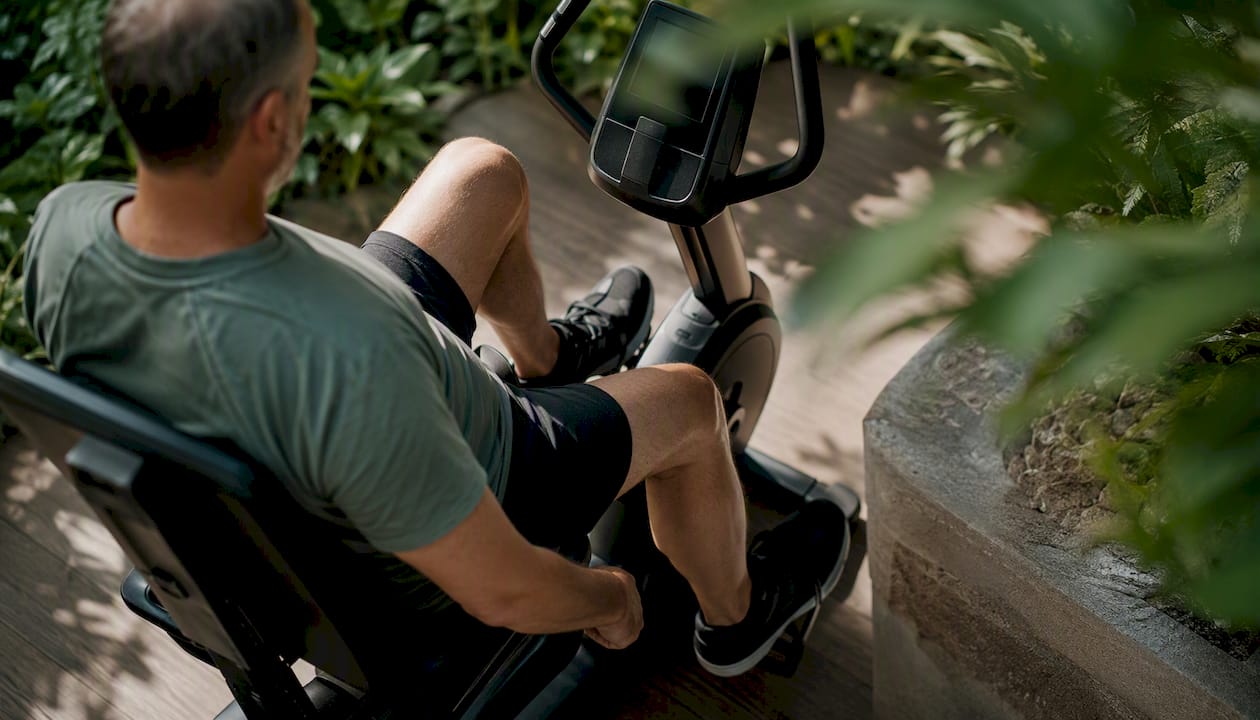
A typical schedule starts at one to three sessions per week for the first several weeks, then tapers as you transition toward a more independent home program. Most patients notice measurable pain reduction within four to six weeks, with meaningful functional gains (easier stairs, longer walking distance) building over two to three months. That timeline lines up with the AAOS clinical practice guideline, which recommends supervised, unsupervised, or aquatic exercise over no exercise at all as the foundation of conservative management.
Reassessment typically happens every four to six weeks using the same outcome measures from your initial evaluation, whether that’s the WOMAC, a Timed Up and Go test, or your NPRS pain score. If the numbers aren’t moving in the right direction, that’s the cue to adjust the plan rather than keep repeating what isn’t working.
On the financial side, most clinics accepting Medicare, Aetna, Cigna, Emblem, and United Healthcare require a referral or prior authorization depending on your specific plan, so it’s worth calling ahead to confirm your benefits before your first visit. Cash-pay options exist for patients whose plans don’t cover PT or who’ve exhausted their visit allowance for the year.
Before each visit, a short checklist helps you get the most out of limited appointment time:
Bring a list of any activities that got noticeably harder or easier since your last session
Note your current pain level with daily activities, not just at rest
Ask what specific outcome measure you’re being tracked with and what improvement looks like numerically
Confirm your home exercise program hasn’t gotten stale (if it feels too easy, say so)
When Physical Therapy Isn’t Enough: Injections and Surgical Referral
Physical therapy is the right starting point for the overwhelming majority of knee osteoarthritis cases, but it’s not the answer for every red flag. Certain signs mean you need faster medical evaluation rather than continued conservative care:
Progressive weakness, numbness, or other neurologic symptoms in the leg
A sudden, severe mechanical block that prevents the knee from straightening or bending
Significant, uncontrolled swelling that develops rapidly rather than gradually
Pain that remains severe and unresponsive despite several weeks of a properly optimized PT program
Joint injections, typically corticosteroid or hyaluronic acid, can serve as a useful adjunct when pain is too severe to tolerate active exercise. The evidence is clear that injections work best as a bridge to enable rehab, not as a replacement for it. Patient-facing research has found that starting with physical therapy can outperform steroid injections for many patients and may reduce downstream costs by helping people avoid or delay more invasive interventions.
Surgical consultation becomes appropriate when function-limiting osteoarthritis persists despite a genuinely comprehensive trial of conservative management, meaning you’ve done the strengthening, the education, and possibly a round of injections, and quality of life still hasn’t improved. Even then, physical therapy doesn’t exit the picture. Prehab (pre-surgical conditioning) improves post-surgical outcomes, and structured postoperative rehab remains essential for regaining full function after any knee procedure.
Before deciding on next steps with your physician, a short checklist can guide that conversation: How long have you consistently followed a supervised exercise program? Have you tried an injection, and did it provide meaningful relief? Is your pain limiting basic daily function, or mainly limiting higher-demand activities? Your answers shape whether the next step is more rehab, an injection, or a surgical opinion.
Research Snapshot: What Guidelines Say About Knee Osteoarthritis Treatment
Three major guideline bodies converge on the same core message even though they phrase it differently. Individualized, multicomponent care built around exercise and education outperforms any single intervention used alone.
Guideline | Exercise Emphasis | Education/Self-Management | Adjunct Modalities |
EULAR (2023) | Individualized dose and progression required | Highest implementation priority, central to the plan | Considered supportive, not core |
AAOS | Supervised, unsupervised, or aquatic exercise recommended over no exercise | Structured self-management programs recommended | Evidence varies by modality, used selectively |
KNGF (Dutch guideline) | Exercise therapy as cornerstone treatment | Patient education integrated throughout care | Modalities used case-by-case, not first-line |
The EULAR 2023 update is explicit that there is no single “best” exercise, and that the win comes from individualizing the plan and getting the behavior-change piece right. That’s a meaningful correction to the common assumption that some specific stretch or machine holds the answer.
Recent meta-analytic work backs specific numbers into that framework: reviews summarized in Frontiers in Medicine point to neuromuscular exercise and TENS producing notable pain-reduction effects, while shockwave therapy and aquatic exercise show measurable WOMAC functional improvements. Those findings track closely with what clinics see in practice: a mixed program beats any single-modality approach.
It’s worth being honest about the gaps. Long-term maintenance research is thinner than the short-term trial data, and how much benefit persists a year or more after formal PT ends depends heavily on whether patients keep up a home program. That’s an area still evolving, not a settled question.
How to Choose a Physical Therapist for Knee Osteoarthritis
Not every clinic approaches knee arthritis rehab with the same rigor, so a bit of due diligence up front pays off. Look for these markers when evaluating a physical therapist:
Experience specifically with orthopedic or geriatric caseloads, since knee OA skews toward older adults with other coexisting conditions
Board certification in orthopedic physical therapy, if available in your area
A clear explanation of which outcome measures they’ll use to track your progress (WOMAC, NPRS, 6-Minute Walk Test, or similar)
A defined plan length with periodic reassessment points, not an open-ended “keep coming back” model
Questions worth asking at your first visit or even during a phone screening: What outcome measures will you use to track my progress? What does a typical plan length look like for someone with my presentation? Will I get a home exercise program, and how will it be adjusted over time? Do you offer telehealth for follow-up visits when in-person isn’t practical?
Confirm insurance details before you commit; verify whether your plan (Medicare, Aetna, Cigna, Emblem, United Healthcare) requires a referral, how many visits are authorized, and what your session length and copay look like. If you have multiple coexisting conditions, such as diabetes or cardiovascular disease alongside knee OA, ask whether the clinic has experience treating older adults with layered health considerations, since exercise dosing often needs adjustment in those cases.
A referral to occupational therapy or a broader multidisciplinary team makes sense when knee OA is affecting your ability to manage daily tasks at home, or when a coexisting condition (severe arthritis in the hands, significant balance impairment) complicates a physical-therapy-only approach.
How a Clinic Actually Builds Your Knee OA Plan
Walk into a physical therapy evaluation for knee osteoarthritis and the first session looks less like a workout and more like an investigation. A thorough history covers when symptoms started, what activities provoke them, and what you’ve already tried. The physical exam checks range of motion, strength, swelling, and how you walk, and baseline outcome measures get recorded on day one: a WOMAC score, an NPRS pain rating, and often a Timed Up and Go test.
Those baseline numbers matter because they turn “I feel a little better” into something concrete. If your WOMAC function score improves by a meaningful margin over six weeks, or your Timed Up and Go time drops by a couple of seconds, that’s objective proof the plan is working, not just an impression.
From there, a tailored exercise plan builds around your specific limitations, whether that’s quadriceps weakness, balance deficits, or stiffness limiting your range of motion. Manual therapy techniques, including joint mobilization, may be layered in during early sessions to reduce pain enough for you to tolerate active exercise. Follow-up visits track those same outcome measures at regular intervals, and discharge happens once you’ve hit functional goals and have a sustainable home program to maintain them.
That structure, evaluate, measure, individualize, reassess, isn’t unique to any one clinic. It’s what evidence-based knee osteoarthritis treatment looks like when it’s done well, whether you’re being seen in Nassau County, Queens, or anywhere else.
A clinician’s honest view on what keeps patients improving
What separates patients who keep their gains from those who slide back usually isn’t the exercise program itself. It’s whether they keep doing a scaled-down version of it once formal visits end. Osteoarthritis is a long-term condition, and the strength and mobility you build in twelve weeks of PT will erode if the home program disappears entirely. The patients who do best treat their home exercises the way they’d treat a daily medication: not exciting, but non-negotiable. If you’re starting knee arthritis rehab now, set your expectations around a WOMAC score or a specific functional goal, like walking a certain distance without stopping, rather than a vague sense of “feeling better.” Concrete targets are easier to sustain motivation around than abstract hope.
Getting Started with Physical Therapy at Contemporaryrehabservices
If you’re dealing with knee osteoarthritis in Nassau County or Queens, Contemporaryrehabservices offers a more hands-on alternative to a rushed, high-volume PT mill: individualized in-person and virtual sessions built around manual therapy techniques like joint mobilization, neuromuscular re-education, and craniosacral therapy, alongside the strength and mobility programs this article covers.
The clinic accepts Medicare, Aetna, Cigna, Emblem, and United Healthcare, with cash-pay options available if your plan doesn’t cover the visits you need. Every plan starts with a full evaluation, including the same baseline outcome measures discussed above, so you and your therapist both know exactly what progress should look like before you start. Booking begins with a phone call or online request to schedule your initial assessment; from there, your therapist builds a plan around your specific knee, not a generic template. Explore the full range of physical therapy and manual therapy services offered, or check the Albertson location page if you’re nearby, and reach out to schedule your first evaluation.
Sources
This article is general information, not a substitute for advice from a qualified doctor. Consult a qualified healthcare professional about your own circumstances before acting on anything here.
Recommended
Comments